This Tiny Marsupial Is Pregnant for Just 12 Days
Twelve days. That’s the entire pregnancy. Then out comes something smaller than a jellybean, hairless and barely conscious, that somehow crawls into its mother’s pouch without any instruction manual.
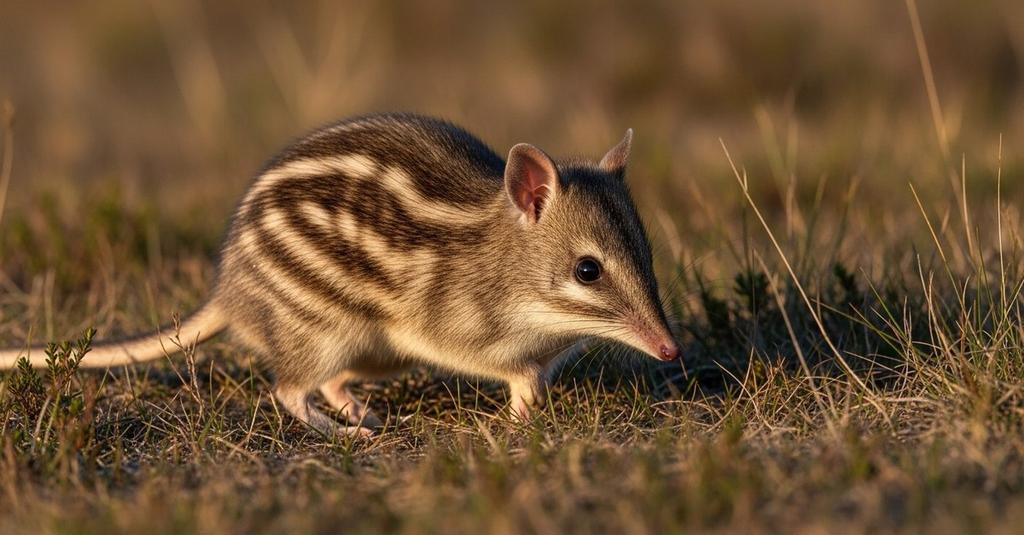
The eastern barred bandicoot — Perameles gunnii, if we’re being scientific about it — doesn’t do pregnancy the way most mammals understand it. This small, striped marsupial from southeast Australia has compressed the whole internal gestation thing into what amounts to a long weekend. The real work, the expensive biological stuff, happens outside the body in a pouch. And once you realize how this actually works, the sheer weirdness of it won’t leave you alone.
Key Facts
- The eastern barred bandicoot has an internal gestation of just 12 days, among the shortest mammalian pregnancies on record.
- After birth, the joey spends 55 days in the pouch, more than four times longer than the pregnancy, completing organ formation and fur growth.
- A single female under 1 kilogram can produce up to 16 offspring per year, with up to 4 joeys per litter across 4 litters.
- Human pregnancy at 280 days is roughly 23 times longer than a bandicoot’s internal gestation, yet the human newborn is far more developed.
- The eastern barred bandicoot is extinct in the wild on mainland Australia, surviving via captive breeding and fenced reserves.
In short: The eastern bandicoot pregnancy lasts just 12 days, among the shortest of any mammal, after which a jellybean-sized joey crawls into the pouch for 55 days to finish developing. This speed lets a single female under one kilogram produce up to 16 offspring a year, yet it could not save the species from extinction in mainland Australia’s wild.
Twelve Days of Pregnancy (and Then What?)
Most mammals don’t operate like this. We think of pregnancy as this long, protected incubation period. Humans: 280 days. Mice: 20 days. Even those feel quick. But 12 days? That’s barely time to notice something’s happening.
Dr. Andrew Cockburn at the Australian National University has spent years studying Australian marsupial reproduction, and what he’s found in the bandicoot’s reproductive timeline is almost implausible — the internal gestation phase has been compressed to something that feels less like biology and more like a biological cheat code. The question isn’t really “how does this work” but rather “why did this ever become an advantage in the first place?”
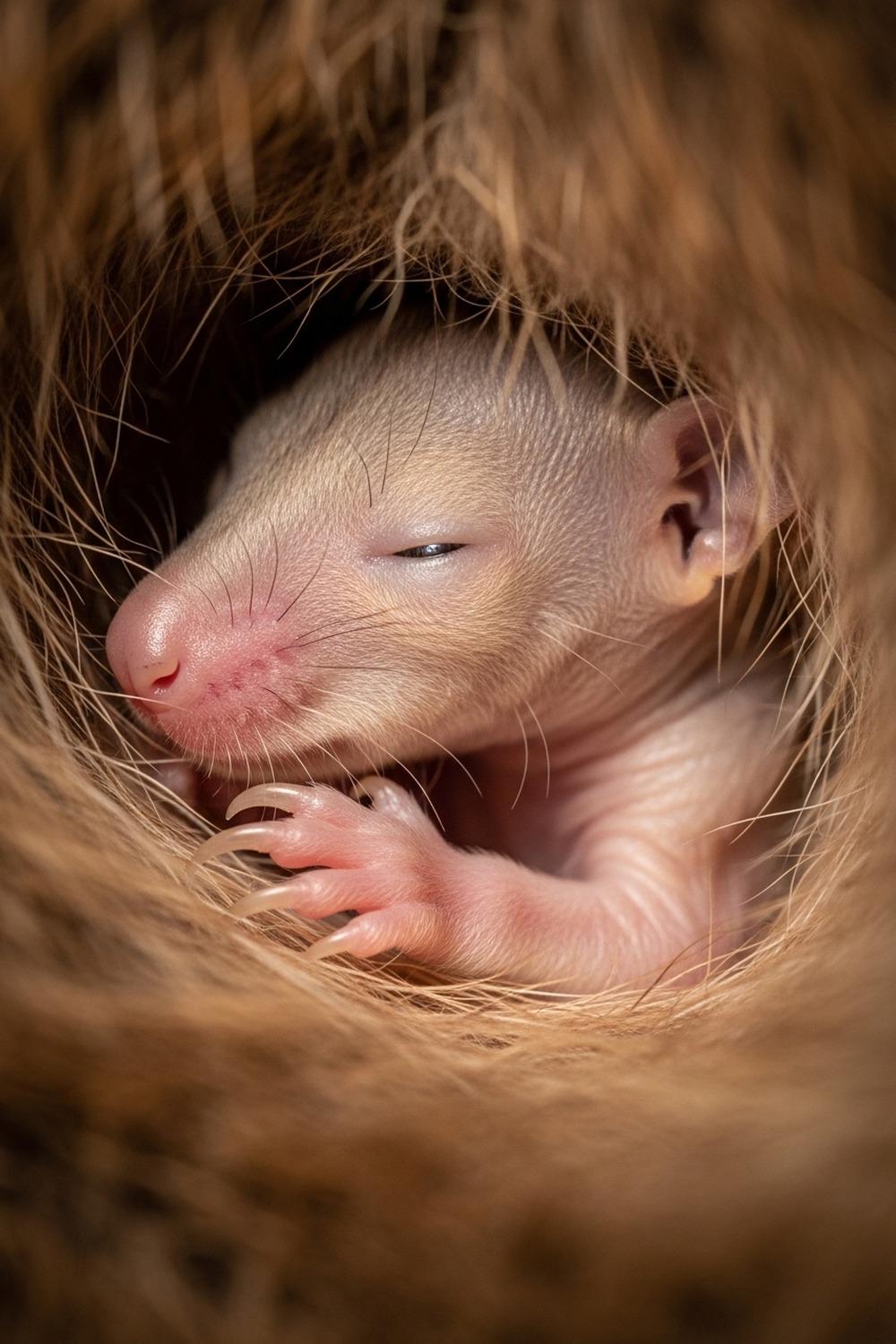
The newborn that emerges? It’s not a bandicoot yet. Not really. Hairless. Blind. Shaped vaguely like a pink comma if you squint. To call it underdeveloped feels generous.
And it knows exactly where to go.
The Pouch Does Everything
That tiny, unfinished creature pulls itself into the mother’s pouch entirely under its own power. Once inside, it spends the next 55 days — more than four times longer than the pregnancy itself — attached to a teat, growing organs and fur and all the other parts you need to be an actual animal. The pouch isn’t just a holding tank. It’s a functional external womb. Temperature control. Nutrition delivery. Immune system backup. Scientists are still mapping out exactly how many systems the pouch is managing.
This two-stage development is what makes marsupials different from placental mammals, but the bandicoot takes it further than almost anything else on the planet. You can read more about Australia’s other evolutionary oddities at this-amazing-world.com, but fair warning — once you start clicking through that site at midnight, you’re not stopping.
There’s something almost elegant about offloading the expensive part. The mother’s body doesn’t wage biological war with a developing fetus for months. She doesn’t have to compete with her own immune system. She just… outsources it. That last fact kept me reading for another hour.
Up to 16 Offspring a Year. Per Female.
Okay, this is where the numbers stop feeling real.
A female eastern barred bandicoot can have up to four joeys per litter. Four litters in a single breeding season. That’s potentially 16 offspring from one animal weighing less than a kilogram. An animal you could hold in your palm can produce 16 of itself in a year. The eastern barred bandicoot has one of the highest reproductive rates of any marsupial in Australia — documented across Victoria and Tasmania in studies spanning decades.
Biologist Tony Pocklington, who worked on bandicoot recovery programs in Victoria, called the species “reproductively explosive” when conditions align. And here’s the kicker: she doesn’t even pause between litters. A female can become pregnant again almost immediately after birth. Joeys in the pouch. New embryo developing simultaneously. Reproduction as a continuous loop.
Why Evolution Chose Speed Over Security
This strategy isn’t random. It’s a solution to a specific problem: Australia changes fast. Drought. Fire. Flood. All of them can happen in the span of weeks or months. A long pregnancy becomes a liability when survival is uncertain. You can’t afford to invest months in something that might die anyway if disaster strikes.
But a 12-day pregnancy? You’re barely committed. You can try again next month.
The pouch-based phase, longer though it is, can be abandoned more easily if conditions demand it. This is what millions of years of evolutionary refinement looks like when the environment is hostile and unpredictable.
Then humans showed up.
Fast Breeding Can’t Outrun Extinction
Turns out, producing 16 offspring annually means nothing when your habitat disappears. The eastern barred bandicoot is extinct in the wild on mainland Australia — gone from Victoria, clinging to existence in Tasmania, surviving mostly through captive breeding and reintroduction programs at fenced reserves.
Urban sprawl consumed its grassland habitat. Foxes and feral cats, introduced by European settlers, did the rest. The animal’s greatest biological asset — its reproductive speed — couldn’t compensate for the pace of habitat destruction and predation.
An animal designed by evolution to bounce back fast, to restock populations after natural disaster, found itself facing threats with no biological solution. The predators were new. The habitat loss was permanent.
By the Numbers
- 12 days: complete internal gestation, among the shortest mammalian pregnancies on record.
- 55 days in the pouch — more than four times longer than pregnancy itself, where organ formation and fur growth complete.
- Up to 4 joeys per litter, 4 litters annually: theoretically 16 offspring from a single female under 1 kilogram.
- Human pregnancy at 280 days is roughly 23 times longer than a bandicoot’s internal gestation, yet the human newborn arrives far more developed.
Field Notes
- Back-opening pouch (unlike forward-opening kangaroo pouches) prevents soil from entering while the bandicoot digs constantly for insects and grubs.
- Orphaned joeys in wildlife care require exact thermal replication of the pouch environment — temperature fluctuation in early weeks is lethal.
- Red kangaroos gestate for about 33 days, nearly three times longer than eastern barred bandicoots, despite sharing the same marsupial two-stage strategy.
Why This Matters
The eastern bandicoot pregnancy reveals something fundamental about life itself: the sheer diversity of solutions evolution produces for the same basic problem. Every reproductive strategy — 12 days or 22 months, placental or pouch-based — represents millions of years of pressure and refinement. Understanding how different species solved this problem tells us something about the conditions that shaped them.
Right now, those conditions are changing faster than evolution can adapt. Reintroduction programs around Melbourne have worked. Populations exist at fenced reserves. But the eastern barred bandicoot’s recovery is fragile, managed, dependent entirely on human decisions about land use and predator control.
An animal built by evolution to bounce back faster than almost anything else shouldn’t be clinging to existence through human intervention. Yet here we are. The eastern bandicoot is a reminder that biological brilliance doesn’t guarantee survival. Sometimes the most extraordinary creatures need the most ordinary thing: a place to live. If this keeps you up at night, there’s more at this-amazing-world.com — and the next story is stranger still.
Frequently Asked Questions
Q: How long is the eastern bandicoot pregnancy?
The eastern barred bandicoot has an internal gestation of just 12 days, among the shortest mammalian pregnancies ever recorded. For comparison, a human pregnancy lasts about 280 days, roughly 23 times longer, and even a mouse gestates for around 20 days. The newborn bandicoot emerges hairless, blind, and barely formed, then crawls unaided into its mother’s pouch, where it spends a further 55 days, more than four times the length of the pregnancy itself, completing the development of organs and fur.
Q: How many babies can an eastern barred bandicoot have in a year?
A single female eastern barred bandicoot, weighing less than one kilogram, can produce up to 16 offspring per year. That breaks down to as many as 4 joeys per litter across 4 litters in a single breeding season. Remarkably, she does not pause between litters: a female can become pregnant again almost immediately after birth, with joeys in the pouch and a new embryo developing simultaneously. This gives the species one of the highest reproductive rates of any marsupial in Australia.
Q: Why did such a fast-breeding animal still become endangered?
Despite producing up to 16 offspring annually, the eastern barred bandicoot is extinct in the wild on mainland Australia. Urban sprawl consumed its grassland habitat, and foxes and feral cats, introduced by European settlers, did the rest. Its reproductive speed evolved to help it bounce back from natural disasters like drought, fire, and flood, but it offered no defense against permanent habitat destruction and novel predators. The species now survives mainly through captive breeding and reintroduction at fenced reserves near Melbourne.
Q: Why did the eastern bandicoot evolve such a short pregnancy?
The 12-day pregnancy is a solution to Australia’s volatile environment, where drought, fire, and flood can strike within weeks. A long internal pregnancy becomes a liability when survival is uncertain, because months of biological investment can be lost if disaster strikes. With a 12-day gestation, the mother is barely committed and can try again the next month. The longer pouch phase can also be abandoned more easily than an internal pregnancy, making the whole strategy a flexible response to an unpredictable, hostile landscape.
Illustrations are AI-generated. Article fact-checked and human-edited. Our editorial standards.