He Ate a Ghost Pepper. Then His Esophagus Split Open.
A 47-year-old man bit into a ghost pepper on a dare and ended up in emergency surgery with a ruptured esophagus and a collapsed lung. The wild part? The pepper itself wasn’t what nearly killed him.
It started simple enough. Food challenge, social pressure, the kind of thing people do without thinking it through. He bit down. The heat hit different than he expected — not just spicy, but the kind of burn that makes your nervous system genuinely panic. So he did what felt instinctive. Grabbed water. Drank it. Kept drinking.
Then his body took over.
What happened next was Boerhaave syndrome — spontaneous esophageal rupture — and it landed him in the ICU with a hole in his esophagus, a contaminated chest cavity, and one lung completely out of commission. The mortality rate for that condition hovers around 35–50% even with immediate surgery. He made it. Most people don’t.
Key Facts
- A 47-year-old man ruptured his esophagus and collapsed a lung after eating a ghost pepper on a dare.
- The injury was Boerhaave syndrome — spontaneous esophageal rupture — which carries a 35–50% mortality rate even with immediate surgery.
- The ghost pepper (Bhut jolokia) measures about 1,041,427 Scoville Heat Units, roughly 200 times hotter than a jalapeño.
- Capsaicin binds to TRPV1 heat receptors, which normally activate around 109°F, so the body reacts as if burned.
- The damage came from violent retching, not the pepper itself, because the esophagus lacks the protective serosa membrane along most of its length.
In short: A 47-year-old man ate a ghost pepper (about 1,041,427 Scoville units) on a dare and suffered Boerhaave syndrome — a ruptured esophagus and collapsed lung with a 35–50% mortality rate. The pepper’s capsaicin triggered TRPV1 heat receptors and violent retching; that mechanical force, not the heat, tore the esophagus, which lacks a protective serosa layer.
The Ghost Pepper and Why Your Brain Thinks It’s on Fire
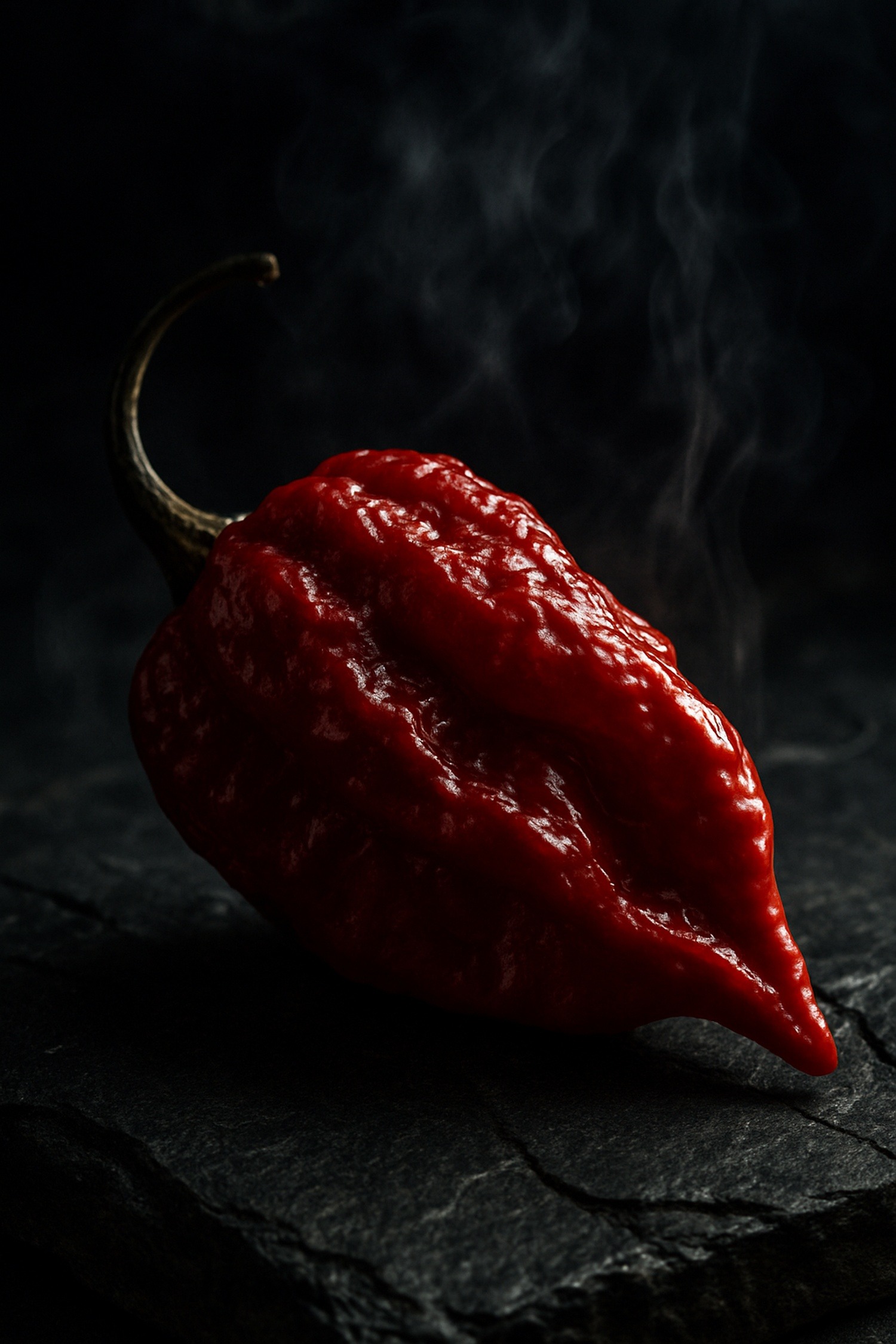
The ghost pepper, or Bhut jolokia, hits around 1,041,427 Scoville Heat Units — roughly 200 times hotter than a jalapeño. But here’s where it gets interesting. That number doesn’t actually tell you what happens to your body. The heat comes from capsaicin, an alkaloid compound that binds to TRPV1 receptors in your nervous system — the exact same receptors that activate when your skin touches something above 109°F. Your body literally cannot tell the difference between eating a ghost pepper and being burned by heat.
So it panics.
That panic triggers an almost reflexive neurological response. Your esophagus starts contracting violently. You retch. Hard. Repeatedly. With everything your body has. And that’s where the mechanism shifts from “uncomfortable” to “potentially lethal.” Because it’s not the capsaicin that tears the esophagus. It’s the force of your own body trying to evacuate what it perceives as a threat.
The retching was the weapon. The pepper was just the trigger.
The Receptor That Confuses Spice with Fire
To understand why a single bite can spiral into a surgical emergency, you have to start with one tiny protein: TRPV1. It sits in the membranes of pain-sensing nerve cells, and its actual job has nothing to do with food. It’s a heat alarm. When tissue temperature climbs toward the threshold where cells start to be damaged — somewhere around 109°F — TRPV1 opens and floods the nerve with a signal that the brain reads, unambiguously, as “this is burning.”
Capsaicin’s trick is that it binds to the same receptor and forces it open at body temperature. The molecule is shaped just right to slot into TRPV1 and switch it on without any actual heat present. So when capsaicin coats the lining of your mouth, throat, and esophagus, thousands of these receptors fire at once and the brain receives a flood of identical “burning tissue” alarms. There is no fire. There is no damage from heat. But the warning system can’t tell the difference, and it doesn’t wait for confirmation before acting.
This is why the sensation feels so total and so frightening. A papercut hurts in one spot. A ghost pepper lights up an entire surface of soft tissue simultaneously, and it does so in regions you can’t see, can’t reach, and can’t cool down. The brain, faced with what looks like a large internal burn, throws every protective reflex it has at the problem: saliva, mucus, swallowing, gagging, and — when the alarm won’t stop — full-body retching.
What Boerhaave Syndrome Actually Is
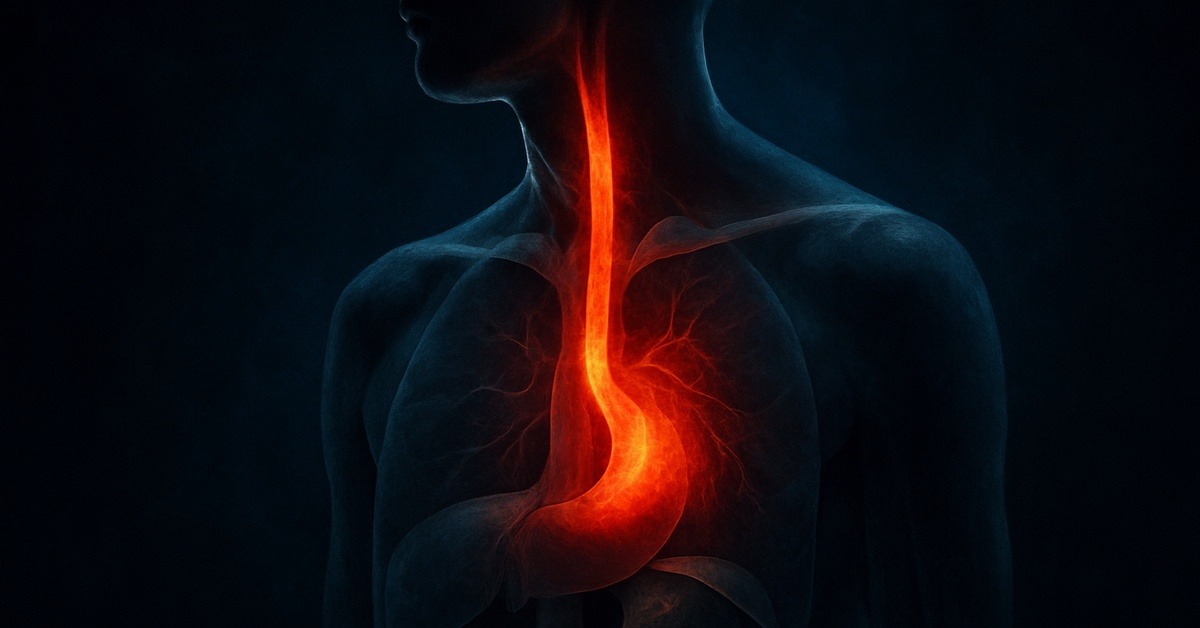
Spontaneous esophageal rupture — sometimes called “effort rupture” in medical literature — happens when the esophagus tears under mechanical pressure. In this case, from violent, sustained retching. The moment it ruptures, stomach contents, air, and bacteria flood directly into the chest cavity. Infection spreads. The lungs compress. The numbers on survival aren’t pretty — mortality rates climb above 35% even when doctors catch it fast, and they usually don’t catch it fast.
Most people mistake the symptoms for something else entirely. Chest pain, difficulty breathing, a feeling that something is catastrophically wrong inside you — that could be a heart attack, pneumothorax, aortic dissection, any number of other emergencies. Doctors have to rule them all out before they land on the right diagnosis. And while they’re ruling things out, the clock is running. Every hour matters.
The Water Situation
Here’s the cruel part that kept me reading for another hour. Water doesn’t actually help with capsaicin. Capsaicin is oil-based. Oil and water don’t mix — they separate. So each gulp of water he drank? It likely redistributed the capsaicin rather than diluting it, which kept the neurological panic response firing, which kept the retching going.
The esophageal rupture wasn’t caused by one single dramatic heave. It was the cumulative mechanical force of repeated violent contractions that finally split the tissue.
The esophagus is tough. Remarkably tough. It handles meals, drinks, acid reflux, all without complaint. But it has limits. Push it hard enough, fast enough, with enough force, and it doesn’t bend.
It breaks.
Why the Esophagus Is Built to Fail Under This Kind of Pressure
Most of the gastrointestinal tract is wrapped in a tough outer membrane called the serosa, a smooth, fibrous layer that adds structural integrity and helps contain leaks. The esophagus is the conspicuous exception. Along most of its length it has no serosa at all. Its wall is a layered tube of muscle and lining, and once you get past the inner mucosa, there’s relatively little holding the structure together against a sudden spike in internal pressure.
That matters during retching. A normal vomit is a coordinated event: the diaphragm and abdominal muscles squeeze, the upper esophageal sphincter relaxes, and the contents move up and out with the pressure release valve open. Trouble starts when the body retches with explosive force while the upper valve doesn’t fully relax — pressure inside the lower esophagus rockets up with nowhere to go. The wall is the weakest point in the system, and it gives way, almost always as a vertical tear in the lower left portion of the esophagus, just above the stomach.
The location is part of what makes the syndrome so dangerous. That stretch of esophagus sits inside the chest, surrounded by the lungs, the heart, and the great vessels. When it splits, the breach doesn’t empty into the relatively forgiving space of the abdomen — it empties into the sealed, sterile cavity around the lungs. Acid, food, swallowed air, and a heavy load of mouth and stomach bacteria pour into a space that has no defenses against them. That’s why a tear measured in centimeters can take down an entire lung and trigger a body-wide infection within hours.
Why Food Challenges Keep Producing This Exact Emergency
Ghost pepper eating contests have a documented history of medical disasters. Spicy noodle challenges. Competitive hot sauce tastings. They’ve all produced ICU admissions. But a ghost pepper esophageal rupture represents something at the extreme end of that spectrum — something most participants genuinely don’t anticipate because they’re not thinking about the mechanics. They’re thinking about the burn.
The burn isn’t the danger.
What’s dangerous is neurological panic → mechanical force → tissue rupture, and it happens faster than most people’s threat assessment systems can process it. The pepper itself doesn’t corrode or dissolve anything. There’s no chemical burn in the clinical sense. It’s purely physiological escalation.
This man required emergency surgery. Repair of the tear. Drainage of the contaminated chest cavity. Re-inflation of the collapsed lung. Recovery from Boerhaave syndrome is long, painful, and uncertain — if it happens at all. Some survivors never eat normally again.
The Weird Part Is That Capsaicin Isn’t Actually Toxic
Capsaicin has a surprisingly complex medical profile when you look at it outside the context of a food challenge. In controlled doses, it’s in pain relief patches. It’s studied for anti-inflammatory properties. Researchers have even explored it as a component in cancer therapy. The same compound that makes a ghost pepper unbearable is, in other contexts, a therapeutic tool.
What made this situation dangerous wasn’t a toxic substance. It was the body’s own emergency response system firing at maximum intensity for too long without an off switch.
That’s harder to sit with. The ghost pepper was just a trigger. The mechanism that nearly killed this man was his own physiology doing exactly what it’s supposed to do — working precisely as designed. No defects. No unusual sensitivities. No freak accidents. Just a normal human body pushed to an abnormal extreme.
A Dose of Perspective on the Heat Itself
It helps to put the ghost pepper’s reputation in context, because the Scoville scale is wildly nonlinear in how it lands on the body. A bell pepper registers zero — no capsaicin to speak of. A jalapeño sits in the low thousands of Scoville Heat Units. The ghost pepper’s roughly one million is not “a few hundred times more uncomfortable” in any way your nervous system experiences linearly; it’s a saturation event. Beyond a certain concentration, every available TRPV1 receptor is already firing, and the brain has no louder alarm left to ring.
This is also why “tolerance” is a partial illusion. Regular chili eaters do desensitize their receptors over time, and seasoned competitors can hold heat that would floor a first-timer. But desensitization is not armor. The retching reflex is a brainstem-level response, and once it’s triggered hard enough, willpower and experience have very little say in the matter. A veteran of a hundred wing challenges and a complete novice are running the same hardware once the gag reflex takes over.
The other quiet variable is the substance itself. Some of the worst incidents involve not raw pods but concentrated extracts and “super-hot” sauces engineered far past anything that grows on a plant. A few drops can deliver a dose the mouth has no way to anticipate, and the body reacts to the surprise as much as the strength.
By the Numbers
- Boerhaave syndrome mortality: 35–50% even with prompt surgical intervention
- The ghost pepper was certified by Guinness as the world’s hottest chili in 2007, measuring 1,041,427 Scoville Heat Units — a record it’s since lost to even more extreme cultivars like the Carolina Reaper, which tops out above 2.2 million SHU and is more than 400 times hotter than a standard jalapeño.
- Capsaicin binds to TRPV1 receptors — the same receptors activated by temperatures above 109°F (43°C) — which is why your body genuinely cannot distinguish between eating a ghost pepper and being burned.
- Bhut jolokia researchers first measured the pepper’s capsaicin levels in the early 2000s, establishing the baseline that led to Guinness certification.
Field Notes
- Milk, not water. Casein protein in dairy actually binds to capsaicin molecules and removes them from receptor sites. Water disperses the oil and extends the burning sensation.
- Boerhaave syndrome was first documented in 1724 by Dutch physician Hermann Boerhaave, who described a Dutch admiral who ruptured his esophagus after forceful vomiting following a large meal — one of the earliest recorded surgical emergencies in modern medical literature and still one of the most lethal.
- The esophagus has no serosa (protective outer layer) like most of the rest of the gastrointestinal tract, which makes it uniquely vulnerable to rupture under pressure.
Why This Matters Beyond One Man’s Dare
The ghost pepper esophageal rupture isn’t an outlier. It’s a window into how the human body handles extremes. We’re built for a certain range of experience. Push beyond that range, and the failure modes are fast and brutal.
What’s alarming is how ordinary the conditions are that produced this. A food challenge. Social pressure. An instinctive grab for water when something burns. Any of that could happen tomorrow to anyone. The ghost pepper isn’t banned. Challenges aren’t going away. And you can’t train the human instinct to grab water out of people in the moment.
There’s a broader lesson buried in the case, too — one that applies far beyond peppers. A lot of the human body’s most dangerous moments don’t come from poisons or pathogens at all. They come from defense mechanisms that are perfectly calibrated for the situations our ancestors faced and badly mismatched to the novel situations we invent for ourselves. The retching reflex evolved to expel something genuinely harmful before it could be absorbed. It never anticipated a person volunteering to swallow a million-Scoville pod for an audience, then trying to put out the fire with the one liquid that spreads it. The reflex did its job. The context was the problem.
So the gap between a bad night and a life-threatening emergency stays razor thin. Most people never know it’s there until they’re standing on the edge.
He survived. He’s lucky. The numbers say he shouldn’t have. Boerhaave syndrome kills more than a third of the people it touches even when surgeons are standing by, and this man’s surgeons weren’t standing by — they had to figure out what they were even dealing with first. That’s the part that stays with you. The speed. The way ordinary becomes catastrophic between one breath and the next.
Frequently Asked Questions
Q: What actually injured the man who ate the ghost pepper?
Not the capsaicin itself, but the force of his own body trying to expel it. The intense heat triggered violent, repeated retching, and that sustained mechanical pressure tore his esophagus — a condition called Boerhaave syndrome. Stomach contents, air and bacteria then flooded his chest cavity, collapsing a lung. He drank water to cool the burn, but capsaicin is oil-based, so water likely just redistributed it and kept the retching going.
Q: What is Boerhaave syndrome?
Boerhaave syndrome is spontaneous esophageal rupture, sometimes called effort rupture, which happens when the esophagus tears under mechanical pressure — in this case from violent, sustained retching. The moment it ruptures, stomach contents, air and bacteria flood the chest cavity, infection spreads and the lungs can compress. Mortality climbs above 35% even when doctors catch it fast, and they often don’t, because the symptoms mimic heart attack, pneumothorax or aortic dissection.
Q: Why doesn’t water help with a ghost pepper?
Because capsaicin, the compound responsible for the heat, is oil-based, and oil and water don’t mix — they separate. Each gulp of water tends to redistribute the capsaicin across the mouth, throat and esophagus rather than diluting it, which keeps the TRPV1 receptors firing and the neurological panic response going. In this case, repeated drinking likely prolonged the violent retching that ultimately ruptured the man’s esophagus.
Q: Why does the esophagus tear so easily under pressure?
Most of the gastrointestinal tract is wrapped in a tough fibrous outer membrane called the serosa, which adds structural integrity and helps contain leaks. The esophagus is the conspicuous exception — along most of its length it has no serosa at all. Its wall is just a layered tube of muscle and lining, so once past the inner mucosa there’s relatively little holding it together against a sudden spike in internal pressure, such as forceful retching.
Illustrations are AI-generated. Article fact-checked and human-edited.