The Tiny Harness That Taught a Broken Fish to Swim Again
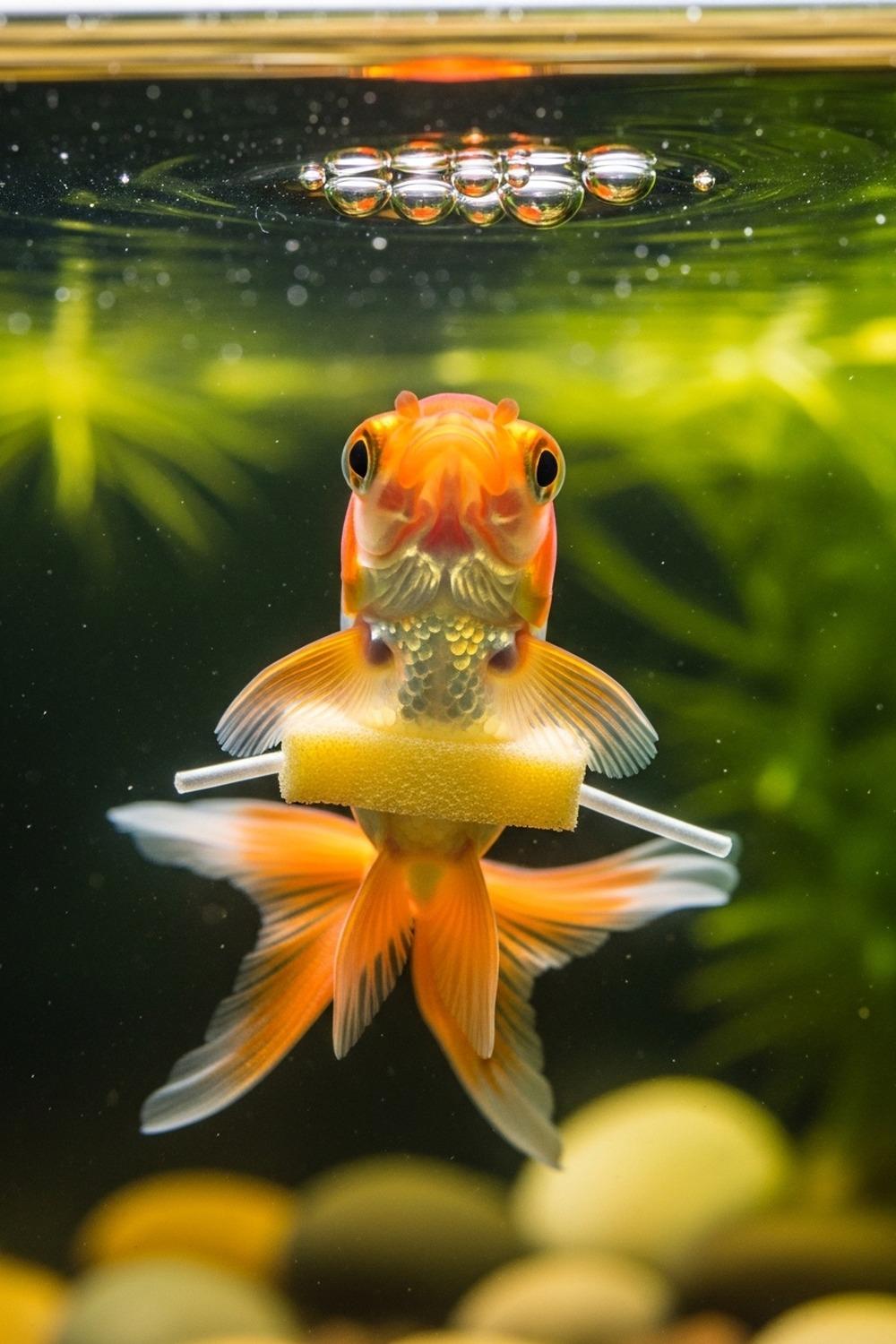
A two-inch goldfish couldn’t control its own body anymore — it floated sideways, trapped in a tank it couldn’t navigate. The owner skipped the vet, ignored research papers, and built something instead: a soft foam harness that took fifteen minutes to construct and changed how aquatic medicine thinks about goldfish swim bladder disorder harness solutions entirely.
What happened next wasn’t supposed to work. The fish leveled out within minutes. It swam toward food for the first time in weeks. That single DIY intervention, documented on a hobbyist forum in 2015, triggered a cascade: forum posts became YouTube videos, videos reached veterinary clinics, and by 2020, university aquatic programs were teaching case studies built from kitchen-counter engineering.
Key Facts
- A DIY foam-and-tubing goldfish buoyancy harness typically weighs less than 0.5 grams in air, with documented builds reviewed between 2016 and 2022
- DIY goldfish flotation harness videos and guides began circulating widely on hobbyist forums and YouTube in 2015 and 2016
- A 2018 British Veterinary Association review found egg-shaped fancy goldfish varieties show measurably higher rates of positional swim bladder disorder than slender wild-type relatives
- Goldfish (Carassius auratus) typically live 10 to 15 years under proper care, and Tish of North Yorkshire reportedly lived to 43 years, the longest reliably documented case
- The American Association of Fish Veterinarians was founded in 1988, and by 2020 buoyancy correction aids appeared in aquatic veterinary continuing education materials
In short: The goldfish swim bladder disorder harness is a sub-0.5-gram foam-and-tubing flotation device that corrects a fish’s buoyancy when its swim bladder fails. First circulating on hobbyist forums in 2015, the DIY fix moved into aquatic veterinary continuing education by 2020, proving care for a goldfish that can live 10 to 15 years.
When the Swim Bladder Fails a Fish Completely
Most bony fish carry an internal gas-filled organ called a swim bladder — a biological ballast system that maintains neutral buoyancy without constant swimming effort. The organ adjusts automatically in healthy fish, a network of specialized cells responding to depth changes in milliseconds. In captive goldfish, malfunction happens with startling frequency. The fish sinks to the bottom. Or floats helplessly at the surface. Or in the worst cases, inverts completely, belly-up, very much still alive.
University of California’s School of Veterinary Medicine has documented swim bladder disorder as one of the most commonly reported conditions in ornamental fish since the early 2000s. Captive goldfish show disproportionately high rates — particularly the fancy double-tailed varieties bred for appearance rather than hydrodynamic efficiency.
The causes overlap and vary. Constipation and internal digestive pressure can compress the swim bladder directly. Bacterial infection, polycystic kidneys, tumors can distort it. But here’s the thing: in fancy goldfish — ryukins, orandas, telescopes — the problem is almost architectural. Rounded, compressed body shapes leave almost no natural room for a normally positioned organ. A 2018 review through the British Veterinary Association showed egg-shaped goldfish varieties had measurably higher incidence of positional swim bladder disorder compared to slender wild-type relatives. The fish didn’t evolve this way. Humans bred them into it.
In the wild, a fish that can’t regulate buoyancy doesn’t last long. Easy target. Burns energy just staying oriented. Can’t feed efficiently. In a home aquarium, the outcome depends entirely on whether anyone is watching — and whether they’ll do something unconventional about what they see.
The Harness That Shouldn’t Have Worked — But Did
A flotation device for a fish sounds absurd at first blush. The kind of story you’d dismiss before clicking — invented for viral attention, not genuine need. The engineering logic, though, is sound. The results documented across hobbyist communities since the mid-2010s are difficult to dismiss. If a fish floats too high (most common), a small weight attaches to soft foam that encircles the body without restricting gill movement. If it sinks, the foam itself provides lift on the side that drops. Adjustments happen iteratively, in tiny increments, watching the fish respond in real time.
It’s not unlike adaptive thinking that drives structural problem-solving — the same observe-and-correct methodology engineers use when designing systems that respond to dynamic, unpredictable loads. That philosophy doesn’t stay exclusive to grand infrastructure. Sometimes it plays out in a glass tank on a kitchen counter, a principle explored further in the world of structural design built to respond to human perception.
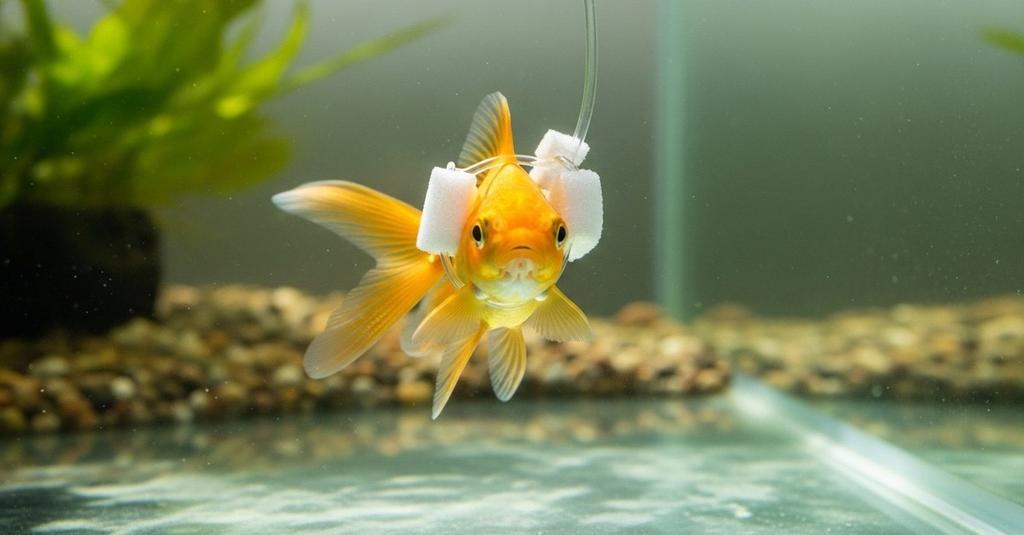
Materials matter enormously. Foam used in the harness must be non-toxic, waterproof, soft enough that it doesn’t abrade the fish’s lateral line — the sensory organ running along a fish’s flank that detects vibrations and pressure changes. Craft foam, sold in children’s art supply packs, has become the material of choice for documented DIY builds. Thin aquarium airline tubing forms the body loop, cut to a circumference just loose enough to allow natural swimming motion. The whole assembly weighs less than half a gram in air.
In water, net buoyancy effect can be tuned to within a fraction of that. Documented cases reviewed by aquatic veterinary forums between 2016 and 2022 show properly fitted harnesses produced orientation and forward swimming within minutes of fitting.
That turnaround time is striking.
These weren’t gradual recoveries. Near-immediate corrections of posture that the fish’s own biology had failed to maintain for days or weeks. Watch the videos, and the moment of leveling stays with you.
What Goldfish Actually Are — And Why It Matters
Cultural narrative says goldfish are disposable, temporary, not worth effort. That story collapses under examination. Goldfish (*Carassius auratus*) live 10 to 15 years under proper care, with multiple verified individuals reaching 20 years or beyond. Tish, kept by a family in North Yorkshire, England, reportedly lived to 43 years — a figure documented by the family and widely reported. The upper limits of goldfish longevity remain subject of genuine scientific interest.
Why does this matter? Because research confirms what the perception gap has obscured for decades. Goldfish distinguish individual human faces. Navigate mazes. Demonstrate memory extending well beyond the mythologized “three-second” span — a claim with zero basis in experimental data. They possess nociceptors, pain receptors. They show behavioral complexity that pet care culture has historically undervalued.
But the undervaluation has real consequences. Because goldfish are perceived as low-value pets, veterinary research into their conditions remains comparatively underfunded. Most practicing fish veterinarians — a specialty that exists, though in limited numbers globally — report that owners delay seeking care for goldfish far longer than they would for a cat or dog with equivalent symptoms.
Goldfish swim bladder disorder harness solutions wouldn’t have emerged from institutional waiting. The disorder is treatable in many cases — dietary adjustment, antibiotics for bacterial causes, in some instances minor surgical procedures performed by aquatic vets under anesthesia. And yet the harness builders didn’t wait for validation. They saw a living thing in distress and built something to help it.
The Goldfish Swim Bladder Disorder Harness in Veterinary Context
DIY improvisation crossed into institutional recognition sometime between 2016 and 2020. The American Association of Fish Veterinarians, formally established in 1988, represents a field that has expanded considerably. By 2020, discussions of flotation aids for fish with swim bladder dysfunction appeared in continuing education materials for practicing aquatic vets. University veterinary programs — including University of Florida’s College of Veterinary Medicine, which operates one of North America’s most active aquatic animal health programs — incorporated case studies involving physical buoyancy correction into curriculum. The goldfish swim bladder disorder harness had crossed from internet ingenuity into something approaching clinical acknowledgment, even if formal clinical trials remain sparse.
Evidence kept accumulating, straightforward mechanism driving that transition. Owners documented recoveries. Veterinarians saw results in their clients’ tanks. The physics was unambiguous: a fish whose swim bladder provides insufficient lift on the left side will roll left. Add compensatory buoyancy on the left, and it stops rolling. The intervention doesn’t require complex pharmacology or surgical skill. It requires patience, observation, willingness to iterate — adjusting foam position millimeter by millimeter until the fish swims level.
That iterative quality makes it accessible to non-specialists. It’s genuinely scalable across different fish species and tank sizes. Koi breeders in Japan — where prize specimens sell for tens of thousands of dollars — adopted similar principles, using weighted slings in large outdoor ponds to correct buoyancy in high-value fish during recovery from illness or surgery. The goldfish harness and the koi sling are, functionally, identical ideas at different scales. What one kitchen-counter owner proved is that scale doesn’t determine validity.
Watching a species receive better care because someone refused to accept institutional silence — that matters more than comfort with the unconventional.
How It Unfolded
- 1988 — The American Association of Fish Veterinarians is founded, establishing aquatic animal medicine as a formal veterinary specialty in North America.
- Early 2000s — University of California’s veterinary school begins documenting swim bladder disorder as among the most commonly reported conditions in pet goldfish, particularly in fancy varieties.
- 2015–2016 — DIY goldfish flotation harness videos and guides begin circulating on hobbyist forums and YouTube, drawing widespread attention for the first time.
- 2020 — Aquatic veterinary continuing education materials begin referencing physical buoyancy correction aids as a recognized supportive care option for fish with chronic swim bladder dysfunction.
By the Numbers
- 10–15 years: the typical healthy lifespan of a well-cared-for goldfish, with documented individuals reaching 20+ years (British Veterinary Association, 2018).
- 43 years: the reported lifespan of Tish, a goldfish kept by a North Yorkshire family — the longest reliably documented case on record.
- Less than 0.5 grams: the typical in-air weight of a DIY foam-and-tubing goldfish buoyancy harness, as reported across hobbyist community builds reviewed between 2016 and 2022.
- Fancy egg-shaped goldfish varieties show measurably higher rates of positional swim bladder disorder compared to slender wild-type relatives, according to a 2018 British Veterinary Association review.
- Several thousand dollars to over $30,000 USD: the market value range of prize koi in Japan, where buoyancy slings during illness represent a significant investment in fish welfare and asset protection.
Field Notes
- In 2019, an aquatic veterinarian in the Netherlands reported successfully using a modified foam harness on a betta fish — a species not previously documented as a candidate for buoyancy aid — after standard dietary and antibiotic treatments for swim bladder disorder failed to produce improvement. The fish swam freely for a further four months before declining from unrelated causes.
- Goldfish can be anesthetized using clove oil (eugenol) diluted in tank water — a technique used by aquatic vets for procedures including swim bladder surgery, and which most owners don’t know exists. Fish medicine has a surprisingly sophisticated pharmacological toolkit.
- The lateral line — the sensory organ running along a fish’s flank — can detect pressure changes as small as 0.1 Hz in frequency, meaning a poorly fitted harness that seems comfortable to a human observer may still register as constant low-level stimulation to the fish. Proper fit is not just about physical movement; it’s about sensory load.
- Researchers still can’t fully predict which goldfish with swim bladder disorder will respond to harness correction versus which require internal intervention. The variability in outcomes across otherwise similar fish and similar conditions remains an open question in aquatic veterinary medicine, and the lack of controlled clinical trial data means that current treatment decisions rely heavily on practitioner experience rather than published evidence.
Frequently Asked Questions
Q: Can a goldfish swim bladder disorder harness cure the condition permanently?
The harness doesn’t cure swim bladder disorder — it manages the symptoms. It corrects the fish’s orientation in the water, allowing it to feed and move normally, but the underlying cause (constipation, bacterial infection, anatomical compression, or cyst) remains. In some cases, addressing the root cause — through dietary changes or veterinary treatment — allows a fish to eventually swim without the harness. In chronic cases, the harness becomes a long-term assistive device, sometimes worn for months or years.
Q: How do you actually build a goldfish swim bladder disorder harness at home?
Most documented builds use soft craft foam cut into a small saddle or jacket shape, with a loop of aquarium airline tubing forming the body ring. The foam sits above the fish’s center of mass if the fish sinks, or below if it floats too high. The tubing loop should be loose enough that the fish can move freely without restriction — you should be able to slide it slightly. Adjustment is done incrementally, watching how the fish responds in real time. Start small. Most fish level out faster than you’d expect.
Q: Isn’t swim bladder disorder just a sign the fish is dying?
This is the most damaging misconception about the condition. Swim bladder disorder is not inherently terminal — it’s a functional impairment, and many fish with the condition are otherwise healthy. A fish that can’t right itself will starve and weaken, but that’s a consequence of the disorder going unmanaged, not the disorder itself. With buoyancy assistance and appropriate care, fish have lived for years after first presenting with severe swim bladder dysfunction. The disorder’s association with death is largely a product of owners giving up too soon.
Editor’s Take — Dr. James Carter
What strikes me most about this story isn’t the foam and tubing — it’s the implicit claim the harness builder was making. They were saying: this fish’s life is worth an hour of problem-solving. That’s a position most of pet care culture doesn’t extend to fish, and the goldfish swim bladder disorder harness exists because one person extended it anyway. The veterinary world is now catching up to something a hobbyist proved in their kitchen. That’s not a small gap to close. It’s a values gap, and it runs deeper than any organ dysfunction.
A two-inch fish in a glass box shouldn’t be a story about innovation. But here we are: aquatic veterinarians citing DIY foam builds, koi breeders scaling the same principle to pond-sized slings, university programs running case studies from hobbyist videos. What the harness actually proved is that the limit on what we do for an animal is almost never technical — it’s always whether we’ve decided the animal is worth it. The next time you walk past a pet shop tank, look at what’s floating sideways in the corner. Someone, somewhere, built something for that.
“
Illustrations are AI-generated. Article fact-checked and human-edited. Our editorial standards.