Australia’s Huntsman Spider: The Rent-Free Pest Controller
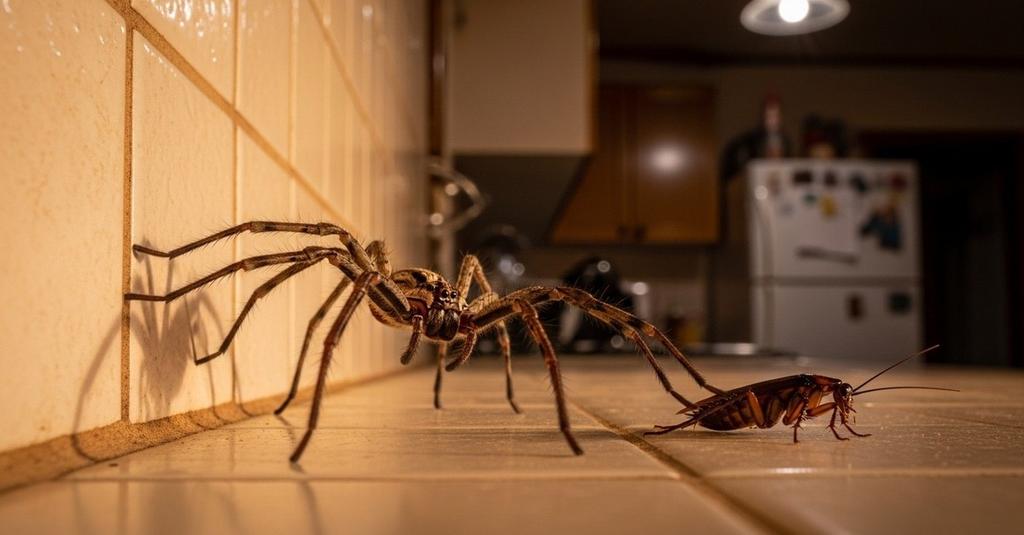
She doesn’t move. She doesn’t need to. The cockroach behind the refrigerator has already made its last mistake — and the huntsman spider Australia residents know well is already aware of it. This is pest control without an invoice, a contract, or a single spray can. It’s been working for millennia, running invisibly in the gaps between your walls and your understanding of what lives there.
Across Australian homes, an unspoken arrangement plays out every night. A spider the size of a human hand moves in uninvited, dismantles the insect population with quiet efficiency, and asks for nothing in return. Most of the world would call this terrifying. Australians, increasingly, call it Tuesday.
But how did one of the planet’s largest spiders become a household fixture — and what does that tell us about the wild systems quietly running beneath our domestic lives?
Key Facts
- The giant huntsman (Heteropoda maxima), described by arachnologist Peter Jager in 2001, holds the record as the world’s largest spider by leg span at up to 30 centimetres.
- The Sparassidae family contains over 1,300 described species, with Australia hosting the highest regional diversity.
- University of Queensland research from 2018 found resident huntsman spiders consume an average of two to three significant prey items per week in domestic settings.
- Australia spends over AUD 2 billion annually on residential and commercial pest control, against which spider-based control costs zero.
- A Queensland Museum review of ten years of hospital data, published in 2016, found no cases of serious systemic reaction to huntsman bites in healthy adults.
In short: The huntsman spider Australia residents share their homes with is a free, ancient pest-control system. Research shows a single resident eats two to three pests weekly, and a 2016 Queensland Museum review of ten years of hospital data found no serious systemic reactions in healthy adults. The world’s largest by leg span reaches 30 centimetres.
Meet the Huntsman: Australia’s Largest House Spider
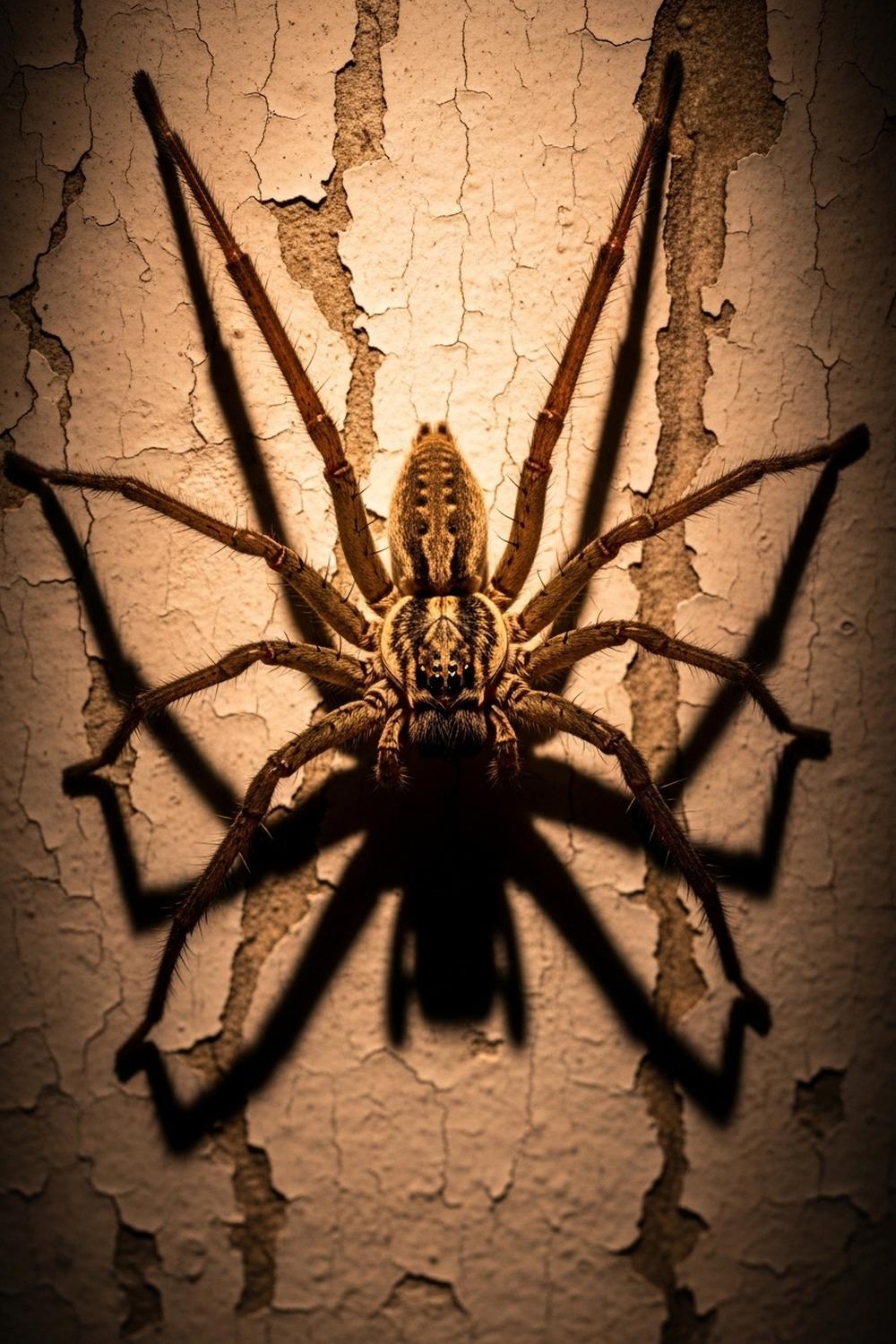
The Sparassidae family, commonly called huntsman spiders, contains over 1,300 described species distributed across tropical and subtropical regions worldwide. Australia hosts an extraordinary concentration of them. The giant huntsman (Heteropoda maxima), described by arachnologist Peter Jäger of the Senckenberg Research Institute in 2001, holds the record as the world’s largest spider by leg span — stretching up to 30 centimetres from tip to tip.
The species most Australians encounter at home belongs to the genus Isopeda or Holconia: brown-grey flattened hunters built for squeezing behind bark, under rocks, and yes, behind kitchen appliances. They don’t build webs. Instead, they hunt by speed and ambush, relying on extraordinary sensitivity to vibration and air movement. Their flat body plan is an evolutionary masterwork — compressed enough to slip into a gap the width of a coin, explosive enough to cover half a metre in under a second.
What makes them unusual among large spiders is their relationship with enclosed spaces. Unlike funnel-web spiders, which construct specific retreat tunnels, huntsmans are opportunists. Any dark, warm, sheltered surface suits them. A house, from their perspective, is simply a very convenient cliff face — textured walls to cling to, warm air currents, and a reliable supply of moths, cockroaches, silverfish, and flies attracted to human light. They didn’t evolve to live with us. We just happened to build exactly the kind of structure they already preferred.
Here’s the thing: the huntsman spider in your hallway isn’t trapped. The window’s been open all week. She’s there because she chose to be, and that distinction changes everything about how you read her stillness on the wall.
How She Hunts: Speed, Ambush, and Ancient Logic
When an insect moves within range — typically detected through leg-hair sensilla that pick up air displacement and substrate vibration — the huntsman launches an attack that’s over in milliseconds. She doesn’t paralyse prey and wrap it. She subdues it directly, using chelicerae strong enough to puncture a cockroach’s exoskeleton in a single strike.
Research published by the University of Queensland’s arachnology team in 2018 found that huntsman spiders in domestic settings consume an average of two to three significant prey items per week — cockroaches, large moths, and crickets topping the list. Over a single season, one resident huntsman can intercept dozens of pest insects that would otherwise breed and multiply inside a home. The numbers aren’t trivial. A single female German cockroach can produce up to 30,000 descendants in a year. The spider eating her in February is doing compound-interest pest control. Huntsman spiders are pursuit predators, not passive ones.
Thousands of fine hairs called trichobothria on the huntsman’s legs detect air currents so precisely that she can track a flying moth in complete darkness. Her eight eyes don’t form sharp images by spider standards — they detect light and movement, nothing more. The real sensory system is distributed across those thousands of hairs. When she finally moves, it looks instantaneous. Leg coordination during a strike has been recorded at over 40 body lengths per second in some species — the equivalent of a human sprinting the length of a football pitch in under a second. She doesn’t miss often.
Australians who’ve watched this happen describe the same moment. The kitchen is quiet. There’s a blur of movement. Then the spider is still again, and the moth is gone.
It’s the kind of efficiency that makes a flyswatter feel primitive.
The Pest Control Industry Has a Silent Competitor
The global pest control market was valued at approximately USD 22.5 billion in 2023, according to a market analysis published by the Pest Management Professional network, with projections pushing it past USD 30 billion by 2030. Australia alone spends over AUD 2 billion annually on residential and commercial pest services. Pyrethroid sprays, bait stations, ultrasonic repellers, professional fumigation — an entire industrial apparatus built around a problem that a spider handles for free.
Why does the huntsman spider Australia residents share their homes with matter more than we’ve ever admitted? Because National Geographic’s research on spider ecology has long highlighted the underappreciated role of spiders as biological pest regulators, with global spider populations estimated to consume between 400 and 800 million tonnes of prey annually — a figure that dwarfs all human meat consumption combined. The huntsman is part of that system. A living, self-replicating, self-deploying pest-management unit that costs nothing to run and nothing to maintain.
But here’s what’s actually striking: how poorly this biological pest control gets measured. There’s no invoice, no audit trail, no GDP entry for “spider services rendered.” The value only becomes visible when it disappears — when spider populations collapse and pest insect populations spike in response. We noticed the absence before we ever thought to measure the presence.
Across the natural world, animals perform ecological labour that humans have never accounted for in economic terms. Consider an ancient oak tree, which supports over 2,300 species of insects, fungi, and lichens in a similarly invisible arrangement — as explored in our piece on the secret ecosystems living inside old trees. These are relationships built over millions of years, not designed, not negotiated, just quietly functional. The huntsman spider Australia encounters most frequently indoors operates in precisely this register.
Huntsman Spider Australia: Venom, Bites, and the Fear Factor
The fear response huntsman spiders trigger is wildly disproportionate to the actual risk they pose. A study published by the Queensland Museum in 2016, drawing on hospital presentation records over a ten-year period, found that huntsman spider bites resulted in symptoms no more severe than a bee sting in the vast majority of cases — localised swelling, mild pain, occasional nausea that resolved within 24 hours. There are no confirmed fatalities from a huntsman bite in Australia’s medical literature.
Compare that to the eastern brown snake, responsible for more deaths in Australia than any other snake species globally. Both share suburban habitat. Huntsmans generate far less domestic panic. The fear hierarchy in Australian wildlife doesn’t track closely with actual danger, and that misalignment costs us something real: it costs us the working arrangement a spider is quietly offering.
The venom itself is neurotoxic in composition but delivered in quantities too small to cause systemic effects in healthy adults. Children and individuals with venom allergies represent a higher-risk group, which is why even spider-tolerant Australians typically relocate huntsmans found in children’s bedrooms rather than letting the arrangement continue unchecked. The spider’s first response to human contact isn’t aggression — it’s retreat. Huntsmans move away from vibration and touch at extraordinary speed, which is exactly what makes them startling. The sprint to escape looks, from the human side, like a sprint to attack.
It isn’t.
She doesn’t want your attention. She wants the moth on the ceiling. Sydney funnel-web spider. Redback. Eastern brown. Those are the animals that shape Australian risk assessment. The huntsman sits at the bottom of that list — enormous, visible, harmless to most, and doing active ecological work while the rest of that list just tries to kill you.
Where to See This
- Huntsman spiders are found across coastal and inland Australia year-round, but domestic sightings peak in autumn (March–May) as temperatures drop and insects move indoors. Queensland, New South Wales, and Victoria offer the highest encounter rates; subtropical north Queensland hosts the largest specimens.
- The Australian Museum in Sydney maintains one of the world’s most comprehensive arachnid collections and runs public identification programs — visitors can submit spider photographs for expert identification at australianmuseum.net.au.
- For readers wanting to understand what they’re living with: Dr. Robert Raven’s arachnology research at the Queensland Museum is the most cited primary source on Australian spider ecology, and his published field guides are available through the museum’s publications arm.
By the Numbers
- Up to 30 cm leg span: the maximum recorded measurement for Heteropoda maxima, the world’s largest spider by leg span (Senckenberg Research Institute, 2001).
- 1,300+ species: the total described species in the Sparassidae family globally, with Australia hosting the highest regional diversity.
- 400–800 million tonnes: estimated annual global prey consumption by all spider species combined (Martin Nyffeler and Klaus Birkhofer, The Science of Nature, 2017).
- AUD 2 billion+: Australia’s annual residential and commercial pest control spend, against which spider-based biological control costs exactly zero.
- 10 years of hospital data: the period reviewed by Queensland Museum researchers in 2016 to confirm no serious systemic effects from huntsman bites in healthy adults.
Field Notes
- In 2017, researchers at the University of the Sunshine Coast documented huntsman spiders cooperating in prey capture — a behaviour previously considered rare in non-social spider species. Small groups of Delena cancerides, a communal huntsman species found under bark in southeastern Australia, were recorded subduing prey items too large for a single spider to handle alone.
- Huntsman spiders don’t build webs, but females construct elaborate silk egg sacs that they guard aggressively — one of the only times a huntsman will hold position rather than flee when threatened. She’ll carry the sac in her chelicerae for weeks, refusing food for the duration.
- The flat body plan that makes huntsmans so effective at squeezing under doors and behind appliances is the same adaptation that allows some species to shelter under loose tree bark in the wild — their entire anatomy is optimised for the gap between surfaces, not open space.
- Researchers still don’t fully understand how huntsman spiders navigate back to the same resting spots inside houses after extended hunting forays. Whether they use pheromone trails, vibration mapping, or spatial memory is an open question — and the answer may vary between species.
Frequently Asked Questions
Q: Is the huntsman spider Australia residents find at home actually dangerous?
For healthy adults, no. The huntsman’s venom causes localised pain and swelling in most bite cases — comparable to a bee sting. A Queensland Museum review of ten years of hospital data published in 2016 found no cases of serious systemic reaction in healthy adults. Children and individuals with venom sensitivities warrant more caution. The spider’s instinct is to flee, not attack, so bites typically occur only when a huntsman is accidentally pressed against skin.
Q: Why do huntsman spiders come inside Australian homes?
They’re not lost — they’re hunting. Domestic buildings offer huntsmans everything their natural habitat does: textured vertical surfaces to grip, warm air, dark retreats, and prey insects drawn to indoor light sources. They don’t distinguish between a cliff face and a rendered wall. From the spider’s perspective, your house is simply a warm, prey-rich rock formation. When the insect supply drops, they typically leave of their own accord. No eviction required.
Q: Do huntsman spiders actually control pests effectively, or is that exaggerated?
It’s not exaggerated — it’s just unmeasured. University of Queensland research from 2018 estimated that a single resident huntsman intercepts two to three significant prey items per week in domestic settings. Cockroaches, moths, and silverfish top the diet. The common misconception is that spiders only eat flies. Huntsmans will take almost any arthropod within striking range, including insects considerably larger than themselves. Their contribution to indoor pest suppression is real, continuous, and entirely free.
Editor’s Take — Alex Morgan
We spend serious money engineering solutions to problems that evolution already solved. The huntsman on your wall isn’t a pest — she’s infrastructure. What unsettles me isn’t the spider’s size or speed; it’s how completely we’ve trained ourselves to reach for a spray can before we’ve even asked what the animal is doing there. The arrangement she’s offering is older than agriculture, more efficient than anything in an aerosol, and entirely free. We keep refusing it out of a fear response that the data simply doesn’t support.
The huntsman spider Australia shares its cities and suburbs with isn’t an intruder in any meaningful sense. She’s a remnant of a working system — one that predates houses, predates pest control companies, predates the whole idea that the natural world is something to be managed rather than participated in. Somewhere behind your refrigerator right now, something is moving that probably shouldn’t be. And somewhere on your wall, something efficient and ancient and entirely unbothered is already aware of it. The question isn’t whether to tolerate that arrangement. It’s why we ever stopped.
Illustrations are AI-generated. Article fact-checked and human-edited. Our editorial standards.