When a Python Meets a Croc, Only One Thing Wins
So here’s the thing nobody tells you: when a saltwater crocodile and a 20-foot python end up in the same stretch of water, the fight’s usually over before it starts.
In northern Australia’s wetlands, researchers have documented something that initially seems impossible — these massive constrictors actually hunting crocodiles. But once you dig into the physics of it, once you really understand what each animal is built to do, the outcome stops being mysterious. It becomes almost inevitable. The weird part? Why evolution kept both species locked in this ancient, lopsided dance for millions of years.
Key Facts
- A saltwater crocodile’s bite registers approximately 3,700 psi, the highest confirmed bite force of any living animal tested, per Dr. Gregory Erickson’s 2012 Florida State University team.
- Australian scrub pythons can reach up to 21 feet in length, among the top five longest snake species on Earth.
- Saltwater crocodiles can hold their breath for 1 to 2 hours when submerged, neutralizing constriction as a kill method.
- Crocodilians have existed largely unchanged for over 80 million years, outlasting non-avian dinosaurs.
- Juvenile crocodiles under three feet fall within a scrub python’s prey range, reversing the typical outcome.
In short: In northern Australia’s flooded wetlands, the saltwater crocodile vs python encounter is usually decided by physics: the croc’s 3,700 psi bite, bony osteoderm armor, and one-to-two-hour breath-hold defeat the python’s squeeze. Yet 21-foot scrub pythons can still take juvenile crocodiles under three feet, so the outcome shifts with age and size.
The Bite That Changes Everything
A saltwater crocodile’s bite registers around 3,700 pounds of force per square inch. Let me put that in perspective — that’s enough to shatter bone like chalk.
Herpetologist Adam Britton has spent years tracking these animals in the Northern Territory, and he’ll tell you the crocodile’s jaw mechanics are fundamentally different from anything else alive today. It’s not just powerful. It’s mechanically optimized in ways that make most predators look improvised.
The python brings one thing to the fight: constriction. Coil. Squeeze. Wait for suffocation. Except — and here’s where it gets interesting — saltwater crocodiles can hold their breath for over an hour. The squeeze buys almost nothing.
The Python’s Problem
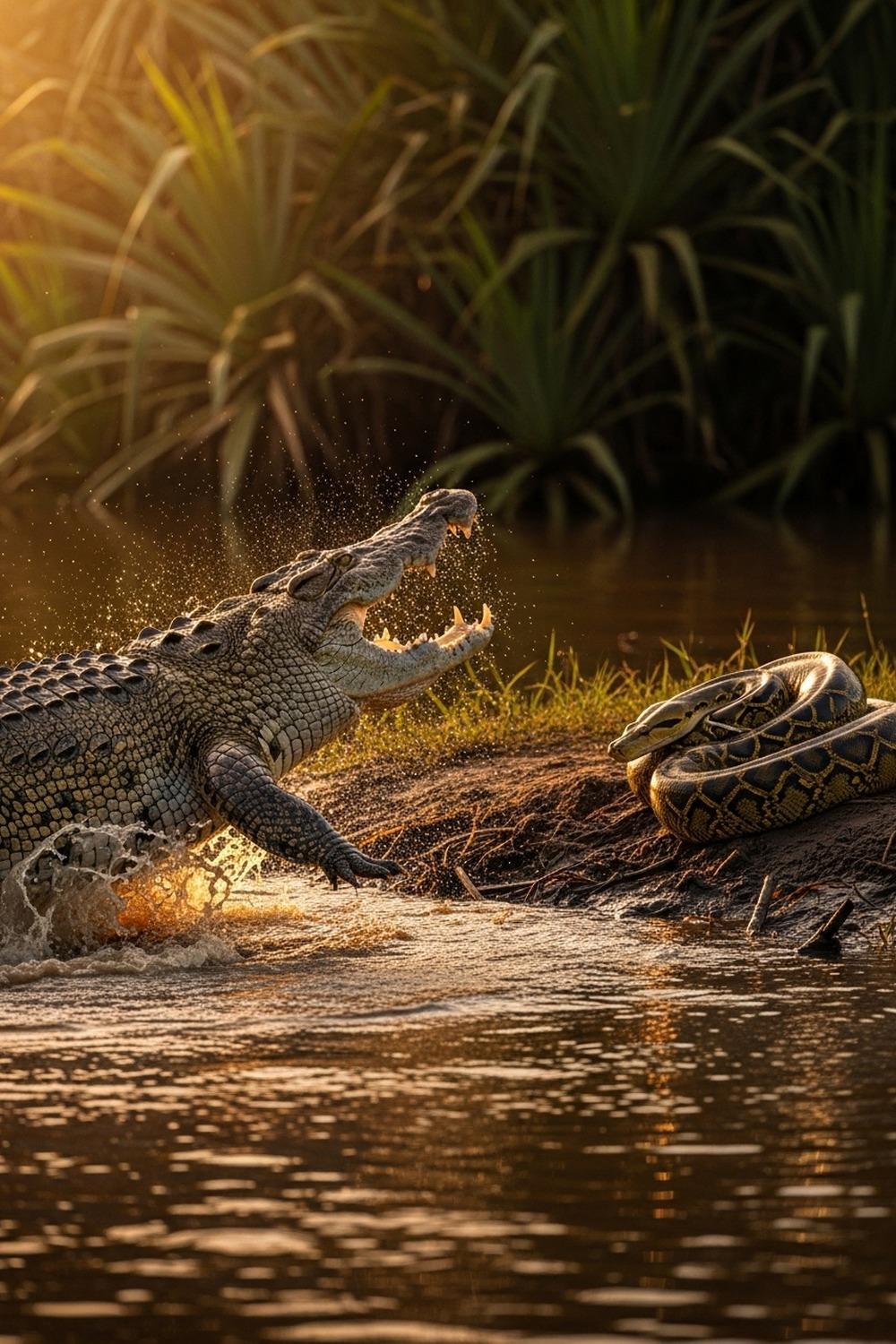
Australia’s scrub pythons are legitimately massive. Some push 20 feet and top 100 pounds, making them one of the continent’s largest snakes. There are documented cases where a python got coils around a crocodile’s snout, briefly preventing the bite.
Briefly.
Here’s where the crocodile’s actual advantage kicks in — osteoderms. Those aren’t just bumpy texture. They’re bony plates embedded in the skin, and they’re structural. They distribute pressure across the body like armor plating. The python is essentially trying to squeeze something wearing built-in mail. For more on how giant constrictors normally hunt and why their tactics work on almost everything else, this-amazing-world.com has the full breakdown.
The Age of It
What actually kept me reading about this for hours wasn’t the violence. It was realizing how old this conflict is. Crocodilians have existed, basically unchanged, for over 80 million years. They outlasted non-avian dinosaurs and just kept going. Large constrictors have been tangling with armored predators for an equally enormous stretch of evolutionary time. These aren’t random encounters.
They’re the product of two deeply ancient survival strategies colliding in the same ecosystem — the tropical wetlands of northern Australia, one of the most biologically intense environments on Earth. During wet season, everything floods. Animals get pushed into closer proximity. A crocodile and a python aren’t choosing to fight. They’re choosing to eat. Sometimes those overlap.
Size Doesn’t Work the Way You’d Think
You’d assume a larger python would shift the outcome. Sheer mass should matter more. And it does — but not enough. Even at maximum size, a scrub python lacks the leverage to fully immobilize a saltwater crocodile’s body. The croc’s tail generates explosive force. One thrash can break a snake’s ribs or disrupt its coil. The python needs stillness to win.
Crocodiles almost never give it.
Here’s the wrinkle: juvenile crocodiles are actually vulnerable to large pythons. Smaller crocs, under three feet, sit well within a scrub python’s prey range. Wildlife observers in Queensland have documented pythons taking young crocodilians with relative success. So the species aren’t locked in one fixed relationship. It shifts depending on age, size, and who catches whom in a bad position.
By the Numbers
- Saltwater crocodile bite force: approximately 3,700 psi — the highest confirmed bite force of any living animal tested under controlled conditions (2012, Dr. Gregory Erickson’s team at Florida State University).
- Australian scrub pythons can reach up to 21 feet in length.
- They’re among the top five longest snake species on Earth by verified records.
- Saltwater crocodiles hold their breath for 1–2 hours when submerged, effectively neutralizing constriction as a kill method.
- Osteoderms in adult saltwater crocodiles are dense enough to deflect low-caliber gunfire — the same bony armor that distributes constrictor pressure across the entire body.
What the Field Actually Reveals
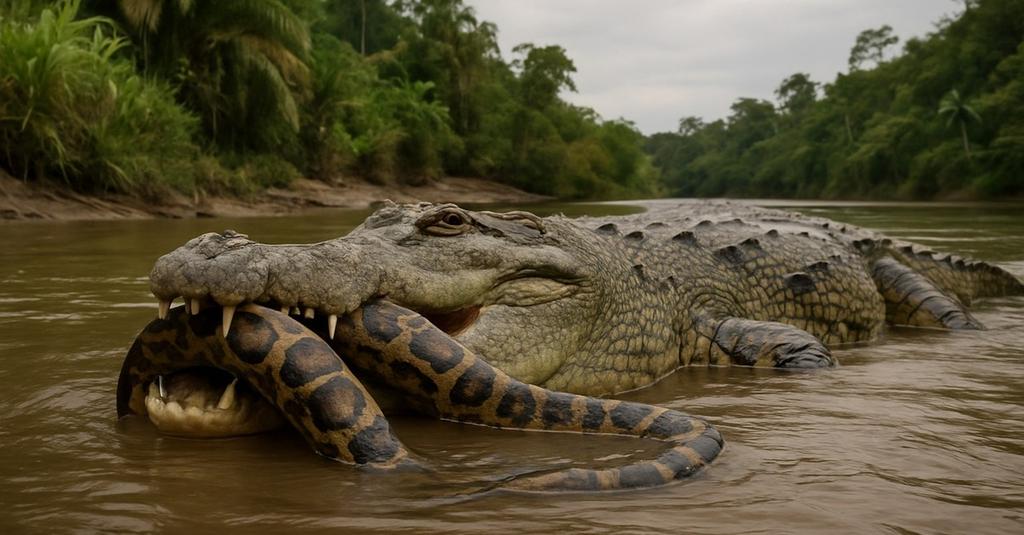
- In Florida’s Everglades, Burmese pythons — invasive species — have been found dead with crocodilian remains partially consumed inside them. Those attempts don’t always end well for the snake.
- Saltwater crocodiles execute a “death roll,” a full-body axial rotation that tears flesh and destabilizes anything wrapped around them. Against a python’s coil, this is particularly destructive.
- Crocodilian scales grow from the inside out, with osteoderm bone forming beneath the skin surface. It’s not decoration — it’s structural integration into the animal’s body itself, making external pressure far less effective than it would be on soft-bodied prey.
Why Science Keeps Watching
The crocodile vs python dynamic matters beyond the drama. Researchers studying apex predator competition use these encounters to understand how ecosystems self-regulate. When two top-order predators share habitat, their interactions shape prey populations, territorial behavior, and species distribution across wetland systems.
Dr. Bryan Fry at the University of Queensland has argued that understanding predator-on-predator conflict reveals how ancient food webs functioned — and how modern ones might respond to climate-driven habitat shifts. Northern Australia’s wetlands are expanding in some areas and contracting in others as rainfall patterns change. More forced overlap between species. More encounters. More conflict. The data from these interactions isn’t just interesting to researchers. It’s a signal about ecosystem stress that wildlife managers are actively tracking.
Two of the planet’s oldest surviving lineages, meeting in a flooded wetland, playing out a conflict older than most mountain ranges. The crocodile usually wins. The python doesn’t stop trying. And the ecosystem holding both of them is changing faster than either species has ever had to adapt to. Science is watching. So should you.
Frequently Asked Questions
Q: Who wins in a saltwater crocodile vs python fight?
The saltwater crocodile usually wins. Its bite registers approximately 3,700 psi, the highest confirmed bite force of any living animal, measured by Dr. Gregory Erickson’s team in 2012. The crocodile can also hold its breath for one to two hours, neutralizing the python’s constriction strategy, and its bony osteoderms distribute the squeeze like armor. A crocodile’s tail thrash or death roll can break a python’s ribs or disrupt its coil.
Q: Can a python ever kill a crocodile?
Yes, but mainly when the crocodile is small. Juvenile crocodiles under 3 feet sit well within a 21-foot scrub python’s prey range, and wildlife observers in Queensland have documented pythons taking young crocodilians with relative success. In Florida’s Everglades, invasive Burmese pythons have been found dead with crocodilian remains partially consumed inside them, showing those attempts don’t always end well for the snake. The relationship shifts depending on age, size, and circumstance.
Q: Why don’t a crocodile’s osteoderms let a python win by squeezing?
Osteoderms are bony plates embedded in a crocodile’s skin that form from the inside out, integrating structurally into the animal’s body rather than acting as decoration. They distribute pressure across the entire body like armor plating, so a python is essentially trying to squeeze something wearing built-in mail. In adult saltwater crocodiles, refined over 80 million years, these plates are dense enough to deflect low-caliber gunfire, which is why external constriction is far less effective than on soft-bodied prey.
Illustrations are AI-generated. Article fact-checked and human-edited. Our editorial standards.