Ethical Elephant Sanctuary Chiang Mai: The No-Riding Truth
Search “ethical elephant sanctuary Chiang Mai no riding” today and you will find dozens of camps promising exactly that — yet when World Animal Protection assessed 2,849 elephants across Thailand for its January 2026 report, 69% of them were still living in poor or unacceptable conditions. The saddles are coming off. The suffering is not. Chiang Mai has become the world capital of a comforting story: that tourism finally learned to love elephants. The numbers tell a colder one.
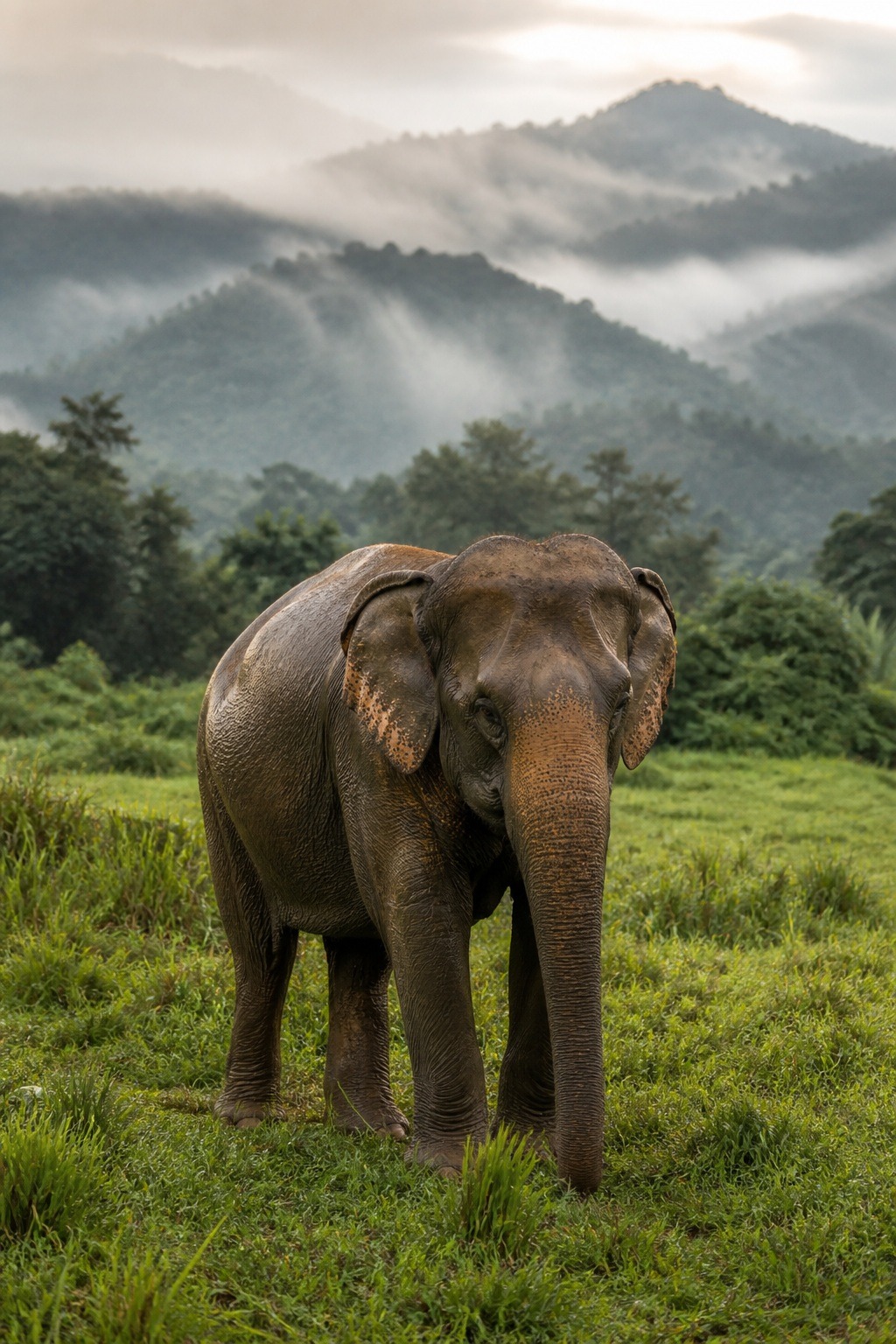
Bottom line: rides are genuinely fading in Chiang Mai, but “no riding” no longer means “humane.” The industry mostly swapped the saddle for the bathing tub — and only about 7% of Thailand’s captive elephants live somewhere you are meant to simply watch.
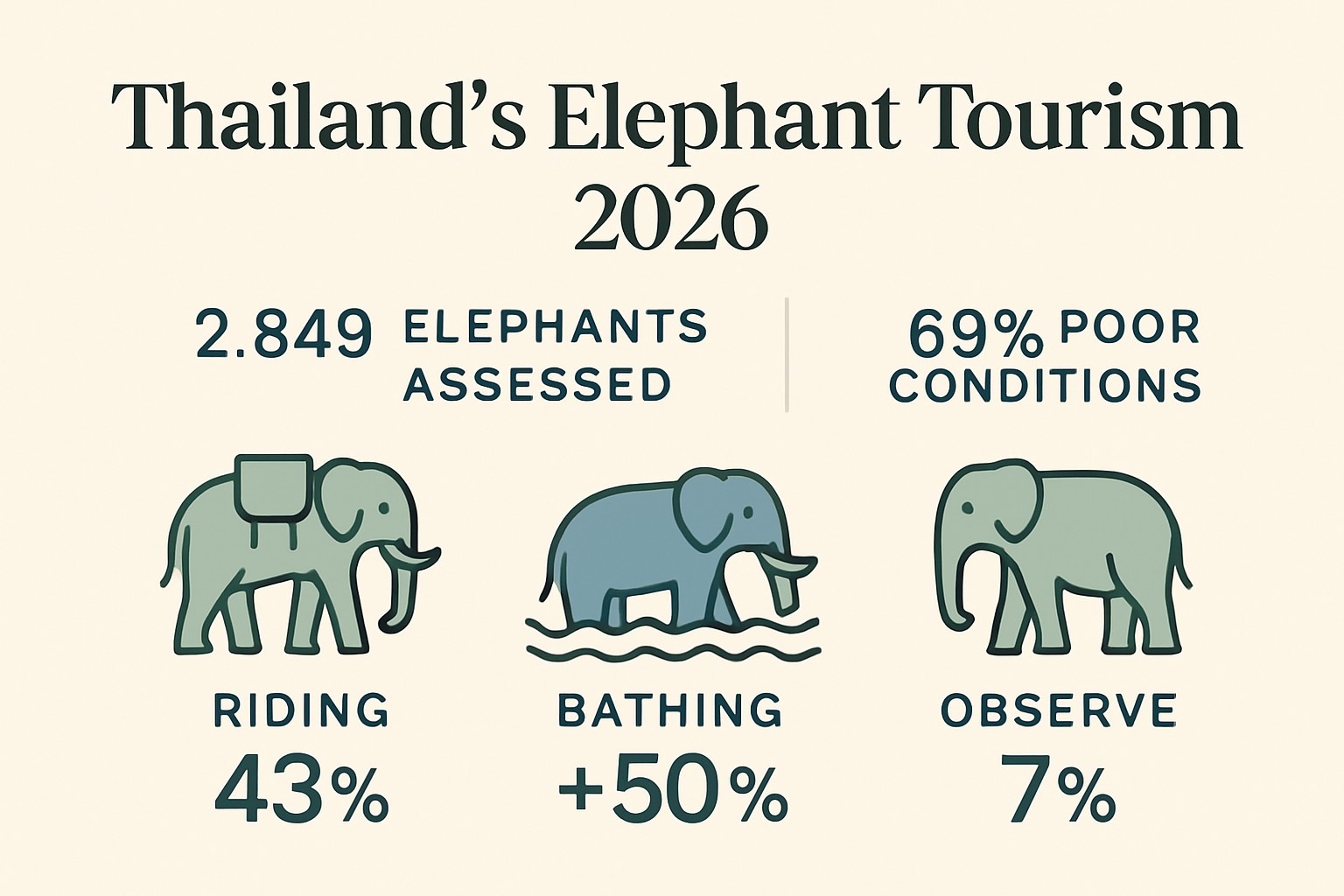
- 2,849 elephants at 236 venues assessed (Feb 2024–Jan 2025)
- 69% in poor or unacceptable conditions
- 43% still used for riding in 2024 — down from around 92% in the early 1990s
- 7.3% at observation-only venues (up from 4.6% in 2010)
- 5% living in “best possible” captive conditions
Key Facts
- World Animal Protection’s January 2026 report Bred to Entertain assessed 2,849 elephants at 236 Thai venues; 69% lived in poor or unacceptable conditions.
- Elephant riding fell from around 92% of captive elephants in the early 1990s to 43% in 2024.
- Only about 7.3% of Thailand’s captive elephants are at observation-only venues.
- Traditional training relies on phajaan (the crush) and the bullhook to break a young elephant’s will.
- In early January 2025, 22-year-old Spanish student Blanca Ojanguren Garcia was gored to death while bathing an elephant in southern Thailand.
In short: Chiang Mai’s elephant camps largely dropped riding, but no-riding no longer means humane: a January 2026 World Animal Protection report found 69% of 2,849 assessed Thai elephants in poor conditions. Riding fell from 92% to 43%, yet the captive population grew over 70%. Bathing, the popular alternative, still relies on the same coercive training.
Did Chiang Mai’s camps really stop the rides? The 92%-to-43% paradox
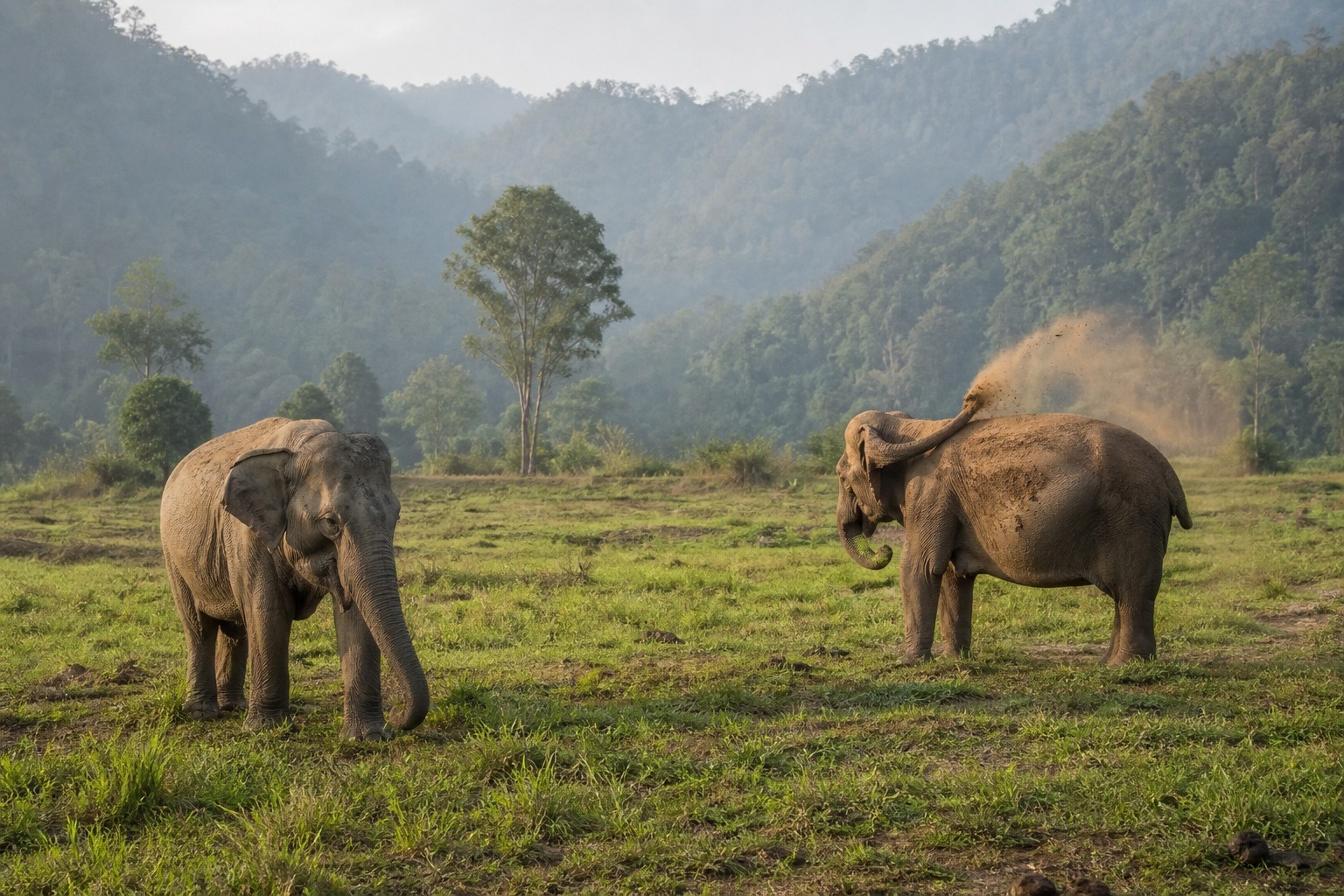
On paper, it looks like one of the fastest ethical turnarounds in modern tourism. In the early 1990s roughly 92% of captive elephants in the trade carried tourists on their backs. By 2024 that share had fallen to 43%. A collapse. A victory.
Here is the catch nobody puts on the billboard. Over the same period the total number of captive elephants in Thai tourism grew by more than 70%. So the percentage plunged while the population ballooned — and when you multiply a shrinking fraction by a swelling total, the number of elephants actually being ridden barely moved. A share cut roughly in half against a population up by three-quarters leaves the real-world decline closer to a fifth than a half. The “great switch away from rides” is real, but it is a fraction of what the headline percentage implies.
Where did all the new elephants go, if not under saddles? Into a softer-looking business with the same animals, the same chains at night, and a friendlier word on the sign.
Why riding was banned — the spine, the bullhook, and the “crush”
An elephant looks built to carry weight. It isn’t. Unlike a horse, whose spine curves to bear a load, an elephant’s backbone rises into sharp bony protrusions — spinous processes — that point upward toward the skin. Sustained weight on that ridge, day after day with a saddle and two adults, causes pressure injuries, tissue damage and lasting spinal harm. Veterinary specialists in elephant welfare have flagged this for years: the animal that seems strongest at carrying is anatomically one of the worst suited to it.
The deeper reason riding fell out of favour is what has to happen before an elephant will accept a human at all. Traditional training relies on phajaan — “the crush” — in which a young elephant is separated from its mother, confined, restrained and subjected to pain and fear until its will breaks. The bullhook keeps that lesson fresh. A calf that has been through the crush is compliant for life. That is the machinery behind every ridden elephant, and increasingly Western tourists learned to see it.
{IMAGE_2}
Turns out the ethics of a photo op depend entirely on what you cannot see in the frame. And once operators understood that riding had become the visible symbol of cruelty, they didn’t necessarily fix the cruelty. They removed the symbol.
The rebrand — how a “camp” became a “sanctuary”
The word “sanctuary” is not regulated. Any venue in Thailand can print it on a banner. So when riding turned toxic, camps rebranded overnight: “camp” became “rescue,” “trekking” became “ethical experience,” and the price often went up rather than down. The elephants frequently stayed exactly the same, and so did the chains.
This is the gap most travel guides miss entirely. They list “ethical” venues by name and trust the label. But the January 2026 assessment, led by wildlife veterinarian Dr Jan Schmidt-Burbach of World Animal Protection, found that fewer elephants used for riding did not translate into better lives — welfare barely improved, because the marketing changed faster than the husbandry. A tight chain and a cruel training history do not become humane when the brochure switches fonts.
If a single word can be applied to a genuine rescue and to a chained-up photo mill with equal legality, the word has stopped carrying information. Treat “sanctuary” on a Chiang Mai sign as a marketing claim, not a certification.
The new trap: why elephant bathing is not the ethical choice tourists think
Ask a traveller today for the “kind” alternative to riding and most will say the same thing: bathing. Splashing a gentle giant in a river, no saddle in sight. It feels like tenderness. It has quietly become the industry’s biggest hands-on activity, and more than half of Thailand’s captive elephants are now at washing or “care” venues.
Two hard facts sit under the splashing. First, an elephant that stands calmly while strangers scrub it has usually been broken the same way a ridden elephant was — bathing on demand still depends on the crush and the bullhook to guarantee the animal won’t refuse. Second, it is not safe. In early January 2025, Blanca Ojanguren García, a 22-year-old Spanish law student from the University of Navarra, was gored to death by a panicked elephant while bathing it at a care centre on Koh Yao Yai island in southern Thailand. Eighteen people were present. The animal, experts suggested, was simply stressed by being made to interact with tourists.
Bathing is not riding’s ethical opposite. It is riding’s replacement — the same coerced contact, sold as affection.
Elephant Nature Park and the pioneers of no-riding since 1995
There is a real version of this, and it predates the trend by three decades. Saengduen “Lek” Chailert began rescuing injured, elderly and abused elephants in the 1990s and founded Elephant Nature Park — widely described as the first ethical no-riding elephant sanctuary of its kind in Asia — in 1995, later settling it in the Mae Taeng valley about 60 kilometres north of Chiang Mai. Her Save Elephant Foundation now cares for dozens of rescued elephants pulled from street begging, logging, trekking and circus work.
At a genuine sanctuary the elephants do not perform, do not carry, and are not required to interact on cue. They forage, dust-bathe, socialise and, in many cases, slowly recover from decades of damage — the kind of recovery we have written about in the story of an elephant named Somboon, who did not lie down to sleep for 70 years, and in the reunion of two elephants separated for 22 years. That is what “sanctuary” is supposed to mean. Chailert’s model is not the industry norm in Chiang Mai. It is the exception the industry borrowed a word from.
The one rule that beats the 7 red flags
You can memorise a checklist of warning signs — and they are worth knowing. But there is a single filter that quietly resolves all of them, and it is easier to remember than any list.
Everything on the usual red-flag list is really a symptom of the same disease: forced contact. Chains and small enclosures, baby elephants (a calf that tame implies the crush), bullhooks tucked behind a mahout’s back, “packages” priced by activity, no visible veterinary care, breeding on site, and any promise that the animal will do something for you on schedule. Compare the three business models honestly and the marketing gloss falls away:
| What you’re offered | What it really is | Share of elephants |
|---|---|---|
| Riding / shows | Weight injury + the crush; openly declining | ~43% (2024) |
| Bathing / feeding / “care” | Forced contact, still crush-dependent; now the majority | Over 50% |
| Observation only | Watch from a distance; the genuine option | ~7.3% (2024) |
A full day at a reputable observation-focused park typically runs a few thousand baht per person (roughly US$70–100) — often more than a hands-on camp, precisely because it earns nothing from making the elephant work.
What the 2026 data really shows
Read carefully, “Bred to Entertain” is neither the triumph nor the catastrophe it gets flattened into. Fewer elephants ride. Slightly more live in observation-only settings — 7.3% in 2024, up from 4.6% in 2010. Those are real gains, driven less by a change of heart than by economics: Western tourist pressure, tour-operator boycotts and platforms dropping ride listings made cruelty visible and unprofitable, so operators adapted the product.
But 69% still live in poor or unacceptable conditions, only about 5% in the best possible ones, and the total captive population keeps climbing. The industry didn’t shrink; it re-skinned. Schmidt-Burbach’s team frames the shift bluntly: activities marketed as “ethical,” like bathing and caretaking, have replaced riding without delivering the welfare the label promises. Progress measured in single percentage points, against a growing population, is the honest picture — hopeful at the edges, sobering in the middle.
Frequently asked questions
Can you still ride elephants in Chiang Mai? Yes. It is legal and still offered, though far less common than it was — about 43% of Thailand’s captive elephants were used for riding as of 2024, down sharply from the early 1990s. Declining is not the same as gone.
Is elephant bathing ethical? No, despite how it is marketed. An elephant that bathes on cue for strangers has almost always been through the same fear-based “crush” training as a ridden one, and the activity has proven dangerous — a tourist was killed during a washing session in January 2025.
Which Chiang Mai sanctuary is truly no-riding? Elephant Nature Park, founded by Lek Chailert in 1995 in the Mae Taeng valley, is the long-established pioneer of the no-riding, no-performance model. More broadly, apply the one rule: if the venue lets you touch, wash, feed or ride the elephant, it is not a true sanctuary.
How do I judge a venue in one question? Ask what you will be allowed to do. If the answer includes any physical contact on demand, walk away. If the answer is “watch the elephants from a respectful distance,” you have found the real thing.
Sources and notes
- World Animal Protection — “Bred to Entertain: A new assessment of Thailand’s elephant tourism industry” (published 12 January 2026; research led by wildlife veterinarian Dr Jan Schmidt-Burbach)
- World Animal Protection — reporting on elephant bathing and welfare, and the “Taken for a Ride” research series
- Save Elephant Foundation / Elephant Nature Park — background on founder Saengduen “Lek” Chailert and the no-riding model
- CNN and BBC News — reporting on the January 2025 death of Blanca Ojanguren García at a Thai elephant-care venue
The most useful thing a visitor can carry to Chiang Mai in 2026 is not a checklist but a habit of asking what happens off-camera. The industry has proven it will change its vocabulary faster than its practices, which means the pressure that moved it — travellers refusing to pay for contact — is also the only thing likely to move it further. The elephants cannot read the sign. But they will feel, eventually, which word we decide to reward.
Illustrations are AI-generated. Article fact-checked and human-edited. Our editorial standards.