A Beluga Whale Saved a Drowning Diver — On Purpose
Nobody was watching the whale. That’s the detail that keeps pulling me back into this story.
At a free diving competition in Sanya, China, a diver named Yang Yun slipped beneath the surface of a cold-water tank and didn’t come back up. Her legs had locked with cramp. Twenty feet of water, no wetsuit, no way to signal for help. She was just sinking. And Mila — a beluga whale living at the Polar Ocean World aquarium — was apparently paying closer attention than anyone else in that room.
Key Facts
- At a free diving competition in Sanya, China, beluga whale Mila guided drowning diver Yang Yun to the surface by gently taking her leg in her mouth after the diver’s legs cramped.
- The competition tank sat at approximately 39 degrees Fahrenheit (4 degrees Celsius), cold enough to cause muscle incapacitation in unprotected divers within minutes.
- Belugas produce over 50 distinct vocalizations, one of the most complex acoustic repertoires of any marine mammal, per NOAA Fisheries data from 2021.
- A 2010 study in PLOS ONE identified at least 7 cetacean species demonstrating altruistic behavior toward other species across more than 30 recorded events spanning 50 years.
- Belugas can live up to 70 years in the wild, and Mila died in 2019 at Polar Ocean World aquarium.
In short: The beluga whale rescue at Polar Ocean World in Sanya, China saw a captive beluga named Mila guide cramping diver Yang Yun to the surface in 4-degree-Celsius water. The story examines cetacean cognition, spindle neurons, and over 50 documented vocalizations as evidence of cross-species awareness.
The Beluga Whale Rescue Nobody Saw Coming
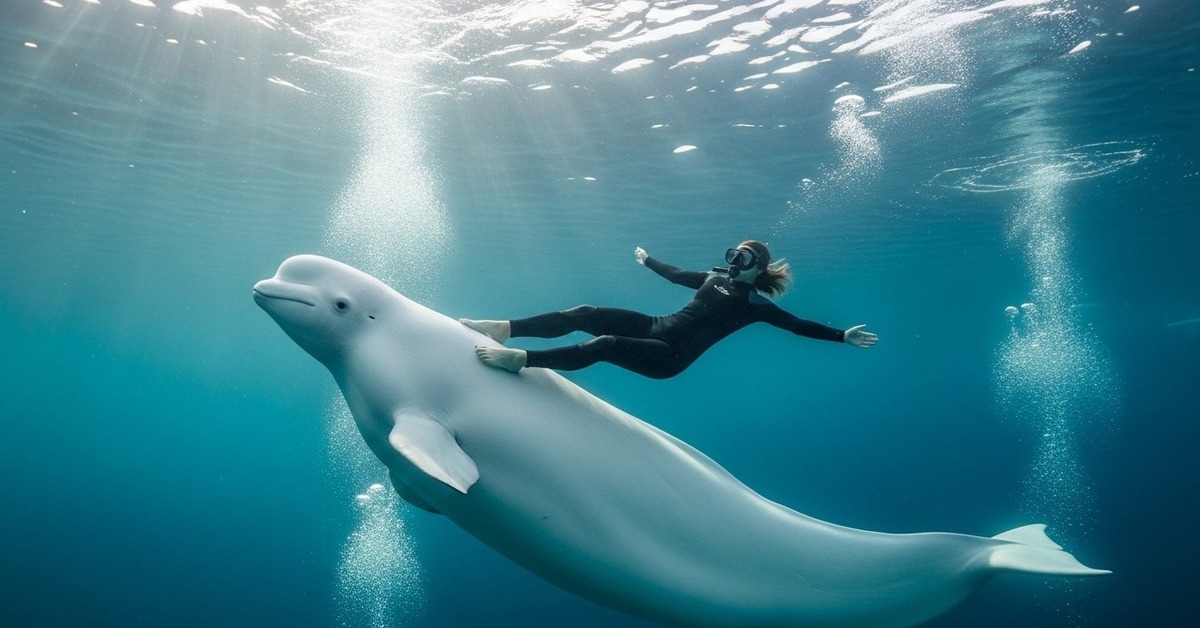
Mila took Yang Yun’s leg gently in her mouth and guided her toward the surface. Calm. Deliberate. No frenzy, no collision, nothing frantic about it. Marine biologist Dr. Justin Gregg, who’s spent years studying cetacean cognition, has written extensively about how belugas demonstrate what appears to be genuine social awareness — the ability to read cues from other individuals, including members of entirely different species. The question researchers keep circling back to: is this empathy, or something that just looks like it?
That distinction matters enormously in science. For Yang Yun, sinking in 39-degree water, it didn’t matter at all.
What Mila Actually Did in That Tank
This wasn’t a training exercise. Mila hadn’t been conditioned to respond to drowning humans — there’s no protocol for that. She was a captive beluga living at Polar Ocean World, sharing space with a competition designed to test how long divers could endure Arctic-temperature water without a wetsuit. When Yang Yun’s muscles seized and she lost her ability to reach the surface, Mila closed the gap.
Eyewitnesses described it as almost gentle. Not a nudge. Not an accident of proximity. Mila wrapped her mouth around the diver’s leg — carefully, the way you’d handle something fragile — and pushed upward. The crowd saw it happen before the safety divers even moved.
That last detail kept me reading for another hour.
If you’re drawn to stories about the hidden intelligence of ocean life, there’s a trove of them waiting at this-amazing-world.com. But finish this one first, because it gets stranger.
Belugas Are Built Differently From Other Whales
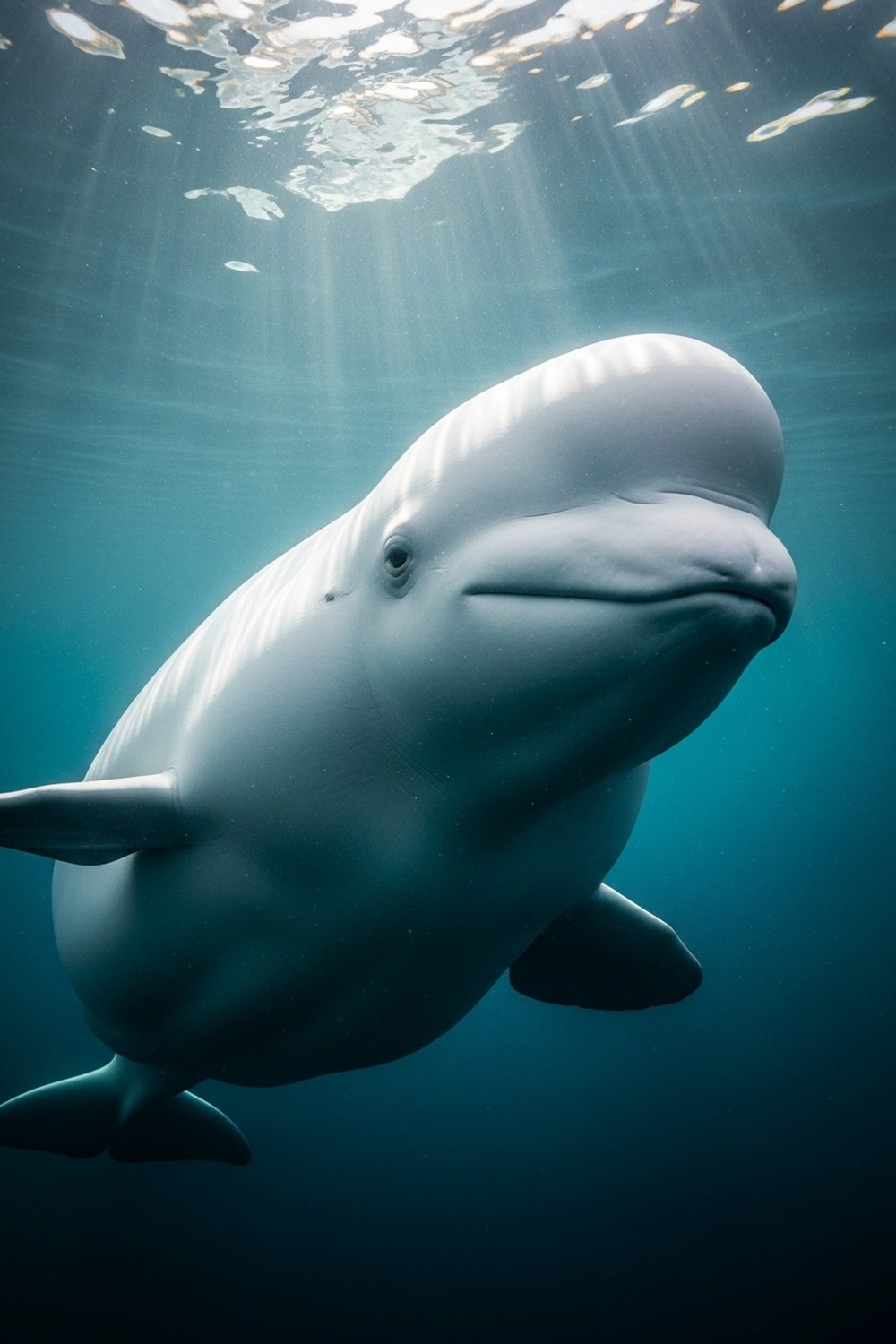
The beluga whale rescue story makes more sense when you understand what these animals actually are. Belugas aren’t just large, pale fish with good timing. They’re among the most socially complex marine mammals on the planet — living in tight, multigenerational pods across Arctic and sub-Arctic waters, building relationships over decades. They communicate using over 50 distinct sounds: clicks, whistles, chirps, clangs. Sailors used to call them the “canaries of the sea,” which sounds whimsical until you realize those same sailors were navigating by acoustic landmarks and had very good reasons to pay attention to what was making noise under their hulls. Scientists have since documented that belugas can mimic sounds outside their natural repertoire, including human speech patterns.
They also have something most cetaceans don’t: a flexible, mobile neck. Belugas can turn their heads independently of their bodies. They can make facial expressions. They look at you differently than other whales do.
Turns out, that’s not accidental.
The Science of Animal Empathy Gets Complicated Here
Cetacean intelligence research has expanded dramatically since the 1990s. Dr. Lori Marino published work showing that dolphins and whales possess neurological structures — including spindle neurons — previously thought to be exclusive to great apes and humans. These are the cells believed to underpin social awareness, emotional processing, and rapid decision-making in complex environments. Belugas have them. So when Mila assessed Yang Yun’s situation and acted, her brain was physically equipped to do something sophisticated.
Here’s where it gets harder, though.
We can’t ask Mila what she was thinking. We can observe the behavior. We can map the neurology. We can note that it happened once, clearly, on camera, in front of witnesses. What we can’t do is prove intent in a way that satisfies every skeptic. And that gap — between what we saw and what we can demonstrate — is exactly where this story lives. Which raises the obvious question: why are we still surprised when this happens? Because it’s happened before.
This Wasn’t the First Time Cetaceans Saved a Human
There’s a longer history here than most people realize. Dolphins have been documented pushing drowning swimmers toward shore in multiple verified cases — off the coast of New Zealand, in the Red Sea, near Greece. In 2004, a group of lifeguards in New Zealand were circled for 40 minutes by a pod of bottlenose dolphins while a great white shark worked the perimeter. The animals involved in those events were wild. Unprompted. Not responding to any cue a human had given them.
The beluga whale rescue involving Mila adds something different to that list: a captive animal. One that had been living alongside humans long enough to understand something specific about their fragility — about how they move when they’re fine versus how they move when they’re not.
These aren’t random acts of animal chaos that happen to benefit humans. They suggest something more structured. A capacity to recognize distress across the species boundary, and then choose — if that’s even the right word — to respond to it. Whether that’s instinct, learned behavior, or something closer to what we’d call compassion, the pattern keeps showing up.
By the Numbers
- Over 50 distinct vocalizations — one of the most complex acoustic repertoires of any marine mammal, per NOAA Fisheries data (2021).
- The competition tank sat at approximately 39°F (4°C), cold enough to cause muscle incapacitation in unprotected human divers within minutes. Yang Yun didn’t have minutes.
- Belugas can live up to 70 years in the wild, accumulating decades of social knowledge within their pods — longer than most marine mammals outside of orca populations, which means an adult beluga has had a long time to learn what distress looks like.
- A 2010 study in PLOS ONE identified at least 7 cetacean species demonstrating altruistic behavior toward other species, across more than 30 recorded events spanning 50 years of research.
Field Notes
- Belugas can swim backward — unusual for whales, and possibly part of why Mila could maneuver so precisely around a human body in a confined tank.
- They’re born brown or gray, turning white somewhere between ages 5 and 12. That gradual color shift makes individual identification easier for researchers tracking behavior over time, which is part of how we know as much as we do about beluga social development.
- Mila was noted by Polar Ocean World staff as unusually attentive to human visitors even before the rescue — she’d watch people from the water with a consistency that handlers found striking. That detail didn’t make headlines until afterward.
What the Beluga Whale Rescue Actually Tells Us
The beluga whale rescue in Sanya wasn’t a magic trick. It wasn’t a lucky coincidence of animal behavior lining up with human need. It was a data point — a clear, witnessed, documented data point — in a growing body of evidence that the line between animal behavior and something more deliberate is blurrier than we’ve been comfortable admitting.
Mila didn’t save Yang Yun because she was trained to. She did it because something in her — her neurology, her social wiring, her years of proximity to humans — recognized a creature in distress and responded to it. That’s not a small thing. That’s actually quite a significant thing, if you sit with it long enough.
We’ve spent centuries drawing a clean line: animals act on instinct, humans act on understanding. Events like this one don’t demolish that line dramatically. They just keep pressing on it. Quietly. Persistently.
One documented rescue at a time.
Mila died in 2019 at Polar Ocean World, after years of being one of the most-watched animals in Chinese marine tourism. She’s still cited in animal cognition research. Still referenced in lectures about cross-species behavior. She pushed a human being toward the surface of the water. She didn’t have to. She did it anyway. If this kind of story keeps you up at night, there’s more at this-amazing-world.com — and the next one is even stranger.
Frequently Asked Questions
Q: What happened in the beluga whale rescue in Sanya, China?
During a free diving competition at Polar Ocean World in Sanya, diver Yang Yun’s legs locked with cramp roughly twenty feet down in a cold-water tank, leaving her unable to surface. Mila, a captive beluga whale, gently took the diver’s leg in her mouth and pushed her upward toward the surface. Eyewitnesses described the action as deliberate and gentle, and the crowd saw it happen before safety divers even moved.
Q: How cold was the water during the beluga whale rescue?
The competition tank sat at approximately 39 degrees Fahrenheit, or 4 degrees Celsius, which the article notes is cold enough to cause muscle incapacitation in unprotected human divers within minutes. Yang Yun had no wetsuit, and the competition was designed to test how long divers could endure Arctic-temperature water. The extreme cold is what caused her legs to seize, leaving her sinking before Mila intervened.
Q: Have other whales or dolphins saved drowning humans before?
Yes. Dolphins have been documented pushing drowning swimmers toward shore in verified cases off New Zealand, in the Red Sea, and near Greece. In 2004, a pod of bottlenose dolphins circled New Zealand lifeguards for 40 minutes while a great white shark worked the perimeter. A 2010 PLOS ONE study identified at least 7 cetacean species showing altruistic behavior toward other species across more than 30 recorded events over 50 years of research.
Illustrations are AI-generated. Article fact-checked and human-edited. Our editorial standards.