The Woman Who Performed Her Own C-Section and Survived
Here’s the thing about the self-performed cesarean section that Inés Ramírez Pérez performed on herself with a kitchen knife on March 5, 2000: it shouldn’t have worked. No anesthesia. No surgeon. Eight hours from the nearest clinic, alone in a mountain village in Oaxaca, Mexico — and yet she and her son Orlando both walked away from it. The medical world didn’t have a category for what she did. It still doesn’t, really.
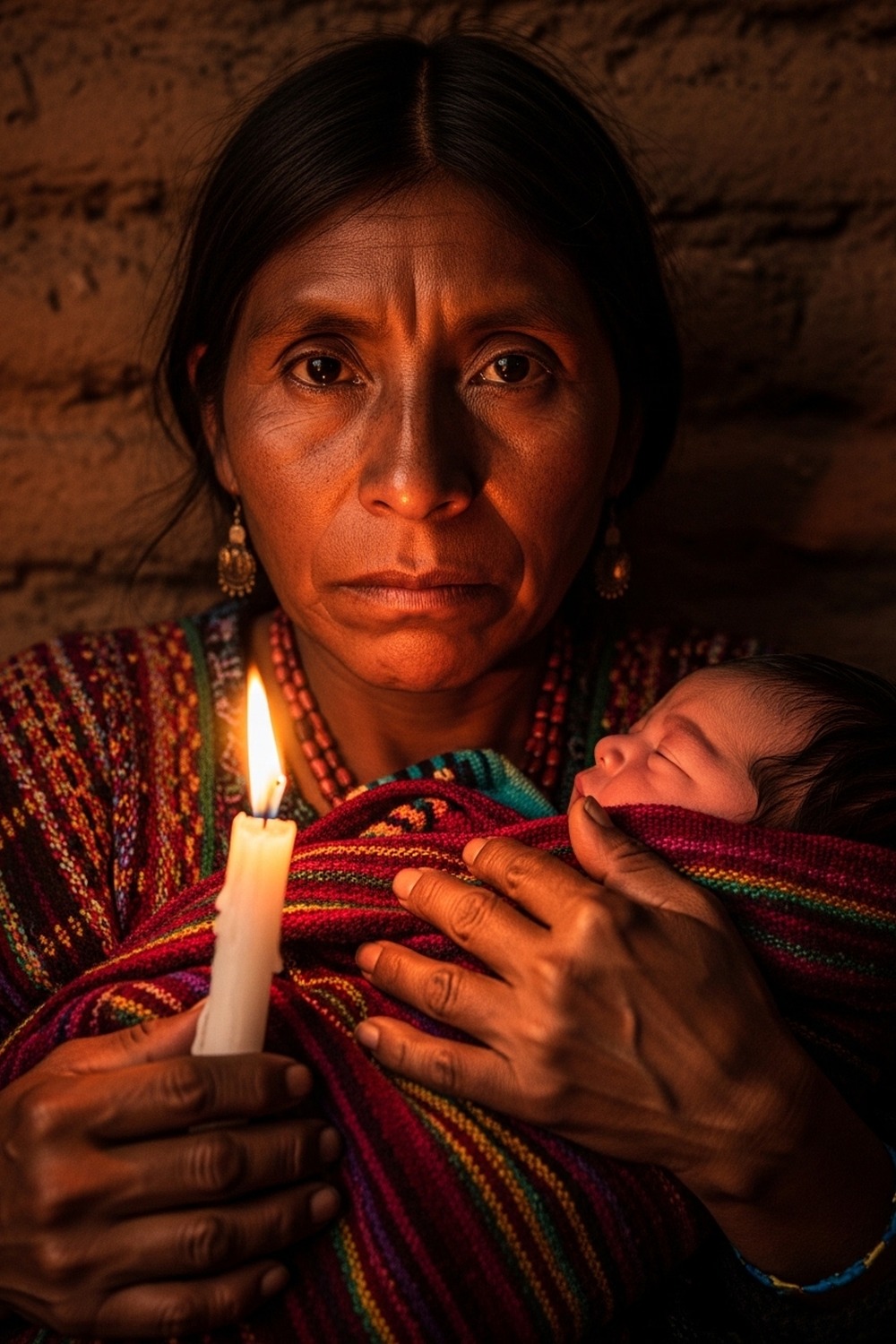
Inés was 40 years old, nine months pregnant, and alone. She’d already lost a baby to obstructed labor. Her husband was at a bar. The nearest clinic was a rough eight-hour drive away — if a vehicle could be found at all. She labored for twelve hours. Then she made a decision that would stun physicians around the world and force a reckoning about what survival really looks like when the medical system simply doesn’t show up.
Key Facts
- Ines Ramirez Perez performed a cesarean section on herself with a kitchen knife on March 5, 2000, in a mountain village in Oaxaca, Mexico.
- She made a single vertical incision approximately 17 centimeters long, per the 2004 case report by Dr. R.F. Cabrera in the International Journal of Gynecology & Obstetrics.
- She was 40 years old, the nearest clinic was an estimated 8 hours away, and she had labored for 12 hours beforehand.
- Hers is the only verified case in peer-reviewed medical literature of a self-performed cesarean in which both mother and child survived.
- Approximately 295,000 women died from pregnancy-related complications in 2017, with 94% in low- and lower-middle-income countries (WHO, 2019).
In short: The only verified self-performed cesarean section in which both mother and child survived was carried out by Ines Ramirez Perez on March 5, 2000, in Oaxaca, Mexico. With a kitchen knife and no anesthesia, eight hours from the nearest clinic, she made a 17-centimeter incision and delivered her son Orlando alive.
The Night Inés Decided No One Was Coming
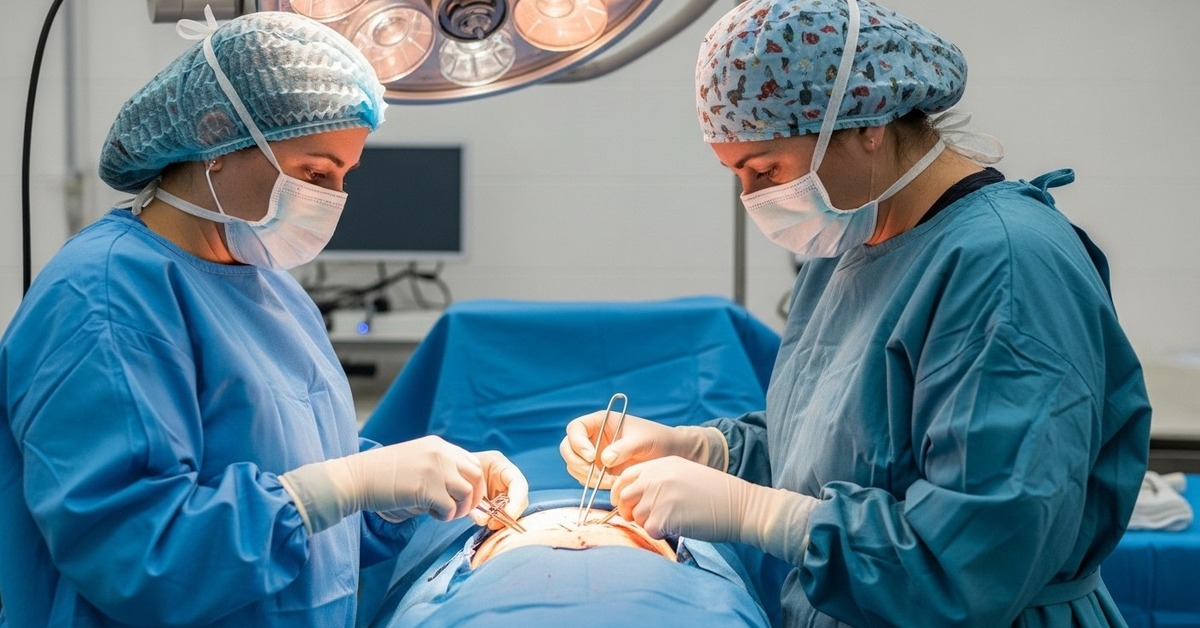
She drank three small glasses of hard liquor first — not enough to numb much, but perhaps enough to steady nerve. Then she lay down on a low wooden bench and cut through her own abdomen with a kitchen knife roughly 15 centimeters long. According to the case report published in 2004 by Dr. R.F. Cabrera and colleagues in the International Journal of Gynecology & Obstetrics, she made a single vertical incision approximately 17 centimeters long — through skin, fat, and uterine wall, without a single instrument designed for the purpose. The team that later documented her case called it the only verified self-performed cesarean in which both mother and child survived. They weren’t hedging. They searched.
She worked for about an hour. The baby emerged and cried immediately — a sound that, in that dark room, must have meant everything. Household scissors cut the umbilical cord. Shortly after, she lost consciousness from blood loss. When she came back around, she pressed a sweater against the wound and sent her six-year-old son, Benito, out into the night to find a neighbor who could fetch help. The nearest health assistant arrived hours later. She was eventually transferred to a regional hospital, where surgeons repaired the incision and removed her uterus to stop the bleeding.
She named the boy Orlando. He was healthy. No infection developed — a medical outcome that physicians who reviewed the case noted with something close to disbelief, given the conditions. What Inés had done should not have worked. And yet.
What Her Story Reveals About Maternal Healthcare Gaps
Why does this matter beyond the extraordinary particulars of one night in Oaxaca? Because Inés Ramírez Pérez isn’t an anomaly in the sense that her desperation was unique — she’s an anomaly in the sense that she survived it. Obstructed labor remains one of the leading causes of maternal death globally, particularly in rural and low-income regions where access to emergency obstetric care is either hours away or doesn’t exist at all. Her story echoes the impossible decisions that women in remote communities face every day, a thread that runs through urgent efforts like the work of community health workers reaching rural villages by bicycle in Uganda — where the margin between life and death is often measured not in equipment, but in hours and kilometers.
Approximately 295,000 women died from pregnancy-related complications in 2017 — the most recent year for which comprehensive global data is available, according to the World Health Organization. The overwhelming majority of those deaths, roughly 94 percent, occurred in low- and lower-middle-income countries. Obstructed labor, the same condition Inés faced, accounts for a significant share of that toll. In many rural regions of sub-Saharan Africa, Southeast Asia, and Latin America, a woman experiencing obstructed labor may wait not hours but days for any form of intervention, if it arrives at all.
What makes Inés’s case clinically remarkable isn’t just the act itself — it’s the outcome. Self-surgery of any kind almost universally ends in fatal infection, hemorrhage, or both. That she avoided all of these without antibiotics, sterile instruments, or trained assistance suggests something that researchers still can’t fully account for: that human desperation, under extreme conditions, can sometimes produce outcomes that defy the statistical model entirely.
How the Medical World Responded to Her Case
Reaction in obstetric circles was immediate and divided when Dr. R.F. Cabrera and his colleagues at the Hospital Civil de Guadalajara formally documented Inés’s case and submitted it for publication in 2004. Some physicians questioned the timeline. Others questioned whether the incision could genuinely have been unaided. The published case report was meticulous in its response to those doubts: investigators interviewed Inés directly, examined the wound, reviewed the surgical repair performed afterward, and consulted with the regional health team that had responded to Benito’s alarm. Every detail corroborated her account.
As Smithsonian Magazine noted in its coverage of the case, the physicians who examined her confirmed that the incision was consistent with a single, deliberate, non-surgically assisted cut — the kind made by someone working slowly and with intent, not by accident or violence. The 2004 paper further noted that while historical records contain isolated claims of self-surgery, none prior to Inés’s case had been documented, verified, and published with a surviving mother and child. It stands alone in the peer-reviewed literature.
There’s an uncomfortable implication in that singularity. If Inés’s case is the only documented successful self-performed cesarean in history, it means every similar attempt before hers almost certainly ended in death — and those deaths went unrecorded, uncounted, and unmourned by any medical journal. The data left no room for alternative interpretation, and anyone who studied this literature carefully enough understood what that silence meant.
The Self-Performed Cesarean That Changed How We See Survival
Journals deal in procedure and outcome, not in the texture of a moment — which is why what the medical literature tends to understate is the sheer cognitive clarity that Inés demonstrated that night. She wasn’t panicking. She was diagnosing. She recognized the presentation of obstructed labor from her own previous loss, understood that her baby was not going to descend naturally, and assessed her options: no transport, no midwife, no trained help. Then she acted on that assessment with a precision that would be remarkable even in a trained professional under duress. The National Autonomous University of Mexico, in subsequent discussions of the case in medical education contexts, cited it as an example of what global health researchers call ‘autonomous medical decision-making under resource deprivation’ (and this matters more than it sounds) — a term that sanitizes something raw and extraordinary into institutional language.
She used no forceps, no retractors, no suction. She had to manually explore the uterine cavity to locate and extract the infant — a procedure that, performed without assistance, requires both hands, significant core stability while supine, and the ability to continue despite extraordinary pain. Blood loss during a cesarean section in a clinical setting averages between 500 and 1,000 milliliters. Inés lost enough to lose consciousness.
But that she regained it, retained the presence of mind to compress her wound, and then directed her six-year-old effectively enough to summon help — that sequence is what separates her story from a tragedy. Surgeons who repaired her incision afterward noted that while the wound edges were ragged, the uterine cut itself had been made with enough precision to avoid the major vessels that run adjacent to the lower uterine segment. Whether that was anatomical knowledge, instinct, or fortune, they couldn’t say. Perhaps it was all three.
How It Unfolded
- Before 2000: Isolated historical claims of self-surgery exist in folklore and anecdote, but none had ever been medically documented with a verified surviving outcome in the peer-reviewed literature.
- March 5, 2000: Inés Ramírez Pérez, alone in her home in the mountains of Oaxaca, Mexico, performs an unaided cesarean section on herself after twelve hours of obstructed labor, delivering a live son.
- 2004: Dr. R.F. Cabrera and colleagues publish the formally verified case report in the International Journal of Gynecology & Obstetrics, sparking international discussion in obstetric and global health circles.
- 2010s–present: Her case is cited repeatedly in global maternal health advocacy, used to illustrate the lethal consequences of healthcare inaccessibility in rural and low-income regions worldwide.
By the Numbers
- 295,000: maternal deaths globally in 2017, with 94% occurring in low- and lower-middle-income countries (World Health Organization, 2019).
- 17 cm: the approximate length of the abdominal incision Inés made, as documented in the 2004 case report in the International Journal of Gynecology & Obstetrics.
- 8 hours: the estimated travel time from Inés’s village to the nearest hospital-level clinic in Oaxaca, assuming a vehicle was available — which it was not.
- 1: the number of verified cases in global peer-reviewed medical literature of a self-performed cesarean section in which both mother and child survived.
- 12 hours: the duration of obstructed labor Inés endured before making the decision to operate on herself — well past the clinical threshold for fetal and maternal risk.
Field Notes
- When surgeons repaired Inés’s incision at the regional hospital, they found that she had also manually removed the placenta herself — an additional procedure requiring precise internal navigation — before losing consciousness. This detail appeared in the original 2004 case documentation and is frequently omitted in popular retellings of her story.
- Inés had given birth eight times before Orlando. Her previous child had died during obstructed labor — a loss she is reported to have referenced directly when explaining her decision to intervene. She knew the outcome of doing nothing. That knowledge was, in a clinical sense, her most important tool.
- Cited in global health literature not only as an example of survival under extreme conditions, her case also serves as evidence of what researchers call ‘task-shifted obstetric decision-making’ — the phenomenon where patients themselves assume clinical roles when the healthcare system is structurally absent.
- Researchers still can’t fully explain why Inés didn’t develop sepsis. She used no antiseptic before cutting, no antibiotic after. Her wound was open for hours in a non-sterile environment. Whether individual immune factors, the specific microbial environment of rural Oaxaca, or sheer statistical fortune accounts for the absence of infection remains genuinely unresolved in the medical literature.
Frequently Asked Questions
Q: Is Inés Ramírez Pérez’s self-performed cesarean section really the only verified case in medical history?
Yes, as of the most recent review of peer-reviewed literature. The 2004 case report published by Dr. R.F. Cabrera in the International Journal of Gynecology & Obstetrics is explicit on this point: investigators searched the historical medical record and found no prior documented instance of a self-performed cesarean section in which both the mother and child survived. Anecdotal and folkloric claims exist, but none has been medically verified and published.
Q: How did Inés know where and how to cut?
She had no formal medical training. Turns out, though, she had given birth eight times before and had previously lost a child to obstructed labor — meaning she had direct, personal experience of what that condition looks and feels like. Physicians who documented her case noted that she made a vertical midline incision, which is one of the more anatomically intuitive approaches, as it follows the natural midline of the abdomen. Whether she had observed animal butchering or traditional birth practices that informed her understanding of internal anatomy isn’t recorded, but researchers consider it plausible.
Q: Was a self-performed cesarean section survivable before modern medicine?
Almost certainly not in the vast majority of cases. Even today, the risk factors Inés faced — no anesthesia beyond alcohol, no sterile instruments, no trained assistance, no antibiotics, and significant blood loss — would be considered unsurvivable in most clinical risk models. Her survival is not a template. It’s an outlier that illuminates a systemic failure: when healthcare is structurally inaccessible, individuals are forced into decisions that medicine has no category for. Her survival says less about the procedure and more about the desperation that made it necessary.
Editor’s Take — Sarah Blake
What stays with me about Inés’s story isn’t the surgery. It’s the six-year-old in the dark. Benito, sent out by his mother — bleeding, barely conscious — to find someone, anyone. That child’s journey through a mountain village in the middle of the night is the part of this story that the medical journal can’t fully capture. Inés knew the system wasn’t coming. She built her own. And then she sent her son to close the last gap she couldn’t close herself. That’s not a medical miracle. That’s a mother doing the arithmetic of survival.
Inés Ramírez Pérez lives in Oaxaca. Orlando, the boy she cut herself open to save, is now in his mid-twenties. The mountain village where it happened still sits eight hours from a clinic. Globally, hundreds of thousands of women continue to navigate the gap between where they are and where care exists — a gap that doesn’t announce itself as a crisis, because the women inside it rarely have a platform from which to say so. What would it take for the distance between a woman and a surgeon to stop being a death sentence? We already know it’s possible to close that gap. The question is whether we find it urgent enough to try.
Illustrations are AI-generated. Article fact-checked and human-edited. Our editorial standards.