The Diving Duck That Vanishes Six Meters Underwater
Nobody’s really looking at the scaup. That’s what makes this so strange.
They’re the ducks people walk past at the lake — compact, dark-headed, bobbing between dives, nothing flashy about them. But what’s happening six meters below the surface while you’re watching is something waterfowl biologists still can’t fully explain. An animal weighing less than two pounds is doing something that shouldn’t work at that size, in conditions where most ducks wouldn’t even attempt it.
Key Facts
- Scaup can dive 6 to 7 meters (roughly 20 feet) underwater on a single breath, holding their breath up to 25 seconds, despite averaging just 800 grams.
- Lesser Scaup populations fell from an estimated 7.7 million birds in the 1970s to under 3.5 million by the early 2000s.
- Lesser Scaup populations have crashed by nearly 75% since the 1980s, one of the steepest declines of any North American duck.
- The St. Clair Flats between Michigan and Ontario historically hosted over one million scaup in a single migration season.
- North America has two main species, the Greater Scaup (Aythya marila) and the Lesser Scaup (Aythya affinis).
In short: The scaup diving duck, weighing under two pounds, dives 6 to 7 meters into dark cold water on a single breath to feed. Yet Lesser Scaup numbers have crashed nearly 75% since the 1980s, falling from 7.7 million birds in the 1970s to under 3.5 million, for reasons researchers still cannot fully explain.
How the Scaup Diving Duck Sees in the Dark
Those yellow eyes are doing something specific. Scaup eyes are adapted for low-light vision underwater — higher rod cell density than most waterfowl, built for murky, near-lightless conditions at the bottom of lakes and bays. Ornithologist Dr. Frank Bellrose, who spent decades studying North American waterfowl, noted that scaup seemed to forage successfully in turbidity levels that stopped other diving ducks cold.
So how far down does that vision actually work?
Six to seven meters. One breath. For a bird you could tuck under one arm. They’re down there hunting mollusks, insect larvae, and aquatic plants while dabbling ducks are still paddling around in ankle-deep water.
That last fact kept me reading for another hour. Because the physics of it — the pressure, the cold, the darkness — just doesn’t fit what we’d expect from something that small.
Scaup Build the Continent’s Biggest Duck Rafts
During migration, scaup congregate in numbers that are genuinely hard to picture. Rafts of Greater and Lesser Scaup can stretch across entire bays. Historically, the St. Clair Flats between Michigan and Ontario hosted over a million birds in a single season.
One location. One season.
The Greater Scaup tends to favor coastal bays and larger open water, while the Lesser Scaup dominates inland lakes — together forming some of the largest duck aggregations anywhere on the continent. Watching a raft from shore is a disorienting experience. The flock moves like one organism: birds popping under at one end, surfacing at the other, a rolling motion like a wave that never quite breaks. And then, all at once, thousands of them vanish beneath the surface simultaneously. It goes quiet. Then they’re back.
Two Species, One Mystery That Won’t Go Away
North America has two main scaup species — the Greater Scaup (Aythya marila) and the Lesser Scaup (Aythya affinis). They look nearly identical. They behave similarly. But the Lesser Scaup has been in serious, sustained decline for decades, while Greater Scaup numbers, though also reduced, tell a different story. The scaup diving duck became a focal point of conservation concern precisely because the decline is so steep and the cause so unclear.
Researchers have proposed everything from contaminant loads in wintering habitats, to shifts in food availability during migration stopovers, to breeding ground disruptions deep in the boreal forest. No single explanation has stuck.
And that should make us uncomfortable.
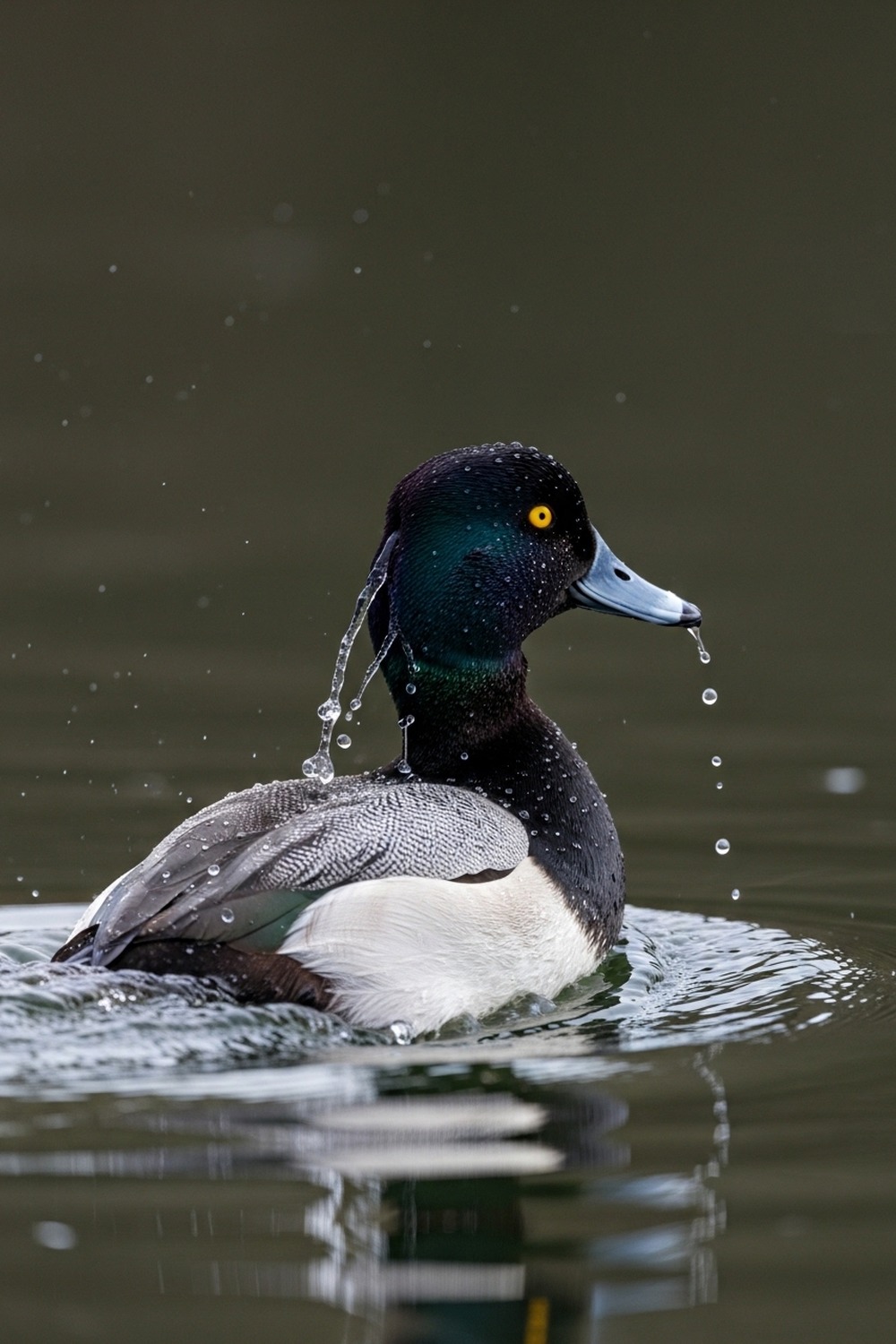
The 75% Drop That Researchers Still Can’t Explain
Lesser Scaup populations have crashed by nearly 75% since the 1980s — one of the steepest declines of any North American duck species on record. The scientific community doesn’t fully agree on why. A landmark study by Dr. Ray Alisauskas and colleagues tracked breeding female Lesser Scaup and found evidence of poor body condition during spring migration, suggesting birds were arriving at their breeding grounds nutritionally depleted. But whether that’s a cause or a symptom is still being argued.
Which raises the obvious question: if a species has been falling apart for forty years, why don’t we have a better answer?
Turns out, these birds spend winters in bays that aren’t closely monitored. They migrate through corridors that haven’t been fully mapped. They dive into depths we rarely look at. When a species declines that sharply over four decades and we still can’t pinpoint the driver, it says something uncomfortable about how little we actually understand the full arc of their lives.
By the Numbers
- Lesser Scaup populations fell from an estimated 7.7 million birds in the 1970s to under 3.5 million by the early 2000s — a decline tracked through the U.S. Fish & Wildlife Service’s annual Breeding Waterfowl Survey.
- Dive depth: 6–7 meters (roughly 20 feet).
- Breath hold: up to 25 seconds per dive, for a bird averaging just 800 grams.
- The St. Clair Flats once supported more than one million scaup in a single migration season — a concentration wildlife managers now consider functionally impossible to recreate under current habitat conditions.
- Greater and Lesser Scaup together once ranked among the top five most abundant ducks in North America. Combined populations now sit at roughly half their historic peak estimates.
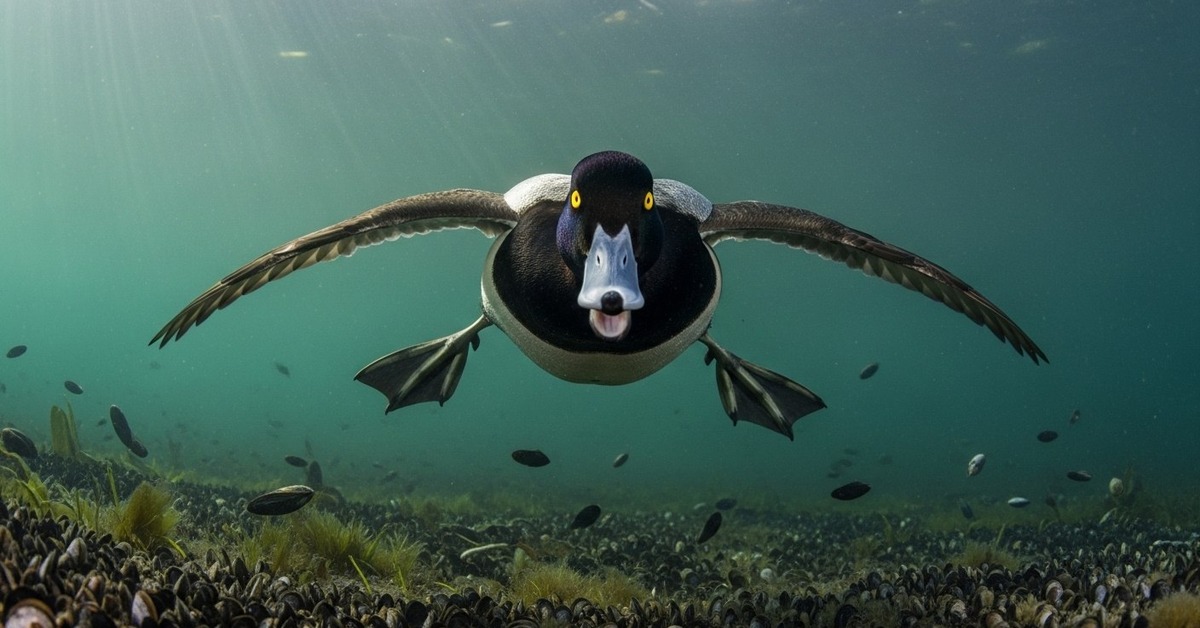
Field Notes
- Telling them apart is harder than it sounds — even for experienced birders. The main visual clue is the iridescent gloss on the head: green on Lesser Scaup, purple on Greater Scaup. But only in good light, only at close range, and only if the bird cooperates.
- Nest parasitism. Female scaup will lay eggs in other scaup nests — or in nests belonging to entirely different diving duck species — distributing their reproductive effort across broods they won’t personally raise.
- Scaup are among the latest-nesting ducks in North America, often not beginning incubation until June in boreal Canada. That tight window makes any disruption during spring migration stopover hit especially hard.
What We Lose When a Diving Duck Disappears
The scaup diving duck isn’t charismatic in the way wolves or eagles are. It doesn’t trend. It rarely makes the news. But it sits at the intersection of freshwater ecosystems, boreal breeding habitat, and coastal wintering grounds — and its decline works as a signal about the health of all three. When a species that evolved to thrive across that entire range can’t sustain its population, something has shifted across an enormous swath of the continent. You can read more about the hidden lives of waterfowl and what their movements tell us at this-amazing-world.com.
We tend to pay attention to animals we can see clearly — the ones in documentaries, the ones that photograph well. The scaup spends half its life underwater, invisible, doing something extraordinary. And it’s been quietly disappearing while we looked elsewhere.
That’s the part that stays with you.
A duck the size of a football, diving six meters on a single breath into cold dark water to find its food — and doing it tens of thousands at a time, in flocks that once darkened entire bays. The scaup is strange, underappreciated, and in serious trouble for reasons nobody’s fully figured out yet. Some of the most important stories are the ones happening just beneath the surface. There’s more at this-amazing-world.com — and the next one is even stranger.
Frequently Asked Questions
Q: How deep can a scaup diving duck dive?
Scaup can dive 6 to 7 meters underwater, roughly 20 feet, on a single breath, holding their breath up to 25 seconds, despite averaging just 800 grams. Their yellow eyes are adapted for low-light vision with higher rod cell density than most waterfowl, letting them forage in murky, near-lightless conditions at lake and bay bottoms. They hunt mollusks, insect larvae, and aquatic plants at depths that stop other diving ducks cold, far below where dabbling ducks paddle in ankle-deep water.
Q: Why are Lesser Scaup populations declining?
Lesser Scaup populations have crashed by nearly 75% since the 1980s, falling from an estimated 7.7 million birds in the 1970s to under 3.5 million by the early 2000s. The cause remains unclear despite decades of study. Proposed explanations include contaminant loads in wintering habitats, shifts in food availability during migration stopovers, and breeding ground disruptions in the boreal forest. A study by Dr. Ray Alisauskas found breeding females arriving nutritionally depleted, but whether that is a cause or symptom is still debated.
Q: What’s the difference between Greater and Lesser Scaup?
North America has two main scaup species, the Greater Scaup (Aythya marila) and the Lesser Scaup (Aythya affinis). They look nearly identical and behave similarly. The main visual clue is the iridescent gloss on the head: green on Lesser Scaup and purple on Greater Scaup, visible only in good light at close range. The Greater Scaup favors coastal bays and larger open water, while the Lesser Scaup dominates inland lakes. The Lesser Scaup has suffered the steeper, more sustained decline.
Q: How large do scaup migration rafts get?
Scaup form some of the largest duck aggregations anywhere on the continent. During migration, rafts of Greater and Lesser Scaup can stretch across entire bays. Historically, the St. Clair Flats between Michigan and Ontario hosted over one million birds in a single season, a concentration wildlife managers now consider functionally impossible to recreate under current habitat conditions. Watching a raft is disorienting, as the flock moves like one organism, with thousands of birds diving beneath the surface simultaneously and then resurfacing.
Illustrations are AI-generated. Article fact-checked and human-edited. Our editorial standards.