The Tiny Face Mites That Have Lived on Humans for Millions of Years
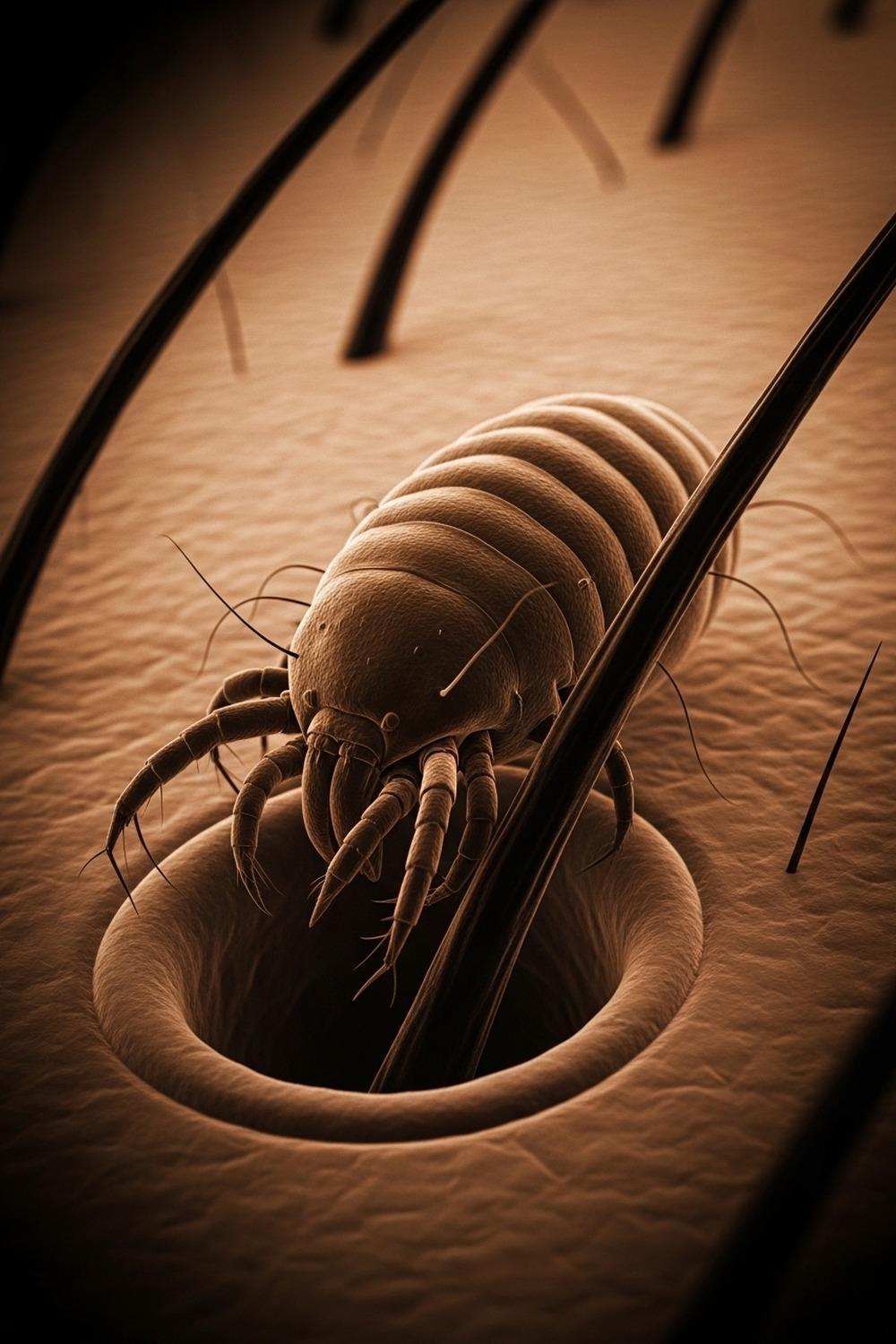
Eight-legged, 0.3 millimeters long, and impossibly old — Demodex folliculorum face mites are moving through your eyelashes right now. Most people carry hundreds. Almost none know it. Yet these ancient hitchhikers have shared human skin for millions of years, quietly co-evolving as our species crossed continents and climates, and their presence is now revealing secrets about who we are and where we came from that researchers spent decades failing to see.
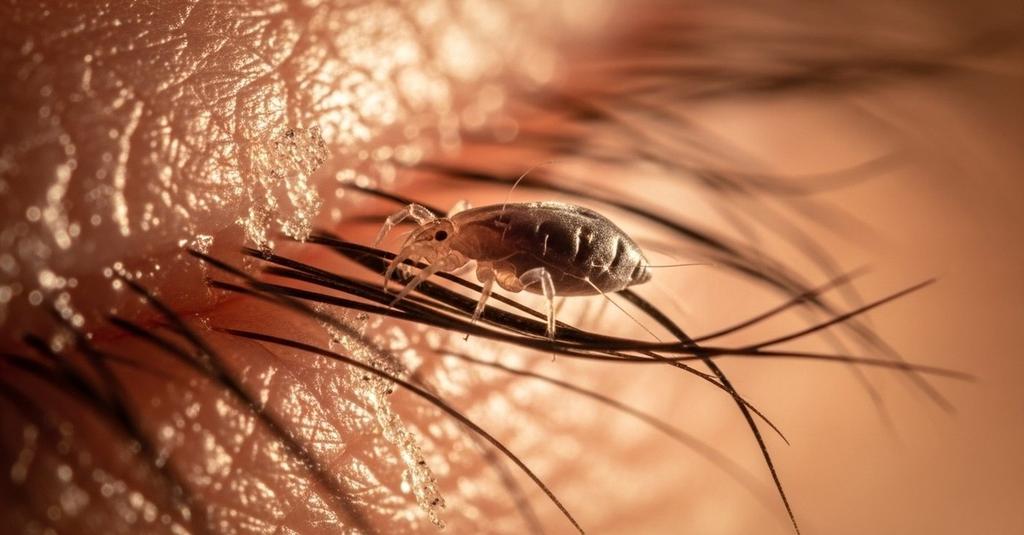
They emerge at night. They feed on the oils your skin produces, mate near the surface of your follicles, and retreat before dawn. By daylight they’re still — patient, invisible, perfectly synchronized with a host that remains entirely unaware.
The question researchers have spent decades trying to answer isn’t whether you have them. It’s what their presence is actually telling us about human ancestry, immune ecology, and how intimately our bodies are shared with other species.
Key Facts
- Demodex folliculorum are arachnids about 0.3 mm long, first formally described by German physician Gustav Simon in 1842.
- A 2014 University of North Carolina study published in PLOS ONE found 100% of adults over age 60 tested positive for Demodex DNA.
- A 2022 PNAS study led by Alejandra Perotti at the University of Reading identified four distinct Demodex genetic lineages corresponding to African, European, Asian, and Latin American host ancestry.
- Rosacea patients carry Demodex populations up to 18 times higher than those with clear skin, according to the National Rosacea Society’s 2019 review.
- The FDA approved Xdemvy (lotilaner ophthalmic solution 0.25%) in 2023, the first drug specifically targeting Demodex-associated blepharitis.
In short: Demodex face mites are 0.3 mm arachnids living in human follicles, carried by 100% of adults over 60 per a 2014 study. A 2022 PNAS study found their genomes track human migration across four ancestral lineages. They are usually harmless but linked to rosacea, and in 2023 the FDA approved Xdemvy to treat Demodex-related blepharitis.
Ancient Hitchhikers: What Face Mites Actually Are
Demodex folliculorum are arachnids — distant cousins of spiders and ticks — belonging to the family Demodicidae. German physician Gustav Simon first formally described them in 1842 while examining the contents of human sebaceous glands under a microscope. For most of the century that followed, science treated them as curiosities. It wasn’t until researchers at the University of North Carolina began building a systematic picture of human skin ecology in the 2010s that the true scope of Demodex colonization became clear. Their 2014 study, published in PLOS ONE, found that 100% of adults over 60 tested positive for Demodex DNA — and that even younger adults carried them at surprisingly high rates.
The Demodex genus currently includes more than 65 known species, each highly host-specific: the ones on your face won’t transfer to your dog, and the ones on your dog can’t survive on you.
Two species live on human skin simultaneously. Demodex folliculorum tends to cluster in hair follicles — particularly around the nose, cheeks, forehead, and eyelashes. Its slightly smaller sibling, Demodex brevis, prefers the deeper sebaceous glands. They don’t compete. They partition the real estate with almost deliberate precision, each with a distinct preference for follicle depth. In ecological terms, they’ve achieved what biologists call niche differentiation — splitting resources to avoid competition.
They have no anus. This matters more than it sounds. Waste accumulates inside their bodies across a lifespan of roughly two weeks, and when they die they decompose within the follicle, releasing everything at once. It sounds alarming. In a healthy skin ecosystem, it isn’t — but it’s the kind of biological detail that reframes how you think about your own face.
How Co-Evolution Shaped Human Skin Ecosystems
The relationship between humans and Demodex folliculorum face mites isn’t parasitism in the classical sense. Something stranger and more intimate is happening — a co-evolutionary entanglement so old that geneticists are now using it to trace the movements of ancient human populations. In 2022, a team led by Alejandra Perotti at the University of Reading published a landmark genetic analysis in PNAS revealing that Demodex populations on different human ethnic groups carry distinct genetic lineages that diverged hundreds of thousands of years ago — roughly tracking the dispersal of Homo sapiens out of Africa. Different continents, different mite genetics. The mites didn’t just spread with us. They evolved with us.
Watching a species become genetically embedded into another over evolutionary time, you stop calling it contamination.
Perotti’s team found something even more striking in the mite’s genome: Demodex are in the process of losing genes. Their genomes are shrinking — a classic signature of organisms that have become so dependent on a host that they no longer need to code for functions the host provides. As of 2022, Demodex appear to be on an evolutionary trajectory toward what biologists call obligate mutualism: a state of total dependence where the parasite and host can no longer survive without each other. It hasn’t happened yet. But the genetic direction is clear. An organism that began as an external colonizer may be slowly becoming a permanent biological fixture — as built-in as mitochondria. Evolution doesn’t move on human timescales, yet it is moving, and it’s moving toward us.
When the Balance Breaks: Demodex and Skin Disease
For most people, Demodex folliculorum face mites are entirely harmless. Population sizes stay small, the skin’s immune response keeps them in check, and the ecosystem functions quietly. But the line between benign resident and active problem is thinner than most people realize — and crossing it is often triggered by something else entirely. Why does this matter? Because once that line gets crossed, Demodex becomes medically significant in ways modern medicine is only beginning to understand.
A 2019 study from the National Rosacea Society found that patients with rosacea carry Demodex populations up to 18 times higher than those with clear skin. Researchers at the Chinese Academy of Sciences confirmed in 2021 that Demodex can act as a vector for Bacillus oleronius, a bacterium whose proteins trigger immune flare-ups consistent with the inflammation seen in rosacea and blepharitis — an inflammatory condition of the eyelid margins. The mites don’t cause rosacea. The current evidence, detailed in a 2022 Nature Scientific Reports analysis, suggests they amplify it, carrying bacteria deeper into the follicle than the immune system can easily reach. It’s a reminder that the line between passenger and pathogen is almost always drawn by context, not character.
Blepharitis — chronic inflammation at the base of the eyelashes — is now strongly associated with elevated Demodex counts. Ophthalmologists estimate that Demodex-associated blepharitis affects somewhere between 45% and 58% of patients presenting with lid disease in clinical settings, a figure that remained underappreciated until systematic testing became routine in the 2010s.
A pharmaceutical treatment specifically targeting Demodex — lotilaner ophthalmic solution — received FDA approval in 2023 under the brand name Xdemvy, the first drug ever approved explicitly for Demodex-driven blepharitis. That’s how recently this relationship entered mainstream medicine. Stress, immunosuppressive medication, HIV, and certain chemotherapy regimens are all associated with Demodex population surges. The mites don’t change their behavior. The host’s ability to control them does.
Demodex Folliculorum Face Mites as Human Biomarkers
Alejandra Perotti’s 2022 PNAS study didn’t just illuminate co-evolution — it opened a new methodological possibility. Because Demodex populations carry genetic signatures that reflect the ancestry of their hosts, researchers began proposing that mite DNA could function as a secondary record of human migration. Standard genetic anthropology relies on ancient DNA extracted from bones and teeth — materials that survive poorly in tropical climates and wet soils. Mite genetics, by contrast, could provide a complementary signal drawn from living populations right now.
The University of Reading team identified four distinct Demodex lineages corresponding broadly to African, European, Asian, and Latin American host populations. Latin American mites showed evidence of mixing between European and Indigenous American lineages consistent with post-Columbian contact. Migration written not in stone, but in the genomes of something living on your eyelid.
And here’s what the precision reveals: populations that have historically experienced geographic isolation — island communities in Oceania, remote Indigenous groups in the Amazon — tend to carry Demodex with correspondingly narrow genetic diversity. Where human populations mixed, mite populations mixed. Where they stayed separate, so did the mites. This creates a living archive of human contact and separation stretching back further than most written records, and encoded in an organism that almost no one knew was carrying it. Demodex folliculorum face mites have become, almost by accident, an instrument of historical anthropology.
Perotti described the mites in a 2022 interview as “neglected” — a term scientists use for organisms assumed to be too simple or too marginal to reward serious study. That assumption cost decades of insight.
What We Still Don’t Know — and Why It Matters
For all the progress since 2014, there are questions about Demodex that remain genuinely unresolved. Researchers still can’t reliably culture Demodex folliculorum in laboratory conditions — the mites survive only briefly outside a host, making controlled experiments extraordinarily difficult. Without reliable lab cultures, testing potential treatments is slow and indirect. The FDA approval of Xdemvy in 2023 was built on clinical trial data measuring symptom reduction, not on mechanistic studies of how lotilaner kills the mites at the molecular level. That gap matters because it limits the precision with which medicine can intervene when Demodex populations become clinically significant.
Transmission patterns are also incompletely mapped. We know Demodex spreads through close physical contact — mother to infant during early infancy is the most documented pathway, with studies from Kyushu University in Japan suggesting the majority of colonization happens in the first year of life. But the precise social and environmental conditions that determine population density across a human lifetime are still being mapped.
Why do some people carry thousands and others carry dozens, even when age, immune status, and skin type appear similar? The answer almost certainly involves microbiome interactions, sebum production rates, and genetic variation in the host’s immune surveillance — but the exact weighting of those factors is unknown. That uncertainty isn’t a failure of science. It’s an honest reflection of how complex the human skin ecosystem actually is — and how much more is living on us than most of us have ever thought to consider.
How It Unfolded
- 1842 — German physician Gustav Simon first identifies and describes Demodex folliculorum while examining human sebaceous gland secretions under a microscope in Berlin.
- 1963 — Parasitologist Franks Nutting publishes a systematic morphological study that establishes the two distinct human Demodex species — D. folliculorum and D. brevis — as separate entities with different follicle habitats.
- 2014 — Researchers at the University of North Carolina publish the first large-scale population study in PLOS ONE, confirming Demodex DNA presence in all 29 adult volunteers tested and challenging assumptions about how common colonization actually is.
- 2022 — Alejandra Perotti’s team at the University of Reading publishes landmark genetic research in PNAS linking Demodex lineages to ancient human migration routes, repositioning face mites as tools of anthropological research.
- 2023 — The FDA approves Xdemvy (lotilaner ophthalmic solution 0.25%), the first drug specifically targeting Demodex-associated blepharitis, marking the condition’s formal entry into mainstream clinical medicine.
By the Numbers
- 100% of adults over age 60 tested positive for Demodex DNA in the 2014 University of North Carolina PLOS ONE study — the most comprehensive population screening conducted at the time.
- 0.3 mm — average body length of Demodex folliculorum; D. brevis is slightly smaller at approximately 0.2 mm, making both species invisible without magnification.
- Up to 18× higher Demodex population densities found in rosacea patients compared to healthy controls, according to the National Rosacea Society’s 2019 review of clinical data.
- 4 distinct Demodex genetic lineages identified in the 2022 PNAS study, corresponding to African, European, Asian, and Latin American host population ancestry.
- 2-week lifespan — the full lifecycle of Demodex folliculorum, from egg to adult death, completed entirely within or at the surface of a single human follicle.
Field Notes
- In 2022, genome sequencing revealed that Demodex folliculorum has one of the smallest arthropod genomes ever recorded — a dramatic reduction consistent with long-term host dependency. The mites appear to have lost genes for functions they no longer need because the host effectively provides them, a genomic signature seen in very few other organisms.
- Demodex don’t have eyelids. They spend their daylight hours motionless in follicles not because they “rest” in any neurological sense, but because their photoreceptors respond to light by triggering stillness — an adaptation that likely evolved to reduce detection by the host’s immune system.
- The mites responsible for mange in dogs are also Demodex — specifically Demodex canis — but the species barrier is absolute. Human Demodex can’t survive on dogs, and canine Demodex can’t colonize people. Host specificity this strict suggests millions of years of parallel evolution, not recent cross-species transfer.
- Researchers still can’t explain why some immunocompetent adults with no diagnosed skin conditions carry Demodex populations ten to twenty times higher than their peers. The individual variation is real and reproducible in clinical data — but no study has yet identified the determining factor.
Frequently Asked Questions
Q: Are Demodex folliculorum face mites dangerous to most people?
For the vast majority of people, Demodex folliculorum face mites are entirely harmless. They’re part of the normal skin microbiome, regulated by the immune system, and most carriers never experience any symptoms at all. Problems arise when populations spike — often due to immune suppression, stress, or certain medications. The 2014 University of North Carolina study confirmed that Demodex colonization is essentially universal in older adults, yet most carry them indefinitely without issue.
Q: How do Demodex mites spread between people?
Demodex spreads through direct skin-to-skin contact, particularly in early infancy. Research from Kyushu University suggests most humans acquire their initial Demodex colonization from their mothers during the first year of life — through nursing, cheek-to-cheek contact, and other close physical proximity. After that initial colonization, populations grow slowly and self-regulate. Transfer between adults is possible through close contact but appears to be far less significant than early childhood acquisition in establishing a person’s long-term mite load.
Q: Can you get rid of Demodex face mites permanently?
No — and in most cases, you wouldn’t want to. Demodex folliculorum face mites are so deeply integrated into the skin ecosystem that complete eradication isn’t realistic, and the evidence doesn’t suggest it would be beneficial for healthy individuals. Even the FDA-approved drug Xdemvy, approved in 2023 specifically for Demodex-associated blepharitis, is designed to reduce populations to non-symptomatic levels — not eliminate them entirely. Thinking of Demodex as an infection to be cured misreads the biology. They’re residents, not invaders. The goal, when treatment is needed, is balance.
Editor’s Take — Sarah Blake
What strikes me about the Demodex story isn’t the mites themselves — it’s what their genomes are quietly recording. Every migration, every isolated community, every colonial encounter that mixed human populations: all of it written into the DNA of something living on the human face right now. We spend enormous resources extracting human history from ancient bones in degraded soils. The answer has apparently also been sitting on our eyelids, patient and invisible, for hundreds of thousands of years. That gap between what we carry and what we know we carry seems worth sitting with.
The skin has never been a boundary — it’s an ecosystem. What lives on it has co-evolved with us, tracked our migrations, and may eventually become so dependent on our biology that the line between host and inhabitant dissolves entirely. Demodex folliculorum face mites are not anomalies. They’re evidence of how thoroughly life interpenetrates life, at scales we can barely see. The next time you feel entirely alone, consider that hundreds of eight-legged organisms are sleeping in your follicles, carrying in their shrinking genomes a record of every place your ancestors have ever been.
“
Illustrations are AI-generated. Article fact-checked and human-edited. Our editorial standards.