The Eastern Hognose Snake’s Death Fake Is Pure Theater
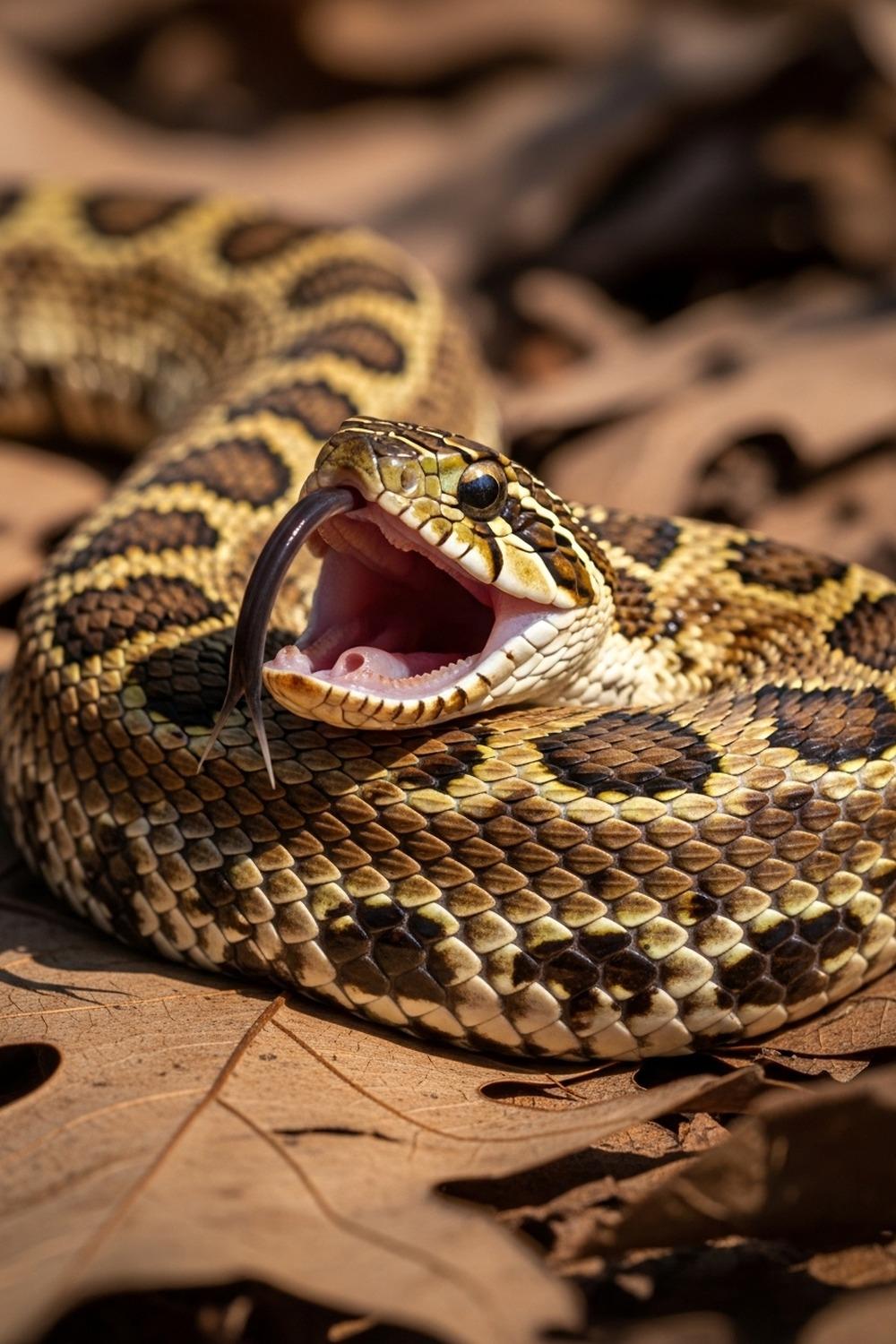
Belly-up in a forest clearing, tongue lolling, musk rising — the eastern hognose snake commits to its death with the energy of an actor who has already quit the stage. Most animals shut down when threatened. This one turns itself up to maximum signal. The eastern hognose snake playing dead is not instinct switched off. It’s instinct dialed into something far stranger.
Found across eastern North America from southern Canada to northern Mexico, the eastern hognose snake — Heterodon platirhinos — is completely harmless to humans. It doesn’t constrict. It doesn’t inject venom in any medically significant quantity. What it does instead is perform, and perform with apparent commitment to every detail. That performance raises a question biologists have been quietly asking for decades: how does an animal evolve a behavior this specific, this layered, this dramatically absurd?
Key Facts
- The eastern hognose snake, Heterodon platirhinos, ranges across eastern North America from southern Canada to northern Mexico and is harmless to humans.
- Its defense sequence includes at least five distinct escalating behaviors before the death display, per University of Georgia SREL 2003 research.
- Eastern hognose snakes occupy a geographic range of approximately 3.5 million square kilometers, per NatureServe 2022.
- Adults typically reach 50 to 115 centimeters in length, with females significantly larger than males.
- American toad populations, the hognose’s primary prey, have declined an estimated 20 to 30% in parts of the northeastern United States since 2000.
In short: The eastern hognose snake playing dead performs an elaborate, layered defense: a cobra-like hood, hissing, bluff strikes, then thanatosis, flipping belly-up, releasing decomposition-scented musk, and even regurgitating. This Heterodon platirhinos display runs at least five escalating behaviors and exploits predators’ instinctive reluctance to eat anything already dead.
How the Hognose Snake Fakes Its Own Death
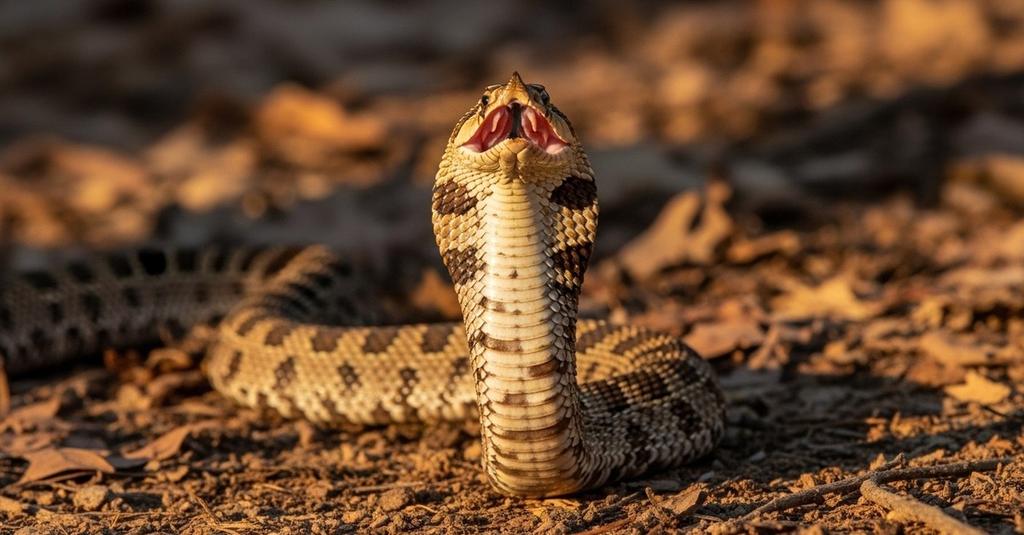
The death display of the eastern hognose snake is not a single act — it’s a sequence, and every step has biological logic behind it. The performance begins with the cobra impression: the neck flattens, the head widens, the whole animal takes on an ominous silhouette. Then comes the hissing, audible from several meters away. Then the bluff strikes, mouth often closed, achieving absolutely nothing except demonstrating that the snake has tried its options and found them wanting.
Herpetologist Gordon Burghardt at the University of Tennessee, who has studied animal play and deceptive behavior for decades, has described tonic immobility in snakes as a genuinely complex defense strategy, not merely a freeze response. Field studies through the 1980s and 1990s documented the sequence in detail — the escalation is methodical, almost formulaic. Only when all else fails does the apparent death behavior — known scientifically as thanatosis — kick in.
The rollover is sudden. The snake throws itself onto its back, opens its mouth, lets the tongue go limp. The musk glands activate. Sometimes the snake regurgitates. These are not random signals — each one adds information to a predator’s threat assessment. Dead things smell like rot. Dead things don’t hold food. Dead things lie upside down. The hognose is stacking every available cue simultaneously, building a case no hungry hawk should want to argue with.
Here’s the detail that makes researchers genuinely laugh: flip the snake right-side up mid-performance, and it rolls back over. It cannot play dead the correct way up. The instinct to remain inverted overrides everything else. Back it goes, tongue out, the production starting fresh. It’s the one seam in an otherwise seamless costume.
The Predators the Hognose Has Already Outsmarted
Why does this work? Because predators share a behavioral quirk that the hognose has been exploiting for millennia: a strong reluctance to eat anything that’s already dead. Red-tailed hawks, great horned owls, foxes, raccoons — these are the animals the hognose is performing for. This isn’t squeamishness. It’s risk management written into predator cognition by thousands of years of evolution. A carcass that smells heavily of rot carries pathogen risk. A meal that requires zero pursuit is statistically suspicious.
The hognose snake playing dead is essentially filing a false health declaration at nature’s border control, and it works more often than you might expect. Much like the mossy frog’s extraordinary camouflage in Vietnam and Laos, which turns stillness into invisibility rather than theater, the hognose takes the opposite approach: maximum signal, maximum drama, betting that more noise equals less attention. Watching a predator walk away from a performance like this — not frightened, just reassessing the math — you stop thinking of it as theater and start thinking of it as conversation.
Studies conducted at various universities through the 2000s confirmed that the chemical compounds released during the hognose’s display include sulfur-containing molecules consistent with decomposition odor — a scent profile that triggers avoidance behavior in a wide range of mammalian predators. This isn’t a general “bad smell.” It’s a precisely calibrated olfactory message: already dead, already decomposing, not worth your time. The body doubles down by going limp — muscle tone drops noticeably, and the snake becomes genuinely floppy in a way that even curious predators find unappetizing. A live animal that fights back is one thing. A slack, reeking, upside-down problem is another calculation entirely.
Field observers in the Appalachians have watched red foxes approach a performing hognose, nose working, pause for several seconds, and then simply walk away. No dramatic recoil. Just a quiet reassessment and departure. Which is, in a way, the most chilling possible outcome — the predator wasn’t frightened off. It just decided the math didn’t add up.
The Science Behind Animal Death-Feigning Behavior
Thanatosis — the scientific term for death-feigning across the animal kingdom — is far more widespread than most people realize. Opossums do it, famously. Certain sharks enter tonic immobility when flipped upside down. Some insects freeze so completely under threat that even experienced entomologists have mistaken them for specimens.
But the hognose version is unusually theatrical even by these standards, which is why it keeps attracting attention from behavioral ecologists. A 2017 study published in Smithsonian Magazine’s coverage of animal deception highlighted hognose behavior specifically as a case study in layered defense. The reason: the hognose pairs death-feigning with active olfactory deception in a way that most other species don’t bother with. The smell is the differentiator. Any snake can go limp. The hognose builds the whole corpse.
What makes the eastern hognose snake particularly interesting to evolutionary biologists is the specificity of the rollover behavior. The animal doesn’t just stop moving. It actively repositions itself into a posture that no living snake would naturally adopt. This suggests the behavior evolved under strong selective pressure — predators who saw through simpler death-feigns continued to eat hognose snakes, while predators confronted with the full performance walked away. Over generations, the performance got more elaborate. The musk intensified. The rollover became reflexive. The regurgitation was added to the repertoire.
The reflex to roll back over when manually righted is the most telling detail of all. It suggests the behavior isn’t conscious — the snake isn’t “deciding” to play dead and then “deciding” to maintain the posture. It’s been wired so deep into the animal’s nervous system that it executes automatically, overriding evidence that the threat has passed. Which raises an uncomfortable question: what else in nature is running on automatic, performing a role so thoroughly that the performer has no awareness of performing it?
Where Eastern Hognose Snake Playing Dead Fits in the Bigger Picture
The hognose is not the rarest snake in North America. It’s not endangered. It’s not particularly difficult to find across its range, which stretches from southern Ontario and Quebec down through the eastern United States and into parts of northern Mexico. And yet it turns up disproportionately in the behavioral ecology literature, specifically because its defensive repertoire is so complete.
A 2003 paper from the University of Georgia’s Savannah River Ecology Laboratory — one of the most productive herpetology research sites in North America — documented hognose behavior in detail as part of a broader survey of defensive strategies in colubrid snakes. Most snakes pick a strategy and commit to it. The conclusion was that no other species in the region employs as many distinct defensive behaviors in a single escalating sequence. The hognose runs through them all, in order, with apparent methodological thoroughness.
Diet explains much of the range and behavior. Hognose snakes eat primarily toads — specifically American toads, which produce skin toxins that would deter most other predators. The hognose has evolved enlarged rear teeth specifically to puncture inflated toads, which puff up as a defense mechanism. There’s also evidence that hognose snakes are mildly resistant to the toad toxins themselves, meaning they’ve co-evolved alongside their primary prey in a way that gives them near-exclusive access to a food source most competitors can’t touch. Drama queen exterior. Specialist hunter underneath.
Researchers at the Savannah River lab have noted that hognose populations tend to be stable in areas with healthy toad populations and suffer when amphibian numbers drop due to habitat loss or disease. The snake’s fate is tied tightly to its prey’s. Understanding the hognose isn’t just about appreciating a good performance — it’s about reading the ecological health of an entire system.
Where to See This
- Shenandoah National Park, Virginia, USA — spring and early summer (April through June) are peak activity months for hognose snakes; look for them in dry, sandy, or open woodland habitats along the park’s lower elevation trails.
- The Savannah River Ecology Laboratory (SREL) in South Carolina maintains one of the longest-running herpetology monitoring programs in North America; their published field guides and public outreach materials are among the most accurate resources available for snake identification in the eastern US.
- If you encounter a hognose in the field mid-performance, step back and watch — the full sequence from cobra bluff to death display can take several minutes, and the animal will recover and move off on its own once it’s determined the threat has passed. Do not handle it. The musk is memorable.
By the Numbers
- Eastern hognose snakes occupy a geographic range spanning approximately 3.5 million square kilometers across eastern North America, from southern Canada to northern Mexico (NatureServe, 2022).
- Adults typically reach 50–115 centimeters in length, with females significantly larger than males — a pattern common across many colubrid snake species.
- The hognose’s defense sequence includes at least five distinct escalating behaviors before the death display is triggered, making it one of the most behaviorally complex defensive repertoires documented in North American snakes (University of Georgia, SREL, 2003).
- American toad populations — the hognose’s primary prey — have declined by an estimated 20–30% in parts of the northeastern United States since 2000, driven by habitat loss and the chytrid fungal disease affecting amphibians globally.
- Tonic immobility in vertebrates has been documented in over 60 species across fish, reptiles, birds, and mammals, but fewer than a dozen combine it with active olfactory deception as the hognose does.
Field Notes
- In 2011, herpetologists observing hognose snakes in the Piedmont region of North Carolina recorded a single individual performing the full death display — including regurgitation — four times within a single hour-long observation period, each time in response to a different stimulus. The snake appeared physiologically unbothered by the repeated performances.
- The hognose’s upturned snout — which gives the species its name — is actually a specialized digging tool used to excavate toad burrows. The theatrical cobra impression is performed by a snake that, in its daily life, is essentially a determined amphibian archaeologist.
- Female hognose snakes are roughly twice the body mass of males in some populations. When females perform the death display, the sheer size of the performance — more surface area, more musk, more convincing limpness — may be proportionally more effective as predator deterrence.
- Researchers still can’t fully explain why flipping the snake right-side up triggers the re-rollover reflex with such consistency. Whether it’s a vestibular response, a visual cue, or something else entirely remains unclear — and the question matters because it might tell us something important about how deeply involuntary the entire death display actually is.
Frequently Asked Questions
Q: Is the eastern hognose snake playing dead actually dangerous to handle?
No — the eastern hognose is not considered dangerous to humans. It is mildly venomous in a technical sense, with enlarged rear teeth and saliva that can subdue toads, but it’s not medically significant to people and it rarely bites at all. The main deterrent for anyone handling a mid-performance hognose is the musk, which is genuinely foul and clings to skin and clothing with impressive persistence. Leave it alone and it will move off on its own.
Q: How long does the hognose death display typically last?
Duration varies widely depending on the perceived threat. In low-stakes encounters — a curious human who then walks away — the display may last only a few minutes before the snake rights itself and departs. In situations where the snake feels the threat is ongoing, performances have been observed lasting over 30 minutes. The snake periodically lifts its head to assess whether the coast is clear, which rather undermines the theatrical effect but appears not to concern the hognose significantly.
Q: Do all hognose snakes play dead, or just the eastern species?
The death display is most dramatically developed in the eastern hognose — Heterodon platirhinos — though related species including the western hognose (Heterodon nasicus) and the southern hognose (Heterodon simus) show versions of the behavior. The eastern species is generally considered the most committed performer, with the full escalating sequence — cobra display, bluff strike, thanatosis, musk release, and occasional regurgitation — most consistently documented in this species rather than its relatives.
Editor’s Take — Alex Morgan
What gets me about the hognose isn’t the performance itself — it’s the rollover reflex. That moment when you flip the snake upright and it immediately goes back to playing dead tells you everything about how evolution actually works. This isn’t a strategy the snake is choosing. It’s a strategy so thoroughly embedded in the animal’s wiring that it overrides external reality. The hognose doesn’t know it’s performing. It just performs. And somewhere in that fact is a question worth sitting with longer than most of us are comfortable with.
The eastern hognose snake will never know it’s famous for this. It has no concept of its own notoriety in herpetology literature, no awareness that YouTube compilations of its death displays have been watched millions of times by humans finding it both hilarious and oddly moving. It just keeps doing what its lineage figured out — probably somewhere in the Miocene, in a world that looked nothing like ours — and it keeps working. A belly-up, tongue-out, musk-reeking bet against predator intelligence, placed again and again and again. How many other bets like this are being made right now, in forests and grasslands we’ll never walk through, by animals we haven’t thought to watch?
Illustrations are AI-generated. Article fact-checked and human-edited. Our editorial standards.