Why Grief Turns Ordinary Objects Into Sacred Things
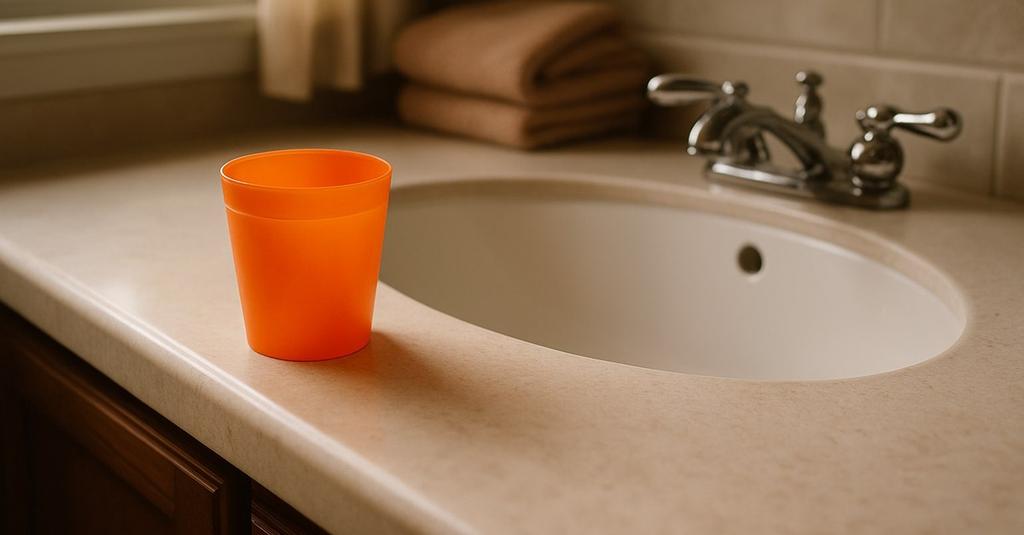
A plastic cup beside a sink. A coat behind a door. You don’t choose these things — they choose you. This is the paradox at the heart of grief and objects: that the most powerful connections between mourners and the possessions of the dead are almost never planned. They happen quietly, in kitchens and bedrooms, and researchers have spent decades trying to understand why something so ordinary carries such weight.
Mark’s family didn’t plan to keep the orange cup. It wasn’t precious. It wasn’t even his favorite. But after the ambulance left on the night of December 31st and the kitchen felt like a different country, nobody could bring themselves to move it. Grief had found its object.
And now the question that researchers, grief counselors, and anthropologists have been circling for decades: why does it always find one?

Key Facts
- Phyllis Silverman and Dennis Klass published Continuing Bonds in 1996, challenging the detachment model of grief
- A 2012 Utrecht University study found 70% of bereaved people formed strong attachment to an ordinary object within the first year
- The continuing bonds model has been cited in over 4,000 academic papers since 1996
- Olfactory grief responses can occur in as little as 300 milliseconds after scent exposure (2018 neuroimaging research)
- About 55 million people die globally each year (World Health Organization, 2022), each leaving several bereaved relatives
In short: The connection between grief and objects explains why mourners attach to ordinary items like a cup or coat rather than valuables. Grounded in the 1996 continuing bonds theory and a 2012 Utrecht study where 70% of the bereaved bonded with an everyday object, it shows attachment is adaptive, not pathological.
How Grief and Objects Form Continuing Bonds
For most of the twentieth century, grief therapy operated under a single assumption: healthy mourning required detachment, a clean severance from the deceased. Then in 1996, researchers Phyllis Silverman and Dennis Klass published Continuing Bonds: New Understandings of Grief, and everything shifted. Drawing on fieldwork with bereaved parents through the organization Compassionate Friends, they challenged the detachment model directly. They found that maintaining an internal relationship with the dead — through memory, ritual, and yes, objects — was not pathological. It was, in the vast majority of cases, adaptive. Their findings reshaped bereavement studies entirely.
The psychological framework they proposed is called continuing bonds theory, and it opened a door that hadn’t been properly opened before: the door to the ordinary kitchen drawer. What’s striking is how non-selective grief appears to be in its object choices.
A 2012 study from Utrecht University in the Netherlands found that bereaved individuals formed strong attachments not to the deceased’s most valuable possessions, but to objects that carried sensory memory — items touched often, items that retained smell, items embedded in daily routine. A wedding ring matters, of course. But so does a scratched coffee mug. So does a pair of reading glasses still folded on a side table.
The emotional weight isn’t about monetary value. It’s about contact. About the residue of a life lived. This is grief doing something specific: it’s building a physical address for a person who no longer has one. The object becomes a location. Somewhere to go when the absence becomes too large to stand inside.
Why Certain Objects Carry More Weight Than Others
When we interact repeatedly with another person, the brain encodes those interactions through sensory pathways — smell, texture, visual familiarity. Here’s the thing: the olfactory system in particular is deeply entwined with grief responses, because scent bypasses the thalamus and routes directly to the amygdala and hippocampus, the brain’s emotional and memory centers. A 2018 study from the University of Queensland found exactly this architecture in neuroimaging data. This is why a deceased person’s unwashed clothing can trigger grief responses so acute they feel physical. It’s not imagination. It’s neurochemistry.
Research on infant bonding shows something parallel: even baby animals form intense emotional bonds with surrogate objects when a primary attachment figure is absent, a behavior strikingly similar to what adult humans do with the belongings of the dead. The same mechanism. Different species, same ache.
Which objects tend to hold the most emotional charge? According to grief researcher Margaret Stroebe at Utrecht University, they share a few consistent features. They’re small enough to be handled. They were part of daily rituals — morning coffee, bedtime reading, the specific chair in the specific corner. They don’t announce themselves as significant.
They were never meant to be memorials. In a 2001 paper published in the journal Omega: Journal of Death and Dying, Stroebe noted something crucial: this ordinariness is precisely the point. Monumental objects — gravestones, framed photographs, formal keepsakes — are already coded as remembrance. They carry their meaning openly. But the ordinary object carries meaning that was never supposed to be there. That mismatch is where the ache lives, and grief, it turns out, knows exactly where to look for it.
There’s something almost unbearable about a half-used tube of hand cream. A bookmark left mid-chapter. A grocery list in someone else’s handwriting. These aren’t monuments. They’re interruptions.
Ancient Cultures Understood This Before Science Did
Long before grief counselors had terminology for continuing bonds, human cultures had rituals built entirely around their logic. The Torajan people of Sulawesi, Indonesia have practiced a form of ancestral veneration for centuries in which deceased family members are kept in the home — sometimes for years — until the family can afford an elaborate funeral ceremony. During that time, the dead are spoken to, offered food, included in family decisions. Objects belonging to the deceased remain in daily use. The line between mourning and living doesn’t fully exist.
Why does Victorian England matter in this conversation? Because at the opposite end of the globe, Victorian mourning culture codified grief into elaborate material practice: mourning jewelry made from the hair of the dead, black-bordered stationery, specific garments worn for prescribed periods. These weren’t just social performances. They were technologies for managing continuing bonds — structured ways of keeping the relationship alive while the world insisted you move on.
But here’s what these cultures share across vast distances and completely different traditions: a refusal of the modern Western assumption that grief has a finish line. Cultures that built mourning traditions into their material lives understood something that took Western psychology until 1996 to formally articulate. The relationship with the dead doesn’t end. It changes form. The person becomes unreachable in body but reachable through object, through ritual, through the particular weight of a cup in your hand at seven in the morning when the house is quiet.
Every shrine ever built, every locket worn, every bedroom left untouched — these are all the same act. Constructing a place where love can still be practiced, even when its subject is gone.
When Continuing Bonds Help — and When They Hold
Not all object attachment in grief is neutral in its effects. A 2006 study from Leiden University in the Netherlands, led by bereavement researcher Paul Boelen, examined the difference between continuing bonds that integrate loss and those that resist it. The distinction isn’t about whether you keep a dead person’s coat behind the bathroom door. It’s about what happens when you open the door.
If the coat brings a moment of closeness — a memory, a sense of presence, a breath of something that feels like comfort — that’s integration. If seeing it triggers acute dissociation, panic, or a sustained inability to function, that’s where grief and objects may benefit from clinical support. And this matters enormously because grief support has historically swung between two damaging extremes.
On one side: push through, pack it up, don’t dwell. On the other: any sustained grief is a disorder requiring treatment. The continuing bonds framework, refined through studies at institutions including Harvard Medical School and the University of Utrecht between 1996 and 2015, offers something more nuanced. It says: maintenance of a relationship with the dead is healthy until the relationship with the living starts to collapse. The orange cup can stay beside the sink for as long as it needs to. What matters is whether, eventually, someone in the house is still eating dinner.
Grief counselors working within this framework now actively encourage clients to identify and name the objects that matter — not to remove them, but to understand what they’re doing. To give the object its proper weight. To say out loud: this cup belonged to Mark, and I’m not ready to put it in the drawer, and that’s all right.
Naming makes the relationship conscious. And conscious relationships, even with the dead, can grow.
How We Begin, Slowly, to Let Objects Rest
The process by which objects eventually release their mourning weight is poorly understood, and researchers are honest about this gap. A 2019 qualitative study by the University of York’s Centre for Death and Society documented interviews with fifty-three bereaved adults who had held significant objects for between two and seventeen years. Almost universally, they described the moment of release not as a choice but as a discovery. One morning they reached for the object and found that something had quietly changed. They had, or it had. The charge was still there, but quieter. Manageable. Not a wound anymore. A scar, which is a different kind of knowledge.
What’s clear is that release rarely happens through decision. Nobody sits down and decides to wash the cup today. It tends to happen through accumulated living — through the ordinary weight of a cup becoming, finally, just a cup again. But when anything does speed this process, it appears to be narrative.
Talking about the object — its history, the person who used it, why it matters — seems to gradually transfer meaning from the object itself into language. The story becomes the container, and the physical thing is gently returned to the material world. Therapists working in narrative grief models, including those trained under the approach developed by Robert Neimeyer at the University of Memphis, use this process deliberately. Tell me about the cup. Where did it come from? What did he do with it? Let the object speak through you, until you have the words and the object can rest.
This is also, and this matters more than it sounds, why music so reliably unlocks grief — singing and shared sound create a pathway for emotion that bypasses ordinary language altogether, reaching the same deep memory structures that objects access through touch and smell.
There’s no timeline for any of this. The coat behind the bathroom door might come down after six months, or after six years, or after someone else needs a coat. Grief doesn’t submit to calendars. And the object, patient as objects are, will wait.
How It Unfolded
- 1917: Sigmund Freud publishes Mourning and Melancholia, establishing the dominant twentieth-century model that healthy grief requires detachment from the deceased — a framework that would shape clinical practice for eight decades.
- 1996: Phyllis Silverman and Dennis Klass publish Continuing Bonds: New Understandings of Grief, formally challenging the detachment model with fieldwork demonstrating that maintained relationships with the dead are adaptive, not pathological.
- 2001: Margaret Stroebe and colleagues at Utrecht University publish research in Omega: Journal of Death and Dying establishing the role of ordinary objects as primary vehicles for continuing bonds behavior.
- 2019: The University of York’s Centre for Death and Society documents long-term object attachment in bereaved adults, finding that release from object-based grief typically occurs through accumulated experience rather than conscious decision — a finding that reframes how counselors approach material grief entirely.
By the Numbers
- 55 million people die globally each year (World Health Organization, 2022), leaving an estimated five to ten bereaved close family members each — meaning hundreds of millions of people are actively navigating object-based grief at any given moment.
- 70% of bereaved individuals in a 2012 Utrecht University study reported strong attachment to at least one ordinary, non-valuable object belonging to the deceased within the first year of bereavement.
- 17 years: the longest documented period of significant object attachment recorded in the University of York’s 2019 qualitative study of fifty-three bereaved adults.
- Olfactory grief responses occur in as little as 300 milliseconds after scent exposure — faster than conscious recognition — according to neuroimaging research published in 2018.
- The continuing bonds theoretical model has been cited in over 4,000 academic papers since its introduction in 1996, making it one of the most influential frameworks in modern bereavement research.
Field Notes
- In 2014, grief researchers at the University of Memphis documented a bereaved woman who had kept her late husband’s reading glasses on his side table for eleven years — not as a shrine, but because she still automatically glanced at them each morning, and the glance had become its own quiet ritual of connection.
- Watching a species of grief behavior persist across cultures and centuries without clinical validation until 1996, you begin to suspect that Western psychology arrived very late to something humans already knew.
- Victorian mourning hair jewelry — intricate brooches, rings, and lockets woven from the hair of the dead — was not considered morbid in its time. It was considered loving. The shift in perception tells us more about changing attitudes toward death than about the jewelry itself.
- Researchers still cannot reliably predict which specific object will become the primary grief anchor for any individual — despite extensive study, the selection process remains, in the words of one Utrecht University researcher, “beautifully arbitrary and entirely immune to outside logic.”
Frequently Asked Questions
Q: Is the connection between grief and objects forming continuing bonds a sign of unhealthy mourning?
No. Since Klass and Silverman’s 1996 framework, the clinical consensus has shifted firmly away from classifying object attachment as a warning sign. Maintaining a relationship with the deceased through objects is considered adaptive in the vast majority of cases. It becomes a clinical concern only if the attachment prevents functioning in daily life or sustains acute distress over a prolonged period — typically defined as more than twelve months of severe impairment.
Q: Why do people attach to ordinary objects rather than treasured ones?
The brain encodes relationships through sensory routine, not monetary significance. Objects that were handled daily, that carry residual smell, or that were embedded in repeated rituals hold stronger neurological associations than formally valuable objects. A worn cardigan triggers the olfactory-amygdala pathway faster and more powerfully than a piece of jewelry the deceased only wore occasionally. Grief follows neurology, not sentiment — which is why a plastic cup can outweigh a gold watch in emotional charge.
Q: Does keeping objects belonging to the dead prevent the grief process from completing?
This is one of the most common misconceptions in popular grief culture — the idea that holding onto objects means “not moving on.” Current bereavement research, particularly work from Utrecht University and the University of Memphis between 2001 and 2019, finds the opposite: that continuing bonds maintained through objects tend to support integration rather than block it. The goal of grief was never to detach from the dead. It was always to find a way to carry them that allows you to keep living. Objects, at their best, help with exactly that.
Editor’s Take — Sarah Blake
What stays with me about this research is the 2019 York finding — that release from an object’s grief weight isn’t a decision. Nobody washes the cup on purpose. They just reach for it one morning and find that something has quietly changed. That’s not therapy. That’s not willpower. That’s the body, slowly and on its own schedule, learning to live in the same room as loss. I think that’s both more honest and more hopeful than anything a timeline for grief has ever offered.
Somewhere right now, in an ordinary kitchen in an ordinary city, there is an object sitting in a specific place for a reason that can’t quite be put into words yet. A cup. A coat. A bookmark in a book that will never be finished. These things are doing real work — neurological, psychological, deeply human work — in a world that doesn’t always give them credit for it. The question isn’t when you’ll be ready to move them. The question is whether, in the meantime, you can let them mean what they mean.
“
Illustrations are AI-generated. Article fact-checked and human-edited. Our editorial standards.