The Woman Who Mailed 200 Million Books to Poor Kids
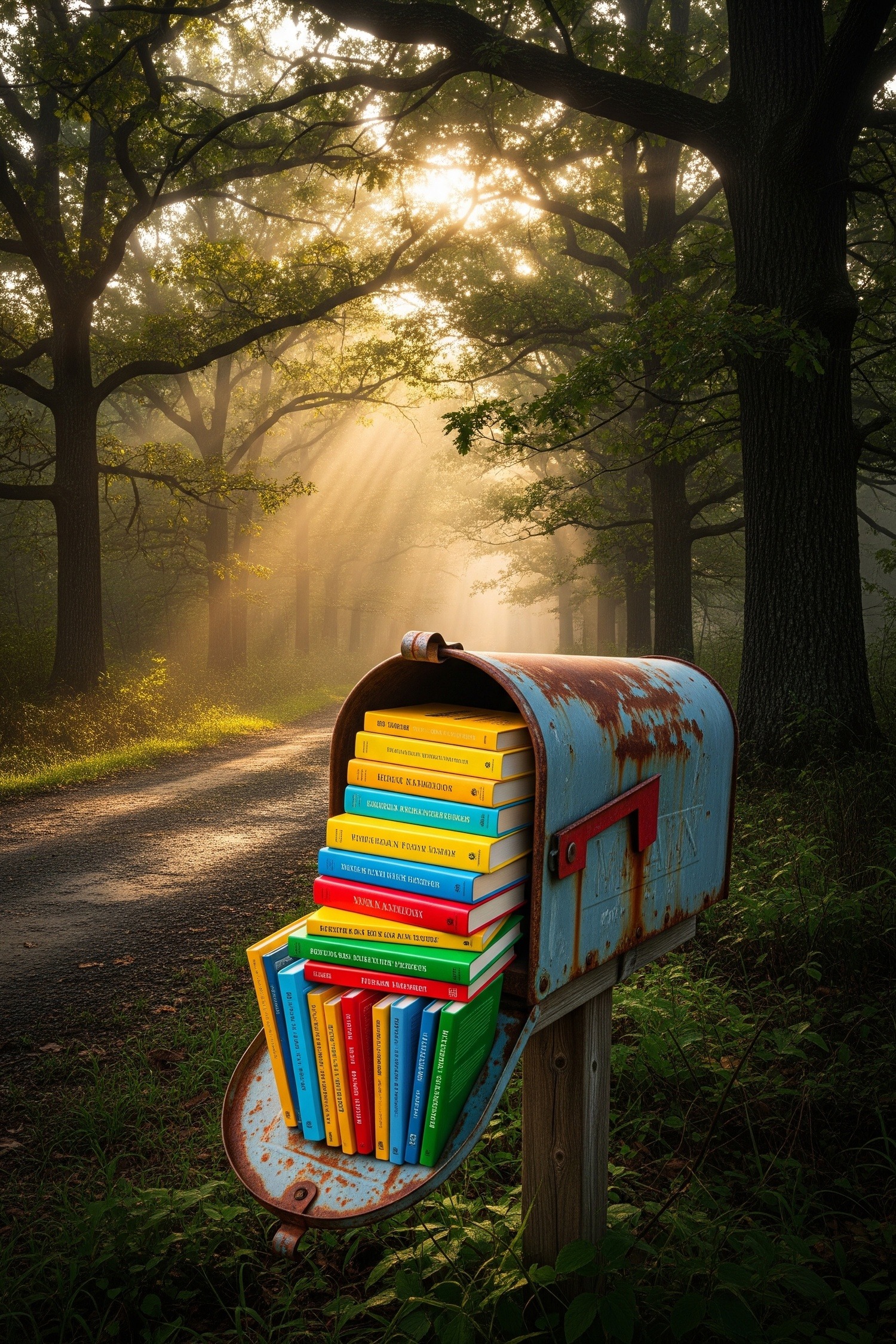
Two hundred million books have gone out through the mail since 1995, and the wild part? Nobody required an application. No income verification. No waiting period. A woman from Tennessee just decided that every kid deserves a book showing up at their house with their name on it.
Dolly Parton grew up in a one-room cabin in Locust Ridge, Tennessee. Her father signed his name with an X. She watched poverty close doors that never opened again for people around her, and somewhere along the way — probably in that cabin, probably in the dark — she decided that when she had the power to change something, she actually would.
So she didn’t write a check to some existing nonprofit. She built her own thing. And it’s still running.
Key Facts
- The Dolly Parton Imagination Library launched in 1995 in Sevier County, Tennessee, mailing one free book per month to every child from birth to age five.
- More than 200 million books have been mailed through the program since 1995, growing by roughly 1.5 million per month according to the Dollywood Foundation.
- Researchers at the University of Virginia found that children enrolled in the program arrived at kindergarten significantly more prepared, with the strongest benefits in low-income households.
- The program now operates in more than 2,300 communities across five countries, including the United States, Canada, the United Kingdom, and Australia.
- The program costs about $25 per child per year, delivering roughly 60 books by age five, funded through a public-private model where local communities back their own chapters.
In short: Dolly Parton’s Imagination Library, launched in 1995 in Sevier County, Tennessee, mails one free age-appropriate book each month to every enrolled child from birth to age five. It has delivered over 200 million books, costs about $25 per child yearly, and runs in 2,300-plus communities across five countries.
How the Dolly Parton Imagination Library Actually Works
It is 1995 in Sevier County, Tennessee. The Imagination Library launches with something that sounds almost stupid in its simplicity: every child from birth to age five gets one free, age-appropriate book mailed directly to their home every single month. That’s it. No income checks. No forms. No questions about whether you “deserve” it.
The book arrives with the child’s name on it.
Not the parent. The child. And Dr. Helen Egger, who studies early childhood literacy, has this phrase for what that does — “structurally significant.” The absence of barriers becomes the intervention itself. But what actually changes when a book shows up at your door twelve times a year?
Turns out, quite a lot. When a three-year-old gets a book addressed to them by name, something shifts in how families interact with reading. That expectation — *you are a reader* — has measurable effects. It’s almost embarrassing how much a small signal like that matters.
The Research Behind Every Monthly Book
Researchers at the University of Virginia tracked kids in the program and compared them to peers who weren’t enrolled. The kids who got the books arrived at kindergarten significantly more prepared. Letter recognition. Understanding that print carries meaning. Holding books correctly. Turning pages in the right direction. These sound like tiny things until you realize they’re foundational — they’re the behaviors that predict whether a kid will actually become a reader or fall behind before they even start.
The data is clean. Classroom-level. Reproducible.
And here’s what gets interesting: the benefits were strongest in low-income households. The program doesn’t target those families — it’s universal access, open to everyone. But universal access, in practice, disproportionately helps the kids who need it most. The ones whose parents work two jobs. The ones who live in neighborhoods without libraries. The ones who’ve never seen someone read for pleasure because everyone’s too busy surviving.
You can read more about early childhood development science at this-amazing-world.com.
One County, Then Everything Else
The program didn’t expand because Dolly hired a marketing firm. It expanded because people kept asking if they could copy it. Governors noticed the kindergarten readiness numbers. Parent groups wanted it. Libraries wanted it. Local nonprofits started funding their own chapters and suddenly — sometime in the early 2000s — the program was in multiple states. Then multiple countries. Canada. The UK. Australia. Five countries now. Thousands of communities.
What began as one woman trying to fix one problem in her hometown became something else entirely.
Two hundred million books. If you stacked them, they’d reach the moon and back — that last fact kept me reading for another hour, which is embarrassing but true. But the number that actually matters? It’s one. One book. One Tuesday morning. One three-year-old who’s never owned anything like it before.
The Book Selection Process Is Surprisingly Rigorous
Books don’t get picked randomly for this program. A team of early childhood literacy experts curates titles by developmental stage because a book for a newborn and a book for a four-year-old aren’t doing the same cognitive work. Some books build phonemic awareness. Others focus on emotional vocabulary or narrative structure. The program has introduced millions of kids to “The Little Engine That Could” and “Llama Llama Red Pajama,” but those aren’t famous choices — they’re methodical ones.
And Dolly isn’t a figurehead signing checks from somewhere else. She reviews book lists. She advocates for specific titles. She’s been known to push back if she doesn’t think something hits right.
By the Numbers
- Over 200 million books mailed since 1995, growing by roughly 1.5 million per month according to the Dollywood Foundation’s tracking.
- Children in the program showed measurably higher kindergarten readiness scores in independent University of Virginia research, with the strongest gap in letter recognition — something that compounds every year afterward in ways educators can actually quantify.
- More than 2,300 communities across five countries now run chapters, making this one of the largest privately funded early childhood literacy programs on the planet.
- $25 per child per year. That’s 60 books by age five. Compare that to the national average for kids below the poverty line, which is zero books.
Field Notes
- The first book every child receives is “The Little Engine That Could.” The Dollywood Foundation said the message of persistence resonated with Dolly’s own story — poor kid, kept pushing, didn’t stop.
- Dolly turned down the Presidential Medal of Freedom twice before accepting it in 2022. She didn’t feel comfortable with the honor at first.
- The funding model is public-private hybrid: local communities fund their own chapters, which means Dolly’s foundation acts like a franchisor of a literacy model rather than a traditional charity. That design is why it scaled so fast instead of staying centralized and slow.
Why This Story Is Bigger Than One Famous Name
The Imagination Library is proof of concept. Universal, no-strings-attached access to books in early childhood produces measurable results at scale across different countries and income levels. Policymakers are watching. Several government programs in the UK and Australia have adopted or co-funded the model after seeing local data. What started as one woman’s response to poverty became a blueprint that researchers and education officials actually cite when arguing for early literacy investment.
The biggest barrier to reading isn’t ability. It’s access. And access isn’t just about whether a library exists in your town — it’s about whether a book exists inside your home at all. Most kids from low-income families enter kindergarten having never owned a single book. That gap doesn’t close. It compounds. Every year it gets bigger.
The Imagination Library attacks that specific problem directly, cheaply, and without bureaucracy.
Dolly Parton built something that will outlast her tours, her albums, and probably her era. Two hundred million books. Sixty books per child. One book at a time, arriving with a name on the envelope. That’s not charity — that’s architecture. A structure built to hold up children before the system ever gets a chance to let them fall. There’s more at this-amazing-world.com — and the next one is even stranger.
Frequently Asked Questions
Q: How does the Dolly Parton Imagination Library work?
Every enrolled child from birth to age five receives one free, age-appropriate book mailed to their home each month, with the child’s own name on it rather than the parent’s. There are no income checks, no forms, and no questions about whether a family deserves the book. According to early childhood literacy researcher Dr. Helen Egger, the absence of barriers becomes the intervention itself, and families receive the books for as long as the child remains in the eligible age range.
Q: What evidence shows the program improves school readiness?
Researchers at the University of Virginia tracked children in the program and compared them with peers who were not enrolled. The enrolled children arrived at kindergarten significantly more prepared, showing stronger letter recognition, understanding that print carries meaning, and basic book-handling skills like holding books correctly and turning pages the right way. The data was classroom-level and reproducible, and the benefits were strongest in low-income households even though the program offers universal access rather than targeting those families.
Q: How did the Imagination Library expand from one Tennessee county to five countries?
The program grew because outside groups asked to copy it rather than through a marketing campaign. Governors noticed the kindergarten readiness numbers, while parent groups, libraries, and local nonprofits began funding their own chapters. By the early 2000s the program was in multiple U.S. states and then expanded internationally to Canada, the United Kingdom, and Australia, reaching more than 2,300 communities in five countries. The public-private funding model, where local communities back their own chapters, allowed it to scale quickly.
Q: How are the books chosen for each child?
A team of early childhood literacy experts curates titles by developmental stage because a book for a newborn and a book for a four-year-old do different cognitive work. Some titles build phonemic awareness, others focus on emotional vocabulary or narrative structure. Dolly Parton herself reviews book lists and advocates for specific titles. The first book every enrolled child receives is The Little Engine That Could, chosen because the Dollywood Foundation says its message of persistence resonated with Dolly’s own story.
Illustrations are AI-generated. Article fact-checked and human-edited.