This Termite Turns Itself Into a Bomb When It Gets Old
There’s a termite in the rainforests of French Guiana that doesn’t get weaker as it ages. It gets more dangerous. And when the colony needs it, it explodes.
Not metaphorically. Literally ruptures open and sprays poison everywhere.
The termite is called Neocapritermes taracua, and it’s spent millions of years evolving something that sounds like it came straight out of a sci-fi thriller: the older it gets, the deadlier it becomes. Not stronger in the traditional sense. More explosive. More toxic. More willing to detonate itself for the colony’s survival.
Key Facts
- Neocapritermes taracua, a termite from the rainforests of French Guiana, uses autothysis, deliberately rupturing its body to spray a toxic chemical on attackers.
- A 2012 study published in Science by Robert Sobotnik and colleagues confirmed older N. taracua workers produce substantially higher concentrations of toxic secretion than younger ones.
- The blue toxic secretion contains copper-containing proteins unique to this species, accumulating in glands over the termite’s entire life.
- N. taracua is the most extreme documented case of autothysis in termites, with toxin potency surpassing the benchmark ant species.
- A single termite colony can contain millions of individuals, so it can absorb the loss of aging soldiers in exchange for killing attackers.
In short: The exploding termite defense belongs to Neocapritermes taracua in French Guiana, which grows deadlier with age. Older workers accumulate copper-based blue toxin in their glands, and when predators attack they rupture their own bodies in a process called autothysis, spraying poison. A 2012 Science study confirmed older workers carry far more toxin than younger ones.
How the Exploding Termite Defense Actually Works
Autothysis. That’s the scientific word for deliberate self-rupture. When a predator breaks through the colony’s defenses, the older worker termites don’t run. They don’t fight with mandibles or claws. Instead, they contract their bodies so violently that they literally burst open, spraying a sticky, toxic chemical cocktail all over whatever’s attacking them.
Researcher Robert Šobotník and his team documented this in stunning detail — identifying which glands do the work, measuring how toxic the secretions actually are, comparing old workers to young ones. The difference was massive.
Turns out the blue-tinted glands in older workers produce significantly more toxin than those in younger ones. A lot more.
The termite is, in the most literal sense, a living weapon that charges up over a lifetime and detonates on demand.
The Blue Backpack
The color matters.
It comes from copper-based proteins that accumulate in specialized glands over the course of the termite’s entire life. The older the termite, the more saturated those glands become. If you looked at a young worker and an old worker side by side, you’d actually see it — the older one carries visible blue tinting in its body, a visual signal of how much destruction it’s walking around with. The toxin just keeps building, year after year, day after day, until the termite is basically a walking grenade.
For more on how insects evolve extreme survival strategies, there’s a lot more at this-amazing-world.com.
Here’s what really gets me about this: the termite’s entire aging process is oriented around becoming more useful to the colony by becoming more lethal. It doesn’t slow down and become a burden like most aging animals do. It loads up. It waits. And when the time comes, it goes out in the most dramatic way possible.
Aging Into a Weapon
Most organisms lose utility as they age. Cells accumulate damage. Speed decreases. Strength drops. Humans especially — we get slower, weaker, more dependent.
But in Neocapritermes taracua, that entire logic flips upside down.
Age equals potency. The longer this termite lives, the more crystalline blue toxin builds up in its glands, and the more catastrophic its self-sacrifice becomes for any attacker. It’s one of the most extreme examples of biological role specialization ever documented in colonial insects. And while some ant species practice autothysis too, N. taracua has developed the most potent version yet — measurably more toxic, measurably more devastating.
The colony has essentially outsourced its most extreme defense to its oldest members.
Here’s where it gets even stranger.
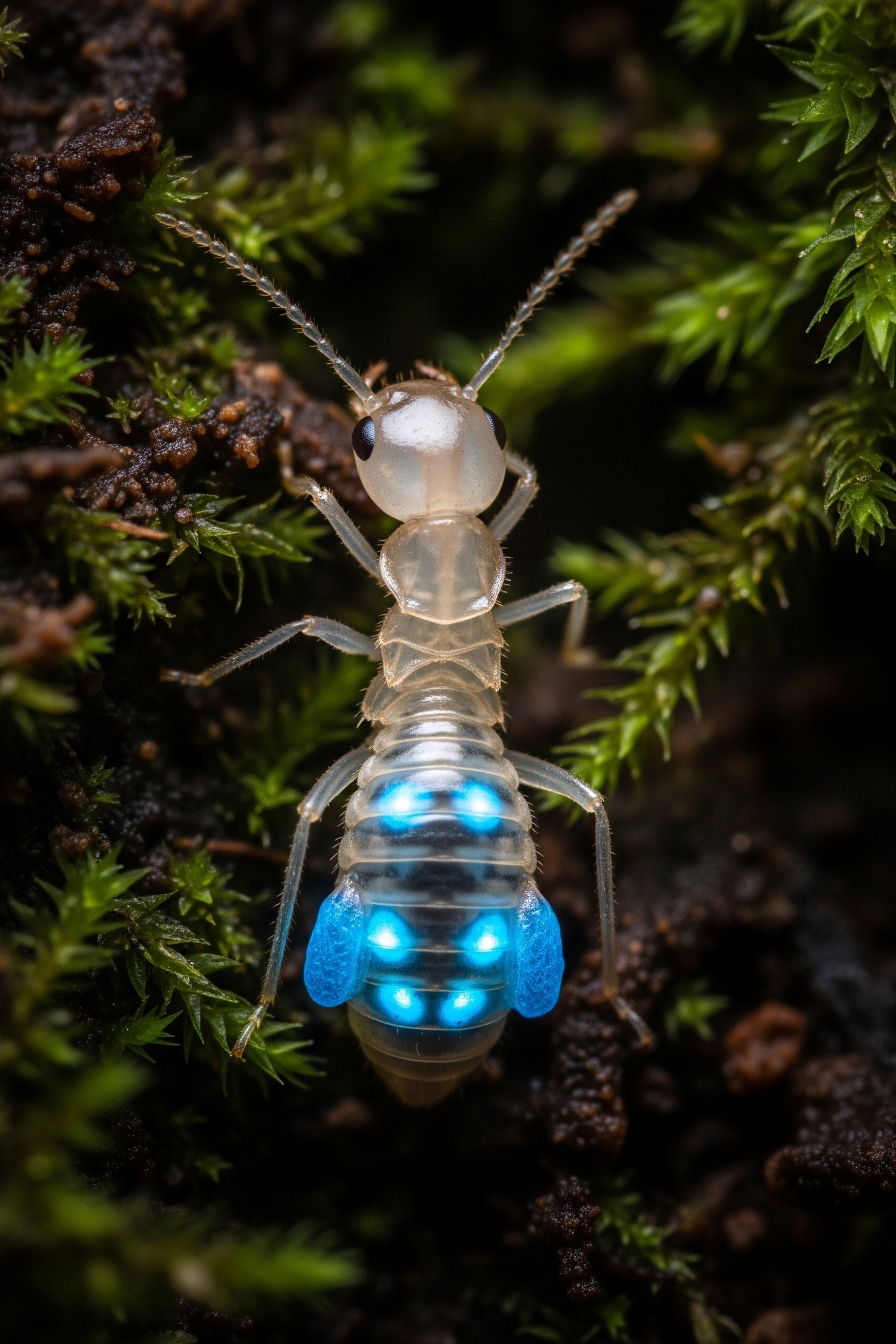
The Colony’s Calculation
From an evolutionary standpoint, this makes complete sense. Older workers have already contributed years of labor to the colony — foraging, building, caring for eggs. Their reproductive value is zero. Their work output is declining. But if their deaths can reliably neutralize a threat that might kill hundreds of younger, more productive colony members? That trade is worth making every single time. The colony survives. The individual does not.
That’s the entire calculation, distilled into biology over millions of years.
It’s not sacrifice in the way we’d use that word. There’s no conscious choice happening. But the biology has been shaped — ruthlessly, elegantly — to make self-destruction the most logical outcome for an aging termite facing a predator. Evolution doesn’t care about the individual. It cares about what works.
By the Numbers
- In a 2012 study published in Science, Šobotník and colleagues confirmed that older N. taracua workers produce substantially higher concentrations of toxic secretion than younger ones — making age itself a measurable threat multiplier.
- The toxic blue secretion contains copper-containing proteins unique to this species. Nothing like it in other termite defense mechanisms.
- Neocapritermes taracua is the most extreme documented case of autothysis in termites, with toxin potency surpassing that of the ant species previously considered the benchmark.
- A single termite colony can contain millions of individuals. The colony can absorb the loss of individual soldiers while a few dead attackers tips the entire defensive equation in the colony’s favor.
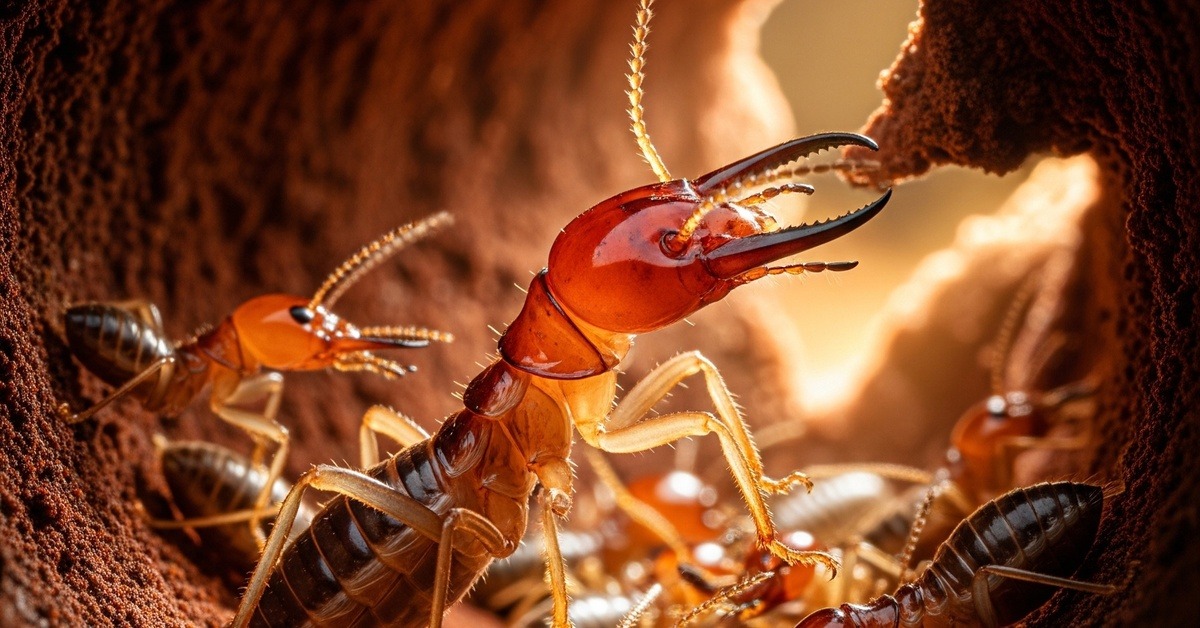
The Biology of Aging Into Destruction
- The glands responsible for the explosion — called hypertrophied salivary glands — aren’t fully developed in younger workers. They enlarge over the course of a termite’s entire lifespan, meaning the body is literally building toward this moment from early in its life.
- Sticky and toxic. The spray doesn’t just kill on contact — it can immobilize attackers, trap them in place, and in some documented cases cause a chain reaction that eliminates multiple invaders from a single detonation.
- Autothysis has evolved independently in multiple insect lineages, including several ant species in Southeast Asia. Colonial living, under enough evolutionary pressure, keeps arriving at the same radical conclusion: some individuals are most valuable dead.
What This Termite Tells Us About Life in a Colony
The exploding termite defense isn’t just strange for strangeness’s sake. It’s a window into how profoundly different colonial life is from individual survival. In a colony, the unit of survival isn’t the body you’re looking at. It’s the whole structure. The network. The thousands of interconnected lives that depend on each other to function.
When you’re part of that, your purpose isn’t self-preservation. Your purpose is the colony’s preservation.
And if your death serves that better than your life, then evolution will find a way to make your death very useful.
That last fact kept me reading for another hour, honestly.
It doesn’t map onto human experience in any comfortable way. But it’s worth understanding — because it reveals how many different answers biology has found to the question of what a life is actually for. Not all of them look like survival. Some of them look like controlled detonation.
A termite that ages into a bomb. A colony that weaponizes its elderly. A defense so extreme it sounds invented. But it’s documented. It’s happening right now in the rainforests of French Guiana. Nature doesn’t always choose the gentle path. Sometimes it chooses the one that works. If this keeps you up at night, there’s more at this-amazing-world.com — and the next one is even stranger.
Frequently Asked Questions
Q: What is the exploding termite and where does it live?
The exploding termite is Neocapritermes taracua, a species found in the rainforests of French Guiana. When a predator breaks through the colony’s defenses, older worker termites contract their bodies so violently that they literally burst open, spraying a sticky, toxic chemical cocktail on the attacker. Researcher Robert Sobotnik and his team documented this in detail in a 2012 study published in Science, identifying which glands produce the toxin and measuring how much more potent it is in older workers.
Q: What is autothysis in termites?
Autothysis is the scientific term for deliberate self-rupture, where an insect bursts its own body as a defense. In Neocapritermes taracua, older workers do not flee or fight with mandibles; instead they detonate, releasing a toxic secretion that can immobilize and kill attackers. Autothysis has evolved independently in multiple insect lineages, including several ant species in Southeast Asia, but N. taracua is the most extreme documented termite case, with toxin potency surpassing the ant species previously considered the benchmark.
Q: Why does the exploding termite become more dangerous with age?
The blue toxin comes from copper-based proteins that accumulate in specialized glands over the termite’s entire life, so the older the worker, the more saturated and lethal those glands become. A 2012 Science study confirmed older Neocapritermes taracua workers produce substantially higher toxin concentrations than younger ones. From an evolutionary standpoint, aging workers have low remaining work value, so the colony effectively outsources its most extreme defense to its oldest members, whose deaths can neutralize threats to hundreds of younger individuals.
Illustrations are AI-generated. Article fact-checked and human-edited. Our editorial standards.