The 9-Year-Old Who Sang His Way Out of a Kidnapping
What does a nine-year-old do when he has no phone, no weapon, no way to signal anyone outside? Willie Myrick faced exactly that question in March 2014, alone in a stranger’s car, and his answer would become one of the most extraordinary acts of survival ever recorded. He had only a voice — and the will to use it.
The kidnapping happened on an ordinary Saturday morning in Atlanta. Willie stepped outside his home and was grabbed by a man he didn’t know. According to reporting by WSB-TV Atlanta in 2014, Willie later described the man as aggressive and volatile — someone who made it immediately clear that silence was expected. For three hours, through the streets of metro Atlanta and into the suburb of East Point, Georgia, nobody outside that car knew where he was.
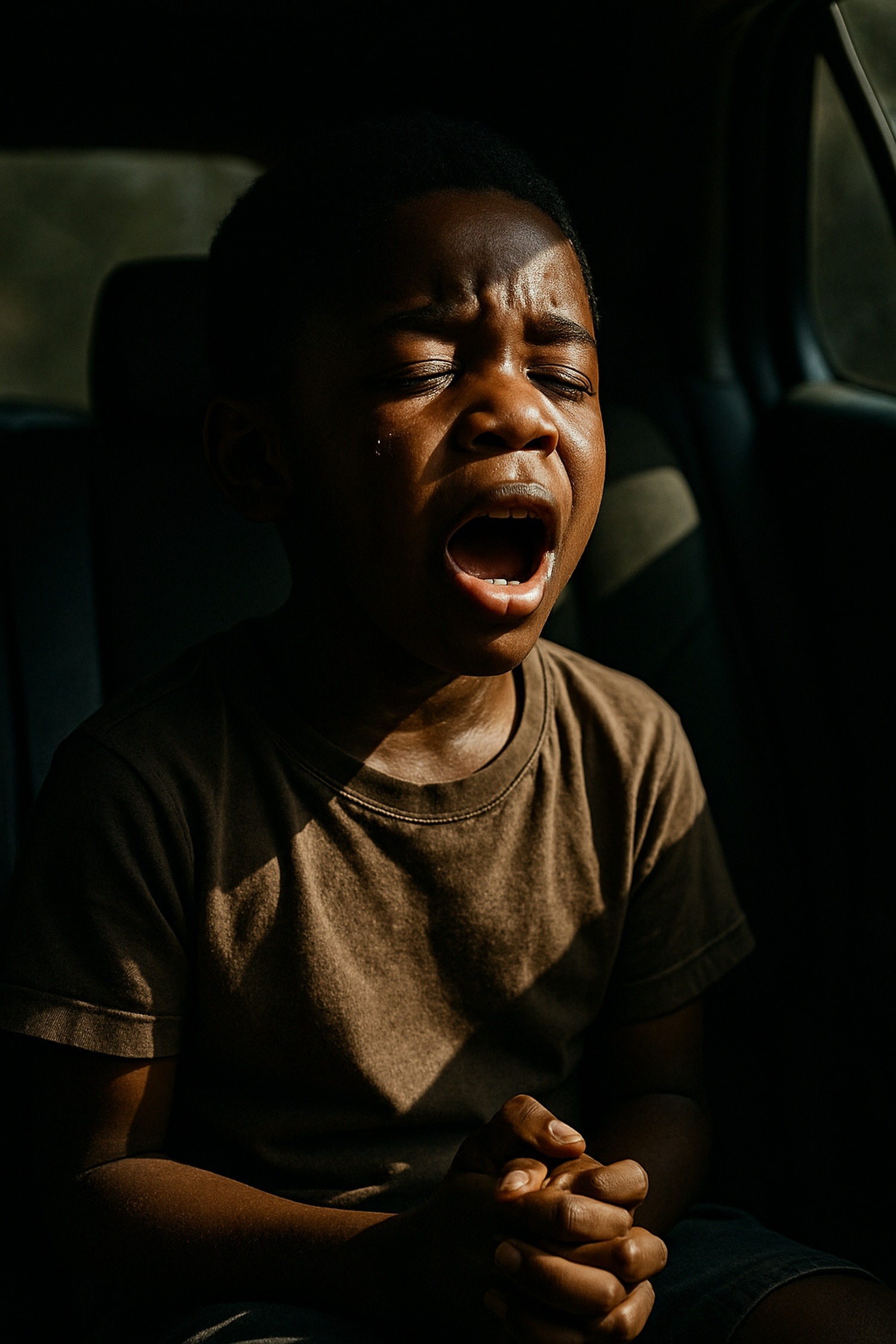
What happened inside it, though, would eventually reach millions of people — and redefine what courage sounds like.
Key Facts
- In March 2014, nine-year-old Willie Myrick was abducted on a Saturday morning in Atlanta and held for approximately three hours in a stranger’s car
- Willie sang Hezekiah Walker’s gospel song ‘Every Praise’ continuously for the three-hour ordeal until the kidnapper pulled over in East Point, Georgia, and pushed him out
- Hezekiah Walker, a Brooklyn-based pastor and gospel artist, recorded ‘Every Praise’ with his Love Fellowship Choir in 2013; the song topped the Billboard Gospel Airplay chart that year
- Psychologists at the University of Toronto, who have studied vocal behavior under stress since the early 2000s, have documented that sustained singing activates the parasympathetic nervous system, slowing heart rate and cortisol production
- The kidnapping was reported by WSB-TV Atlanta in 2014
In short: In March 2014, nine-year-old Willie Myrick was abducted in Atlanta and held in a stranger’s car for three hours. He sang Hezekiah Walker’s 2013 gospel hit ‘Every Praise’ continuously until the kidnapper pushed him out in East Point, Georgia. University of Toronto research shows sustained singing activates the parasympathetic nervous system, lowering heart rate and cortisol — biology and tradition aligning under threat.
The Moment Willie Reached for the Only Thing He Had
Willie was nine. He weighed perhaps sixty pounds. And he was alone in a moving car with a stranger whose intentions were entirely unknown. The mathematics of that situation, for any adult processing it from the outside, are almost unbearable to contemplate. But Willie Myrick didn’t freeze. He didn’t disappear into silence the way fear so often demands. Instead, he reached for something that had been living inside him since Hezekiah Walker’s recording of “Every Praise” had topped the Billboard Gospel Airplay chart in 2013.

He started to sing.
The gospel song is repetitive by design. It builds. It circles back. It’s the kind of music that doesn’t ask much of the singer except commitment — and commitment was the one thing Willie had in full supply. Softly at first, perhaps. Then louder. The kidnapper told him to stop. Willie kept going. The man cursed at him. Willie kept going. For three hours — not three minutes, not thirty — a nine-year-old child held a single song between himself and whatever darkness that car ride might have ended in.
That’s not instinct. That’s will.
What the Voice Does Under Extreme Threat
It’s easy to hear this story and frame it as miraculous — the hand of faith reaching into a terrible situation and pulling a child to safety. That’s one true way to read it. But here’s the thing: there’s another lens equally valid, rooted in what we understand about the psychology of trauma response and the physiology of the human voice. Psychologists at the University of Toronto, who have studied vocal behavior under stress since the early 2000s, have documented that sustained singing activates the parasympathetic nervous system, slowing heart rate and cortisol production even in high-threat environments.
For the singer, it’s a regulatory tool. It keeps the body from tipping into full dissociative panic. Willie may not have known any of that. But his nervous system did. Singing kept him present. It kept him functional. It kept him, in the most literal biological sense, from shutting down entirely inside that car.
And there’s something else that’s worth sitting with: it filled the space. It made Willie impossible to ignore, impossible to treat as an object, impossible to disappear.
For the kidnapper, three hours of unbroken gospel music was a different kind of experience entirely. Research into how tenderness and strength operate simultaneously under pressure suggests that the human voice, particularly in song, can create profound psychological discomfort for someone attempting to dominate or control another person. Every repetition of “Every Praise” was a declaration that Willie was still present, still human, still impossible to fully subdue. That’s a form of resistance that requires no physical strength whatsoever.
Eventually, the man had enough. He pulled over in East Point — just south of Atlanta — shoved Willie out of the car, and drove away. Three hours of singing had done what no weapon, no phone, and no adult intervention had been able to do.
Gospel Music as a Technology of Survival
Why does gospel music become the resource people reach for under the worst pressure? Because “Every Praise” wasn’t random. The song had been living in Black gospel communities across the American South well before it topped the charts. Hezekiah Walker, a Brooklyn-based pastor and gospel artist who has been recording since the 1980s, released the track in 2013 with his Love Fellowship Choir — and it spread the way only truly communal music does, through churches and Sunday school classrooms and family living rooms.
By the time Willie was grabbed in March 2014, the song had been living in his body for months. He didn’t have to think about it. He just had to open his mouth. That’s the thing about music absorbed in community: it doesn’t sit in the intellectual brain where fear does most of its damage. It sits somewhere older, somewhere the body can access even when the mind is overwhelmed.
The Smithsonian Institution’s research into American gospel traditions has documented how deeply gospel functions as a survival tool within communities that have historically faced profound threat — not only spiritual sustenance, but a technology of endurance passed across generations. During the civil rights movement, freedom songs were deployed not because they were pleasant but because they were destabilizing to those who wished to maintain control through fear. Willie Myrick, at nine years old, reached unconsciously for exactly that same technology.
He sang himself back into personhood at a moment when someone was trying to reduce him to an object.
Watching a child instinctively access centuries of his own tradition to survive modern violence is the kind of moment that stops you.
The Meeting That Changed Everything
After the story broke through local Atlanta media and then spread nationally, it reached Hezekiah Walker himself. Walker is no peripheral figure in gospel — he leads the Love Fellowship Tabernacle Church in Brooklyn and has been a central figure in urban contemporary gospel since the late 1980s. He was moved in a way that went beyond public relations warmth. He arranged to meet Willie personally.
In video footage from that meeting, which went viral in mid-2014, Walker is visibly emotional as he listens to Willie recount what happened inside that car. Then comes the moment that became one of the most quietly extraordinary images of that year: Walker sat down at a piano and performed “Every Praise” with Willie standing beside him. The boy who’d used the song to survive, and the man who’d written it, sharing the same stage. The Willie Myrick kidnapping gospel song moment reached far beyond the gospel community. CNN covered it. People covered it. Dozens of international outlets picked it up. It landed because it was, at its core, a story about what a child had chosen to do when there was nothing left to choose from.
Walker told interviewers afterward that he’d written “Every Praise” during a period of personal difficulty — that the song had come from a place of needing something to hold onto.
He hadn’t known, when he wrote it, that it would one day hold a nine-year-old boy together inside a kidnapper’s car. That’s not an unusual trajectory for gospel music, but it remains astonishing every time it plays out. Songs written in one person’s darkness travel into other people’s darkness in ways the writer can never predict or control.
Willie, for his part, handled the media attention with composure that most adults would struggle to match. He spoke clearly about what he’d done and why. He wasn’t performing humility. He seemed genuinely matter-of-fact. He sang because it was the thing he had. He sang until the man let him go. That was it. The story, in Willie’s own telling, wasn’t complicated.
How It Unfolded
- 2013 — Hezekiah Walker releases “Every Praise” with his Love Fellowship Choir; it reaches number one on the Billboard Gospel Airplay chart and becomes a staple in Black church communities across the American South.
- March 2014 — Nine-year-old Willie Myrick is abducted from outside his Atlanta home and spends three hours singing “Every Praise” inside his kidnapper’s car before being released physically unharmed in East Point, Georgia.
- Mid-2014 — The story breaks nationally after Willie’s family shares it with local Atlanta media; Hezekiah Walker personally invites Willie to perform “Every Praise” together, generating viral coverage across CNN, People, and international outlets.
- 2015–present — The Willie Myrick kidnapping gospel song story continues to circulate as a case study in child resilience, trauma response, and the psychology of survival, appearing in school curricula and pastoral counseling training materials across the United States.
By the Numbers
- 3 hours — the duration of Willie Myrick’s abduction, entirely spent inside the kidnapper’s vehicle before release (WSB-TV Atlanta, 2014).
- 9 years old — Willie’s age at the time; the FBI classifies children under 12 as among the most vulnerable victims in abduction cases.
- 1 song — “Every Praise” was the only song Willie sang, repeating it on a continuous loop for the entire duration of the ordeal.
- Number one — the chart position “Every Praise” held on the Billboard Gospel Airplay chart in 2013, making it one of the most recognizable gospel tracks in America at the time of the Willie Myrick kidnapping gospel song incident.
- Millions — the estimated global viewership of the video footage showing Willie’s meeting and performance with Hezekiah Walker, shared across platforms in the summer of 2014.
Field Notes
- Willie’s case is unusual in abduction research because his survival strategy was entirely self-generated — he received no prior training in how to respond to kidnapping, and singing is not part of any standardized child-safety curriculum. His choice emerged spontaneously from his faith community, not formal instruction. Researchers at the National Center for Missing and Exploited Children have noted the Willie Myrick kidnapping gospel song case as a rare example of a child deploying creative psychological resistance rather than compliance or escape attempts.
- Gospel music’s specific rhythmic and repetitive structure may matter more than the spiritual content. Music psychologists note that cyclical, call-and-response forms — which “Every Praise” exemplifies — are particularly effective at regulating breathing and heart rate during sustained stress, regardless of whether the singer holds religious belief.
- Hezekiah Walker had written “Every Praise” primarily as a worship tool for congregational singing, not as a recorded single — it was intended to be sung together, in community, which means the song was literally designed to be louder when more people join in. Willie, alone in a car, was using a communal instrument in profoundly solitary circumstances.
- Law enforcement was never able to identify or apprehend the kidnapper. It remains an open case. Researchers studying the incident can’t fully explain why the abductor chose to release Willie rather than escalate — whether the singing genuinely disturbed him psychologically or whether other factors were at play. That uncertainty is honest, and it matters.
Frequently Asked Questions
Q: What exactly happened during the Willie Myrick kidnapping gospel song incident?
In March 2014, nine-year-old Willie Myrick was grabbed from outside his Atlanta home by an unknown man and forced into a vehicle. For three hours, as the car moved through metro Atlanta, Willie sang “Every Praise” by Hezekiah Walker on continuous repeat. The kidnapper told him to stop multiple times. Willie refused. The man eventually pulled over in East Point, Georgia, pushed Willie out of the car, and drove away. Willie was physically unharmed.
Q: Why did singing help Willie survive — is there a scientific explanation?
Singing activates the parasympathetic nervous system, which counters the fight-or-flight stress response by slowing heart rate and reducing cortisol levels. For Willie, it likely kept him regulated and functional during an extreme threat. For the kidnapper, three hours of unbroken gospel singing appears to have created psychological discomfort significant enough to end the abduction. Music psychologists note that repetitive, rhythmic singing is a particularly effective self-regulation tool — and it also makes the singer’s humanity impossible to ignore.
Q: Did Willie Myrick really meet Hezekiah Walker afterward?
Yes. After the Willie Myrick kidnapping gospel song story spread nationally in mid-2014, Hezekiah Walker — the Brooklyn-based gospel artist who wrote and recorded “Every Praise” — arranged a personal meeting with Willie. The two performed the song together on stage, with Walker at the piano and Willie singing beside him. Video footage of the meeting went viral, drawing millions of views and coverage from CNN, People, and international media. Walker said he was deeply moved by Willie’s story and proud that the song had played a role in his survival.
Editor’s Take — Sarah Blake
What strikes me about the Willie Myrick kidnapping gospel song story isn’t the miracle of it — it’s the mechanics. A nine-year-old, working with zero resources, intuitively understood that making himself psychologically loud was more powerful than trying to disappear. He didn’t comply. He didn’t collapse. He occupied the space so completely that staying became harder than letting him go. That’s not faith as passive comfort. That’s faith as active strategy. Most adults I know wouldn’t have thought of it.
Child abduction cases are usually defined by what the victim couldn’t do — couldn’t run, couldn’t call for help, couldn’t fight back. Willie Myrick’s story ruptures that narrative entirely. He reminds us that resistance doesn’t require size, or speed, or weapons. Sometimes it requires only the refusal to be silent in a space where someone is counting on your silence to maintain control. What do you carry inside you that could do the same? What song — or skill, or story, or name — would you hold onto if that was all you had left?
Illustrations are AI-generated. Article fact-checked and human-edited. Our editorial standards.