Why Grief Chooses the Most Ordinary Objects
Mark’s wife picked up the orange cup. She didn’t put it back down for three months.
It wasn’t expensive. It wasn’t special. Cheap plastic, the kind that comes in those bulk multipacks at the grocery store, the ones you buy and never think about again. But on December 31st, her husband held it one last time. And then he didn’t.
She couldn’t wash it.
Not because she forgot. Not because she was in shock or denial or any of those clinical terms people use when they don’t understand what they’re looking at. She couldn’t wash it because she knew — with absolute clarity — what that would mean. The water would run over the plastic. The cup would become clean. And then it would become ordinary again. And then he would be gone in a way that washing his coffee mug somehow hadn’t made official yet.
Turns out grief doesn’t care about logic. It cares about texture. About weight. About the specific orange of cheap plastic under fluorescent kitchen light.
Key Facts
- In the 1990s, researchers Dennis Klass, Phyllis Silverman, and Steven Nickman introduced continuing bonds theory, challenging the prior ‘let go’ model that had dominated for about eighty years.
- A 2020 study in Omega: Journal of Death and Dying found 77% of bereaved individuals kept at least one object from the deceased for longer than a year.
- By 2010, over 60% of UK bereavement therapists incorporated continuing bonds into practice, up from near zero in 1985.
- A 2014 longitudinal study from the University of Utrecht found children allowed to keep a deceased parent’s belonging showed lower rates of complicated grief in adolescence.
- The Torajan people of Sulawesi, Indonesia keep deceased family members in their homes for years, feeding and speaking to them as still-present family.
In short: The pull of grief ordinary objects exert, like a cheap orange cup left unwashed for months, reflects real neuroscience and continuing bonds theory from the 1990s. Procedural memory keeps the connection active in our hands, which is why unremarkable belongings often carry more emotional weight than heirlooms after a loss.
Why We Can’t Let Go (And Why That’s Actually Fine)
Psychologists used to think this was broken. Used to tell grieving people they had to “let go,” had to “move on,” had to perform this clean separation from the dead. It was the standard model for about eighty years. Then in the 1990s, three researchers named Dennis Klass, Phyllis Silverman, and Steven Nickman published something that changed everything: what if maintaining a connection to someone you’ve lost isn’t pathological? What if it’s actually how people heal?
They called it continuing bonds. The theory basically says your nervous system doesn’t reclassify the dead into “past tense” the way your brain wants to. The relationship is still active. Still real. Still processing. And objects — ordinary objects, specifically — become the physical location where that happens.
Here’s the thing: the brain doesn’t store grief in abstractions. It doesn’t live in memories or photographs or stories you tell yourself late at night. It lives in your hands. In the weight of something. In the neural pathways that fire when your fingers recognize a texture they’ve touched a thousand times before.
The cup was a nervous system still looking for its person.

The Neuroscience of Holding On
When you pick up an object that belonged to someone who’s gone, you’re activating what researchers call procedural memory — the same system that lets you ride a bike without thinking, that knows how to tie your shoes in the dark. Your brain treats the object like a relationship that hasn’t ended, just changed form. The person isn’t there, but the belonging is. And the nervous system doesn’t have a category for that, so it just keeps the connection active. Keeps reaching for it.
That last fact kept me reading for another hour.
There’s real neuroscience here. Real measurable stuff. But the practice itself — the keeping, the holding, the not-washing — that’s ancient. Far older than any theory that came along to explain it.
Cultures Have Always Known This
The Torajan people of Sulawesi, Indonesia keep the bodies of deceased family members in their homes sometimes for years. They feed them. They speak to them. The deceased is still a family member, still present, still requiring care. Victorian England built an entire economy around it — lockets of hair, memorial rings, photographs staged with the dead posed living among the living. In Japan, Buddhist traditions place the deceased’s chopsticks upright in rice, a ritual that says: you still occupy space in this family’s daily life. You still matter. Your absence is not permanent. It’s structural.
And the “let go” model everyone internalized?
Barely a hundred years old.
Researchers are increasingly convinced it was wrong from the start.
The Objects Nobody Predicts
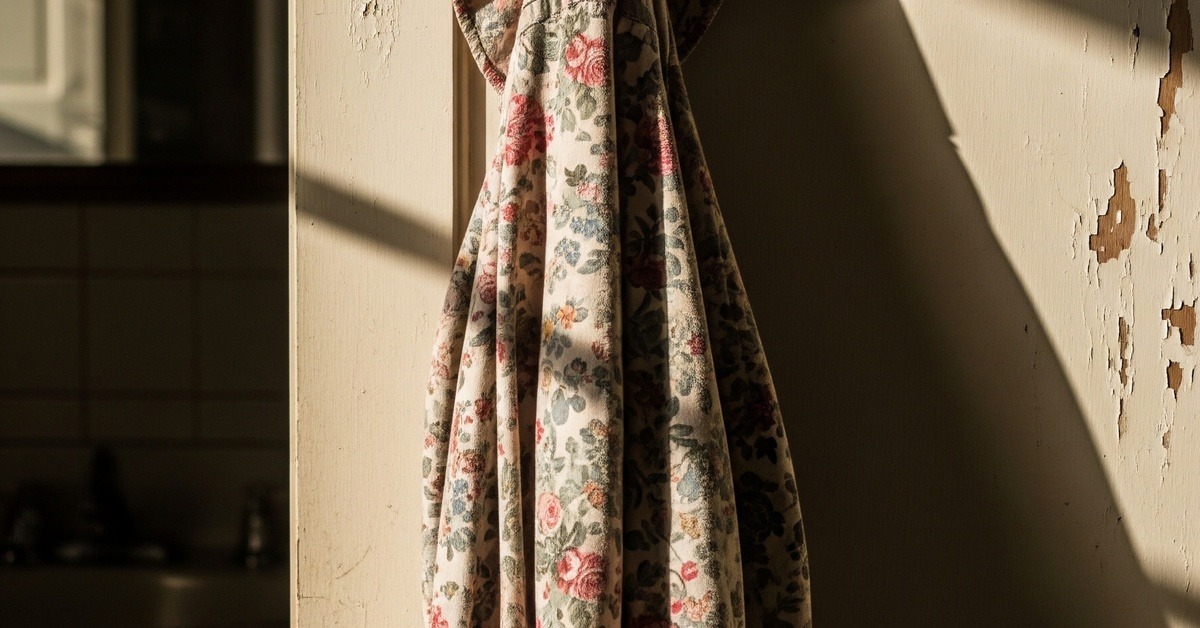
Here’s where it gets strange. Grief doesn’t attach to what you’d expect. You’d think the sacred object would be the wedding ring, the handwritten letter, the photograph. Sometimes it is. But just as often it’s the housecoat still hanging behind the bathroom door. The half-used bar of soap. The coffee mug with the chip in the handle that was always his, the one nobody dared use, the one that sits in the back of the cabinet three years later untouched.
Nobody decides this beforehand. Nobody wakes up and thinks: I’m going to make this specific object sacred.
Grief decides.
And the strangest part? The object doesn’t even need to have mattered before. That orange cup was unremarkable in every measurable way. Maybe that’s exactly why it worked.
Why Ordinary Things Hit Harder
Pauline Boss is a grief researcher who developed something called “ambiguous loss” — it’s the specific disorientation of losing someone while the world tells you to move on, to function, to act like absence is a category your brain can successfully categorize. She’s written extensively about ordinary objects and why they carry more weight than heirlooms.
A diamond ring has weight before the loss. A plastic cup acquires it after. The dissonance between what the object is and what it’s become — that’s the gap where grief actually lives. The more unremarkable the object, the stranger the power it holds.
And the act of washing it? That wasn’t irrationality. That was precision. Washing meant transformation. Washing meant the cup would be clean again, ordinary again, which would mean the absence was undeniable. So it sat beside the sink for months, picked up and set down, a small orange anchor in a life that had been cut loose.
By the Numbers
- 77% of bereaved individuals kept at least one object from the deceased for longer than a year, according to a 2020 study in Omega: Journal of Death and Dying.
- Continuing bonds theory basically flipped grief counseling on its head. By 2010, over 60% of bereavement therapists in the UK incorporated it into practice. In 1985, it was near zero.
- One documented case: a woman kept her husband’s unwashed shirt sealed in plastic for 22 years. She described it not as a burden but as an active source of comfort.
- Children allowed to keep something belonging to a deceased parent showed measurably lower rates of complicated grief in adolescence compared to children who weren’t allowed to keep anything, according to a 2014 longitudinal study from the University of Utrecht.
The Details Nobody Talks About
- The smell embedded in fabric bypasses rational processing entirely — the olfactory system has a direct pathway to the brain’s emotional centers that other senses don’t get. A coat that still smells like someone can stop you in a doorway without warning, years later.
- Some cultures consider it spiritually dangerous to give away or destroy a deceased person’s belongings too quickly. The object carries something of the person. This isn’t metaphor. This is cosmology.
- Grief therapists now use something called object-based narrative therapy — clients bring in a meaningful item, describe its weight and texture and color in physical terms, and access grief that words alone can’t reach. The body remembers what the mind can’t articulate.
What This Actually Means
The orange cup beside the sink isn’t a failure to cope. It isn’t denial or pathology or anything that needs fixing. Grief and objects are partners in a process stranger and slower and more precise than any five-stage model ever captured.
When someone holds a small orange plastic cup and sets it back down without washing it, they’re not stuck. They’re doing what humans have always done — finding a physical location for love that no longer has a living address. They’re rebuilding the floor beneath their feet, and they’re using what’s available.
The danger lives in how we respond to it. In the well-meaning suggestion to “clear things out” or “make space.” In treating carefully preserved ordinary objects as clutter rather than architecture — the invisible structure holding someone together.
That cup didn’t ask to become sacred.
Grief made it so.
And that’s worth understanding not just for when we lose someone, but for how we treat people who already have. The objects they’re still holding aren’t relics of a dead past. They’re the present tense of love. For more stories that keep you reading at 2am, there’s more at this-amazing-world.com.
Frequently Asked Questions
Q: Why does grief attach to ordinary objects instead of valuable heirlooms?
Grief often attaches to unremarkable items, a chipped mug, a housecoat, a plastic cup, rather than wedding rings or letters, because of the dissonance between what the object is and what it has become. A diamond ring carries weight before the loss; a plastic cup acquires it after. Grief researcher Pauline Boss, who developed the concept of ambiguous loss, argues that gap is where grief actually lives, which is why the more unremarkable the object, the stranger and stronger its hold can be.
Q: What is continuing bonds theory in grief research?
Continuing bonds theory was introduced in the 1990s by researchers Dennis Klass, Phyllis Silverman, and Steven Nickman. It rejected the roughly eighty-year-old ‘let go’ model and proposed that maintaining a connection to someone who died is not pathological but a healthy part of healing. The idea reshaped grief counseling: by 2010, over 60% of UK bereavement therapists used it, compared with near zero in 1985. Objects become the physical location where that ongoing relationship is processed.
Q: Is keeping a deceased person’s belongings actually healthy?
Research suggests it can be. A 2020 study in Omega: Journal of Death and Dying found 77% of bereaved people kept at least one object from the deceased for over a year, and a 2014 University of Utrecht longitudinal study found children allowed to keep a parent’s belonging showed lower rates of complicated grief in adolescence. Rather than denial, holding onto objects gives love a physical location, and therapists now even use object-based narrative therapy to help clients access grief that words alone cannot reach.
Illustrations are AI-generated. Article fact-checked and human-edited. Our editorial standards.