The Greatest Ancient Mysteries of the World, Explained
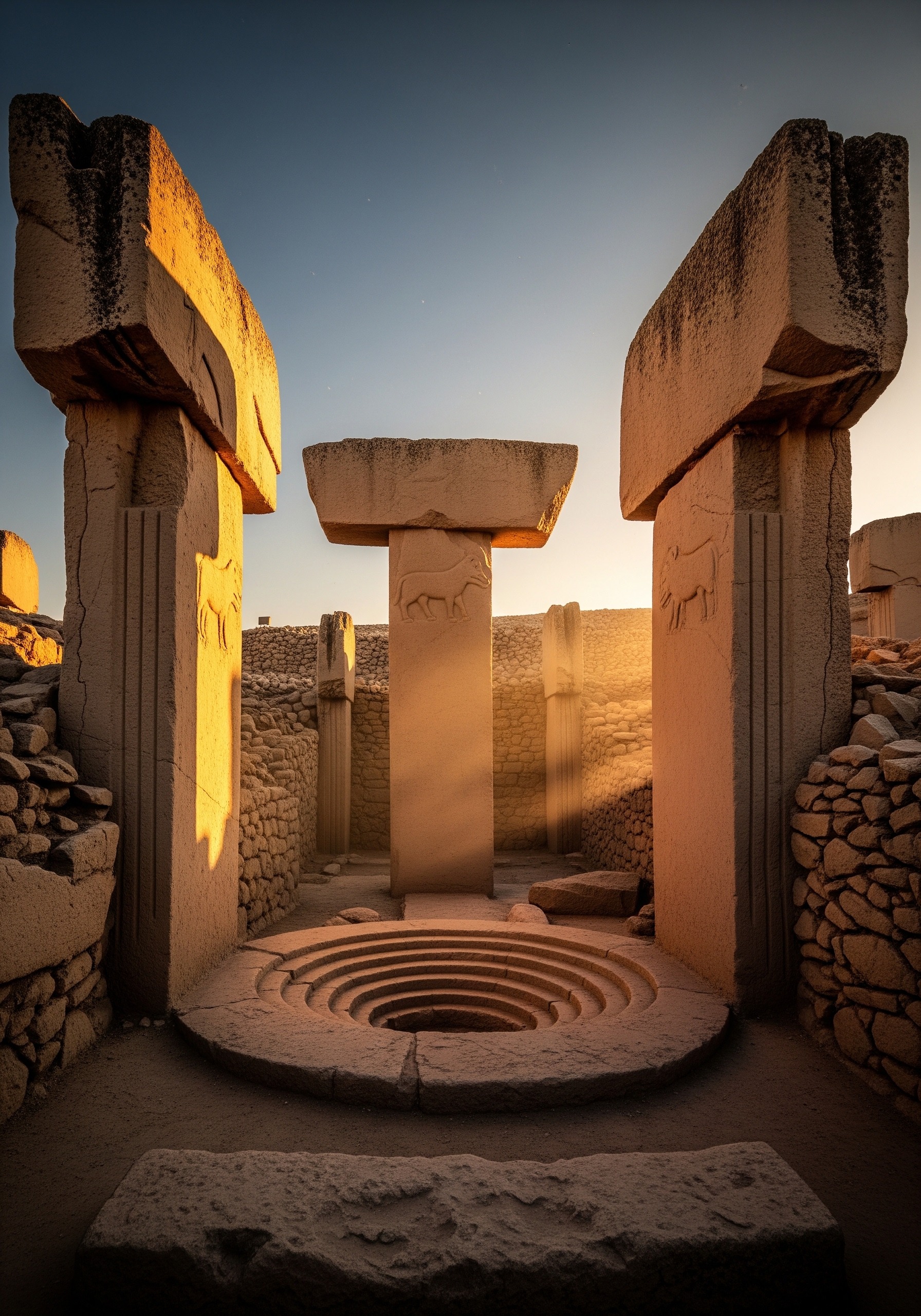
On a Turkish hilltop called Göbekli Tepe, a farmer’s plow once caught a carved stone that turned out to be roughly 11,500 years old — and that single moment broke the established timeline of civilization. It is only one of the ancient mysteries of the world that still refuse to fit our story of ourselves: places, machines, scripts and tombs that survived their makers in pieces, daring every century to put them back together.
Key Facts
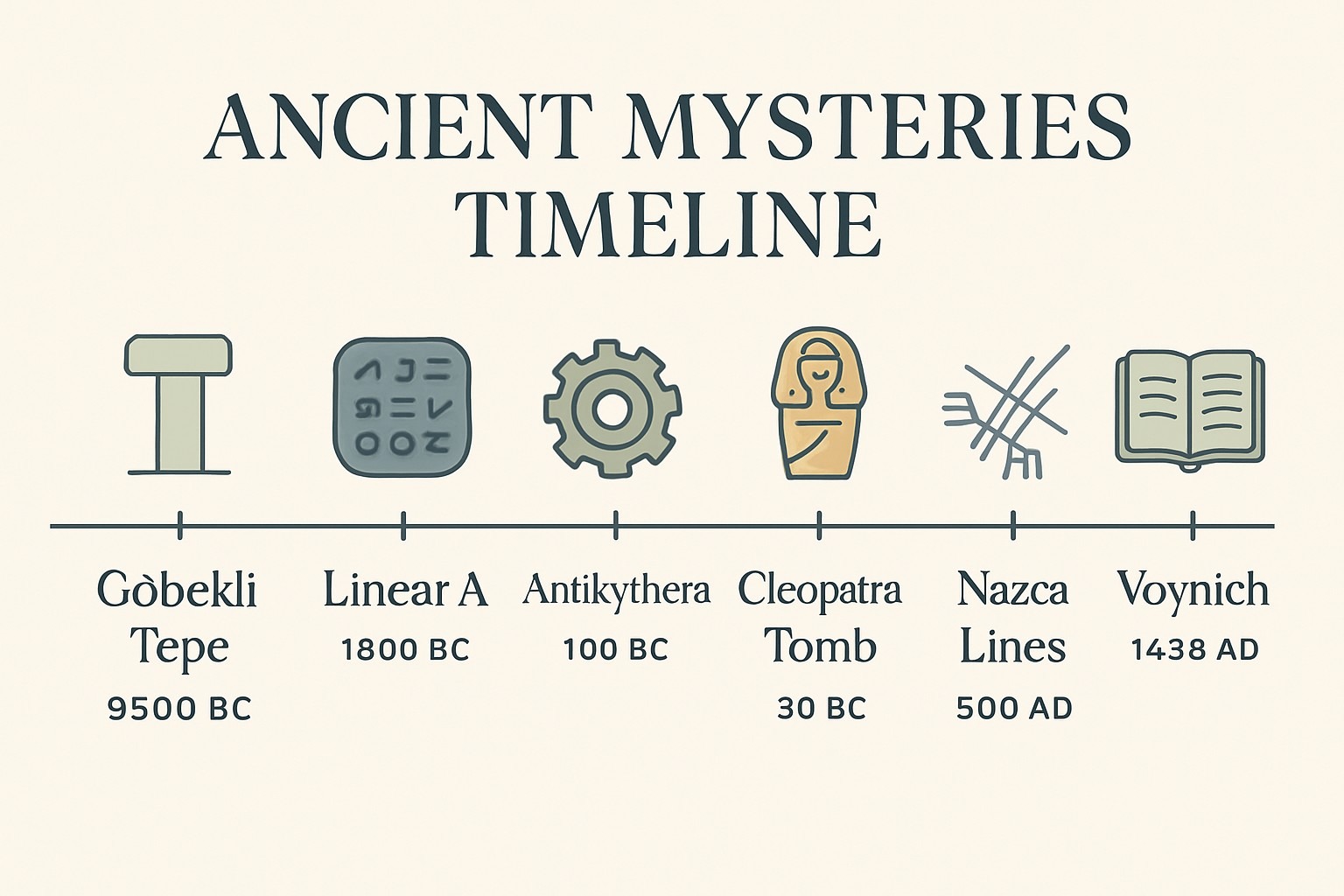
- Göbekli Tepe in southeastern Turkey was built around 9500 BCE — about 6,000 years before the Great Pyramid of Giza.
- The Antikythera mechanism (c. 100 BCE) is the world’s oldest known analog computer; an April 2026 simulation from Argentina’s Universidad Nacional de Mar del Plata concluded the device would have jammed within roughly four months of continuous use.
- The Nazca geoglyphs cover about 450 square kilometres of Peruvian desert; the longest figures stretch over 370 metres.
- Linear A — the script of Minoan Crete, written between roughly 1800 and 1450 BCE — has been studied for over a century and remains undeciphered, even though the related Linear B was cracked in 1952.
- Only about 10% of Göbekli Tepe has been excavated; Turkish authorities estimate full excavation would take roughly 150 years.
In short: Most of the famous ancient mysteries are not “unsolvable” in the spooky sense. They are old problems with shrinking unknowns — and 2026 brought genuinely new evidence, especially around Göbekli Tepe and the Antikythera mechanism, that quietly rewrites what we thought we knew.
Key Facts
- Göbekli Tepe in southeastern Turkey was built around 9500 BCE — about 6,000 years before the Great Pyramid of Giza.
- The Antikythera mechanism (c. 100 BCE) is the world’s oldest known analog computer; an April 2026 simulation from Argentina’s Universidad Nacional de Mar del Plata concluded the device would have jammed within roughly four months of continuous use.
- The Nazca geoglyphs cover about 450 square kilometres of Peruvian desert; the longest figures stretch over 370 metres.
- Linear A, the script of Minoan Crete written between roughly 1800 and 1450 BCE, remains undeciphered, even though the related Linear B was cracked in 1952.
- Only about 10% of Göbekli Tepe has been excavated; Turkish authorities estimate full excavation would take roughly 150 years.
In short: Most famous ancient mysteries are not unsolvable but old problems with shrinking unknowns. The article sorts them into four types — engineering riddles, undeciphered codes, vanished places and unknown purposes — and notes that 2026 brought genuinely new evidence, especially around Göbekli Tepe and the Antikythera mechanism.
Why the ancient mysteries of the world keep mattering
An “ancient mystery” tends to mean one of two things to a curious reader: a gap science cannot yet fill, or a story so strange it feels almost staged. Most listicles flatten these into the same shape — ten artifacts, one paragraph each, a wink at aliens. That is the wrong shape.
What each mystery reveals about us is what makes it interesting. Göbekli Tepe matters not because we cannot explain it but because it proves hunter-gatherers built monumental religion before agriculture, reversing the order in every textbook printed before 1995. The Antikythera mechanism matters because it shows the ancient Greeks ran into the same engineering frustrations we do — and possibly lost.
Here’s the honest framing this article uses: every entry below is a puzzle with a known evidence base, a working hypothesis, and a residual unknown stated plainly.
No alien filler.
The four kinds of ancient mystery
Lumping them together hides the pattern. After working through the credible cases, almost all of the greatest ancient mysteries fall into one of four categories:
| Type | Example | Roughly dated | What we don’t know |
|---|---|---|---|
| Engineering riddle | Antikythera mechanism; Puma Punku stonework | c. 100 BCE / c. 500 CE | Exact tooling and lineage of the techniques |
| Undeciphered code | Linear A; Voynich Manuscript; Indus script | 1800 BCE – 1438 CE | The underlying language, in most cases |
| Vanished place or person | Cleopatra’s tomb; Egyptian Labyrinth; tomb of Alexander the Great | ~2000 BCE – 30 BCE | Physical location and state of survival |
| Purpose unknown | Nazca Lines; Plain of Jars; Costa Rican stone spheres | 500 BCE – 700 CE | Why they were made, and for whom |
That last column is the honest one. None of these mysteries lacks evidence. Each lacks one specific thing — and naming that thing is more useful than gesturing at the unknown.
{IMAGE_2}
Göbekli Tepe: the temple that broke the timeline
Discovered in 1963 (it sat unrecognised for three decades) and seriously excavated from 1995 by the German archaeologist Klaus Schmidt of the Deutsches Archäologisches Institut, Göbekli Tepe is now run by the Turkish Taş Tepeler project under Necmi Karul of Istanbul University. The site sits about 15 kilometres northeast of Şanlıurfa.
What it contains is, even by archaeological standards, ridiculous: T-shaped limestone pillars up to 5.5 metres tall, weighing as much as 16 tonnes, arranged in concentric stone circles and carved with foxes, snakes, vultures and humanoid figures. Radiocarbon dating puts the oldest layers at around 9500 BCE — roughly 6,000 years before the first pyramid, and before any settled agriculture in the region.
For two decades the consensus said the site was purely ceremonial: a pilgrimage centre for hunter-gatherers. That has shifted. Recent excavation reports, summarised by Popular Archaeology in 2025, describe domestic architecture, hearths, and more than 7,000 grinding stones, with phytolith residues in the soil indicating cereal processing. Hunter-gatherers may have lived there, not just visited.
What remains a mystery is sharper than “who built it”. It is: why did people who had not yet domesticated grain organise 16-tonne stones into rings? And does Göbekli Tepe represent the first temple, the first town, or a hybrid we don’t yet have a word for? Only about a tenth of the site has been dug. The rest, by current Turkish estimates, will take 150 years.
The Antikythera mechanism and the April 2026 reality check
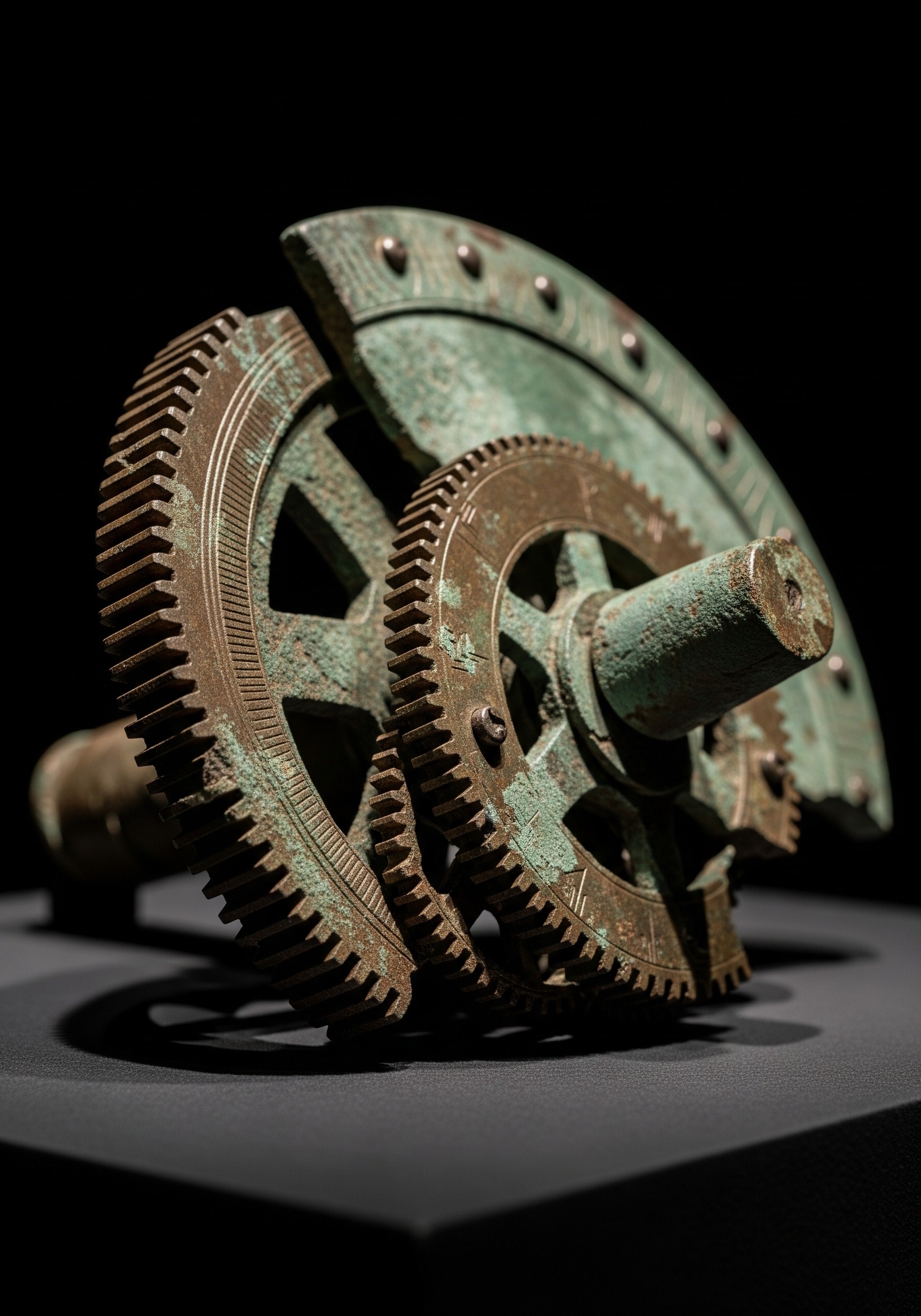
Of every artifact on this list, the Antikythera mechanism is the most beautiful problem. Fished out of a Roman-era shipwreck off the Greek island of Antikythera in 1901, the corroded bronze fragments turned out to contain at least 30 interlocking gears tracking the Sun, Moon, eclipses, the Olympic calendar and the orbits of the five planets known to the ancient world. It dates to around 100 BCE. Nothing of comparable mechanical sophistication appears in the European record for another 1,400 years.
For most of the last century the story was simple: the Greeks were further ahead than we had imagined. Two 2026 studies complicate that — and, candidly, neither is fully conclusive.
- March 2026 (National Observatory of Athens): X-ray re-analysis suggests the calendar ring most likely had 354 holes, not 360 — a lunar year, not a solar one. The Bayesian odds came out roughly 229-to-1 in favour of 354.
- April 2026 (Universidad Nacional de Mar del Plata, Argentina): a simulation incorporating the device’s triangular gear-tooth profile and known manufacturing tolerances found that the machine would have jammed or skipped within roughly four months of operation.
- The honest implication: we may have inherited a prototype, a teaching model, or an aspirational object — not a working observatory. The Greeks were still extraordinary; the device may simply have been less practical than we wanted it to be.
Did the Greeks know it would jam? Probably yes — corrosion has shifted the gears slightly, so modern measurements overstate the friction, and Tony Freeth of University College London, who led the 2021 reconstruction, points out that an ancient operator could have re-meshed the wheels by hand between uses. The mystery has not vanished. It has shifted from “how is this possible?” to “what was it actually for?” — which is, if anything, more interesting.
Undeciphered codes: Linear A, the Voynich, the Indus script
Three undeciphered scripts deserve to sit together because they fail for three different reasons. Linear A, written on Crete between roughly 1800 and 1450 BCE, fails because we don’t know the underlying Minoan language. The Indus script of the Harappan civilisation (c. 2600–1900 BCE) fails because the inscriptions are too short — most are under five signs, leaving no statistical foothold. The Voynich Manuscript, carbon-dated to between 1404 and 1438 CE, fails for a stranger reason: we are not sure it encodes a real language at all.
A 2024 paper by Rajesh Rao of the University of Washington reopened the case for the Indus script being linguistic rather than purely ornamental, identifying statistical patterns consistent with a structured writing system. That nudges the consensus; it does not crack it.
It is fair to call these mysteries genuinely unsolved. Anyone selling you a “decipherment” of the Voynich Manuscript — and someone always is — is almost certainly wrong.
Lost places: Cleopatra’s tomb and the Egyptian Labyrinth
Some mysteries are not missing information but missing real estate. Cleopatra VII and Mark Antony were buried together in 30 BCE, according to Plutarch, somewhere near Alexandria. A 365 CE tsunami devastated the city; the tomb was likely lost to the sea. Kathleen Martínez of the University of Santo Domingo has spent two decades excavating the temple of Taposiris Magna 45 kilometres west of Alexandria, on the theory that the tomb is inland. As of early 2026 she has found tunnels, coins, and a headless statue — but no queen.
Herodotus described another lost structure: the Egyptian Labyrinth, located near Hawara beside the pyramid of Amenemhat III, which he claimed contained 3,000 rooms and “marvels beyond measure”. Most of it was quarried for building stone in antiquity. Ground-penetrating radar surveys by the Mataha Expedition in 2008 detected a vast subterranean structure at the site, but Egyptian authorities have not yet authorised full excavation.
These are mysteries waiting on permission and money, not on ideas.
The myths we should stop repeating
Three claims keep appearing in popular coverage and almost never survive scrutiny.
“The Nazca Lines could only have been made with help from the air.” They could not, and almost certainly were not. Experimental archaeology — including Joe Nickell’s 1982 reconstruction at the University of Kentucky — has shown the figures can be laid out from the ground using ropes, stakes and proportional surveying. The 2023 AI-assisted survey led by Masato Sakai at Yamagata University, which identified over 300 previously unknown figures, treats them as ground-built religious markers along pilgrimage routes.
“Puma Punku’s stones could only have been cut by lasers.” No. The blocks are andesite, not granite; the famously crisp H-shaped joints have been replicated with bronze tools, abrasive sand, and patience by Jean-Pierre Protzen of UC Berkeley in the 1990s. They remain astonishing — just not impossible.
“Linear A has been decoded.” It has not. Every few years someone claims a breakthrough. None has held up to peer review.
What we still genuinely don’t know
Three honest unknowns sit at the edge of mainstream archaeology, and they are the right ones to be curious about. We do not know why Göbekli Tepe was deliberately backfilled around 8000 BCE — buried, intact, by the people who built it. We do not know the language behind Linear A. We do not know where Cleopatra was put in the ground.
Those three sentences would not have looked the same in 2015. Two more decades of fieldwork will probably rewrite at least one of them.
Frequently Asked Questions
Q: What is the oldest known ancient mystery in the world?
A: By construction date, Göbekli Tepe in Turkey is currently the oldest monumental built mystery — about 11,500 years old. Portable artefacts can be older: the Venus figurines of Europe date back 25,000–30,000 years, but their meaning is more interpretively open than archaeologically mysterious. Göbekli Tepe is the oldest large-scale structure whose purpose is still actively debated.
Q: Have any famous ancient mysteries actually been solved?
A: Yes — far more than remain open. Linear B, the Mycenaean Greek script, was cracked by Michael Ventris in 1952. The Behistun Inscription let Henry Rawlinson unlock Akkadian cuneiform in the 1850s. The Antikythera mechanism’s astronomical function was confirmed by X-ray tomography in 2006. Solved cases vastly outnumber the open ones; the open cases simply get the headlines.
Q: Are aliens responsible for any ancient mysteries?
A: No working archaeologist supports the alien hypothesis for any site. It is rejected because every “impossible” construction technique attributed to extraterrestrials — quarrying, transport, dressing megaliths — has been replicated by experimental archaeologists using tools available at the time.
Q: What is the most likely next ancient mystery to be solved?
A: The Indus script is the leading candidate. The corpus is large, machine-learning tools are improving, and recent cross-comparisons with Dravidian phonotactics have produced suggestive partial matches. Linear A is harder. Cleopatra’s tomb depends mostly on continued excavation around Taposiris Magna and (less likely) a calm season for marine archaeology in Alexandria harbour.
Sources
- UNESCO World Heritage Centre — Göbekli Tepe
- Popular Archaeology — How Göbekli Tepe is reshaping our understanding of the Neolithic
- Live Science — New Antikythera simulation suggests the device would have jammed (April 2026)
- Wikipedia — Antikythera mechanism
- UNESCO World Heritage Centre — Lines and Geoglyphs of Nasca
What survives is what was meant to. The ancient mysteries of the world are not riddles set for us to solve — they are evidence of people who built bigger than they had to, wrote things they hoped someone would read, and sometimes buried what they had made for reasons of their own. Each generation gets a little closer; none gets all the way. That is the deal.
Illustrations are AI-generated. Article fact-checked and human-edited.