Aphids Born Pregnant: Embryos Inside Embryos Explained
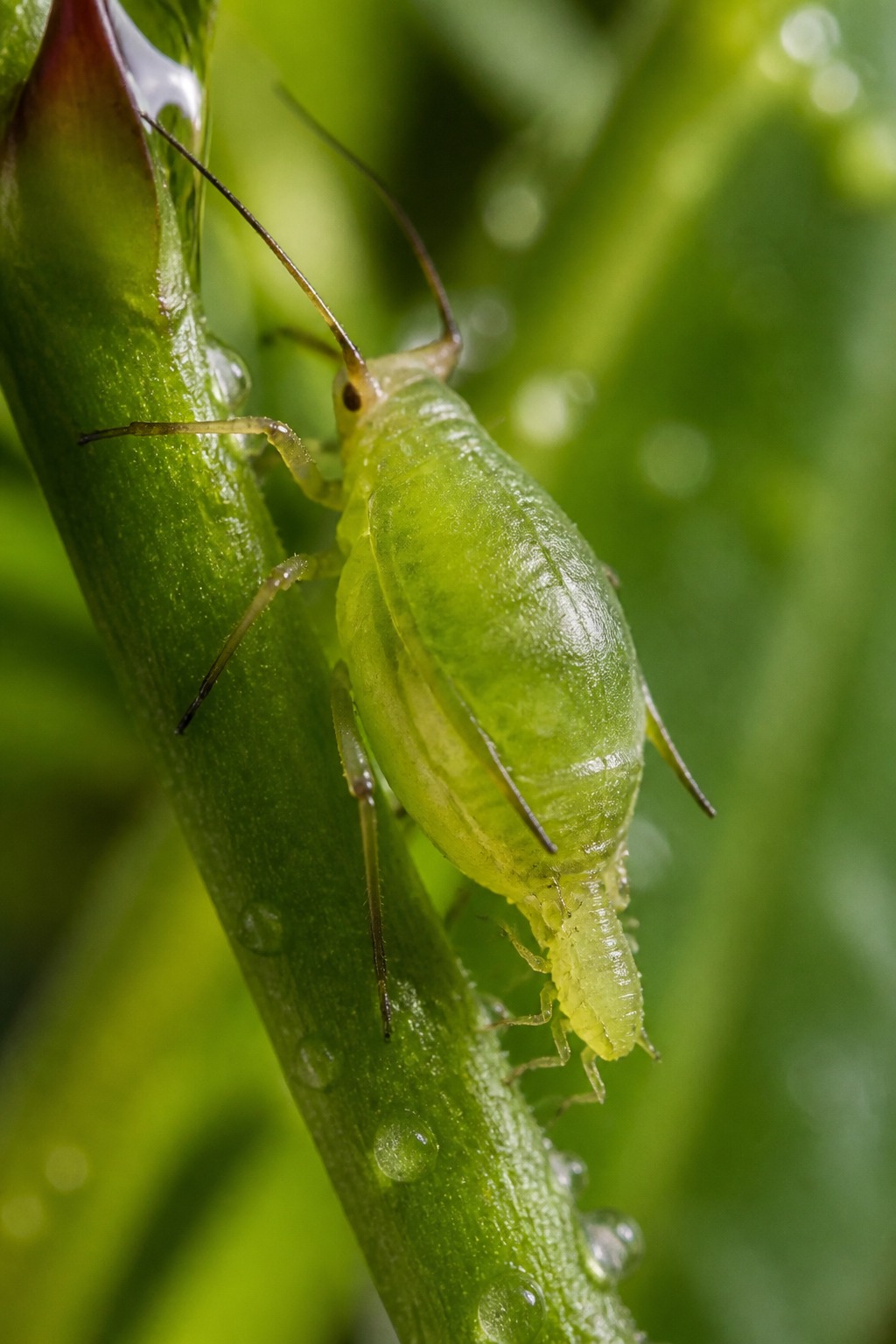
On a rose stem in June, a wingless green aphid the size of a pinhead gives birth — and her newborn daughter is already pregnant. This is the strange, verified truth behind the phrase “aphids born pregnant”: the babies arrive with the next generation’s embryos already forming inside them. No egg. No father. No waiting. Just a living matryoshka of mothers, unfolding faster than almost anything else in your garden.
Key Facts
- Through spring and summer, most aphids reproduce by viviparous parthenogenesis — live birth of clones with no mating.
- Developing daughters already carry their own embryos before birth, stacking three generations in one body (telescoping generations).
- An aphid can go from newborn to reproducing adult in about 7-10 days, because she is born already pregnant.
- In 1858 Thomas Henry Huxley calculated one aphid could theoretically produce a quintillion (10^18) descendants; BASF estimates around 600 billion in a year under ideal conditions.
- In 1745 Charles Bonnet first proved virgin birth in an animal by isolating a single aphid nymph under glass in Geneva.
In short: Aphids are born pregnant: through summer most reproduce by viviparous parthenogenesis, giving live birth to clones with no mating. Each unborn daughter already carries her own embryos, stacking three generations in one body. This telescoping lets an aphid reproduce in about a week. Charles Bonnet first proved animal virgin birth with a single isolated aphid in 1745.
Aphids born pregnant: a birth that already contains the next birth
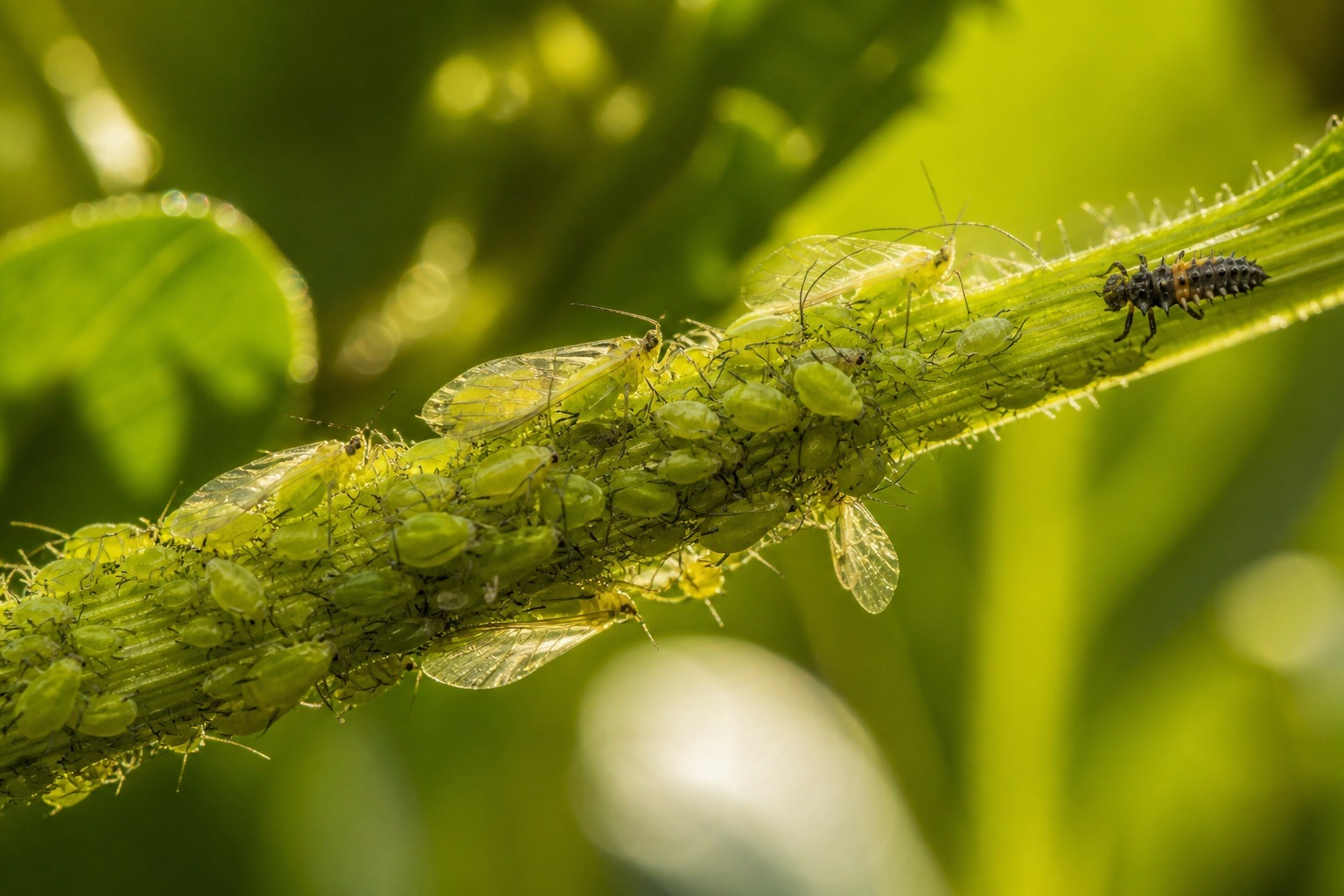
Let’s be precise, because the fact is even odder than the slogan. Through spring and summer, most aphids reproduce by viviparous parthenogenesis — a mouthful that unpacks into two plain ideas. Parthenogenesis means virgin birth: no mating, no sperm, offspring that are clones of the mother. Viviparous means live birth: no egg is laid, a wriggling nymph walks out. Put them together and you get a female who was never fertilised, producing live daughters who were never fertilised either.
Now the twist. Inside that pregnant mother, each developing daughter has already begun forming her own embryos before she is even born. The generations are stacked. Biologists call it “telescoping generations,” and it is the reason a single aphid can go from newborn to grandmother in about a week.
Turns out the popular one-liner undersells it. “Born pregnant” is accurate — but it hides the third doll.
The Russian doll, done properly: three generations in one body
Most cartoons of aphid reproduction show two nested figures: a mother and, curled inside her, a daughter. Reality runs one layer deeper. That unborn daughter isn’t just an embryo — she already carries the germ cells, the founding cells of eggs, that will become her own daughters. So a single pregnant aphid, at one instant, holds her body, her developing daughters, and the earliest cells of her granddaughters. Grandmother, mother, granddaughter — three generations sharing one small green frame.
That compression is not an accident of crowding. In a 1989 paper in the journal Functional Ecology, ecologists Pavel Kindlmann and Anthony Dixon argued that telescoping is a developmental strategy: by starting the next generation’s embryos early, the aphid slashes the time between births. Every hour shaved off the cycle multiplies across a summer. The whole architecture is built for speed.
{IMAGE_2}
And when you build a body for speed and skip the entire ceremony of finding a mate, the arithmetic gets frightening fast. A Victorian biologist worked it out on paper, and the number he reached still sounds like a misprint.
Huxley’s quintillion: the arithmetic that unsettled a Victorian biologist
In 1858, Thomas Henry Huxley — Darwin’s fiercest public defender — published a study of aphid reproduction in the Transactions of the Linnean Society of London. Working from the breeding rates of the day, he calculated what would happen if a single founding female’s descendants all survived. His conclusion: one impregnated aphid could, without any further fertilisation, give rise to “a quintillion of Aphides” — a 1 followed by eighteen zeros.
Huxley reached for a human yardstick to make it land. “He is a very stout man who weighs two million grains,” he wrote — and then the line that outlived him: the tenth brood alone, if every member survived, “contains more substance than 500,000,000 stout men.” One aphid’s tenth generation would outweigh the population of a continent.
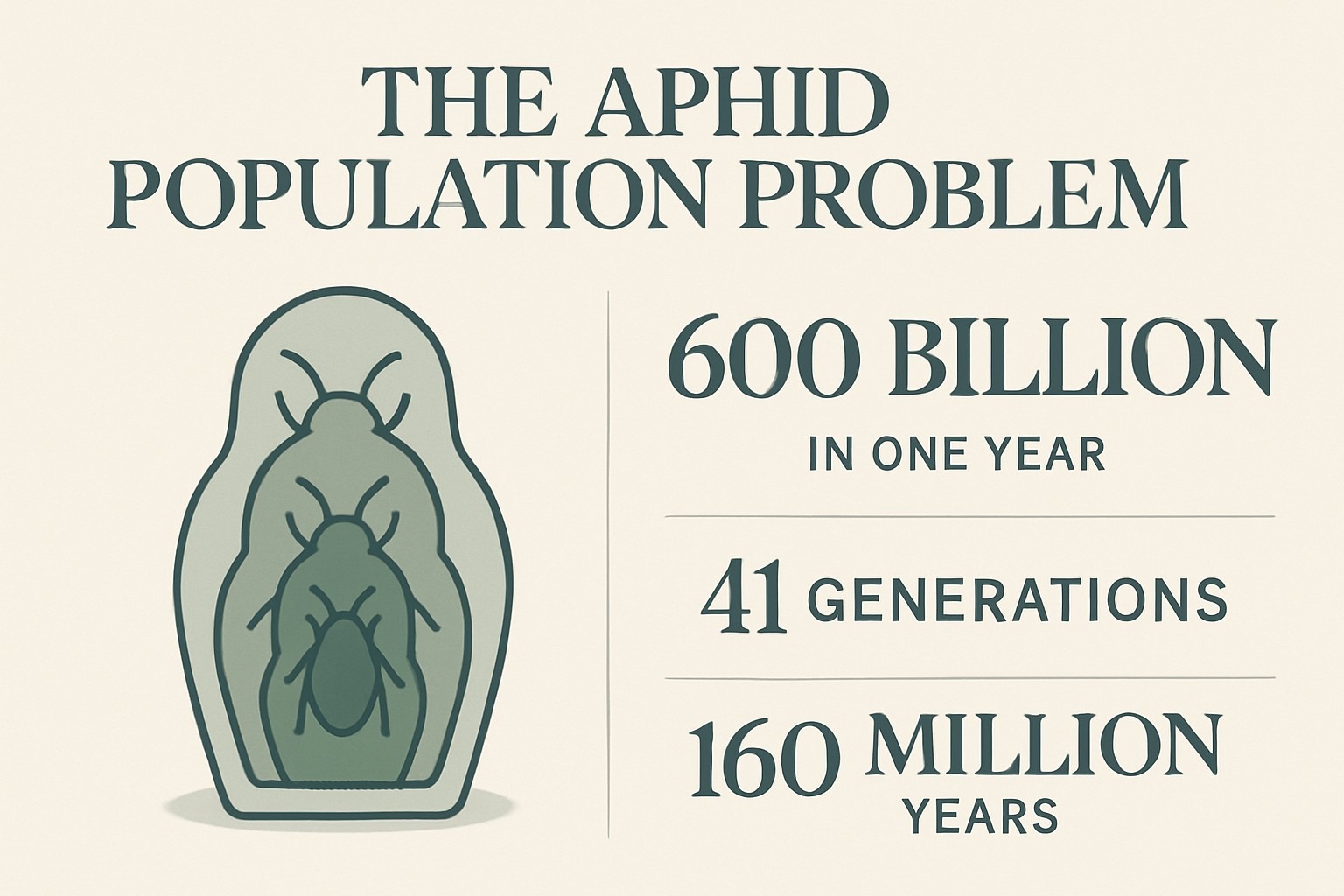
Modern industry math lands in the same terrifying neighbourhood. The agricultural firm BASF has estimated that, under ideal unrestricted conditions, one aphid could theoretically found around 600 billion descendants in a single year. Both figures are hypotheticals — nothing on Earth lets every aphid live — but they answer the question popular videos dodge. How many? Not “a lot.” A number with twelve zeros, minimum.
- ~600,000,000,000 — theoretical descendants of one founder in a year (BASF estimate, ideal conditions)
- 1 quintillion (1018) — Huxley’s 1858 upper bound; the tenth brood alone outweighs 500 million “stout men”
- Up to 41 — generations of cabbage aphid (Brevicoryne brassicae) reported in a single season
- ~7–10 days — newborn to reproducing adult, because she is born already pregnant
- ~160 million years — how long the Buchnera bacterium has lived inside aphid cells
- 1745 — the year one glass jar in Geneva first proved virgin birth in an animal
Geneva, 1745: one nymph, one glass jar, and the first proof of virgin birth
Long before genetics, a twenty-something naturalist named Charles Bonnet decided to settle an argument by watching. In Geneva, he isolated a single newborn aphid under a glass — sealed off from any possible mate — and observed it, meal by meal, day after day. The aphid, alone and untouched, produced offspring anyway. For about a month Bonnet recorded generation after generation appearing from a virgin insect.
It was the first experimental demonstration of parthenogenesis in an animal, published in his 1745 Traité d’insectologie. And here is the quietly wonderful part: it is a 280-year-old experiment a curious person can still repeat. Isolate one aphid nymph, keep it fed and alone, and watch. No lab, no license — just patience and a lens. Bonnet’s method was the whole discovery.
Virgin birth isn’t unique to aphids, either. It flickers up across the animal kingdom in stranger places than a rose bush — including a famous case where a stingray appeared to fall pregnant with no mate in her tank. Aphids simply made it their default setting.
The passenger that never leaves: Buchnera and 160 million years in the same cells
Here’s the hidden character no garden guide mentions. Every aphid carries a live-in bacterium, Buchnera aphidicola, housed in specialised cells called bacteriocytes. Aphids drink phloem sap — sugar-rich, but desperately short on essential amino acids the insect can’t build itself. Buchnera makes them. Without the bacterium, the aphid starves on a full stomach; without the aphid, the bacterium can no longer survive on its own. Neither is complete.
Research summarised by microbiologist Paul Baumann and colleagues in Annual Review of Microbiology dated this partnership to roughly 160 million years — the two lineages have been inseparable since the age of dinosaurs. And because the aphid reproduces by packing live embryos inside her body, she doesn’t just pass on her genes. She packs Buchnera straight into each embryo before birth. The bacterium is inherited the way the eye colour is: bundled into the next aphid, already aboard, generation after generation, for longer than flowering plants have dominated the land.
Counting the night: how summer clones suddenly remember sex
If aphids are all-female clones, where do the males come from? Because in autumn, they do come.
The trigger isn’t temperature or a calendar. It’s darkness. As summer fades, aphids measure the lengthening night — the scotoperiod, not the daylight — and after a run of long-enough nights, the clonal mothers change what they produce. Suddenly they bear males and sexual, egg-laying females. Those two mate the old-fashioned way, and the female lays a fertilised, hard-shelled egg built to survive winter — a diapausing egg that sits out the cold and hatches a new founding female in spring. The whole clonal empire of summer folds back into a single overwintering egg.
How the switch is read at the molecular level was mapped in a 2009 BMC Genomics study by Gaël Le Trionnaire and colleagues, tracing the changes in gene and protein activity as the pea aphid flips from asexual to sexual mode. It is, frankly, the best twist ending in insect biology — a creature that spends the whole summer as identical daughters and then, on a cue of pure darkness, reinvents sex to build a seed for the following year.
Why your roses survive anyway: the ladybird, the lacewing, and the wasp within
Read the numbers above and the obvious question is why we aren’t knee-deep in aphids. The answer is a standing army of predators that treats an aphid colony as an all-you-can-eat buffet. Ladybird larvae — spiky, alligator-shaped things nothing like the tidy adult — can eat hundreds of aphids apiece. Green lacewing larvae, nicknamed “aphid lions,” do the same. Hoverfly maggots graze the colony from below.
And then there is the quietly gruesome parasitoid wasp. A female Aphidius wasp lands on an aphid, curls her abdomen under, and injects a single egg inside the living insect. The larva develops within, hollowing the aphid from the inside until the body hardens into a papery brown shell — a “mummy” — with the next wasp sealed inside. Entomologist Ian Grettenberger of UC Davis, quoted in KQED’s Deep Look, has pointed out how much of this control happens invisibly, out in the field, before a gardener ever reaches for a spray.
That balance is the real story, and it deserves saying plainly: an aphid outbreak is rarely a crisis to be nuked — it is a food pulse that the garden’s predators are usually already answering.
What a pregnant newborn rewrites
Strip away the slogan and the aphid quietly overturns a few things we assume are universal. That reproduction needs two parents — no. That a female must mature before she carries young — no. That an animal is a single organism rather than a lineage nested inside itself — also, gloriously, no. The aphid is a chain of mothers telescoped into one body, carrying a 160-million-year-old bacterium, capable of exploding into billions and then, on a signal of darkness, packing the entire summer back into one egg.
The next time you flick a colony off a rose, it’s worth a second look. That crawling smudge of green is running one of the fastest, oldest, and most tightly engineered reproductive systems on the planet — and every newborn in it is already carrying the next.
Common Questions
Are aphids really born pregnant? Yes. For most of the year female aphids reproduce by viviparous parthenogenesis — live birth without mating — and the developing daughters begin forming their own embryos before they are born. Newborns genuinely arrive already carrying the next generation.
How many generations do aphids have in a year? It depends on species and climate, but the numbers are large: cabbage aphid (Brevicoryne brassicae) has been reported at up to 41 generations in a single season, with many species turning out a new generation every week or so in warm weather.
Do aphids ever mate? Yes — in autumn. Long nights trigger the clonal mothers to produce males and sexual females, which mate and lay a hardy, fertilised egg that overwinters and hatches a new founder in spring.
Why do aphids have bacteria inside them? A bacterium called Buchnera aphidicola lives in dedicated aphid cells and manufactures essential amino acids missing from plant sap. The two have been co-dependent for about 160 million years; without Buchnera, the aphid cannot survive.
Sources and Notes
- Huxley, T.H. (1858). “On the agamic reproduction and morphology of Aphis,” Transactions of the Linnean Society of London — the “quintillion” / “500 million stout men” calculation.
- Kindlmann, P. & Dixon, A.F.G. (1989). “Developmental constraints in the evolution of reproductive strategies: telescoping of generations in parthenogenetic aphids,” Functional Ecology.
- Baumann, P. et al., Annual Review of Microbiology — Buchnera aphidicola endosymbiosis dated to roughly 160 million years.
- Le Trionnaire, G. et al. (2009). “Transcriptomic and proteomic analyses of seasonal photoperiodism in the pea aphid,” BMC Genomics.
- Bonnet, C. (1745). Traité d’insectologie — first experimental demonstration of parthenogenesis in an animal.
- BASF Agriculture briefing on aphid reproductive potential; Ian Grettenberger, UC Davis Department of Entomology and Nematology, in KQED Deep Look.
An aphid is easy to squash and easy to dismiss, yet it may be the most quietly radical animal in the garden — a newborn already carrying its granddaughters, a virgin lineage that outnumbers armies, a partnership with a bacterium older than the flowers it feeds on. Look closely enough at the ordinary, and it stops being ordinary at all.
Frequently Asked Questions
Q: Are aphids really born pregnant?
Yes, and it is even stranger than the phrase suggests. Through spring and summer most aphids reproduce by viviparous parthenogenesis — virgin birth of live young that are clones of the mother. Inside a pregnant aphid, each developing daughter has already begun forming her own embryos before she is born. So one aphid can hold her body, her daughters, and the founding cells of her granddaughters at once — three generations in one small frame.
Q: What are telescoping generations?
It is the stacking of generations inside a single aphid. An unborn daughter is not just an embryo — she already carries the germ cells that will become her own daughters. In a 1989 Functional Ecology paper, ecologists Pavel Kindlmann and Anthony Dixon argued this is a deliberate developmental strategy: by starting the next generation’s embryos early, the aphid slashes the time between births, so every hour saved multiplies across a summer.
Q: How fast can aphids multiply?
Frighteningly fast. Because a female is born already pregnant, she can go from newborn to reproducing adult in about 7 to 10 days, and cabbage aphids can run up to 41 generations in one season. In 1858 Thomas Henry Huxley calculated that one aphid’s descendants, if all survived, could reach a quintillion — a 1 followed by eighteen zeros. The firm BASF estimates around 600 billion descendants in a year under ideal conditions.
Q: Who first proved that aphids can reproduce without mating?
The naturalist Charles Bonnet, in Geneva in 1745. He isolated a single newborn aphid under a glass, sealed off from any possible mate, and watched it produce offspring anyway — generation after generation from a virgin insect for about a month. Published in his Traite d’insectologie, it was the first experimental demonstration of parthenogenesis in an animal, and it is a 280-year-old experiment a curious person can still repeat today.
Illustrations are AI-generated. Article fact-checked and human-edited. Our editorial standards.