Beluga Whale Sanctuary in Iceland: A Second Life at Sea
The beluga whale sanctuary in Iceland opened its gate, and two whales swam into the cold for the first time. Thirty-two thousand square meters of real Atlantic. No walls. Just current, and salt, and the weight of a horizon overhead.
Their names are Little Grey and Little White. For roughly a decade they performed at an aquarium in Shanghai, circling the same chlorinated pool. Then came a journey north to a sheltered bay off the Westman Islands. What does open water feel like to an animal that forgot it existed?
Key Facts
- The sea pen covers roughly 32,000 square meters of natural tidal seawater off Iceland’s southern coast.
- It opened in 2019 as the world’s first open-water refuge built specifically for former captive belugas.
- Little Grey and Little White spent about a decade at Changfeng Ocean World in Shanghai before relocation.
- The project is run by the Sea Life Trust in partnership with Whale and Dolphin Conservation.
- Belugas are nicknamed “canaries of the sea” for their wide vocal range of clicks, whistles, and chirps.
In short: The beluga whale sanctuary in Iceland gave two former performing belugas, Little Grey and Little White, access to 32,000 square meters of open tidal sea off the Westman Islands. It isn’t a release into the wild. It’s a managed second life in real ocean water, run by the Sea Life Trust since 2019.
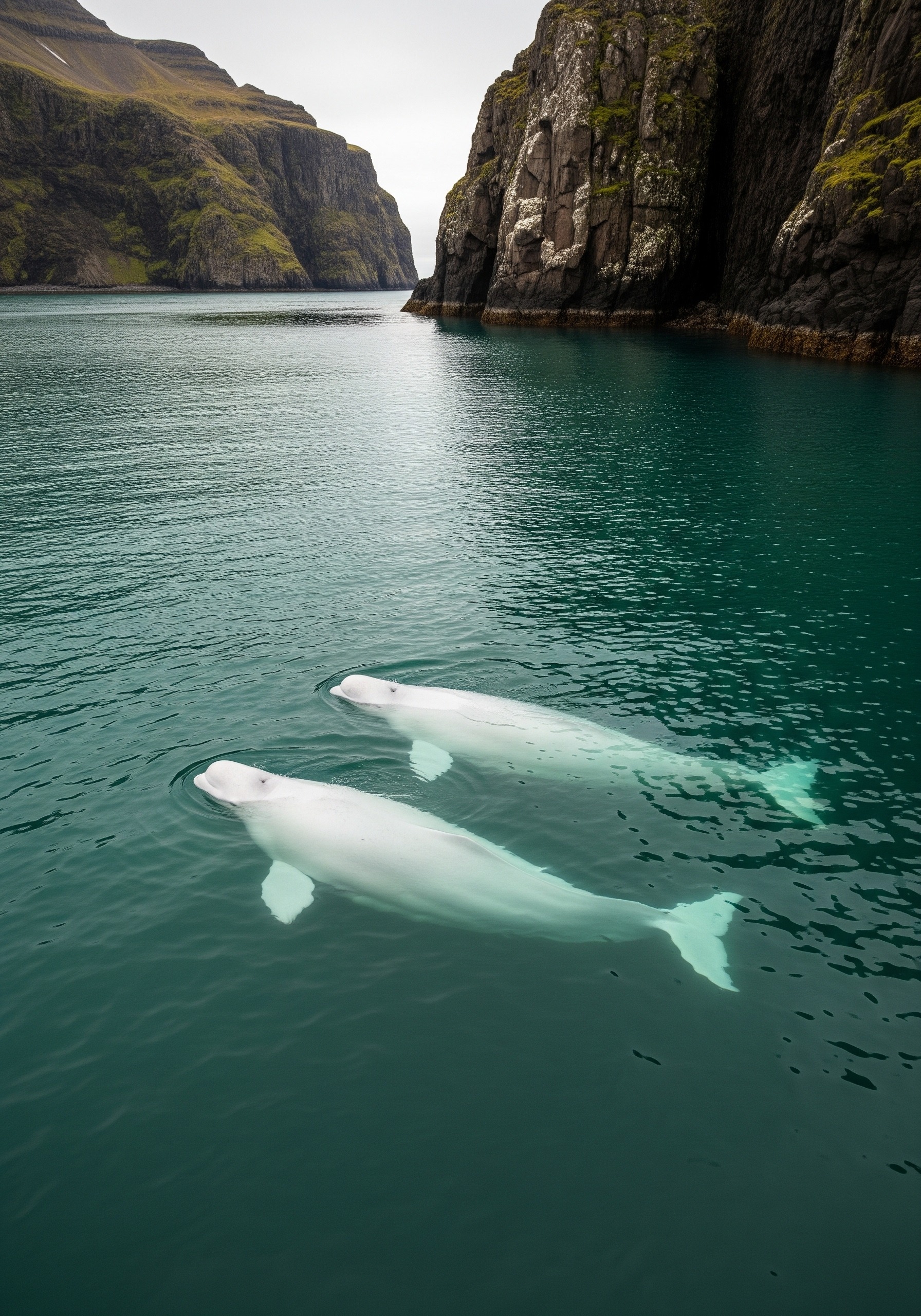
What makes the beluga whale sanctuary in Iceland different?
Most rescued marine mammals end up in another tank — bigger, maybe, but still a box. The Sea Life Trust took a different bet. In 2019 it converted a natural bay at Klettsvik, near the town of Heimaey, into a fenced section of living sea. The same cove, oddly enough, once held Keiko, the orca from the film Free Willy, during his own rehabilitation in the late 1990s. Conservationists at Whale and Dolphin Conservation argued for years that belugas raised in captivity need something between a pool and the wild — a halfway place with tides, depth, and weather, but with humans still close enough to feed and monitor them. Klettsvik became that place.
The numbers tell you why it mattered. A performance pool might hold a few hundred cubic meters of filtered water. This bay holds tidal seawater that exchanges with the open North Atlantic, reaching depths of around 10 meters. The whales can dive. They can feel temperature swing with the seasons. They can hear the bay answer their voices instead of a flat concrete wall throwing the sound straight back. Even the light is different — sun filtering through moving water, shadows shifting with cloud and tide, instead of the unchanging glare of overhead aquarium lamps.
The logistics of building such a place were never trivial. Iceland’s southern coast takes a battering from North Atlantic storms, and the net barrier has to survive surges that would shred a casual installation. Crews engineered a flexible enclosure designed to flex with swell rather than fight it, then monitored its integrity constantly. Storm damage, ice, and the relentless corrosion of salt water make the bay a maintenance commitment with no end date — a permanent infrastructure project wrapped around two animals.
That last part is easy to underrate. Belugas live by sound. A tank lies to them constantly.
How did two whales relearn the sea?
The move itself was an engineering problem dressed as a rescue. Crews flew Little Grey and Little White on a long-haul flight, then trucked and barged them the final stretch to Iceland in 2019. Before they ever touched the bay, the team built their stamina and acclimated them in a landside care pool. You can read how the wider conservation world tracks these efforts through groups like This Amazing World, which follows the slow business of giving captive animals something closer to a real life. Nothing here happened fast.
When the whales finally entered the sea pen, the difference in behavior was immediate and physical. In the wild, belugas forage along the seabed, hunt fish, and probe sediment with their flexible lips. In a tank they’re hand-fed dead fish on a schedule. The sanctuary’s caretakers watched the two slowly rediscover the floor of the bay — touching it, investigating it, reacting to live currents pushing past their bodies for the first time in years.
Did they sound different out there? The acoustics alone must have felt like waking up.
Why captivity changes a whale for good
Here’s the hard truth the team never hides: this was not a release. Little Grey and Little White can’t simply be set loose. The BBC reported on the relocation, and marine biologists are blunt about the reason. Animals taken young and held for a decade lose the survival education a wild calf gets from its mother and pod — where to migrate, how to read ice, which prey to chase, how to dodge orcas. You can’t download that. A beluga that has never hunted under pressure would likely starve or strand within weeks of true freedom.
So the sanctuary is honest about its ceiling. The goal isn’t wildness; it’s welfare. A managed life in real seawater, with veterinary care, monitored feeding, and the freedom to behave like a whale within a protected boundary. Belugas can live 35 to 50 years, which means this is a multi-decade commitment, not a photo opportunity. Whoever runs the project in 2045 will inherit responsibility for animals taken from a tank in another country, on the other side of the world, decades earlier.
There’s a harder ethical layer underneath, too. The belugas never chose captivity, and they can’t choose this either. Every decision — when to move them, what to feed, how much human contact to allow — is made for them by people trying to undo harm other people caused. That asymmetry never fully resolves. The best the team can do is keep the animals’ interests, not the public’s appetite for a happy ending, at the center of every call.
That distinction — refuge, not release — is exactly what makes it credible rather than sentimental.
The science behind the beluga whale sanctuary
Belugas are among the most vocal whales on Earth, and the move gave researchers a rare natural experiment. At Changfeng Ocean World, the two animals lived inside a sealed acoustic environment — hard surfaces, motor hum, filtered water. In Klettsvik bay, sound travels through a complex seabed, kelp, and tide. Teams documented how the whales adjusted to a far richer soundscape, the kind their melon-shaped foreheads evolved to navigate. The beluga’s lack of a fused neck — they can turn their heads, unlike most cetaceans — also lets them orient toward sound and seabed in ways a pool never demanded. A wild beluga uses echolocation the way a bat uses it in the dark, firing rapid clicks and reading the echoes to map prey, ice, and seabed contour. A flat-walled tank scrambles that feedback into useless noise. The bay, with its sloping bottom and drifting kelp, finally gave the two animals a sound-world that behaved the way their biology expects.
Diet shifted too. Caretakers gradually introduced more natural feeding behavior, encouraging the whales to forage rather than wait for a hand. In Shanghai the food arrived dead, on a schedule, dropped from above. In Klettsvik the team could begin offering live and whole fish, letting the belugas relearn the act of pursuit they’d had no reason to practice for ten years. Each change is small on paper and enormous in practice. A decade of learned tank habits doesn’t unwind in a season; it unwinds in years of patient, measured exposure to the real thing, with the caretakers reading appetite and behavior at every step.
What the staff do, every single day, is read these two animals closely and let them set the pace.
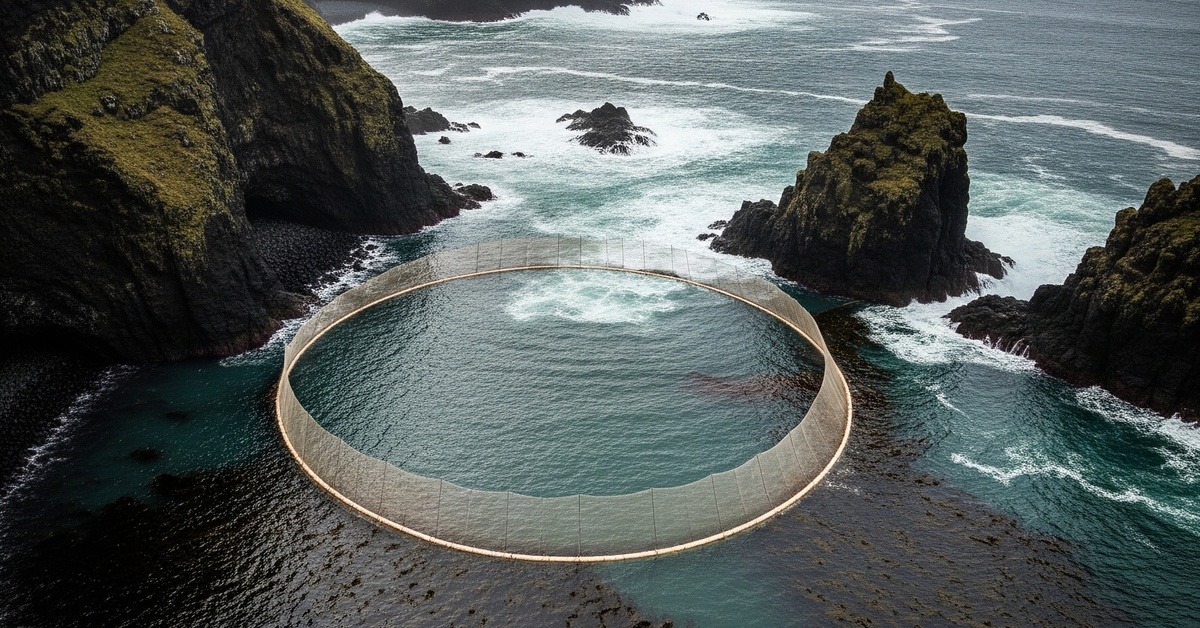
Where to See This
- Klettsvik Bay, near Heimaey on the Westman Islands, Iceland — best visited late spring through summer when ferry access and weather cooperate.
- The Sea Life Trust Beluga Whale Sanctuary visitor center on Heimaey shares the project’s research and the whales’ history.
- Curious travelers should book through the official Sea Life Trust channels and respect that this is a working refuge, not a show — viewing is limited by the whales’ welfare.
By the Numbers
- 32,000 m² — area of the open-water sea pen, versus a few hundred cubic meters in a typical show tank.
- ~10 meters — approximate depth available to the whales in the bay.
- ~10 years — time Little Grey and Little White spent performing in Shanghai before relocation.
- 2019 — year the sanctuary opened and the whales arrived in Iceland.
- 35–50 years — typical beluga lifespan, the length of the commitment the project has made.
Field Notes
- The same Klettsvik bay once hosted Keiko, the orca from Free Willy, during a high-profile rehabilitation in the late 1990s — making this cove a rare repeat site for cetacean second chances.
- Belugas can change the shape of their melon — the fatty bulge on their forehead — in ways that look almost expressive, a trait far more visible in open water than in a tank.
- Unlike most whales, belugas have unfused neck vertebrae, so they can nod and turn their heads, which helps them scan a complex seabed.
- Researchers still can’t fully say whether the two whales’ vocal repertoire expanded after the move. Measuring it precisely, in a tidal bay full of natural noise, remains genuinely difficult.
Frequently Asked Questions
Q: Is the beluga whale sanctuary in Iceland a release into the wild?
No. It’s a protected refuge, not a release. Little Grey and Little White spent about a decade in captivity, so they never learned the migration, hunting, and predator-avoidance skills a wild beluga gets from its pod. The Sea Life Trust is explicit that full independence is unrealistic. The 32,000-square-meter sea pen gives them natural seawater and behaviors while keeping veterinary care close.
Q: Why are belugas called canaries of the sea?
Belugas produce an unusually wide range of clicks, whistles, chirps, and squeals — so varied that early whalers nicknamed them sea canaries. They rely on this sound to navigate, find prey, and stay in contact across dark or icy water. A concrete pool reflects that sound flatly. The Iceland bay’s natural seabed and tides give the whales a far richer acoustic world to vocalize into.
Q: How big is the sanctuary compared to their old tank?
The sea pen spans roughly 32,000 square meters of tidal Atlantic water and reaches around 10 meters deep. A typical aquarium performance pool holds only a few hundred cubic meters of filtered water. The difference isn’t just size — it’s depth, real currents, seasonal temperature change, and natural sound. That combination lets the whales dive and forage in ways a pool physically cannot offer.
Q: Could other captive whales be moved to sanctuaries like this?
Possibly, but slowly. Klettsvik proved the model works, yet building and staffing an open-water refuge is expensive and logistically brutal — the 2019 relocation alone took years. Each whale also needs individual assessment. Conservation groups view the Iceland project as a template rather than a finished solution, and several proposed whale and dolphin sanctuaries worldwide are watching its results closely.
Editor’s Take — Alex Morgan
What lingers isn’t the size of the bay. It’s the honesty of the people running it. They didn’t sell a fairy tale ending or pretend two performing whales could vanish into the open ocean. They built the best available version of a real life and then refused to overstate it. In conservation that restraint is rare — and it’s the reason I trust this place more than any tank that calls itself a home.
Somewhere off the Westman Islands tonight, two pale whales drift in water that rises and falls with the moon. They’ll never see the open ocean their ancestors knew. But they can feel the tide now, taste real salt, throw their voices into a bay that finally answers back. Maybe that’s the quieter, harder question every captive animal poses to us: not whether we can free them, but whether we can give back even a fraction of what we took.
Illustrations are AI-generated. Article fact-checked and human-edited. Our editorial standards.