China Built Fake European Cities — Then Nobody Came
There’s a 300-foot Eiffel Tower standing above rice paddies outside Hangzhou, and on weekends it’s surrounded by wedding photographers but almost no one actually lives there. The emptiness is the whole point now.
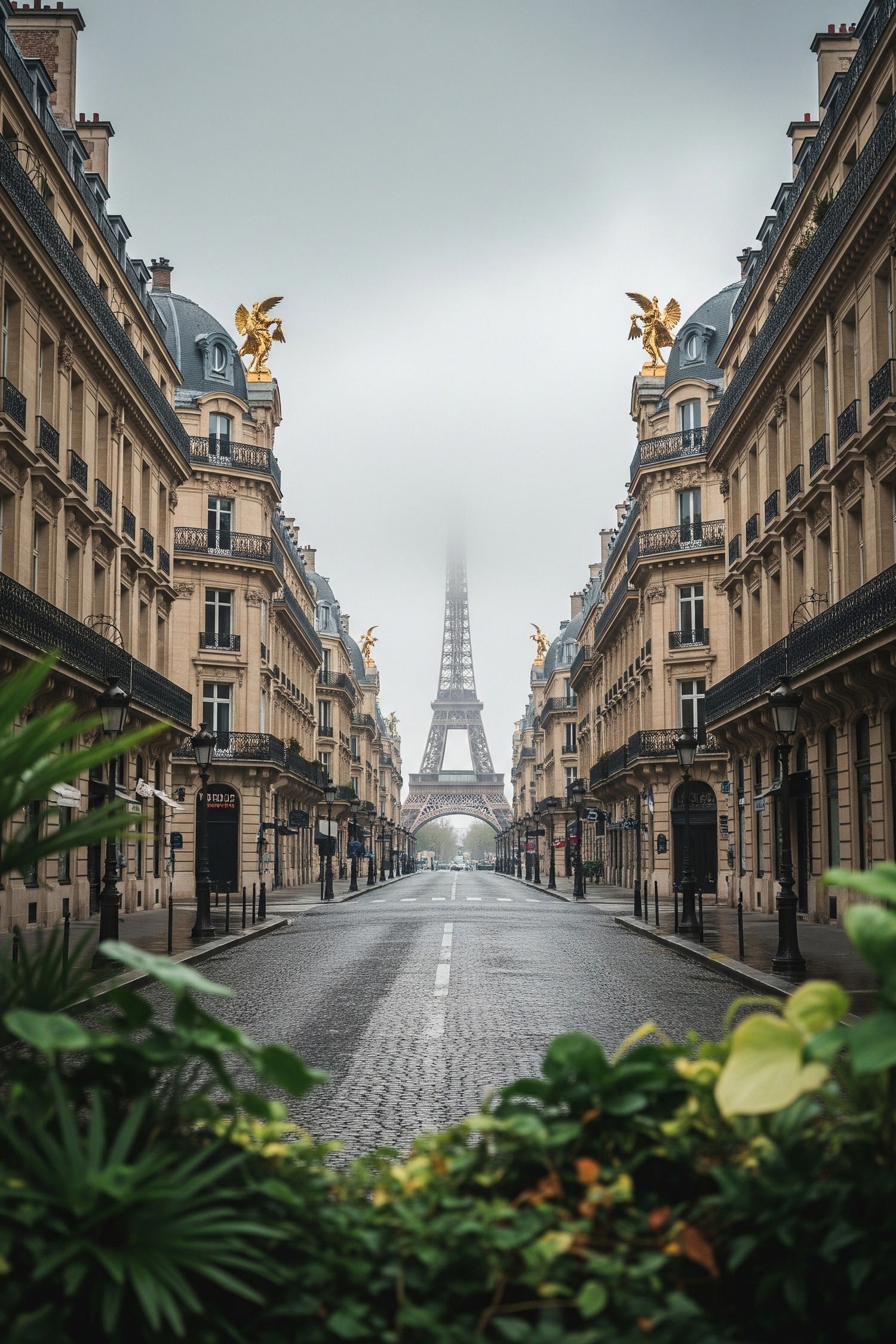
I found out about Tianducheng at 2 AM and couldn’t stop reading. A near-perfect copy of Paris, just sitting in the humid air outside a Chinese city nobody’s heard of. Streets named after French boulevards. Haussmann facades with that specific cream-colored precision. Ornate lampposts that look like they were imported instead of merely inspired. The silence is real enough that you can hear it in photographs.
People were supposed to live here. Tens of thousands of them. Instead, a few thousand did, and the wedding industry moved in.
Key Facts
- Tianducheng, a French-replica city outside Hangzhou, China, was designed to house 100,000 residents; at its lowest points fewer than 2,000 people actually lived there
- Tianducheng’s Eiffel Tower replica stands 108 meters (354 feet) tall — roughly one-third the height of the original — and was built around 2007
- Thames Town near Shanghai cost approximately 6 billion yuan (roughly $900 million USD) to develop and was designed to house 10,000 permanent residents
- China constructed an estimated 64 million empty housing units by 2013, according to Texas A&M economist Gan Li’s analysis of electricity consumption data
- At peak development, China was building approximately 1.8 billion square meters of floor space annually, per McKinsey Global Institute 2012 estimates
In short: China’s replica European cities — including Tianducheng’s 108-meter Eiffel Tower outside Hangzhou and Shanghai’s 6-billion-yuan Thames Town — were designed for tens of thousands but drew almost no permanent residents. Texas A&M economist Gan Li estimated 64 million empty housing units by 2013. Wedding photographers eventually adopted the silent streets as backdrops.
China’s Replica Ghost Cities: How This Actually Happened
The 2000s were insane in China. Development moving at a pace nobody had ever attempted before. Urbanization exploding everywhere at once. The newly wealthy middle class wanted something that meant arrival — not just a place to sleep, but a version of yourself. A statement. Bianca Bosker documented this in her book Original Copies, and she found that Tianducheng was designed to house 100,000 residents. At its lowest points? Fewer than 2,000 people actually lived there.
Here’s where the math breaks down.
Remote locations were chosen because land was cheap. But cheap land far from jobs doesn’t attract residents. It attracts ambition. And ambition is very good at building fountains and laying cobblestone streets to nowhere.
Thames Town Went Even Further
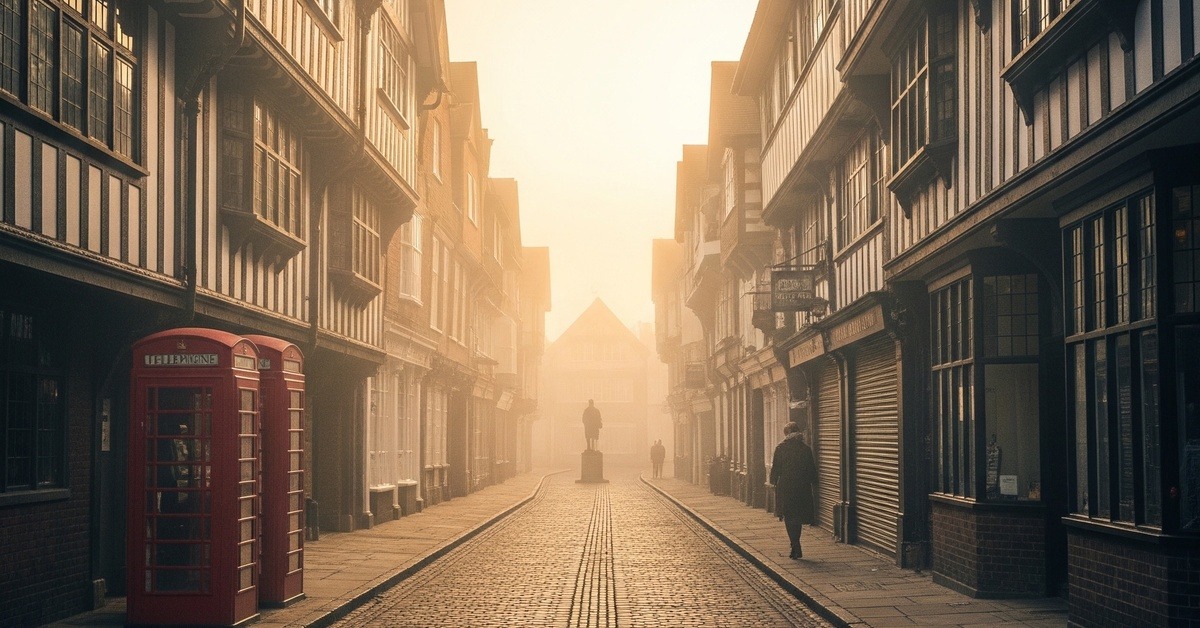
If Tianducheng borrowed from France, Thames Town near Shanghai decided to borrow from an entire British imagination. Cobblestone streets. Red phone booths that actually work sometimes. Tudor timber-framed buildings that look photoshopped onto the landscape. A bronze statue of Winston Churchill standing outside a pub that never quite opened its doors.
Developers sold the dream of living in Europe to buyers who’d never set foot in England. For a brief window in the mid-2000s, units sold fast. You can read about other extraordinary constructions at this-amazing-world.com, but Thames Town has a quality that’s genuinely difficult to categorize — it’s too real to be a theme park, too empty to be a city.
The buyers weren’t naive.
They were betting on appreciation. Buy into the European dream now, sell when the city grows around it. Investment logic dressed in neoclassical architecture. For many people, it made perfect sense on a spreadsheet. The problem is that the city never grew around it the way the spreadsheets predicted.
What Went Wrong
It wasn’t one thing. It was several things that all collided at the same moment. Transit links were missing or inadequate. Property prices climbed past what local salaries could support. And there was something harder to quantify — a psychological mismatch between the brochure fantasy and the reality of commuting two hours each way to a job in a real city. European prestige is compelling in a photograph.
Living inside it, surrounded by empty streets, is something else entirely.
Then something unexpected happened. The emptiness became the attraction.
Wedding Photographers Saved These Places From Total Silence
A meticulously constructed European streetscape with almost no foot traffic is a photographer’s dream. That’s not metaphorical. Wedding couples began flocking to Thames Town and Tianducheng specifically because they weren’t crowded. You could position a bride in front of the Eiffel Tower replica with nothing but sky behind her. No tourists. No construction. No reality intruding on the fantasy. It became an actual industry. On weekends, some of these ghost towns see more wedding parties than residents walking their dogs.
That shift reframed what these places are.
They’re not failed cities exactly. They’re something stranger — functional sets for performing aspiration. European-ness as backdrop. Romance as product. The architecture that failed to attract a permanent community succeeded spectacularly at attracting a moment in someone’s life that matters enough to photograph professionally.
By the Numbers
- Tianducheng’s Eiffel Tower replica stands 108 meters (354 feet) tall — roughly one-third the height of the original. Built around 2007.
- China constructed an estimated 64 million empty housing units by 2013, according to Texas A&M economist Gan Li’s analysis of electricity consumption data. That’s enough to house the entire population of France twice over. Twice.
- Thames Town cost approximately 6 billion yuan (roughly $900 million USD) to develop and was designed to house 10,000 permanent residents. It has never come close.
- At peak development, China was building at a rate of roughly 1.8 billion square meters of floor space annually — equivalent to adding a city the size of Rome every two weeks, according to McKinsey Global Institute estimates from 2012. Every. Two. Weeks.
Field Notes
- Several of China’s replica European towns have functioning amenities — bakeries, small shops, schools — but they serve the thin slice of residents who actually moved in, not the imagined thousands. Walking through on a weekday feels less like a ghost town and more like someone built an elaborate afterthought.
- Tianducheng’s replica isn’t just visual. The surrounding development includes fountains modeled on Versailles, street layouts echoing Haussmann’s Paris grid. Right down to the diagonal boulevard intersections.
- Some of these developments are quietly filling in over time. As China’s cities expanded outward, formerly remote replica towns got absorbed into growing suburban edges. A handful of property values actually recovered. A punchline became a long-term investment for the people who held on.
What These Empty Cities Tell Us About Modern Ambition
It’s easy to mock. A 300-foot Eiffel Tower above a rice paddy is inherently surreal. But zoom out a little and these ghost cities become something else — a document of what happens when you try to shortcut your way into a status that took other cultures centuries to build. Europe’s prestige wasn’t just aesthetic. It was historical weight, accumulated slowly. You can copy the lampposts. You can’t copy the time.
China’s developers tried anyway.
The result is one of the most visually arresting experiments in what ambition looks like when it runs slightly ahead of demand. That gap between aspiration and reality isn’t uniquely Chinese. Planned cities that never filled up exist in every era of rapid growth. What makes these particular ghost towns different is the specificity of the dream — not just modernity, but someone else’s version of it.
The wedding couples keep coming.
Winston Churchill keeps standing outside the unopened pub. Somewhere above Hangzhou, a replica Eiffel Tower catches the afternoon light while the surrounding streets stay quiet. It’s not abandoned. It’s waiting for a story that fits. These places are real. The ambition was real. The gap between them is where all the interesting things live.
More stories like this at this-amazing-world.com. The next one is even stranger.
Frequently Asked Questions
Q: Why are China’s replica European cities mostly empty?
Several factors collided. Developers chose remote locations because land was cheap, but cheap land far from jobs doesn’t attract residents — it attracts ambition. Transit links were missing or inadequate, property prices climbed past what local salaries could support, and there was a psychological mismatch between brochure fantasy and the reality of a two-hour commute. European prestige is compelling in a photograph but harder to live inside. Tianducheng was designed for 100,000 residents; fewer than 2,000 actually moved in.
Q: How big is Tianducheng’s Eiffel Tower replica?
It stands 108 meters (354 feet) tall — roughly one-third the height of the original — and was built around 2007. The surrounding development includes fountains modeled on Versailles and street layouts echoing Haussmann’s Paris grid, complete with diagonal boulevard intersections. The Haussmann facades have that specific cream-colored precision, and the streets are named after French boulevards. On weekends the area fills with wedding photographers, but on weekdays you can hear the silence in photographs of the empty boulevards.
Q: How much did Thames Town cost to build?
Approximately 6 billion yuan, or roughly $900 million USD, according to development figures. It was designed to house 10,000 permanent residents and has never come close. The town features cobblestone streets, working red phone booths, Tudor timber-framed buildings, and a bronze statue of Winston Churchill standing outside a pub that never quite opened. Buyers in the mid-2000s were not naive — they were betting on appreciation, planning to sell when the city grew around them. The growth didn’t materialize as the spreadsheets predicted.
Q: How big was China’s construction boom?
At peak development, China was building at a rate of roughly 1.8 billion square meters of floor space annually — equivalent to adding a city the size of Rome every two weeks, per McKinsey Global Institute 2012 estimates. Texas A&M economist Gan Li, using electricity consumption data, estimated China had constructed approximately 64 million empty housing units by 2013 — enough to house the entire population of France twice. The replica European towns are one small subset of this vastly larger phenomenon of speculative urbanization.
Illustrations are AI-generated. Article fact-checked and human-edited. Our editorial standards.