How Did Ancient People Brush Their Teeth? A 7,000-Year Story
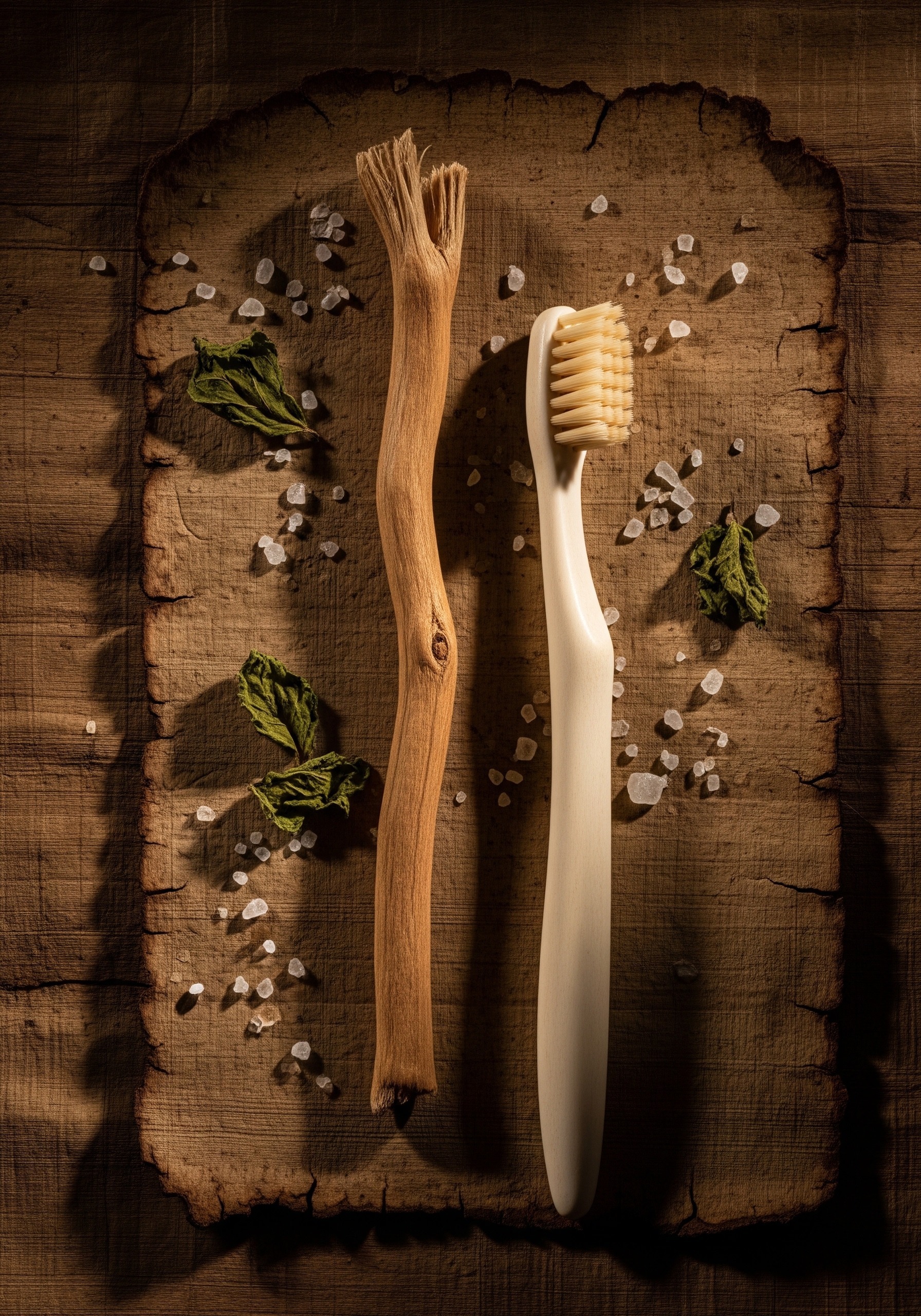
How did ancient people brush their teeth without nylon bristles, fluoride paste, or a single dentist within shouting distance? The honest answer is more inventive — and far more global — than most of us imagine. Five thousand years before the modern toothbrush rolled off a factory line, Babylonian scribes were already chewing the splayed end of a twig into a soft brush, Egyptian priests were grinding pumice and burnt eggshell into a tooth powder, and Tang Dynasty monks in China were lashing stiff hog bristles to handles of carved bone.
Key Facts
- c. 3500 BC — Babylonia: the world’s earliest chew sticks (frayed twigs used as brushes) appear in archaeological records from Mesopotamia, predating modern toothpaste by more than five millennia.
- 4th century BC — Egypt: a Greek-language papyrus held in the Austrian National Library in Vienna preserves the oldest known toothpaste recipe — one drachma of rock salt, two drachmas of dried mint, one drachma of iris flower, and 20 peppercorns, all crushed together.
- c. 619–907 AD — Tang Dynasty China: the first true bristle toothbrush is invented, using coarse hog hairs from Siberia and northern China fitted into bone or bamboo handles.
- ~7,000 years and counting — Arabia: the miswak chew stick (Salvadora persica) is still used daily by millions; modern clinical studies show it contains benzyl isothiocyanate, a genuinely antibacterial compound.
- 200 AD — Rome: wealthy Romans rinsed with imported human urine — the ammonia worked as a real (if revolting) whitening agent, and bottled Portuguese urine was the premium brand.
In short: Ancient people brushed their teeth with frayed twigs, abrasive powders made from ashes and crushed shells, herbal pastes, and — in the Roman case — fermented urine. The very first proper bristle toothbrush appeared in China around the 7th century AD, but humans had already been cleaning their mouths systematically for at least five thousand years before that.
Key Facts
- Around 3500 BC in Babylonia, the world’s earliest chew sticks (frayed twigs used as brushes) appear in the archaeological record, predating modern toothpaste by more than five millennia.
- A 4th-century BC Greek-language papyrus held in the Austrian National Library in Vienna preserves the oldest known toothpaste recipe: one drachma of rock salt, two drachmas of dried mint, one drachma of iris flower, and 20 peppercorns.
- The first true bristle toothbrush was invented in Tang Dynasty China (c. 619–907 AD), using coarse hog hairs fitted into bone or bamboo handles.
- The miswak chew stick (Salvadora persica) has been used for roughly 7,000 years and is still used daily by millions; it contains benzyl isothiocyanate, a genuinely antibacterial compound.
- Around 200 AD wealthy Romans rinsed with imported human urine — the ammonia acted as a real whitening agent, and bottled Portuguese urine was the premium brand.
In short: Ancient people cleaned their teeth with frayed twigs, abrasive powders of ash and crushed shells, herbal pastes, and even fermented urine. The first true bristle toothbrush appeared in China around the 7th century AD, but humans had been systematically cleaning their mouths for at least five thousand years before that.
The First Question: How Did Ancient People Brush Their Teeth Without Modern Tools?
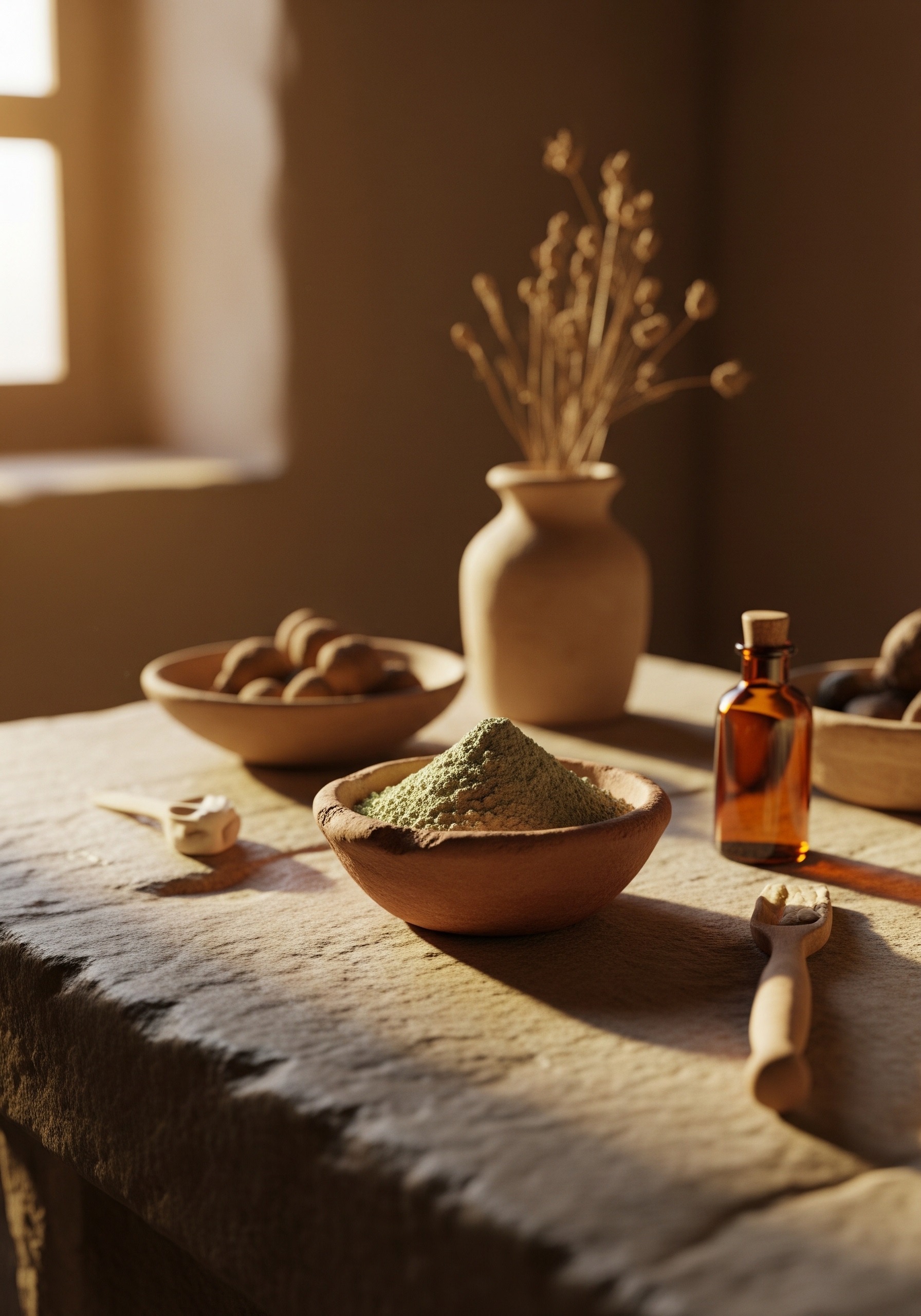
Before answering, it helps to drop one modern assumption: a “toothbrush” is not the only way to clean a tooth. For most of human history, oral hygiene was a daily ritual built from three layers — a mechanical tool to scrub the enamel, an abrasive or herbal compound to lift residue, and a rinse to neutralize acids. Each ancient civilization mixed those three layers from whatever the local landscape offered: aromatic twigs in a date palm oasis, oyster shells on a Mediterranean coast, charcoal from a household hearth.
Surprisingly, the archaeology shows this worked. CT scans of skeletons from Pompeii, frozen in time by Vesuvius in 79 AD, revealed average citizens with strong, largely cavity-free teeth — a dental profile that would make many modern adults envious. The reason, however, was only partly the routine. The other half was the diet: almost no refined sugar, abrasive stone-ground bread that mechanically polished the chewing surfaces, and acidic fruits balanced by chalky water.
Mesopotamia and the Birth of the Chew Stick (c. 3500 BC)
The earliest direct evidence for deliberate tooth-cleaning belongs to the Babylonians of southern Mesopotamia. By around 3500 BC, residents of city-states like Ur and Uruk were chewing the ends of small twigs until the fibers separated into a soft, brush-like tuft. This single innovation — the chew stick — would spread along trade routes for the next five millennia and become, by far, the most widely used dental tool in human history.
Almost every ancient civilization within reach of a fibrous tree adopted some version of it. Indians used neem; Africans favored lime, orange, or Diospyros roots; Greeks chose mastic from the Aegean’s pistachio shrubs; and Chinese travelers picked willow. The mechanical action of the fibers cleared food debris, while the bitter sap of many of these plants happened to be mildly antimicrobial — a folk-medicine coincidence later confirmed by laboratory science.
{IMAGE_2}
Ancient Egypt: The World’s Oldest Toothpaste Recipe
If Mesopotamia gave the world its first toothbrush, Egypt gave it the first toothpaste — twice. An earlier compound, found in tomb inscriptions from roughly 5000 BC, blended powdered ox-hoof ashes, burnt eggshells, myrrh, and pumice into a coarse, gritty paste. It almost certainly scoured enamel raw, but it also removed stains and killed odors in a culture that took ritual cleanliness extremely seriously.
The breakthrough came centuries later. A small papyrus from roughly the 4th century BC, today preserved in the National Library of Austria in Vienna, contains a handwritten Greek-language recipe titled, in the scribe’s own words, “powder for white and perfect teeth.” Its formula is remarkably modern: one drachma (about 0.32 grams) of rock salt, two drachmas of dried mint, one drachma of dried iris flower, and 20 grains of pepper, all crushed together and applied to wet teeth. The result is a clean toothpaste — abrasive enough to polish, fragrant enough to freshen, and with iris root (now confirmed by phytochemistry to contain antimicrobial isoflavones) doing quiet biological work.
Modern dentists who have actually mixed this paste report that it works — mint and pepper produce a sharp clean burn, and the salt removes plaque better than expected. For more on Egyptian science, see our companion piece on ancient Egyptian medicine and its surviving recipes.
The Miswak: A 7,000-Year-Old Toothbrush Still in Use Today
Of all ancient oral-hygiene tools, only one is still in everyday use — and it is one of the oldest. The miswak, also called the siwak, is a pencil-sized stick cut from the root or branch of the toothbrush tree, Salvadora persica, which grows across the Arabian Peninsula, the Horn of Africa, and the Indian subcontinent. Archaeological and textual evidence places its routine use at roughly 7,000 years, making it arguably the oldest continuously used personal-hygiene implement on Earth.
What sets the miswak apart from a generic chew stick is its chemistry. Peer-reviewed research published in the Saudi Medical Journal and reviews indexed at the U.S. National Library of Medicine have identified a small library of bioactive compounds inside Salvadora persica, including benzyl isothiocyanate (a powerful antibacterial), silica (mild abrasive), trimethylamine (mild astringent), and fluoride salts in trace amounts. In several clinical trials, daily miswak users matched or modestly outperformed standard nylon-bristle brushes for plaque removal and gingivitis reduction. The World Health Organization has formally recommended its use since 1987 — not as an antiquity, but as a working public-health tool.
How Did Ancient Romans Brush Their Teeth?
Roman dental care was an unforgettable contradiction of refined technique and stomach-turning ingredients. Wealthy Roman households kept a dentifricium — a tooth powder — applied with a frayed stick or a small linen cloth wrapped around a finger. The base was usually powdered pumice or crushed oyster shell for abrasion, then layered with whatever the recipe-keeper believed worked: charcoal, ground bones, burnt eggshell, ashes, ground antlers, and, in some Imperial-era manuscripts, the pulverized skulls of mice.
The most famous Roman ingredient, however, was urine. The ammonia in stale human urine is a genuine bleaching agent — the same chemistry that powered industrial laundry until the 19th century — and Romans correctly observed that it whitened teeth. Roman writers, including the poet Catullus, joked that Iberian men had the brightest smiles in the Empire because they bathed in urine; the satire was rooted in fact, since fermented urine imported from Portugal (then the Roman province of Lusitania) was prized as the strongest, most ammonia-rich, and most expensive on the market. It was even taxed by Emperor Vespasian under the famous pecunia non olet (“money does not stink”) policy.
Crucially, the Romans did not invent urine-rinsing — they industrialized it. Sources cited in the entry “Dentistry in ancient Rome” describe organized urine markets, regulated import duties, and recipes that blended it with honey or vinegar for daily use. Disgusting? Yes. Effective? Astonishingly, also yes.
The Greeks, the Hippocratic Mouthwash, and the Power of Vinegar
Greek dental practice was less theatrical but more systematic. Around 400 BC, Hippocrates and his school taught that healthy gums and “sweet breath” were signs of overall constitution and prescribed a daily rinse of crushed mint leaves boiled in white wine vinegar with a pinch of salt and pepper. The chemistry was sound: dilute acetic acid breaks down the carbohydrate matrix of dental plaque, salt creates an osmotic stress on oral bacteria, and the mint’s menthol provides antimicrobial volatile oils.
Aristotle, in his History of Animals, even speculated on tooth biology, observing (incorrectly) that women had fewer teeth than men. Among the elite, slaves were sometimes tasked with daily mouth-cleaning rituals using small soft-tipped sticks dipped in such infusions — a practice that historians of medicine link to the later medieval European tradition of “tooth-pickers” employed by aristocratic households.
China’s Game-Changer: The First Bristle Toothbrush (Tang Dynasty, c. 700 AD)
The single most important invention in the history of dental hygiene happened in China during the Tang Dynasty, between 619 and 907 AD. Craftsmen began trimming small tufts of coarse hair from the shoulder and neck of cold-climate hogs raised in Siberia and northern China, where the harsh winters produced unusually stiff bristles. They drilled tiny holes into a flat piece of cattle bone or bamboo, fixed each tuft with knotted thread or animal glue, and produced something that was, structurally, the direct ancestor of every toothbrush sold today.
The first surviving written description comes from the Japanese Zen master Dōgen Kigen, who recorded in 1223 that the monks at Mount Tiantong in China cleaned their teeth twice a day with these bristle brushes. Five centuries later, sea traders carried specimens back to Europe along the Silk Road and the maritime spice routes. By the 17th century, the Chinese toothbrush had become a curiosity in London and Paris — although wealthy Europeans, finding boar bristles too rough, often re-fitted them with softer horsehair.
The boar-bristle toothbrush remained the global standard for more than a thousand years. Only in 1938, when DuPont commercialized nylon, did synthetic bristles begin to replace it. For the history of another quietly revolutionary household object, see our piece on ancient soap-making across civilizations.
Did It Actually Work? What Skeletons Reveal About Ancient Dental Hygiene
The deepest test of ancient dental hygiene is not in any recipe but in the bones. Bioarchaeologists who have analyzed skeletal samples from Pompeii (79 AD), Egyptian Old Kingdom cemeteries (c. 2500 BC), and Iron Age sites across northern Europe have produced a surprisingly consistent picture: tooth wear was severe, but cavities were rare. Without sugarcane, processed flour, or sweetened drinks, the daily microbial assault on enamel was simply much smaller than it is today.
The Ancient Hygiene Toolkit at a Glance
- Mechanical: chew sticks (Mesopotamia, India, Arabia, Africa, China), linen cloth, bristle brush (Tang China).
- Abrasive paste/powder: burnt eggshell + ox-hoof ash (Egypt), pumice + oyster shell (Rome), charcoal + ground bone (Greece, Rome).
- Antimicrobial herbs: mint, iris, myrrh, mastic, neem, miswak — all now confirmed to contain real antibacterial compounds.
- Rinses: wine vinegar + salt (Greece), honey + urine (Rome), water + ash lye (medieval Europe).
What ancient hygiene mostly lacked was an answer to periodontal disease — the slow erosion of gum and jawbone. Tooth wear from gritty stone-milled bread did the cosmetic work, but advanced gum disease and tooth loss in middle age were near-universal. Cave-paintings of Pharaonic dental surgery on Egyptian tomb walls, and a 4th-century BC Etruscan gold-wire bridge recovered near Tarquinia, both hint at the same conclusion: ancient people brushed thoroughly, ate cleanly — and still, eventually, needed a dentist.
Frequently Asked Questions
Q: Did cavemen brush their teeth?
A: There is no evidence of dedicated toothbrushing in the Paleolithic, but microwear analysis of Neanderthal and early Homo sapiens teeth shows clear striations consistent with the use of small plant-fiber probes to dislodge food between teeth — essentially the world’s first toothpicks, used at least 130,000 years ago.
Q: Did ancient Romans really brush their teeth with urine?
A: Yes, although “brush” is generous — they rinsed with it, sometimes mixed with honey or vinegar, and applied tooth-powder with a frayed stick afterward. The ammonia content is a real teeth-whitening agent. Portuguese urine was the most expensive variety because Iberian water and diet apparently produced the highest ammonia concentration.
Q: When was the first toothbrush invented?
A: The first bristle toothbrush — the structural ancestor of the modern toothbrush — was invented in China during the Tang Dynasty (619–907 AD), using boar bristles set into bone or bamboo handles. The first mass-produced European version was made by William Addis in London in 1780.
Q: What did ancient toothpaste taste like?
A: Mostly salty, gritty, and intensely herbal. The 4th-century BC Egyptian recipe — rock salt, mint, iris, and pepper — has actually been mixed by modern researchers and described as “sharp, peppery, and surprisingly fresh,” closer to a strong herbal tooth powder than to anything sweet.
The story of how ancient people brushed their teeth is, in the end, a story of relentless practical intelligence. With nothing more than a twig, an oyster shell, a handful of herbs, and an instinct that a clean mouth meant a healthy body, civilization after civilization built dental routines that — by the brutal verdict of the skeletons they left behind — actually worked. Five thousand years later, our nylon brushes and mint-flavored gels are descendants of those frayed Babylonian sticks and Vienna’s mint-and-iris papyrus. We have refined the chemistry. The instinct, we inherited whole.
Illustrations are AI-generated. Article fact-checked and human-edited.