Magawa the Hero Rat Who Cleared 39 Land Mines in Cambodia
What if the solution to finding hidden explosives wasn’t faster machines, but a nose that weighs 1.2 kilograms? Magawa the hero rat didn’t just walk across Cambodia’s minefields — he revealed something we’d been missing: sometimes the best detection technology has whiskers. For nearly five years, this African giant pouched rat cleared land the size of 20 football fields, finding what metal detectors couldn’t, triggering nothing, saving everything. His story isn’t really about one remarkable animal. It’s about how we stop looking once we’ve decided what the answer should be.
He was born around 2014 at APOPO’s breeding facility in Morogoro, Tanzania — a facility that exists specifically to ask whether rats could do what humans and machines couldn’t. His trainers spent nine months teaching him to scratch at earth above buried explosives. His handlers learned to read the slight pause before he scratched, the angle of his head, what his body was trying to tell them. By the time Magawa retired in June 2021, he’d detected 39 landmines and 28 items of unexploded ordnance — 67 devices removed from ground that farmers could finally reclaim. Nobody was looking at the right place.
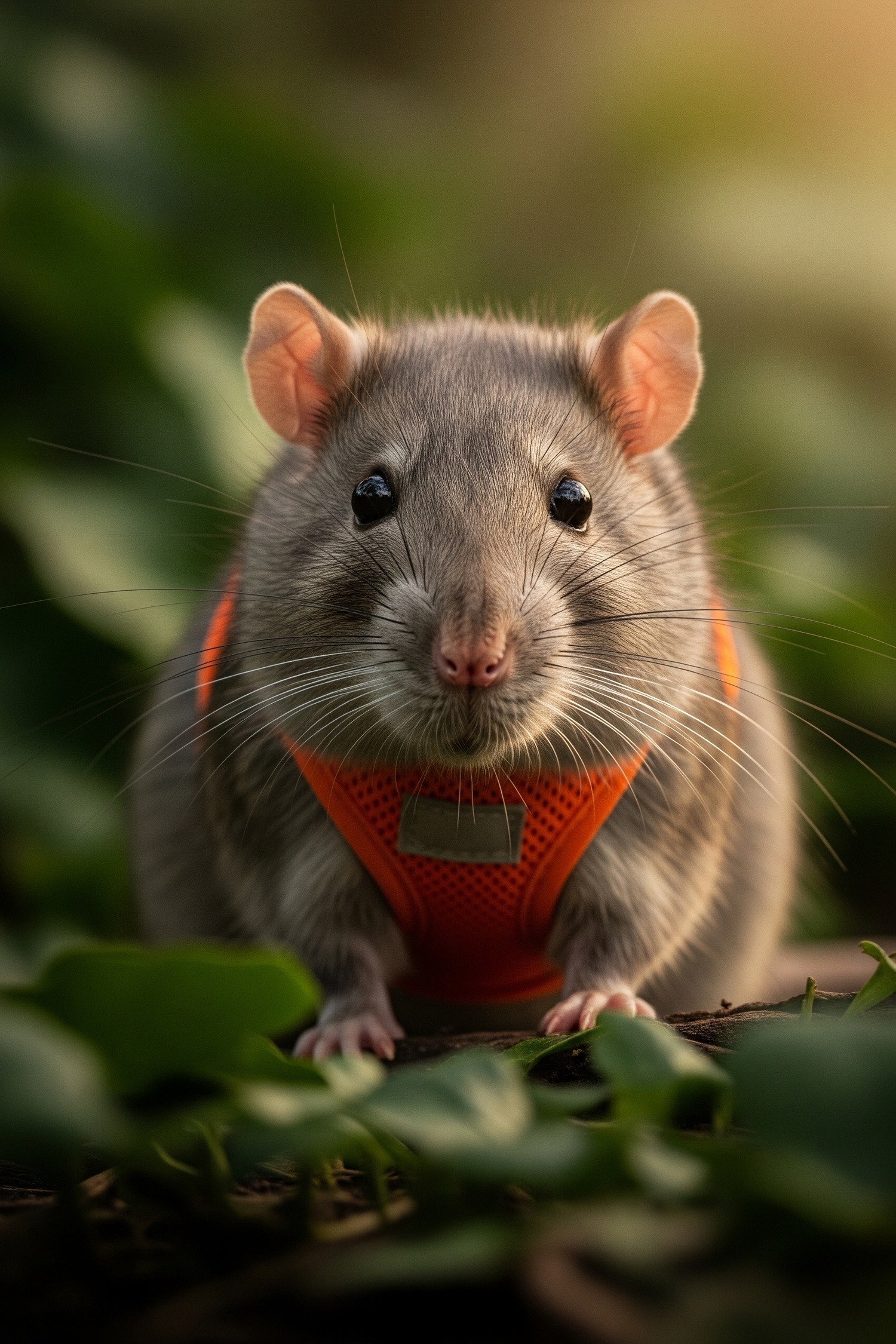
Key Facts
- Magawa, an African giant pouched rat, detected 39 landmines and 28 items of unexploded ordnance, 67 devices total, before retiring in June 2021 (APOPO).
- He cleared roughly 141,000 square meters of land in Cambodia, equivalent to about 20 football fields.
- Magawa weighed about 1.2 kilograms, well below the 5 to 15 kilograms needed to trigger most anti-personnel mines.
- In September 2020, the PDSA awarded Magawa its Gold Medal, the first rat to receive the honor since the program began in 2002.
- Trained by the Belgian-founded NGO APOPO, Magawa was born around 2014 in Morogoro, Tanzania, and died in January 2022.
In short: Magawa the hero rat, an African giant pouched rat trained by APOPO, detected 67 explosive devices and cleared about 141,000 square meters of Cambodian land over nearly five years. At 1.2 kilograms he was too light to trigger mines, and in 2020 he became the first rat awarded the PDSA Gold Medal.
The Rat Who Walked Where Humans Couldn’t
APOPO — Anti-Persoonsmijnen Ontmijnend Product Ontwikkeling, a Belgian-founded NGO operating across Africa and Southeast Asia since the late 1990s — had already refined its methodology around African giant pouched rats for years before Magawa was born. The science is elegant. African giant pouched rats possess an extraordinarily sensitive olfactory system, capable of detecting trace chemical compounds from explosives buried decades underground. A standard metal detector sweeps indiscriminately — it flags shrapnel, iron ore, old coins, anything ferrous. Magawa’s nose went straight to the source: TNT.
From the moment APOPO began formally deploying rats in Tanzania in 1997, accuracy mattered more than noise. A human deminer sweeping with a metal detector stops constantly, excavating false positives, wasting time in fields where every hour matters. A rat trained to respond to a specific chemical signature doesn’t waste motion.
Training took roughly nine months. From birth, the rats were conditioned to associate TNT scent with a food reward — a click-and-treat system calibrated for an animal that doesn’t bond with handlers the way dogs do. Here’s the thing: rats work for banana, not approval. That pragmatism is part of what makes them reliable. There’s no ego. No pride. No attachment. Magawa learned to scratch at the earth above a buried explosive, hold position, and wait. His handlers learned to read every pause, every twitch, every hesitation in his movement.
At 1.2 kilograms, he weighed less than a bag of rice. The pressure required to trigger most anti-personnel mines is between 5 and 15 kilograms. Magawa walked across them without consequence.
A human deminer cannot.
Cambodia’s Buried War: Why This Country, Why Now
Between the 1970s and the late 1990s, an estimated 4 to 6 million landmines were laid across Cambodia — remnants of the Khmer Rouge period, the Vietnamese occupation, and subsequent civil conflicts. Provinces like Battambang, Siem Reap, and Banteay Meanchey became some of the most densely contaminated agricultural regions on Earth. Farmers plowed into them. Children found them along footpaths. The Cambodian Mine Action Centre (CMAC) has documented thousands of casualties since the 1980s.
What changed in 2016? Magawa arrived in Cambodia, deployed by APOPO to work in Siem Reap province. Over the following years, he and his handlers worked systematically through fields and pathways that hadn’t been safely traversed in a generation. By the time he retired in June 2021, APOPO reported that he had detected 67 explosive devices — 39 landmines and 28 items of unexploded ordnance — removed from land that farmers could then reclaim. A trained human deminer using conventional equipment might clear roughly 80 square meters per day. Magawa covered the same area in around 30 minutes.
The Cambodian government estimates that fully demining the country could take generations. But watching a species of problem remain unsolved at this speed, watching fields stay untouched because the conventional methods are too slow, you stop calling it a timeline — you call it a choice. The land itself had become a weapon that outlasted every ceasefire, and Magawa was proof that sometimes solving old problems requires looking at them from an entirely different animal’s perspective.
Every week a field sits uncleared is another week a child can’t safely chase a ball into it.
The Gold Medal and What It Actually Meant
In September 2020, the PDSA — the UK’s People’s Dispensary for Sick Animals — awarded Magawa its Gold Medal, the highest honor the organization gives for animal bravery. The PDSA Gold Medal has been awarded since 2002, previously going to dogs, horses, and pigeons. Magawa was the first rat in the program’s history to receive it. At the ceremony in Cambodia, where APOPO staff fitted the small gold disc to his harness, he showed limited interest in the proceedings and considerably more interest in the banana that followed.
Why did a single rat’s story briefly become a global news moment? Not because detecting mines with rats was unusual — APOPO had deployed hundreds over the years. What made Magawa remarkable was duration and documentation. Most detection rats work for two to three years before retiring. Magawa worked for five. His clearance numbers were the highest of any rat APOPO had deployed to that point. The medal made him visible. The numbers made him undeniable.
He retired in June 2021. He passed away peacefully in January 2022 at the APOPO facility in Siem Reap, surrounded by the handlers who had worked beside him for years. He was roughly seven years old. That’s a long career for any working animal, and an exceptional one for any creature that started from a breeding facility in Tanzania.
What Science Says About Animal Detection
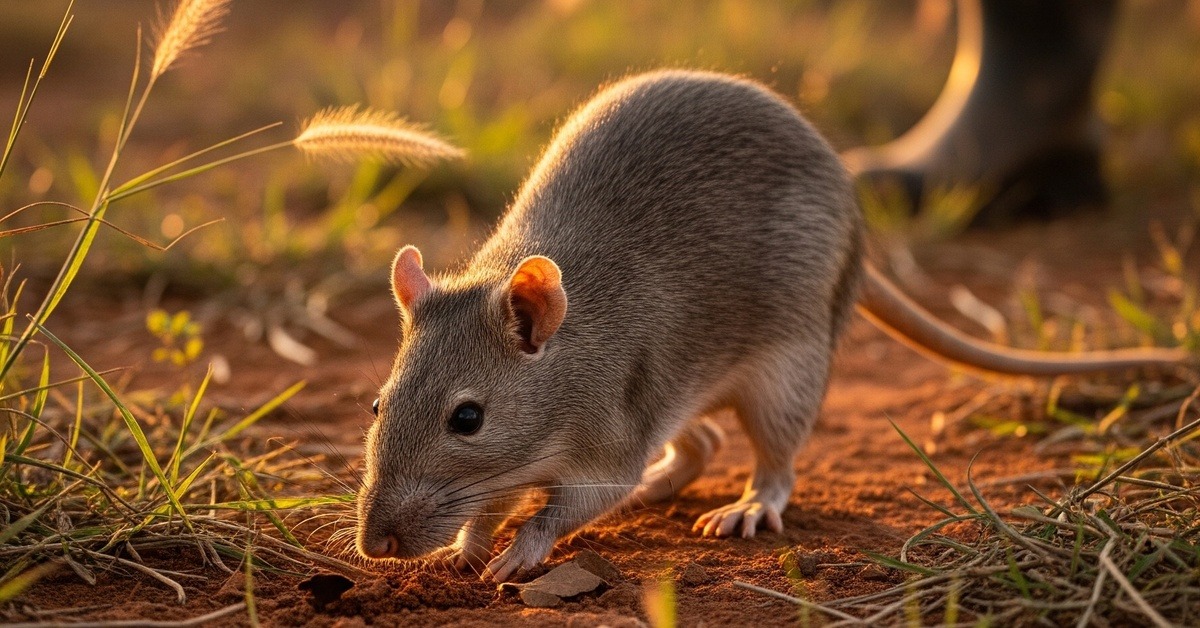
The 2016 PLOS ONE study drawing on APOPO field data from Tanzania and Mozambique quantified what field workers had observed anecdotally for years: trained African giant pouched rats achieved detection accuracy rates comparable to, and in some conditions exceeding, those of conventional mechanical clearance equipment. The key variable isn’t just olfactory sensitivity. It’s signal specificity. Rats trained by APOPO respond to precise chemical signatures rather than the broad electromagnetic field that triggers a metal detector. In heavily contaminated soil with agricultural residue and metal debris, that specificity translates directly into fewer false positives and faster clearance times.
APOPO’s internal data, published in their 2020 annual impact report, found that their rat teams had collectively cleared over 13,000 landmines and unexploded ordnance across multiple countries. But here’s what the numbers don’t capture: the behavioral dimension. Magawa didn’t just detect. He communicated. The scratch-and-hold behavior APOPO trained into their rats creates an observable, repeatable signal that demining teams can act on with confidence.
A rat pausing and scratching at a specific point in a field is not guessing. It’s reporting. The handler reads the signal. The location gets flagged. The human clearance team takes over from there. The rat never touches the device. It never needs to.
APOPO is now expanding its programs into Angola, Zimbabwe, and Ethiopia. They’re also training rats to detect tuberculosis in sputum samples — a different kind of buried threat, a different kind of field. The methodology transfers. The nose doesn’t change.
How It Unfolded
- 1997 — APOPO begins formal rat detection research at Sokoine University of Agriculture in Morogoro, Tanzania, laying the scientific groundwork for the HeroRAT program.
- 2003 — APOPO deploys its first rat detection teams to Mozambique for field trials, marking the transition from laboratory research to active humanitarian demining.
- 2016 — Magawa arrives in Cambodia, beginning fieldwork in Siem Reap province in one of the world’s most heavily landmine-contaminated countries.
- 2020 — Magawa receives the PDSA Gold Medal, becoming the first rat ever awarded the UK’s highest animal honor, bringing global attention to APOPO’s program.
By the Numbers
- 67 explosive devices — 39 landmines and 28 items of unexploded ordnance cleared by Magawa during his working life (APOPO, 2021)
- 141,000 square meters of land cleared — equivalent to approximately 20 standard football fields
- 4 to 6 million landmines estimated to remain buried across Cambodia as of the early 2020s (Cambodian Mine Action Centre)
- 16× faster — the speed at which Magawa cleared 80 square meters compared to a trained human deminer’s daily coverage in equivalent terrain (roughly 30 minutes versus one full day)
- 13,000+ landmines and unexploded ordnance collectively detected by APOPO rat teams across all countries of operation as of 2020 (APOPO Annual Impact Report)
Field Notes
- Magawa wore a custom-fitted harness designed by APOPO engineers to fit the body profile of adult African giant pouched rats without restricting movement — an engineering detail that took several iterations to perfect and allowed handlers to track his position in dense vegetation.
- Unlike the assumptions most people carry, African giant pouched rats live up to eight years in captivity, making them longer-lived working animals than common training animals. Magawa worked productively until age six — an unusually long active career even within APOPO’s program standards.
- The PDSA Gold Medal Magawa received was physically scaled down to fit his harness. The original medal design, created for dogs and horses, was miniaturized — believed to be the smallest version of the medal ever produced.
- Researchers still can’t fully explain why some individual rats in APOPO’s program outperform others trained identically (and this matters more than it sounds). Magawa’s detection numbers were exceptional even by program standards, and the behavioral variables that predict high performance remain an open question in animal cognition research.
Frequently Asked Questions
Q: How did Magawa the hero rat detect land mines in Cambodia without triggering them?
Magawa weighed approximately 1.2 kilograms — well below the 5 to 15 kilograms of pressure required to trigger most anti-personnel landmines. His detection relied entirely on smell, not physical disturbance of the device. APOPO trained him over nine months to identify the specific chemical scent of TNT, scratching at the surface above a buried explosive as his signal. He never contacted the device itself.
Q: What organization trained Magawa, and where is it based?
Magawa was trained by APOPO, a Belgian-founded nonprofit humanitarian organization headquartered in Antwerp, Belgium, with its primary breeding and training facility in Morogoro, Tanzania. Operating since the late 1990s, APOPO runs active programs across sub-Saharan Africa and Southeast Asia. Beyond landmine detection, the organization trains rats to detect tuberculosis in human sputum samples — a parallel program that has screened millions of samples across Africa.
Q: Is it a misconception that metal detectors are just as effective as trained rats for landmine clearance?
Yes. Metal detectors are indiscriminate — they flag any metallic object in the soil, from mine casings to old nails to iron-rich rock. In post-conflict agricultural land, false positive rates can be extremely high, slowing clearance enormously. Trained rats respond to specific chemical signatures, not metal, which means far fewer false positives in contaminated soil. The speed and accuracy advantage is especially pronounced in densely debris-filled terrain like Cambodia’s former conflict zones.
Editor’s Take — Alex Morgan
What stays with me about Magawa isn’t the medal or the headline numbers. It’s the nine months of training for a career spent walking across the worst thing humans ever left in the ground. We spent decades laying those mines and we’re still spending decades finding them — but it took a 1.2-kilogram rat from Tanzania to move the needle in Cambodia in a meaningful way. The real question his story asks isn’t sentimental. It’s structural: what other solutions are we not using because we haven’t looked at the problem from the right animal’s perspective?
Magawa’s story sits at the intersection of two things we’re not great at thinking about together: the long aftermath of war and the unrealized capabilities of the animals we share the planet with. Cambodia’s landmine problem will outlast anyone reading this article. The clearance work continues, field by field, season by season, with rats and dogs and human teams moving across ground that’s been dangerous for fifty years. Somewhere in Siem Reap right now, another trained rat is doing what Magawa did — nose down, unhurried, scratching at earth that’s been holding its breath since before most of us were born.
Illustrations are AI-generated. Article fact-checked and human-edited. Our editorial standards.