The Photo Taken Minutes Before Lightning Struck Moro Rock
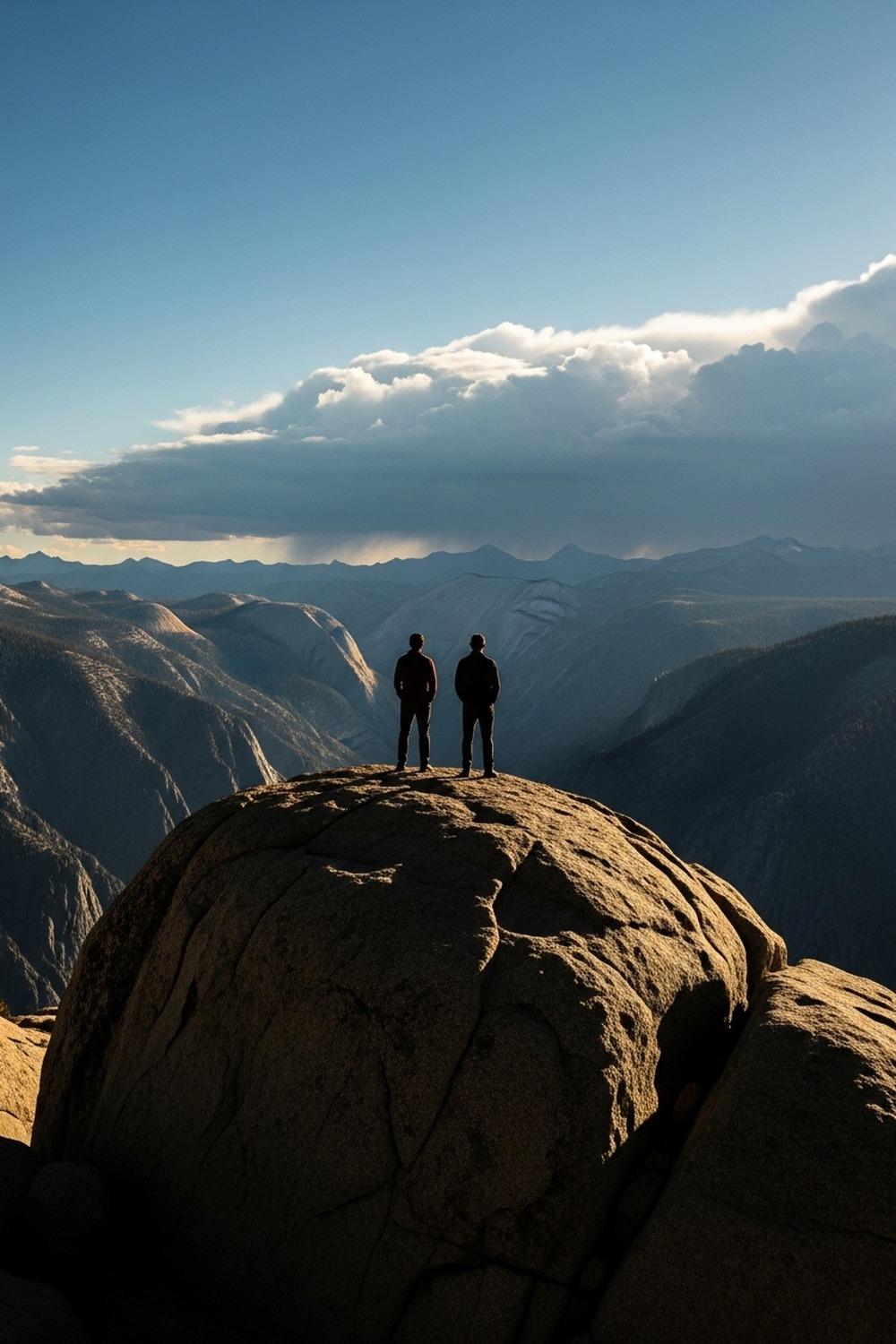
Two brothers stood at the summit of Moro Rock in the summer of 1975, smiling into a camera while someone else was about to die on that same mountain. The photograph would become something nobody wanted to look at — and everyone couldn’t stop looking at.
It is 1975. The Sierra Nevada is sprawling behind them, granite and sky, the kind of view that makes you understand why people spend money to stand on mountains. Someone snapped the photo. Both brothers are grinning. The storm that would change everything is still invisible on the horizon, moving fast, not yet announced.
What makes this story stick isn’t the photo itself. It’s the timing of it. Taken minutes before impact.
Key Facts
- The Moro Rock lightning strike occurred in 1975, when two brothers were photographed at the summit moments before a deadly storm
- Moro Rock rises to 6,725 feet, a bare granite dome above the treeline in Sequoia National Park
- Lightning kills roughly 20 people per year in the U.S. according to NOAA data
- A lightning bolt reaches approximately 30,000 Kelvin, about five times hotter than the sun’s surface
- Roughly 90% of U.S. lightning strike victims survive, though many experience permanent neurological effects
In short: The 1975 Moro Rock lightning strike, captured in a photo of two smiling brothers minutes before disaster, killed a nearby hiker and severely injured one brother. At 6,725 feet, the exposed granite dome in Sequoia National Park is among the most dangerous places to be during the Sierra Nevada’s fast-building afternoon storms.
Why Moro Rock Turns Into a Conductor
Moro Rock rises to 6,725 feet — a bare granite dome jutting straight into open sky above the treeline. No trees. No shelter. Nothing between you and whatever the atmosphere decides to do.
The rock itself is ancient, formed from magma that cooled millions of years ago. It’s essentially a giant piece of conductive material sitting at altitude, waiting. According to the National Lightning Safety Institute, exposed rocky summits are among the most dangerous places to be during electrical storms — strike risk amplifies with elevation, and the total absence of natural grounding cover means current travels through human bodies instead.
Park rangers have been saying the same thing for decades: if you see the clouds building, don’t think about it. Just descend. The mountain doesn’t negotiate with tourists.
Afternoon Storms in the Sierra Nevada Build Faster Than You’d Think
Here’s the thing — thunderstorms in those mountains can develop in under an hour when warm air rises sharply off the valleys below. A blue-sky morning becomes a charged, dangerous afternoon without any dramatic transition. That’s exactly what happened on the day those two brothers stood at the top of one of the most photographed peaks in all of Sequoia National Park.
They weren’t reckless. They weren’t climbers pushing limits or ignoring warning signs. They were tourists on a paved walkway doing what millions of other people do every summer without thinking twice.
That detail — that ordinariness — is what keeps this story alive fifty years later.
What Lightning Actually Does
When a lightning bolt connects, it doesn’t just kill. It rewires.
The current travels through the body in milliseconds, disrupting the electrical signals that run the heart and nervous system. Survivors report permanent neurological damage: memory loss, chronic pain, personality shifts, sensitivity to light and sound that can last decades. One of the brothers survived. That survival came with complications that didn’t end when the storm passed.
A hiker nearby died instantly. That person was also just walking. Also just visiting. Also had no particular reason to think this afternoon would be their last one.
The Photo That Became Something Else
The image circulated for decades — shared in conversations about storm safety, posted in online forums, passed around as a quiet warning dressed up as a vacation snapshot. It’s ordinary in every visible way. Two men. Bright sky. Smiles that feel genuine. But knowing what happens next gives it a weight that’s almost hard to carry.
The Moro Rock lightning strike turned an unremarkable photograph into one of those images that makes you rethink every photo you’ve ever taken on a mountain.
There’s something about knowing a picture was taken minutes before disaster.
We keep looking for signs. We scan the clouds. We study the brothers’ posture and expressions, searching for something that should have warned them.
It never does.
Sequoia’s Pattern of Lightning Deaths
Moro Rock isn’t isolated. The park has recorded multiple lightning fatalities throughout its history, and exposed granite formations are consistently identified as highest-risk zones. Researchers studying lightning strike geography — work referenced by the National Park Service’s own hazard documentation — found that dome-shaped, above-treeline formations attract disproportionate strike activity compared to forested areas at similar elevations.
The park added warning signs. Rangers became more aggressive about telling visitors to descend by noon during summer months. But warnings only work if people listen, and a clear morning sky is a very convincing argument against caution.
The Numbers
- Lightning kills roughly 20 people per year in the U.S. according to NOAA data, but mountains and exposed ridges account for a disproportionate share of those fatalities.
- Moro Rock sits at 6,725 feet elevation — well above the 6,000-foot threshold where afternoon storms develop rapidly in the Sierra Nevada during summer.
- A lightning bolt reaches approximately 30,000 Kelvin. That’s about five times hotter than the sun’s surface, discharged in a fraction of a second.
- Roughly 90% of lightning strike victims in the U.S. survive, but a significant portion experience permanent neurological effects — making survival, in many cases, its own complicated outcome that lasts decades.
What Most People Don’t Know About Lightning on Granite
- Granite doesn’t conduct electricity well on its own — but moisture on the rock’s surface during a storm creates a conductive layer that changes everything. A wet granite dome is a completely different hazard.
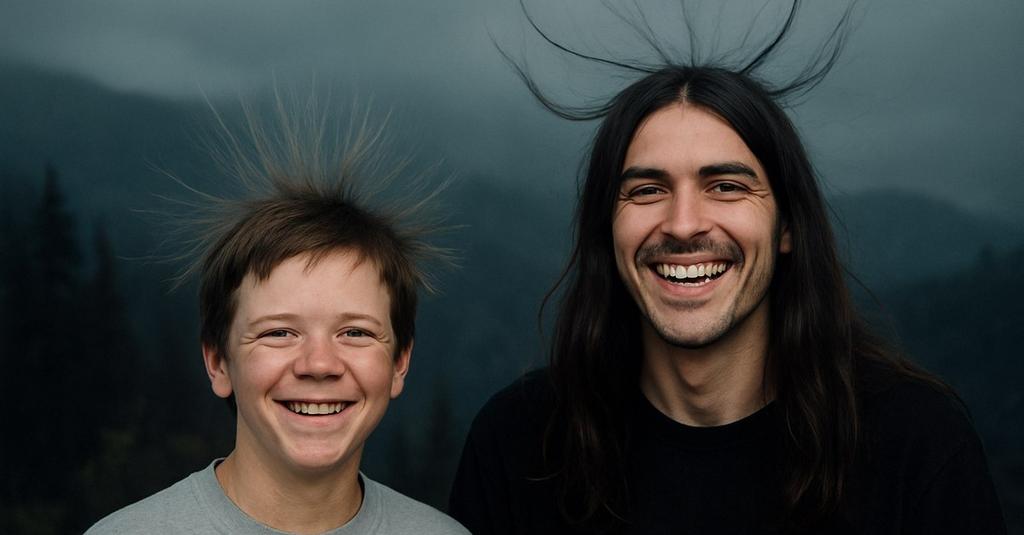
- Most lightning deaths on mountains don’t come from direct strikes. They come from ground current — electricity spreading outward through wet ground or rock from the strike point, reaching people standing several feet away from where the bolt actually landed. That last fact kept me reading for another hour.
- The National Park Service recommends crouching on the balls of your feet, minimizing ground contact, and staying away from other people — the last one being counterintuitive but crucial, since grouped individuals can all be injured by a single ground current event.
Fifty Years Later
The Moro Rock lightning strike of 1975 doesn’t age because the mountain hasn’t changed, and neither has the storm pattern, and neither has the basic human tendency to assume that a beautiful morning means a safe afternoon. Every summer, millions of visitors walk up Moro Rock. They take photos. They smile. They feel that vast, quiet, good thing that mountains give you.
Most of them descend without incident.
But the ones who’ve heard this story carry it differently — a small, low awareness that wasn’t there before. Not fear. Just attention.
That’s what a photograph like this does. It doesn’t keep you off the mountains. It just reminds you to look up once in a while. Check the sky. Check the time. Notice what’s building on the horizon before the camera comes out.
Two brothers went up a mountain on a summer afternoon in 1975. One came back seriously injured. A stranger nearby didn’t come back at all. The photo of their smiling faces survived everything. Mountains are patient places — they’ve seen storms come and go for millions of years, and they’ll see millions more. We’re just visitors passing through. There’s more at this-amazing-world.com, and the next one might keep you up too.
Frequently Asked Questions
Q: What happened during the Moro Rock lightning strike of 1975?
In the summer of 1975, two brothers were photographed smiling at the 6,725-foot summit of Moro Rock in Sequoia National Park, minutes before a fast-moving thunderstorm reached the exposed granite dome. Lightning struck the area. A nearby hiker was killed instantly, and one of the brothers survived but with lasting complications. The photograph, ordinary in every visible way, became a widely shared warning about storm safety on exposed mountain summits.
Q: Why is Moro Rock so dangerous during storms?
Moro Rock is a bare granite dome rising to 6,725 feet, jutting above the treeline with no trees or shelter. Exposed rocky summits are among the most dangerous places during electrical storms, because strike risk rises with elevation and the absence of natural grounding cover means current can travel through human bodies. Sierra Nevada thunderstorms can develop in under an hour as warm valley air rises, turning a blue-sky morning into a deadly afternoon with little warning.
Q: How hot is a lightning bolt and how many people does lightning kill?
A single lightning bolt reaches approximately 30,000 Kelvin, roughly five times hotter than the surface of the sun, discharged in a fraction of a second. According to NOAA data, lightning kills about 20 people per year in the United States, though mountains and exposed ridges account for a disproportionate share of those fatalities. Roughly 90% of strike victims survive, but a significant portion experience permanent neurological effects lasting decades.
Q: What should you do to stay safe from lightning on a mountain?
Park rangers advise descending immediately if clouds are building, ideally by noon in summer when afternoon storms develop rapidly. Most mountain lightning deaths come not from direct strikes but from ground current spreading through wet rock or soil, reaching people several feet from the strike point. The National Park Service recommends crouching on the balls of your feet, minimizing ground contact, and staying away from other people, since a single ground current event can injure a whole group.
Illustrations are AI-generated. Article fact-checked and human-edited. Our editorial standards.