The Priest Who Flew 1,000 Balloons Into the Atlantic
A thousand balloons and a satellite phone — and still the Atlantic took him. The Father Adelir cluster balloon flight is the kind of story that shouldn’t be true, except that every detail of it is: a Catholic priest, a port city in southern Brazil, a fundraiser for truck drivers, and an April morning in 2008 that ended somewhere over open water before anyone fully understood what had gone wrong.
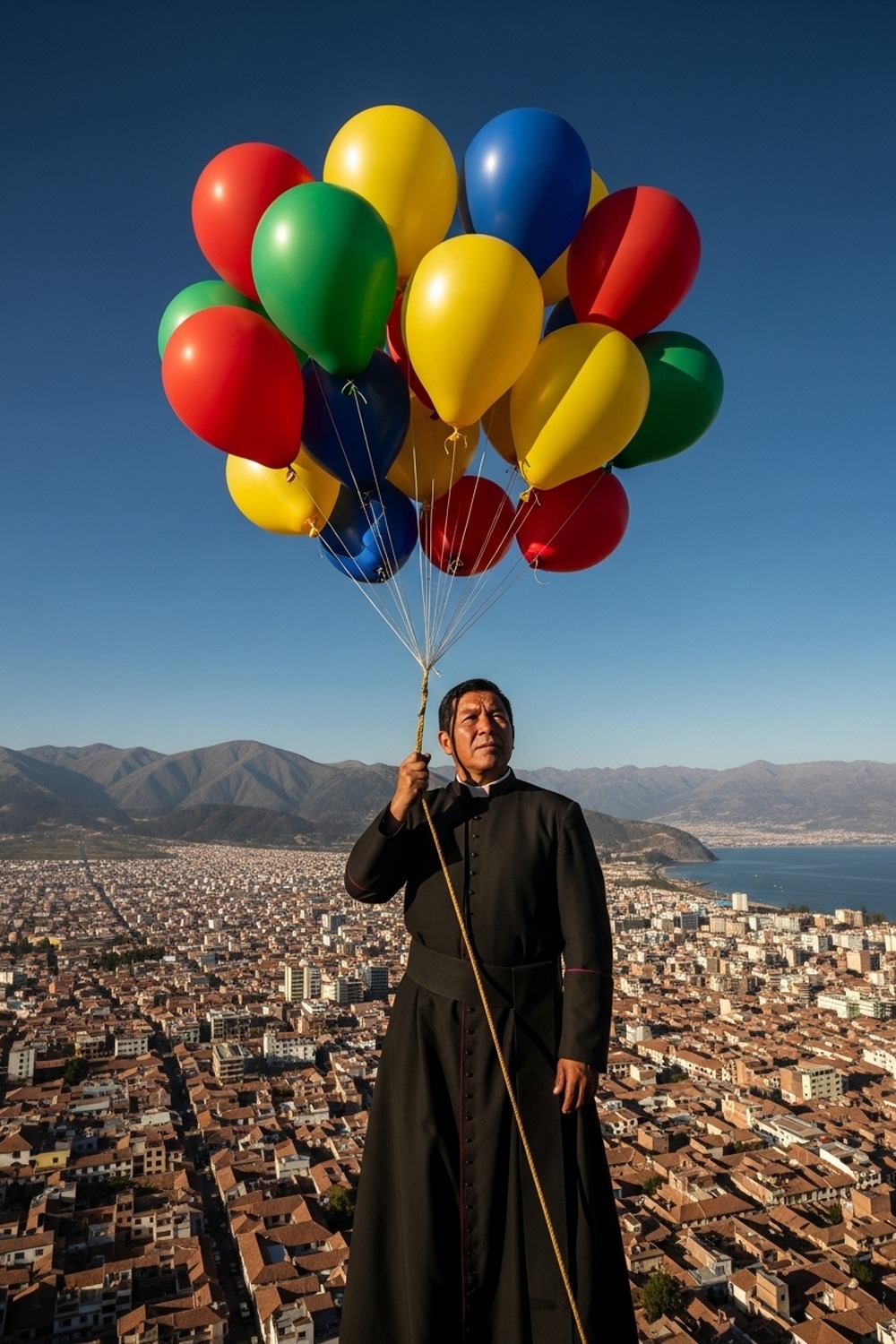
On April 20, 2008, Father Adelir Antônio de Carli lifted off from Paranaguá, a port city on Brazil’s southern coast, intending to break a cluster ballooning distance record and raise funds for a roadside shelter for truck drivers. He was 41 years old, a Catholic priest with a cause he believed was worth the sky. What happened next took months to fully understand — and it still resists easy explanation.
Key Facts
- Father Adelir Antonio de Carli launched from Paranagua, Brazil, on April 20, 2008, attached to 1,000 helium balloons.
- He was 41 years old at the time of the flight and had served as a Catholic priest in southern Brazil.
- His remains were recovered by fishermen near Macae, approximately 180 km northeast of Rio de Janeiro, ending a 3-month search.
- Larry Walters completed the first widely publicized cluster balloon flight in 1982 using 45 weather balloons, reaching about 4,600 meters.
- In 2014, American Jonathan Trappe attempted an Atlantic crossing with 370 balloons but was forced to land in Newfoundland.
In short: The Father Adelir cluster balloon flight launched on April 20, 2008, when a 41-year-old Brazilian priest lifted off from Paranagua on 1,000 helium balloons to fund a truck-driver rest stop. Offshore winds carried him out over the Atlantic, and his remains were recovered near Macae three months later.
The Dream Behind the Father Adelir Balloon Launch
Cluster ballooning — the practice of attaching a harness to a cluster of helium-filled balloons and ascending into open sky — occupies a peculiar place in the history of human flight. According to the Wikipedia entry on cluster ballooning, the activity gained global attention in 1982 when American truck driver Larry Walters lifted off from San Pedro, California, using 45 weather balloons tied to a lawn chair. Walters reached approximately 4,600 meters. He survived, was fined by the Federal Aviation Administration, and became a minor folk legend. But the sport — if it can be called that — has always carried an inherent, structural danger: once you’re aloft, your ability to control altitude, direction, and descent depends almost entirely on equipment, weather, and luck.
Father Adelir understood the risk, at least in theory. He’d trained. He had a GPS device, a satellite phone, and a flight suit designed to withstand cold and altitude. What he may not have fully accounted for was the wind.
The southern Brazilian coast in April is seasonally volatile. The Brazilian Meteorological and Geophysical Institute had issued advisories for shifting offshore winds in that period, and the weather window that looked manageable from the ground became something else entirely at altitude. Father Adelir’s plan called for him to drift roughly inland, tracking records set by previous cluster balloonists. Instead, the winds curved him seaward. He was over open ocean before nightfall.
He did make contact. Rescue teams received intermittent satellite phone calls in the hours after launch. He reported his GPS coordinates. He said he was cold. Then the calls stopped. The sea doesn’t announce the moment it takes someone — it just gets quiet.
What Drove a Priest to Risk Everything for Truckers
There’s a version of this story that treats Father Adelir as reckless, as someone who confused faith with physics. But that reading misses something important about the man and his community. He was a priest in Paranaguá, a city where the trucking industry is both economic lifeblood and relentless grind. Brazil’s BR-101 highway — one of the longest in South America — feeds through the region, carrying drivers across distances that would exhaust most people’s imagination. Father Adelir wanted to build a rest stop, a physical space where those drivers could stop, sleep safely, eat, and breathe. The cause wasn’t abstract. It was local, specific, and rooted in pastoral care.
It’s the kind of dedication that calls to mind other stories of extreme commitment — the way creatures and people sometimes risk everything for something that seems, from the outside, entirely disproportionate to the reward. The sandgrouse carries water in its belly feathers across the Kalahari for its chicks — miles of hostile desert for a biological imperative no outsider can fully measure. Father Adelir’s flight had that same quality of absolute, slightly incomprehensible commitment.
He chose cluster ballooning as his fundraising stunt because it was audacious enough to generate press coverage, which it did — just not the coverage he intended. He’d reportedly made shorter balloon flights before 2008 as promotional events. The Brazilian Civil Aeronautics Administration had been notified. This wasn’t an act of spontaneous recklessness — it was a planned operation that went catastrophically wrong when the atmosphere refused to cooperate. The Paranaguá flight was meant to be the capstone: a record attempt that would draw national attention, generate donations, and fund construction of the rest stop.
People who knew him described a man who was stubborn about goodness. That combination — stubborn, good, and slightly underequipped against the world’s indifference — tends to produce either saints or tragedies. Sometimes both at once.
Searching the Atlantic: Days, Then Weeks, Then Months
Why does the timeline matter so much here? Because the search wasn’t a brief operation — it stretched across an entire season, and the shape of that duration tells you something about how little certainty the Atlantic offered.
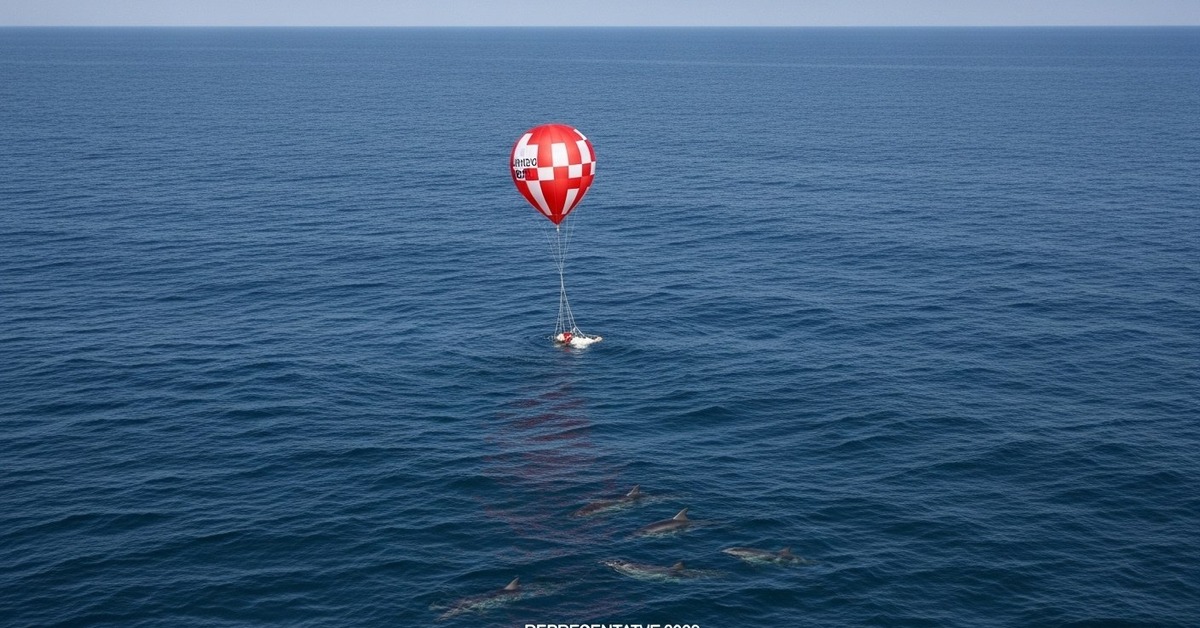
Brazilian authorities launched an extensive operation in April 2008. The Brazilian Navy, the Coast Guard, and volunteer maritime teams combed hundreds of kilometers of coastline and open water. BBC coverage at the time documented the initial optimism — the GPS coordinates Father Adelir had radioed suggested he might be retrievable — followed by the slow erosion of hope as days became weeks without further contact. Search teams recovered balloons. Dozens of them, still aloft, drifting east and south, going nowhere useful, as if they’d been waiting for someone to notice they’d been abandoned. The South Atlantic in that latitude is enormous, the currents unpredictable, and a single person adrift in a flight harness is, oceanographically speaking, almost invisible.
The Father Adelir cluster balloon flight entered a strange public limbo during those months. The Catholic community in Paranaguá held vigils. The Brazilian press covered the search with diminishing frequency. Some people held out hope that he’d landed somewhere remote — an island, a ship, a sandbar — and simply hadn’t been able to communicate. Ocean survival accounts do include stranger things. But the physics of exposure, dehydration, and hypothermia at altitude make extended survival unlikely, even for someone wearing a flight suit. The Atlantic in April is not forgiving at 41 degrees south.
Three months is a long time to wait for an answer that was probably determined in the first 48 hours.
In July 2008 — three months after the launch — fishermen operating near Macaé, a coastal city approximately 180 kilometers northeast of Rio de Janeiro, recovered human remains from the water. DNA testing by Brazilian forensic authorities confirmed the identification. It was Father Adelir. The investigation concluded that he’d died somewhere over or in the Atlantic, most likely within the first several days of the flight going off course.
Father Adelir Cluster Balloon Flight: What the Record Attempt Revealed
Turns out the recreational ballooning community had been discussing this particular problem for years before Paranaguá made it impossible to ignore. The Father Adelir cluster balloon flight exposed the gap between the romance of the sport and its actual danger profile. The Balloon Federation of America, which had long advocated for training standards and weather briefing requirements for cluster balloonists, noted after the incident that many participants underestimated how quickly coastal weather systems can redirect a flight path. Unlike conventional hot-air ballooning — where altitude is managed by controlling heat — cluster ballooning requires pilots to pop individual balloons to descend, a process that’s slow, imprecise, and nearly impossible to execute safely when you’re being blown out to sea in diminishing light. Father Adelir reportedly had a knife specifically for this purpose. Whether he was able to use it, and when, is something forensic analysis in 2008 couldn’t establish.
The altitude records in cluster ballooning are genuinely astonishing, which partly explains the appeal. In 1982, Walters reached an estimated 4,600 meters — by accident, essentially, since his plan had been to drift at a few hundred feet. In 2014, American Jonathan Trappe attempted to cross the Atlantic using a cluster of 370 balloons and was forced to land in Newfoundland after losing balloons to ice. The gap between intent and outcome is a recurring theme. Weather systems at altitude behave differently than at ground level. Coastlines generate their own micro-meteorological conditions. The Father Adelir cluster balloon flight happened exactly at the intersection of all these unpredictable forces: coastal instability, offshore wind shift, and a man who had prepared as well as he could for a situation that ultimately exceeded preparation. The evidence, considered in full, doesn’t allow for the comfortable conclusion that better gear would have saved him — the meteorological conditions that day were the kind that exceed most equipment ratings entirely.
And Brazil has no specific regulatory framework for cluster ballooning to this day. The sport exists in a gray area globally — thrilling enough to attract participants, rare enough that formal safety standards lag behind the accident record.
How It Unfolded
- 1982 — Larry Walters completes the first widely publicized cluster balloon flight in Los Angeles, reaching approximately 4,600 meters on 45 weather balloons before being forced down by an approaching aircraft.
- 2000s — Cluster ballooning gains international attention as extreme sports culture expands online; multiple attempts at distance and altitude records are made across North America and Europe.
- April 20, 2008 — Father Adelir Antônio de Carli launches from Paranaguá, Brazil, with 1,000 helium balloons; contact is lost within hours as offshore winds redirect his flight over the Atlantic.
- July 2008 — Brazilian forensic authorities confirm Father Adelir’s remains, recovered by fishermen near Macaé, ending a three-month search operation.
By the Numbers
- 1,000 — helium balloons attached to Father Adelir’s harness at launch on April 20, 2008.
- 41 — Father Adelir’s age at the time of his death, and the number of years he had served as a Catholic priest in southern Brazil.
- 180 km — approximate distance between the recovery site near Macaé and Rio de Janeiro, indicating how far the Atlantic currents had carried him.
- 3 months — the duration of the official Brazilian search operation before remains were positively identified.
- 45 — the number of weather balloons Larry Walters used in 1982, compared to Father Adelir’s 1,000 (and this matters more than it sounds — that scale difference represents decades of escalating ambition with almost no corresponding advance in safety protocol).
Field Notes
- Father Adelir had completed smaller cluster balloon promotional flights in Paranaguá before the April 2008 attempt — the 1,000-balloon launch was not his first time aloft, which made his preparation seem more credible to observers at the time than it would have to anyone who understood offshore wind behavior on Brazil’s southern coast in autumn.
- Balloons recovered during the search were not deflated or tangled — still ascending when spotted, meaning they’d separated from the harness rather than descending with Father Adelir, which is consistent with a rapid altitude drop or harness failure over open water.
- Cluster ballooning has no global governing body and no unified safety certification standard; pilots operate under whatever aviation authority exists in their country, most of which were written for powered aircraft and conventional balloons, not latex clusters.
- Researchers and aviation safety analysts still can’t say with certainty exactly when or where Father Adelir entered the water — the GPS coordinates he relayed by satellite phone were his last confirmed position, and the three-month drift of his remains between that point and the Macaé recovery site introduced significant uncertainty into reconstruction of the flight path.
Frequently Asked Questions
Q: What was the goal of the Father Adelir cluster balloon flight?
Father Adelir Antônio de Carli launched his cluster balloon flight on April 20, 2008, to raise money for a truck driver rest stop in Paranaguá, Brazil. He planned to set a distance record for cluster ballooning, which he hoped would generate national press attention and donations. His cause was entirely local — improving conditions for the truck drivers his parish community depended on. The flight was authorized with Brazilian aviation authorities.
Q: What is cluster ballooning and why is it so dangerous?
Cluster ballooning involves strapping a harness to a large number of helium-filled balloons and ascending into the open sky. Unlike hot-air ballooning, descent is achieved by popping individual balloons — a slow and imprecise process. Here’s the thing: there’s no engine, no reliable steering, and almost no protection against sudden wind shifts. At altitude, coastal weather can behave entirely differently than at ground level, making pre-flight planning difficult to translate into in-flight safety. The sport’s fatality rate is disproportionate to its small participant base.
Q: Did Father Adelir’s death change ballooning regulations in Brazil?
Despite the visibility of the Father Adelir cluster balloon flight and the extensive search operation it triggered, Brazil has not enacted specific cluster ballooning regulations in the years since. Safety advocates in the ballooning community have repeatedly called for standardized training and mandatory weather briefing requirements, but formal regulatory change has been slow globally, not just in Brazil. The activity continues to occupy a regulatory gray zone in most countries, governed — loosely — by general aviation authorities that weren’t designed with cluster ballooning in mind.
Editor’s Take — Sarah Blake
What stays with me about this story isn’t the balloon count or the search timeline — it’s the truckers. Father Adelir didn’t want fame. He wanted a place where tired men could sleep safely on a dangerous road. The audacity of the method and the humility of the goal exist in such extreme contrast that it almost doesn’t parse. He went up for a rest stop. That’s a sentence I keep turning over. Most of us would be exhausted just filing the paperwork.
There are stories that resist the lesson we want to pull from them. The Father Adelir cluster balloon flight is one of them — it won’t become a clean parable about faith versus physics, or ambition versus preparation. What it leaves behind is quieter and harder: a man who thought a thousand balloons could translate into something useful for people he knew by name. The balloons kept climbing long after he was gone. The rest stop, as far as records show, was never built. Somewhere on the BR-101 tonight, a truck driver is probably still looking for somewhere to stop.
Illustrations are AI-generated. Article fact-checked and human-edited. Our editorial standards.