Why Bees Crawl Into Flowers to Die (And Never Leave)
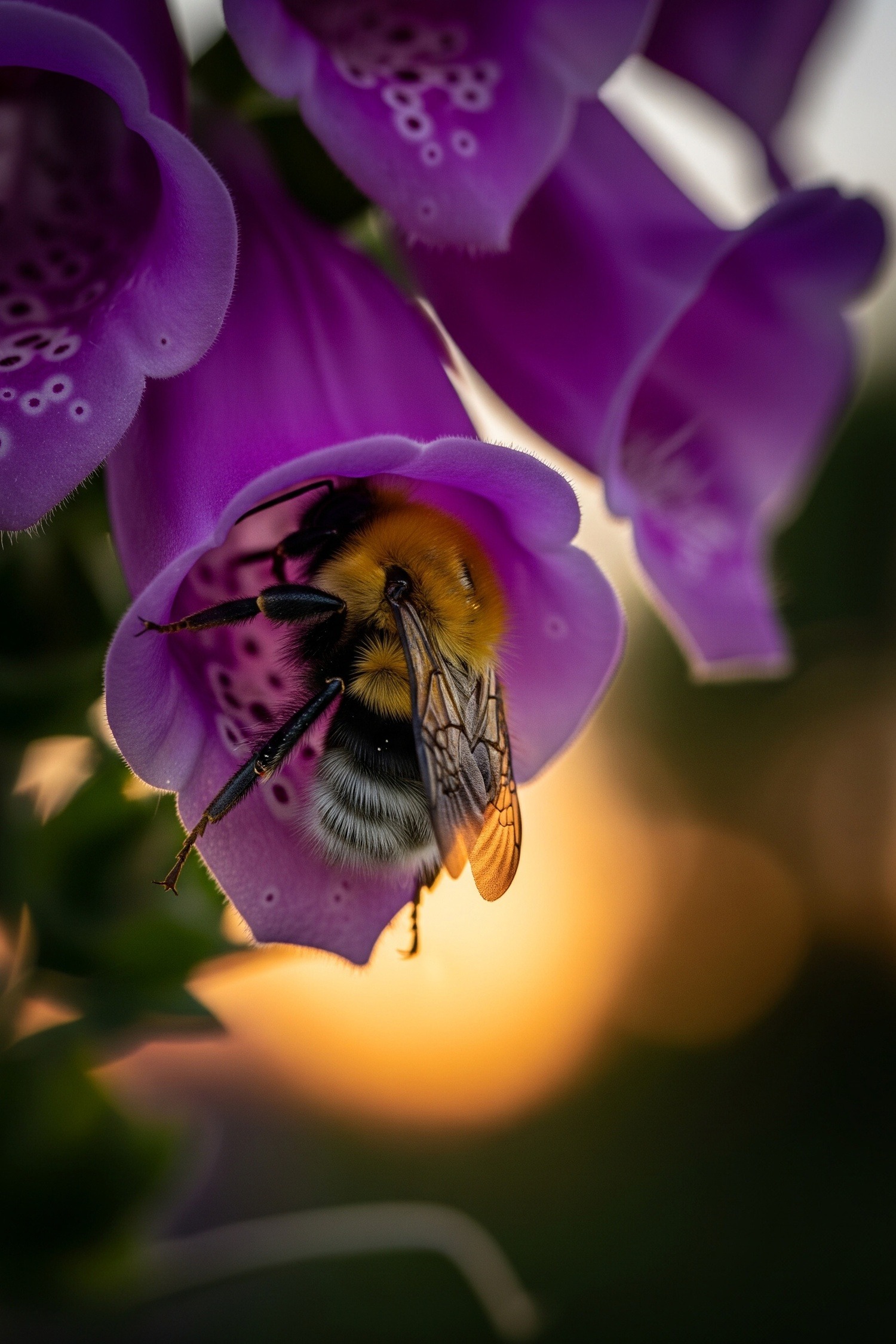
A bumblebee crawls into a foxglove at dusk and never comes back out. It happens constantly, in gardens everywhere, and almost nobody sees it.
Here’s what kept me reading about this for hours: it’s not an accident. It’s not a bee getting trapped or confused. It’s a bee that made a choice.
At the end of the season, when the light turns golden and the nights get cold, male bumblebees and solitary bees start looking for flowers. Not to feed. To die in them. They crawl deep into the throat of a bloom, tuck their legs beneath their body, go still, and that’s where they stay. Permanently.
Key Facts
- At the end of the season, male bumblebees and solitary bees crawl deep into blooms like foxgloves to rest and die, a behavior tied to behavioral thermoregulation.
- There are approximately 20,000 known species of solitary bees worldwide, compared to 8 species of honey bee.
- Solitary bees are responsible for pollinating up to 80% of flowering plant species globally (Food and Agriculture Organization of the United Nations, 2023).
- The inside of a foxglove can be up to 10 degrees Celsius warmer than ambient air on a cool autumn night, sheltering a bee with little energy left.
- Male bumblebees live only 2 to 6 weeks after emerging, so their entire adult life fits within a single calendar month.
In short: The sight of bees dying in flowers is a deliberate end-of-season behavior: male bumblebees and solitary bees crawl into deep blooms like foxgloves, whose interiors can be up to 10 degrees Celsius warmer than the night air. With about 20,000 solitary bee species pollinating up to 80% of flowering plants, this quiet thermoregulation also returns nutrients to the soil.
Why Bees Choose Flowers as Their Final Resting Place
The petals form a small, naturally insulated chamber. Warmer than open air. Sheltered from wind and frost. Dave Goulson — a bumblebee researcher at the University of Sussex who’s spent years watching this behavior — documented how male bees in particular simply run out of biological purpose once mating season ends. No more reason to stay alive. So they find somewhere warm and they rest.
Some bees return to the same flower type night after night before they finally don’t wake up. Scientists have documented this across dozens of species. It looks deliberate. Because it probably is.
Which raises the obvious question: how long has this been happening without anyone paying attention?
The Bee That Lives and Dies Completely Alone
Solitary bees account for around 20,000 known species worldwide. That’s vastly more than the honey bees most people picture. These aren’t colony insects. They don’t make honey. They have no queen, no hive, no collective anything. They work alone, flower to flower, season after season. And when they go, they go like this — tucked into something beautiful.
No funeral. No colony waiting to mourn. Just a single bee, a single bloom, and the fading warmth of an afternoon that’s running out of light.
There’s something genuinely hard to shake about that image. You can learn more about the hidden lives of insects that work alone at this-amazing-world.com.
The Flower Isn’t Just a Deathbed — It’s Architecture
Foxgloves are almost engineered for this. Their tubular blooms angle downward, trapping warm air inside like a chimney in reverse. The interior temperature of a foxglove bell can be several degrees warmer than the air outside — enough to matter enormously to a cold-blooded insect with almost no energy left. Bees dying in flowers like foxgloves aren’t stumbling into them. They’re selecting them the way you’d select a warm room on a cold night.
It’s called behavioral thermoregulation. And it works.
Other bee-friendly flowers show the same dynamic. Deep-throated blooms. Heavy petals. Downward-facing angles. The plant and the bee have been co-evolving for tens of millions of years. Maybe this — the final shelter — is part of that relationship too.
Most People Walk Past This Every Single Day
The staggering thing about bees dying in flowers is how invisible it is. Solitary bees don’t announce themselves. They don’t gather in numbers. A single mining bee might work a patch of garden for an entire season and never once catch your attention. When it dies inside a crocus or a borage bloom, there’s no trace left by morning. Birds find them. Rain moves them. The flower closes and opens again like nothing happened.
How many flowers in your garden have quietly held something like this?
You genuinely don’t know.
Death Inside a Flower Isn’t the End of the Story
Here’s the thing: a bee that dies inside a flower doesn’t just vanish. It becomes part of the soil, the cycle, the next season’s bloom. As the body breaks down, it releases nitrogen and other nutrients directly into the plant’s environment. A bee that spent its life pollinating is still contributing after death — feeding the very flowers it worked. Ecologists call this nutrient cycling. But that phrase doesn’t quite capture what it actually is: a closed loop so elegant it borders on poetic.
The flower gave the bee warmth at the end. The bee gives the flower something back. Neither of them knows it’s happening. And yet the exchange is real, and it’s been happening longer than our species has existed to notice it.
By the Numbers
- Approximately 20,000 known species of solitary bees worldwide, compared to 8 species of honey bee. That ratio shocks nearly everyone.
- Solitary bees are responsible for pollinating up to 80% of flowering plant species globally, despite being nearly invisible in public awareness (Food and Agriculture Organization of the United Nations, 2023).
- Foxglove interior temperatures.
- The inside of a foxglove can be 10°C warmer than ambient air on a cool autumn night — enough to significantly extend the life of a bee seeking shelter.
- Male bumblebees live only 2–6 weeks after emerging, compared to worker bees who may live several months. Their entire adult life — emergence to final rest — fits within a single calendar month.
Field Notes
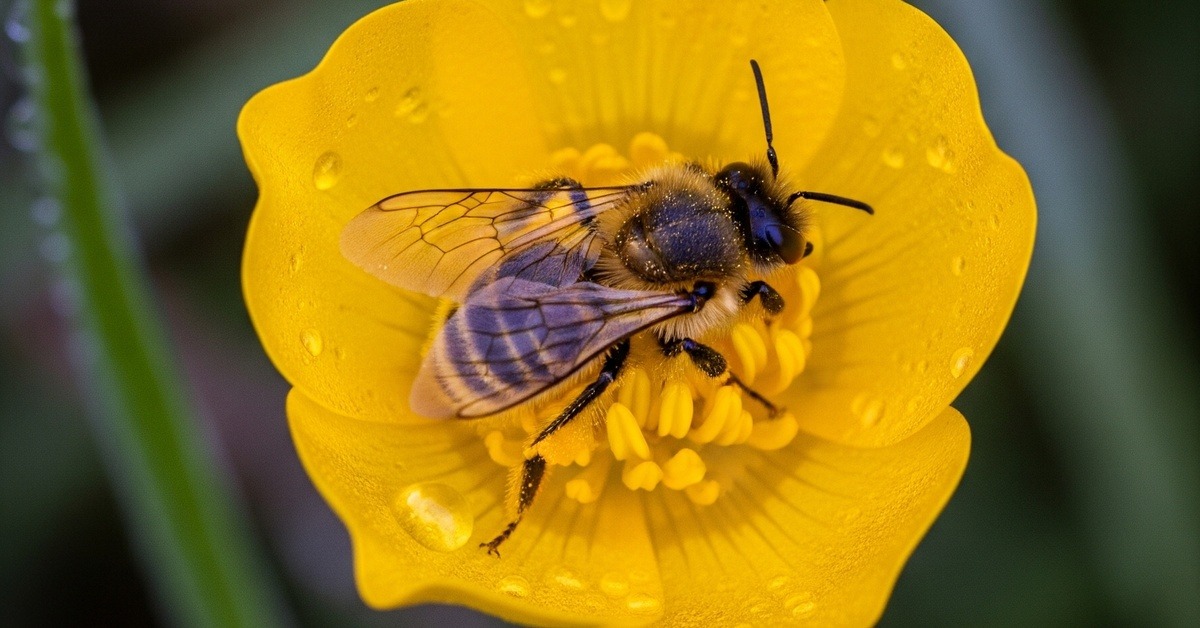
- Some solitary bee species, including certain mining bees, enter a state called torpor inside flowers — a form of temporary dormancy where body temperature and metabolism drop dramatically. This isn’t sleep exactly. It’s closer to a controlled shutdown.
- The bees found “sleeping” in flowers are often male. Female solitary bees typically return to their nest burrows overnight. Male bees have no nest of their own, so they rely on flowers as primary shelter, sometimes gripping petals with their mandibles to avoid falling during high winds.
- Same bee, same flower, multiple nights running. Researchers observing marked individuals found bees returning to within centimeters of the same resting spot, night after night, until they don’t return at all. Spatial memory. Preference. Or something we don’t have a word for yet.
Why This Small, Quiet Fact Actually Matters Now
Solitary bee populations are declining across Europe and North America. Habitat loss. Pesticide use. The disappearance of the flowering plants they depend on. The behavior of bees dying in flowers is one data point in a much larger story. When solitary bees disappear, the pollination networks they support don’t just shrink. They collapse. And the ripples move through entire ecosystems in ways that are only beginning to get noticed.
These are species most people can’t name. Performing work most people can’t see. Losing ground most people haven’t realized is gone.
Planting deep-throated flowers — foxgloves, borage, comfrey, salvias — doesn’t just feed bees while they’re alive. It gives them somewhere to rest when they can’t go on. That’s a small thing. But small things compound. Right now, they need to.
A single bee, alone, crawling into a foxglove at dusk. It’s such a small moment. But it contains something enormous — about solitude, about purpose, about the way living things find shelter where they can. The natural world is full of stories like this one, hiding in plain sight. If this keeps you up at night, there’s more at this-amazing-world.com. And the next one is even stranger.
Frequently Asked Questions
Q: Why do bees crawl into flowers to die?
At the end of the season, male bumblebees and solitary bees seek warm shelter rather than food, and deep blooms like foxgloves provide it. The petals form a naturally insulated chamber that can be up to 10 degrees Celsius warmer than the cold night air, which matters enormously to a cold-blooded insect with almost no energy left. University of Sussex researcher Dave Goulson documented that male bees in particular run out of biological purpose after mating season, so they find somewhere warm and rest there permanently. Scientists call this behavioral thermoregulation.
Q: How many species of solitary bees are there?
There are approximately 20,000 known species of solitary bees worldwide, compared with just 8 species of honey bee, a ratio that surprises nearly everyone. Solitary bees have no queen, no hive, and no colony; they work alone, flower to flower, season after season. Despite being nearly invisible in public awareness, they are responsible for pollinating up to 80% of flowering plant species globally, according to the Food and Agriculture Organization of the United Nations in 2023, making their quiet decline a serious ecological concern.
Q: What happens to a bee’s body after it dies inside a flower?
A bee that dies inside a flower becomes part of the soil and the next season’s bloom. As the body breaks down, it releases nitrogen and other nutrients directly into the plant’s environment, so a bee that spent its life pollinating keeps contributing after death by feeding the very flowers it worked. Ecologists call this nutrient cycling. The flower gives the bee warmth at the end, and the bee gives the flower nutrients back, a closed loop that has been happening far longer than humans have existed to notice it.
Illustrations are AI-generated. Article fact-checked and human-edited. Our editorial standards.