Why Wild Animals Keep Showing Up in Your Backyard
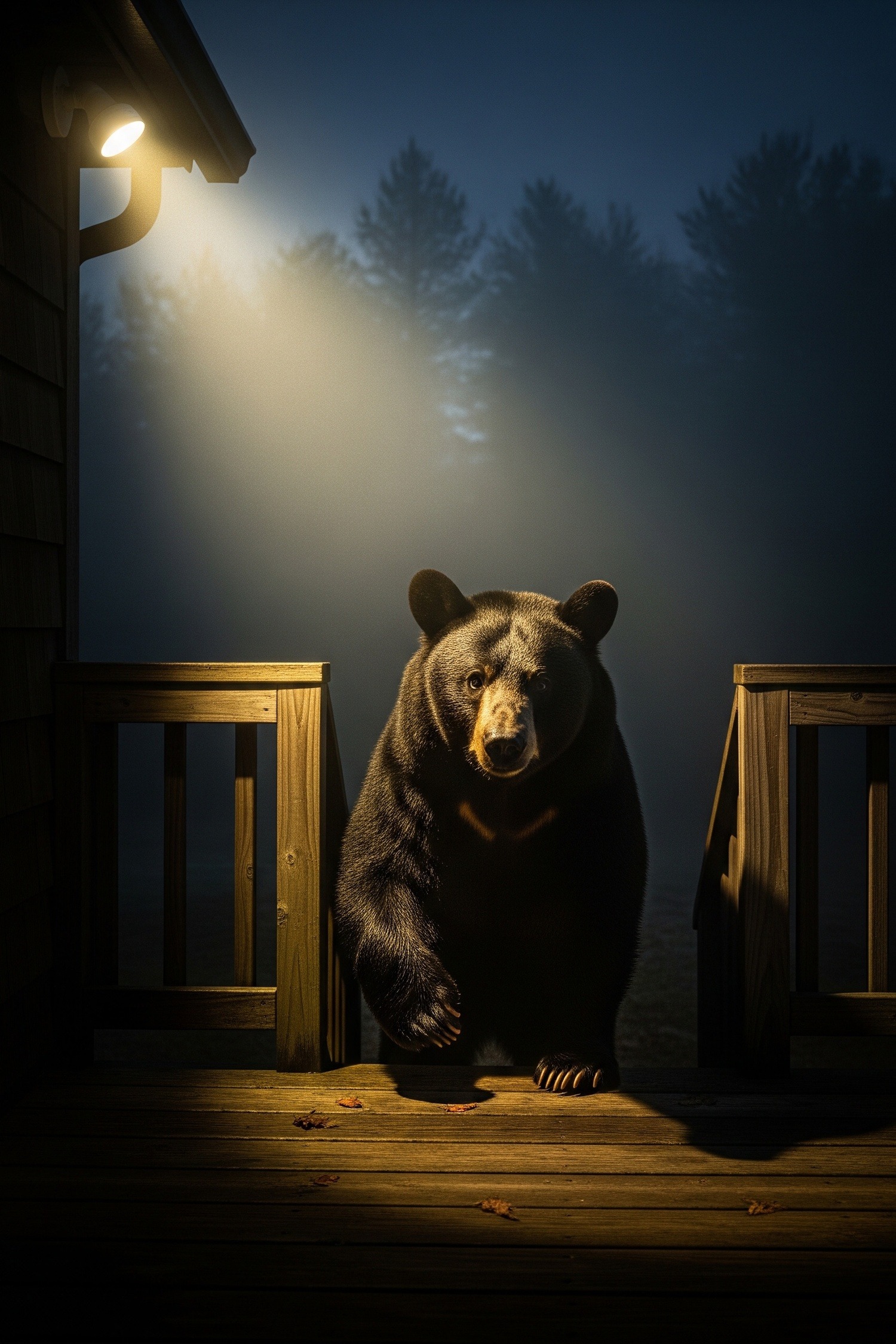
So there’s this bear showing up at 2 a.m., tripping motion sensors in New Jersey suburbs that didn’t exist twenty years ago. Nobody planned for this. And it turns out the bear isn’t the problem — it’s just the most visible symptom of something that’s been quietly erasing the wild for decades.
Six thousand acres. Every single day. That’s how much open land vanishes in the United States. And here’s what nobody tells you about that number: it doesn’t sound like much until you realize it’s happening on purpose, systematically, in the same places where animals used to live.
A wildlife biologist sees that bear differently than you do. Not an invader. Not lost. An animal that’s simply run out of anywhere else to go. And it’s happening in backyards across the country — in suburbs where the forest used to be, where the habitat used to be, where the animal’s entire world used to exist in one unbroken piece.
Key Facts
- The United States loses approximately 6,000 acres of open land to development every day (American Farmland Trust, 2023 Farms Under Threat report).
- The U.S. loses roughly 2.2 million acres of wildlife habitat annually to urban sprawl and agriculture.
- Mountain lion P-22 lived in Griffith Park’s 4,300 acres, a territory about 200 times smaller than a wild male lion would naturally claim.
- Forest fragmentation has increased edge habitat in North American forests by an estimated 70% over the past century.
- Forest patches smaller than 100 hectares lose an average of 50% of their interior-dependent bird species within 25 years of isolation.
In short: Wildlife habitat fragmentation isolates wild spaces into shrinking patches, pushing animals like bears into suburbs not as invaders but as displaced refugees. The U.S. loses about 6,000 acres of open land daily, and edge effects let adaptable generalists thrive while interior forest specialists quietly vanish before anyone notices.
What Happens When You Cut a Forest Into Pieces
Habitat fragmentation doesn’t shrink wild spaces so much as it isolates them. According to ecologist William Laurance, who’s spent decades studying forest fragmentation in the Amazon and beyond, animals start changing their behavior within years. Not generations. Years. The U.S. loses roughly 2.2 million acres of wildlife habitat annually to urban sprawl and agriculture — and each acre lost doesn’t just reduce the total available space.
It fragments what’s left.
Think of a forest like a quilt. Someone’s cutting it into smaller and smaller squares. Each cut creates edges. And edges are where everything gets weird — where wind, noise, light, domestic animals, and invasive plants pour into the habitat and destabilize it. The deepest parts of a forest, the interior zones, are actually the only places where certain species can even exist. Spotted owls. Interior warblers. Salamanders that breed in temperature-sensitive seeps. When the interior disappears and only edges remain, those species don’t gradually decline.
They vanish.
Quietly. Piece by piece.
The Generalists Win. The Specialists Disappear.
Ecologists call this the edge effect. When fragmentation creates an outsized amount of edge habitat — which it does — something strange happens: the species that thrived in deep forest can’t survive there. They need depth, not perimeter. But raccoons? White-tailed deer? Red foxes? They love edges. They’re generalists. They adapt.
So the generalists move in.
- Specialists disappear.
- We see the raccoons and deer everywhere, so we assume wildlife is thriving — which is the real trick of this whole thing.
- The animals we notice are the survivors. The ones we don’t see anymore are the ones we’ve already lost.
That last fact kept me reading for another hour. We literally can’t see what we’re missing.
P-22 and the Mountain Lion in the Island Prison
There’s a mountain lion named P-22. He lived in Griffith Park — 4,300 acres surrounded entirely by Los Angeles. He was trapped there for years because the same freeways that enclosed him also cut him off from every other mountain lion. No reproduction. No escape. Just a single animal circling 4,300 acres for a decade, completely alone.
His story became the symbol for what wildlife habitat fragmentation actually looks like on the ground.
Not an abstract policy problem. Not a map in a report. An actual lion, trapped in a shrinking island, unable to find a mate, unable to migrate, unable to be wild in any meaningful sense. And his territory was roughly 200 times smaller than what a male mountain lion would naturally claim.
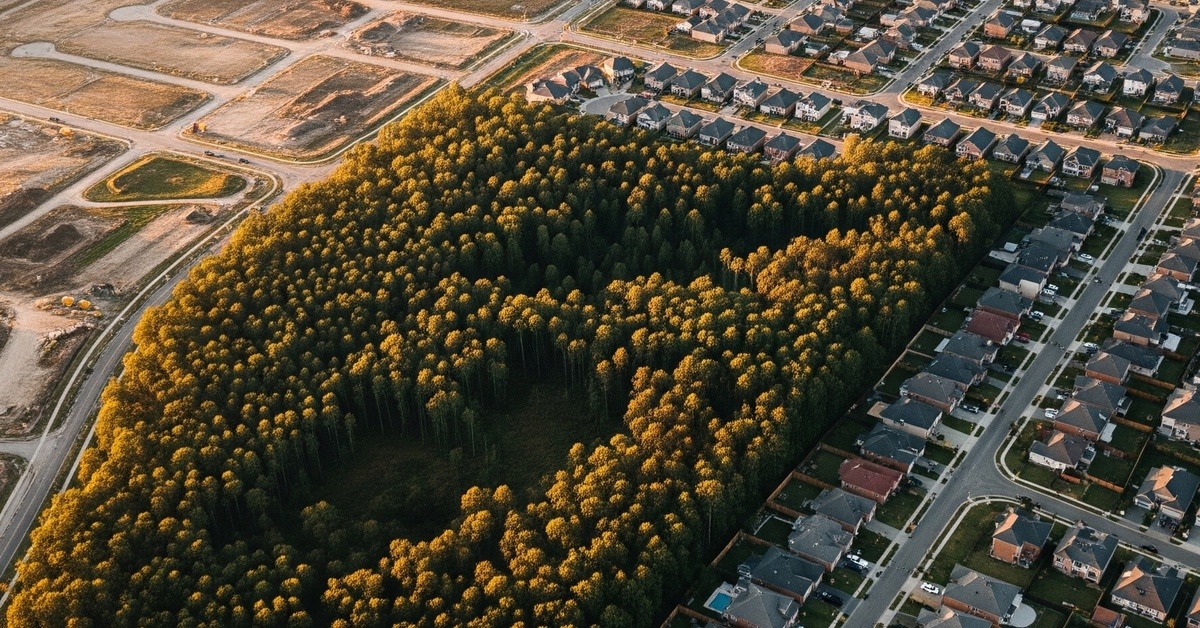
And the fragments keep getting smaller.
The Species That Disappear Before Anyone Notices They’re Gone
Here’s the thing about fragmentation that doesn’t make it into the news: the most serious losses are completely invisible. It’s not the bears or the coyotes. Those species are adaptable. It’s the interior forest specialists. The wood thrush. The cerulean warbler. The Indiana bat. Neotropical migratory birds that need large, unbroken forest tracts to breed. Turns out fragmentation doesn’t just reduce the total habitat area — it changes what can possibly live there, even in the patches that remain.
Researchers call this “area sensitivity.”
Some species need a minimum patch size just to function — to find food, establish territory, raise young. Drop below that threshold and the species disappears from that location. Not immediately. But inevitably. The forest looks intact on a satellite map. The species are already gone.
The Numbers
- The U.S. loses approximately 6,000 acres of open land to development every single day, according to the American Farmland Trust’s 2023 Farms Under Threat report.
- Forest fragmentation has increased edge habitat in North American forests by an estimated 70% over the past century, which fundamentally altered the composition of species that can survive in those patches. Generalists moved in. Specialists moved out.
- P-22’s territory: 200 times smaller than a naturally-ranging male lion would claim.
- Forest patches smaller than 100 hectares lose an average of 50% of their interior-dependent bird species within 25 years of isolation — even when the patch itself remains physically unchanged.
What’s Actually Happening in Fragmented Landscapes Right Now
- Coyotes in suburban areas adjust their active hours to avoid peak human activity — essentially developing new behavioral schedules in response to development pressure rather than abandoning territories.
- White-tailed deer populations increase near forest edges created by fragmentation, because the mix of cover and open foraging land suits them perfectly. Suburban deer overpopulation is actually a symptom of forest loss, not forest health.
- Wildlife corridors work. Even a 50-meter-wide strip of connected habitat is enough to allow small mammal and insect populations to reconnect across fragmented landscapes.
The Bear at 2 a.m. Isn’t Bold. It’s Displaced.
Wildlife habitat fragmentation isn’t a remote problem happening somewhere else. It’s active right now, on the edge of every suburb built in the last thirty years. That bear at your motion sensor light isn’t a warning that something wild has gone wrong. It’s evidence that the landscape those animals depended on has been steadily, systematically dismantled.
The line between wilderness and backyard hasn’t been erased by the animals.
It’s been erased by us.
And that matters because it changes the response. If animals are “invading,” you build walls and call animal control. If animals are displaced, you think about corridors, native plantings, wildlife-friendly yards, and the political choices that allow 6,000 acres a day to disappear without public outcry. The framing determines what happens next.
The bear wasn’t lost. The mountain lion wasn’t bold. They were just animals doing the only thing animals can do — moving toward what’s left. And what’s left keeps shrinking. Understanding that doesn’t make the problem smaller. It makes it feel appropriately urgent. If you want to dig deeper into this, there’s more at this-amazing-world.com — and the next one is even stranger.
Frequently Asked Questions
Q: What is wildlife habitat fragmentation and why does it matter?
Wildlife habitat fragmentation is the breaking of large continuous habitats into smaller, isolated patches, largely through urban sprawl and agriculture. The U.S. loses roughly 2.2 million acres of wildlife habitat annually and about 6,000 acres of open land daily. Fragmentation does not just shrink space; it creates edges where wind, noise, light, and invasive species pour in, destabilizing interior zones that many specialist species, like spotted owls and interior warblers, depend on to survive.
Q: What is the edge effect in fragmented forests?
The edge effect describes how fragmentation creates an outsized amount of edge habitat instead of deep forest interior. Generalist species like raccoons, white-tailed deer, and red foxes thrive on edges and move in, while interior-dependent specialists that need depth disappear. Forest fragmentation has increased edge habitat in North American forests by an estimated 70% over the past century, fundamentally altering which species can survive even in the patches that physically remain unchanged.
Q: Who was P-22 and why did the mountain lion become a symbol?
P-22 was a mountain lion that lived in Griffith Park, 4,300 acres surrounded entirely by Los Angeles. Trapped there for years by the same freeways that enclosed him, he could not find a mate, migrate, or escape, living alone for roughly a decade. His territory was about 200 times smaller than a wild male lion would naturally claim. P-22 became the ground-level symbol of what wildlife habitat fragmentation actually does to animals.
Q: Why don’t we notice the worst losses from fragmentation?
The most serious losses are invisible because they involve interior forest specialists like the wood thrush, cerulean warbler, and Indiana bat rather than visible generalists. Researchers call this area sensitivity: some species need a minimum patch size to function, and below that threshold they vanish inevitably, even when a forest looks intact on a satellite map. Patches smaller than 100 hectares lose about 50% of interior-dependent bird species within 25 years of isolation.
Illustrations are AI-generated. Article fact-checked and human-edited. Our editorial standards.