Why Yellowstone’s Alpha Wolves Spare the Pups They Didn’t Sire
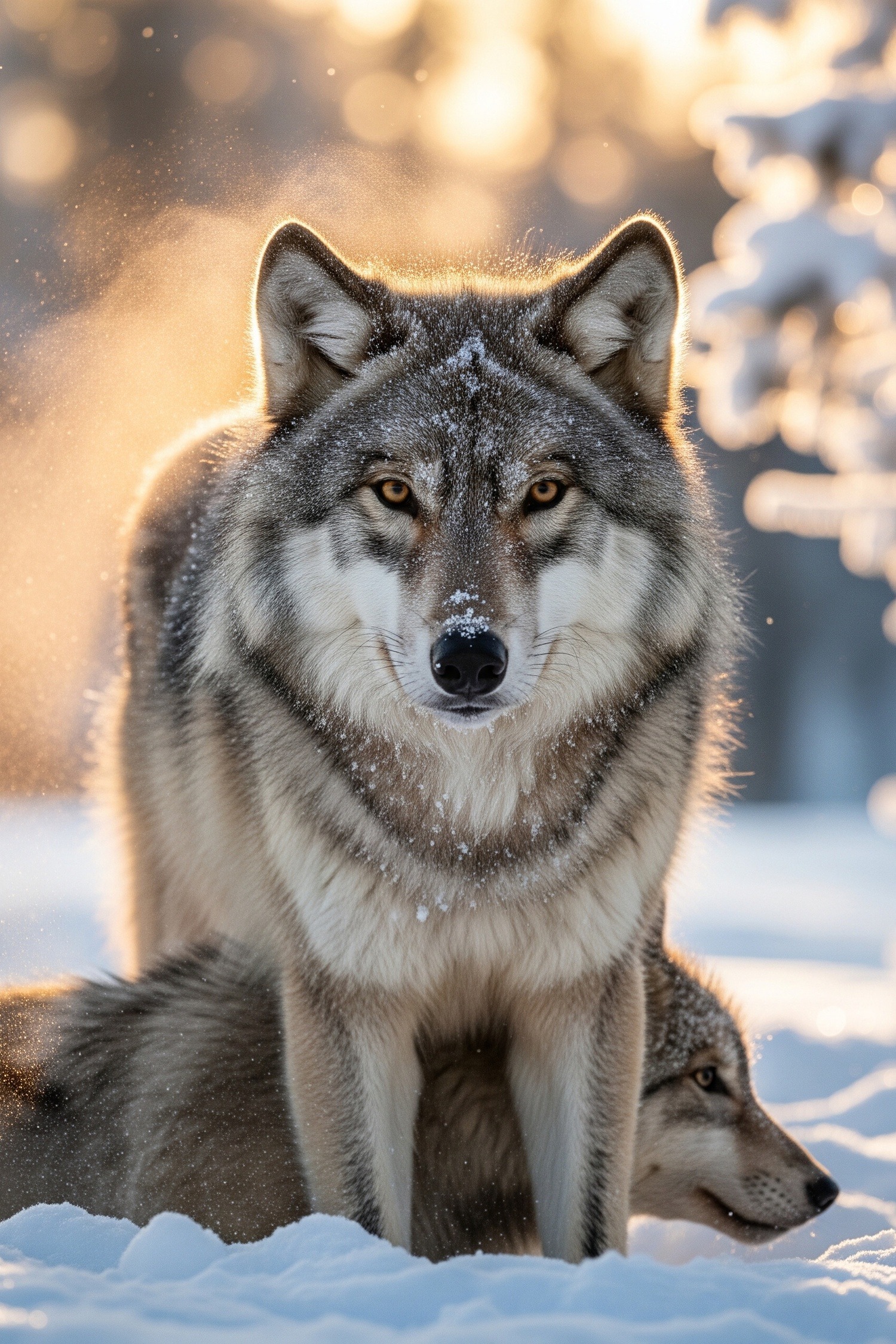
In Yellowstone’s snow, something moved against every prediction we made about Yellowstone wolf pack behavior. A new alpha stepped into a territory already occupied by pups from the previous male — and walked past them. No attack. No territorial assertion. Just a measured indifference that turned out to be one of nature’s most ruthless survival calculations, dressed up as restraint.
Since 1995, when wolves returned to Yellowstone National Park after seventy years of absence, researchers have watched alpha transitions unfold in ways that contradict the old brutality scripts. A new male inherits a pack. By every evolutionary prediction we thought we understood, he should eliminate the previous male’s offspring. Instead, across multiple documented cases, he doesn’t. Why? That’s the question keeping biologists up at night — is this restraint, or is it something far colder?
Key Facts
- Yellowstone lost its last wolf pack in 1926 after federal predator-control campaigns across the American West.
- The U.S. Fish and Wildlife Service reintroduced 41 wolves to Yellowstone between 1995 and 1997.
- Rick McIntyre observed Yellowstone wolves for the Wolf Project for over 6,000 consecutive days between 1995 and 2020.
- A solo wolf hunting elk in Yellowstone has roughly an 18 percent success rate per attempt, while packs of five or more can take down bison and elk weighing 500 to 700 kilograms.
- Hamilton’s rule on kin selection was formalized in 1964 and predicts investment in relatives proportional to shared genetic material.
In short: Since wolves were reintroduced to Yellowstone in 1995, researchers have documented new alpha males tolerating and even feeding pups they did not sire, contradicting older infanticide models. A solo wolf has roughly 18 percent hunting success, while larger packs take elk and bison weighing 500 to 700 kilograms, making pack cohesion more valuable than genetic kinship.
How Yellowstone Wolf Pack Behavior Rewrote the Rules
1926 was the year Yellowstone lost its last wolf pack. Federal predator-control campaigns had systematized extirpation across most of the American West — a 70-year silence that nobody expected to break. When the U.S. Fish and Wildlife Service reintroduced 41 wolves between 1995 and 1997, recovery was supposed to be slow, fragile, and isolated from serious scientific observation. What actually happened was faster and stranger. The Yellowstone Wolf Project began fitting wolves with radio collars and tracking every birth, death, and leadership change — and by the early 2000s, researchers at the University of Minnesota and the Yellowstone Center for Resources had logged enough alpha transitions to notice something that quietly dismantled decades of assumptions about wolf aggression.
The old model was clean and brutal. New alpha male arrives. Kills rival offspring. Secures his genetic legacy. It’s documented in lions. It appears in some primate species. But in Yellowstone’s wolves, the data kept telling a different story.
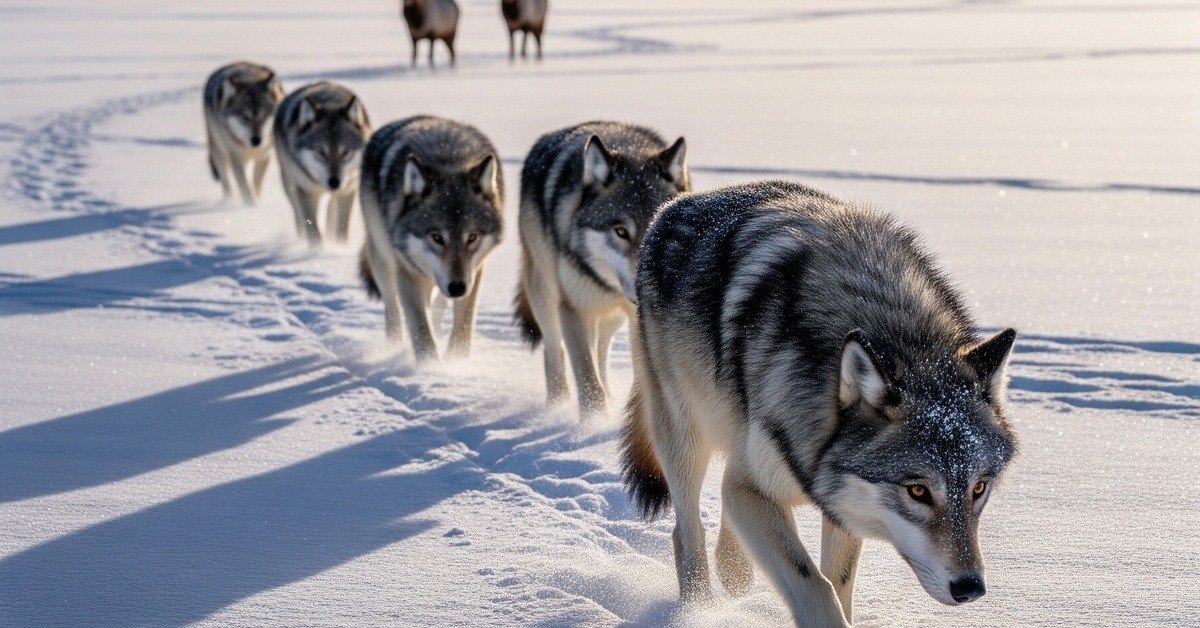
Field teams watched it happen in the Druid Peak Pack in 2001 and again in the Lamar Canyon Pack years later — new alpha males entering a pack containing another male’s pups and simply coexisting. The behavior wasn’t random. It was consistent enough to be biological, repeated across unrelated packs, across years, across different ecological pressures. And that consistency is what makes it scientifically significant.
The Pack Arithmetic That Makes Mercy Pay
Why does this matter? Because the math gets uncomfortable when you run it. A lone wolf hunting elk in Yellowstone has roughly an 18% success rate per attempt. Coordinated pack hunts change that number dramatically — packs of five or more can take down bison and elk weighing 500 to 700 kilograms, prey that a solo wolf couldn’t bring down in a hundred tries. Killing even two pups doesn’t just eliminate them. It subtracts future hunters, future defenders, future pup-rearers from the pack’s long-term ledger.
The calculus runs cold and clear: spare the pup today, field a stronger hunt team in 24 months. Every additional adult hunting member shifts the odds. This kind of cooperative survival arithmetic echoes through the animal kingdom in ways that continue to surprise researchers — much like the extraordinary lengths sandgrouse go to in order to keep their chicks alive in the Kalahari, where individual sacrifice sustains collective survival against brutal odds.
Rick McIntyre, who spent over 6,000 consecutive days observing Yellowstone wolves for the Wolf Project between 1995 and 2020, documented something even more striking: some new alphas didn’t just tolerate inherited pups — they provisioned them. Regurgitating food for young that carry no shared DNA. Defending them at den sites. Treating them, functionally, as their own.
McIntyre’s field notes from the Druid Peak Pack describe a male designated 21M who adopted this behavior without hesitation after asserting dominance. Pack size held. Hunting efficiency rose. By the following winter, the pack had grown from six to ten individuals — a size that correlates strongly with successful elk hunting in Yellowstone’s open terrain. Ten wolves hunt differently than six.
The approach angles change. The chase distances extend. It’s not sentiment doing that work.
What Science Says About Inherited Loyalty
Hamilton’s rule, formalized in 1964, predicts that animals should invest in relatives in proportion to shared genetic material. But wolves, as Yellowstone data increasingly reveals, operate on a more flexible social calculus. The biological concept underlying this behavior — kin selection, or more precisely its absence — has been challenged by nearly three decades of field observation in real pack conditions. A 2019 study published in National Geographic examining wolf cooperative behavior across North American populations found that pack cohesion was a stronger predictor of individual survival than genetic relatedness within the group.
Yellowstone wolf pack behavior specifically manifests as what researchers now call “adopted alloparenting” — the care of non-offspring young by adults who gain no direct genetic benefit. The wolves that thrived were the ones in stable, large, socially coherent packs, regardless of how tightly the family tree knotted.
And here’s what makes Yellowstone an unusually clean laboratory: the terrain. The park’s open valleys — particularly the Lamar Valley — allow researchers to observe wolves visually for hours at a time, something almost impossible in forested wolf habitat. That visibility has produced a 28-year dataset of nearly unmatched depth. Alpha transitions that would be invisible elsewhere are, in Yellowstone, watched in real time through spotting scopes from a pull-off on the Northeast Entrance Road.
Watching a species rebuild itself this way, you realize how little we actually knew about what drives them forward. That data is now changing how wildlife managers approach reintroduction programs globally. If pack stability matters more than genetic lineage, then disrupting packs — through hunting, culling, or translocation of individuals — carries costs that weren’t previously modeled. The policy implications haven’t caught up with the science yet. They rarely do.
Yellowstone Wolf Pack Behavior and the Alpha Myth
Rudolph Schenkel’s 1947 study came out of Basel, Switzerland, with captive, unrelated wolves forced together under artificial conditions. Those weren’t family units. They weren’t wild packs. Yet that research produced the dominant/submissive framework still cited in dog-training circles today — and the word “alpha” itself deserves scrutiny for exactly this reason. It entered popular culture through captive wolf behavior, not wild pack dynamics.
L. David Mech, one of the most cited wolf researchers in the world, spent decades after his early career actively working to correct the terminology he’d helped popularize. In a 2008 paper, Mech argued that wild wolf packs are better understood as family groups with breeding pairs and offspring — not rigid dominance hierarchies. The “alpha” that walks past the inherited pups in Yellowstone isn’t dominating. He’s parenting. The distinction matters enormously.
When Mech and colleagues at the U.S. Geological Survey analyzed pack leadership data from Isle Royale and Yellowstone between 2000 and 2015, they found that “dominant” males spent more time in affiliative behaviors than in aggressive displays. Aggression spiked during territory disputes with rival packs, not within the family group. Mech has said publicly that he wishes the term “alpha wolf” could be removed from the scientific literature entirely — an extraordinary admission from a researcher who helped define the field. The internal pack dynamic looked more like cooperative child-rearing with occasional boundary enforcement.
The alpha isn’t the toughest wolf. He’s often the most socially competent one.
How It Unfolded
- 1926 — Yellowstone’s last wolf pack falls to federal predator-control campaigns, erasing a species that had shaped the park’s entire ecosystem for ten thousand years.
- 1995 — The U.S. Fish and Wildlife Service reintroduces 14 wolves from Alberta, Canada, into Yellowstone, launching one of the most closely monitored wildlife recoveries in history.
- 2001 — Field researchers with the Yellowstone Wolf Project document repeated alpha transitions in the Druid Peak Pack without infanticide, prompting the first formal analysis of inherited pup tolerance.
- 2023 — Approximately 108 wolves across 10 packs now inhabit Yellowstone, with long-term behavioral datasets informing reintroduction programs in Europe, particularly in France and Germany.
By the Numbers
- 18% — Approximate solo wolf success rate per elk hunt attempt in Yellowstone’s open terrain (Yellowstone Wolf Project, 2018).
- 41 wolves — Total number reintroduced to Yellowstone between 1995 and 1997 across two separate Canadian source populations.
- 6,000+ consecutive days — Rick McIntyre’s documented field observation streak in Yellowstone, the longest known continuous wildlife monitoring effort by a single researcher.
- 500–700 kg — Weight range of bison successfully hunted by coordinated Yellowstone packs of five or more wolves — prey impossible for a solo wolf to take.
- 10 packs — Active wolf packs in Yellowstone as of 2023, up from 3 founding packs in 1997, with pack stability directly correlated to hunting success rates.
Field Notes
- In 2004, researchers observed a Yellowstone alpha male designated 302M spend three consecutive days guarding a den of pups sired by a rival male he had displaced — behavior so unexpected that field teams initially questioned their own identification from collar data.
- Wolf pups that survive their first winter with large, stable packs have a dramatically higher probability of becoming breeding adults than pups from smaller, disrupted packs. The alpha’s tolerance literally manufactures his own future competition from within the pack.
- The “trophic cascade” triggered by wolf reintroduction — in which elk movement changed, riverbank vegetation recovered, and even beaver populations rebounded — is now cited as one of the clearest documented examples of apex predator effects on entire ecosystems, a process that wouldn’t function without stable, large, hunting-effective packs.
- Researchers still can’t fully explain why some new alphas provision inherited pups while others simply tolerate them. The threshold conditions that determine which response occurs remain unknown (and this matters more than it sounds), since no single variable predicts the outcome consistently.
Frequently Asked Questions
Q: What drives Yellowstone wolf pack behavior during an alpha transition?
Pack stability and cooperative hunting incentives reshape leadership changes far more than simple genetic self-interest. When a new alpha male takes over, eliminating existing pups would reduce pack size and hunting effectiveness immediately. Long-term data from the Yellowstone Wolf Project, collected since 1995, consistently shows that packs maintaining larger cohorts after leadership transitions outperform smaller, disrupted packs in both hunting success and territory retention through the following winter.
Q: Do alpha wolves in Yellowstone actually feed pups that aren’t theirs?
Yes, and it happens more often than most people realize. Several documented cases show new alpha males regurgitating food at den sites for pups carrying no shared DNA — a behavior called alloparenting. The mechanism appears to be pack-level social bonding rather than individual genetic calculation. Wolves that engage in alloparenting maintain stronger affiliative relationships with the broader pack, which translates into better coordinated hunts and more reliable territory defense, benefits that directly improve the alpha’s own survival odds in a landscape where rival packs compete aggressively for elk-rich ground.
Q: Isn’t the “alpha wolf” concept just how wolf packs work?
Not exactly. The alpha dominance model came almost entirely from a 1947 study of captive, unrelated wolves — not wild family packs (researchers actually call this the “captive bias problem”). Researcher L. David Mech spent decades correcting this framing, arguing in a 2008 paper that wild packs function as cooperative family units, not rigid dominance hierarchies. The wolf that “leads” a Yellowstone pack is typically the breeding male of a family group, not a tyrant maintaining power through constant aggression.
Editor’s Take — Alex Morgan
What stays with me isn’t the mercy — it’s the precision of it. A new alpha walking past inherited pups isn’t making a sentimental choice. He’s running a calculation that we didn’t recognize as calculation because we were looking for sentiment. We spent decades projecting dominance hierarchies onto animals that were actually practicing something closer to cooperative economics. The Yellowstone dataset doesn’t just change how we read wolves. It changes what we think intelligence looks like when it doesn’t come with language attached.
Somewhere in the Lamar Valley right now, a wolf is making a decision that no camera is close enough to catch cleanly. A pup that carries a stranger’s DNA is sleeping near a male who could have ended that story in the first hour of his tenure. He didn’t. The pack hunts. The elk herd shifts. The riverbank holds. Everything downstream — the willows, the beavers, the songbirds nesting in stabilized banks — is running on a choice made in the snow by an animal we’ve spent centuries calling instinct-driven. What exactly are we calling instinct again?
Illustrations are AI-generated. Article fact-checked and human-edited. Our editorial standards.