He Breathed In a Toy at Age 7 — Found It 40 Years Later
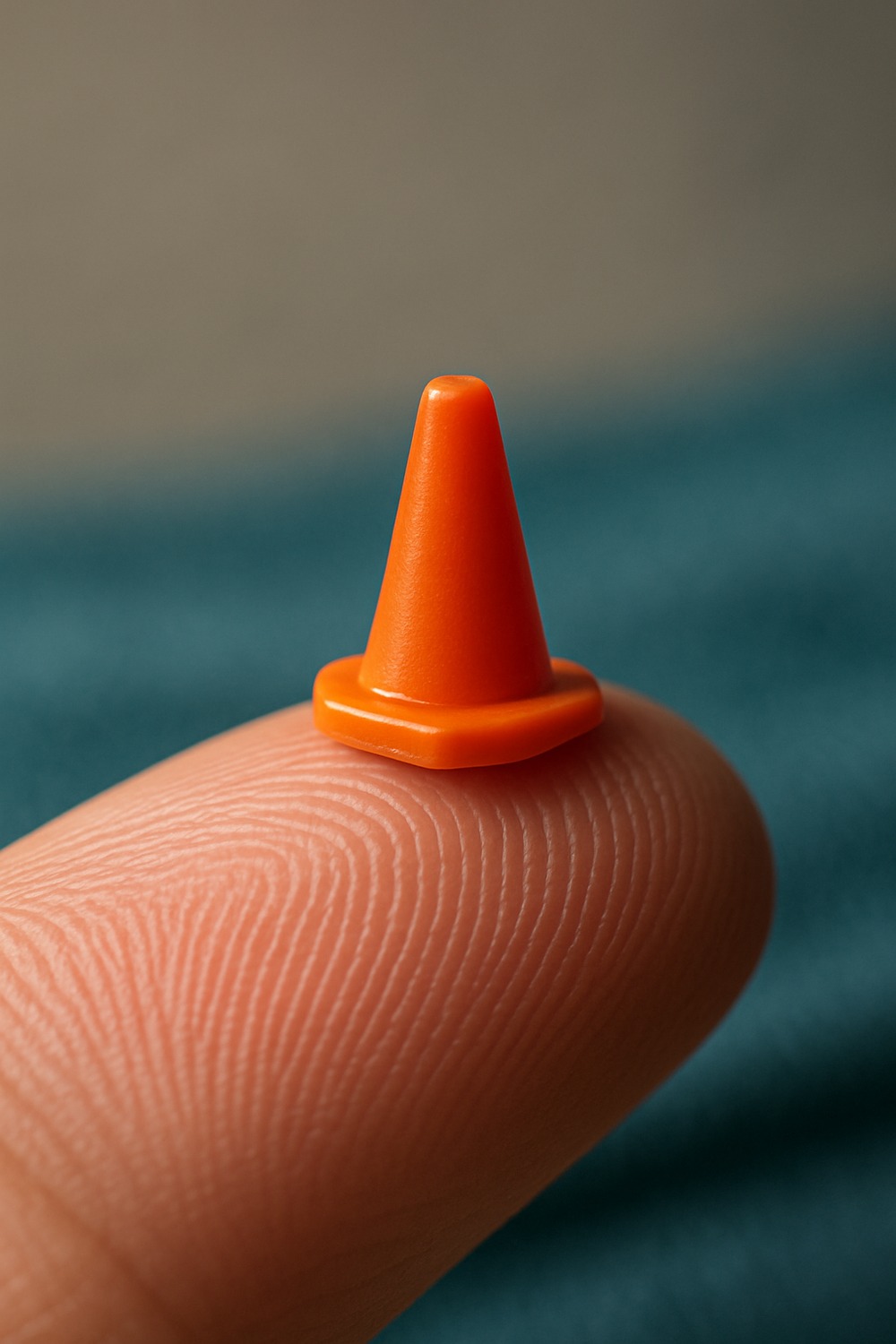
Nobody noticed it for forty years. Not during checkups, not through decades of breathing, not until a persistent cough finally sent a 47-year-old man to his doctor in 2017 — and a camera down into his lungs revealed a tiny orange plastic traffic cone from a Playmobil set he’d played with as a child.
The case was published in BMJ Case Reports by Dr. Rupert Sherwood and his team at Southport and Ormskirk Hospital in Preston, UK. It’s the kind of case that sounds made up until you read the actual notes. A foreign object in lung tissue, sitting undisturbed in a man’s airway since approximately 1977. Forty years. The cone was still recognizably orange.
Key Facts
- A 47-year-old man was found in 2017 to have a Playmobil traffic cone in his lung, approximately 40 years after inhaling it as a child around 1977
- The case was published in BMJ Case Reports by Dr. Rupert Sherwood and colleagues at Southport and Ormskirk Hospital in Preston, UK
- Foreign body aspiration causes approximately 2,000 deaths per year in the United States, per the American Academy of Pediatrics, 2019
- Roughly 80 percent of aspirated foreign bodies in children are food items such as nuts, grapes and hard candy
- Bronchoscopy successfully retrieves foreign bodies in around 95 percent of cases where the object is located
In short: A 47-year-old man in Preston, UK was found in 2017 to have a Playmobil traffic cone in his lung, inhaled around 1977 as a child. Doctors at Southport and Ormskirk Hospital initially suspected cancer due to a chest X-ray shadow and his smoking history, but a bronchoscopy revealed and removed the toy. The case was published in BMJ Case Reports.
The foreign object in lung hiding in plain sight
The chest X-ray showed a shadow. The man’s smoking history made cancer the first and obvious hypothesis — which is exactly the kind of thing that turns a routine appointment into something much heavier. Doctors prepared accordingly.
Then the bronchoscopy team threaded a camera into his airways and found a Playmobil traffic cone.
It was the size you’d expect from a toy set. Small enough that a six-year-old could have inhaled it without a dramatic choking episode — just a brief cough, maybe, and then nothing. The kind of nothing that lasts four decades. Dr. Sherwood’s team noted in their case report that confirmed intervals this long between aspiration and discovery are genuinely uncommon in the medical literature. Which is a polite way of saying: this doesn’t usually happen like this.
The man was 47. The toy was from his childhood. Do the math on that, and sit with it for a moment.
How a lung adapts around a trapped object
Most foreign body aspirations — the clinical term for breathing something in accidentally — trigger an immediate response. Coughing, choking, panic, an ER visit. The body is not subtle about it. But sometimes, particularly with small smooth objects that slip past the larger airways into a narrower branch, there’s no dramatic alert. The object lodges. The body encounters it. And then, in some cases, the surrounding tissue simply begins to accommodate it.
Think of it less like healing and more like negotiation. The airway doesn’t neutralize the object or break it down. It reroutes around it — slowly remodeling the local tissue architecture until breathing remains functional despite the obstruction. Like water finding a path around a stone, except the stone is a 1970s toy accessory and the water is forty years of normal lung function.
It’s not a clean process. It’s more of an ongoing compromise.
That last detail kept me reading for another hour — the idea that the body can run a quiet workaround for that long without ever flagging it as an emergency. You can find more cases that strain the same kind of credulity over at this-amazing-world.com, and the foreign body aspiration literature in particular goes some strange places.
Why symptoms finally surfaced after 40 years
Here’s the thing about a partial airway obstruction: it doesn’t have to stay partial forever.
As the lung tissue around the cone changed with age — normal aging, normal shifts in airway elasticity — what had been a tolerable obstruction for decades began tipping toward something less tolerable. The case notes indicate the man had experienced chest issues for years before finally coming in. But nothing acute. Nothing that demanded immediate investigation. Just background noise that slowly got louder.
Partial blockages like this can seed low-grade infections, encourage mucus buildup, cause recurring inflammation in the affected segment. None of it necessarily dramatic. All of it gradually accumulating. The foreign object in lung tissue hadn’t moved — the circumstances around it had shifted enough that the compromise arrangement stopped working quite so quietly.
Which raises the obvious question: how many other people are walking around with something similar, in a phase where the accommodation is still holding?
Removing it changed everything almost instantly
The bronchoscopy that found the cone also removed it. No open surgery, no general anesthesia drama — just scope, precision tools, extraction. The whole situation that had taken forty years to develop was resolved in a single procedure.
Four months later, the cough was almost completely gone. Biopsy confirmed no cancer, no lasting structural damage. The cone itself was reportedly still intact — orange color faded, but the shape recognizably Playmobil after four decades in the warm humid interior of a human airway.
The implications here are worth actually thinking through rather than just noting. A presentation that looked like potential lung cancer — with a smoking history, a suspicious shadow, and a worried medical team — turned out to be a child’s lost toy. The gap between those two outcomes, in terms of treatment intensity, prognosis, anxiety, and quality of life, is not small. It’s enormous. And the only thing that separated them was a bronchoscopy and a very specific piece of medical luck.
By the Numbers
- Foreign body aspiration causes approximately 2,000 deaths per year in the United States, mostly in children under 5 and adults over 75 (American Academy of Pediatrics, 2019).
- Roughly 80% of aspirated foreign bodies in children are food — nuts, grapes, hard candy. Toy parts make up a significant minority of ER presentations, but that minority still generates thousands of cases annually.
- The Preston case represents one of the longest confirmed gaps between aspiration and discovery on record — approximately 40 years, based on the patient’s recollection of the Playmobil set.
- Bronchoscopy successfully retrieves foreign bodies in around 95% of cases where the object is located. In the 1970s, when this cone was first inhaled, open surgery would have been far more likely.
Field Notes
- Some aspirated objects are never recovered — organic material like food can partially dissolve or become encased in scar tissue, invisible on standard imaging, found only during surgery or autopsy.
- Children aged 1 to 3 are the highest-risk group, combining genuine oral curiosity with still-developing swallowing reflexes. Adults with neurological conditions, alcohol use, or recent dental work form a separate secondary risk group that doesn’t get discussed nearly as often.
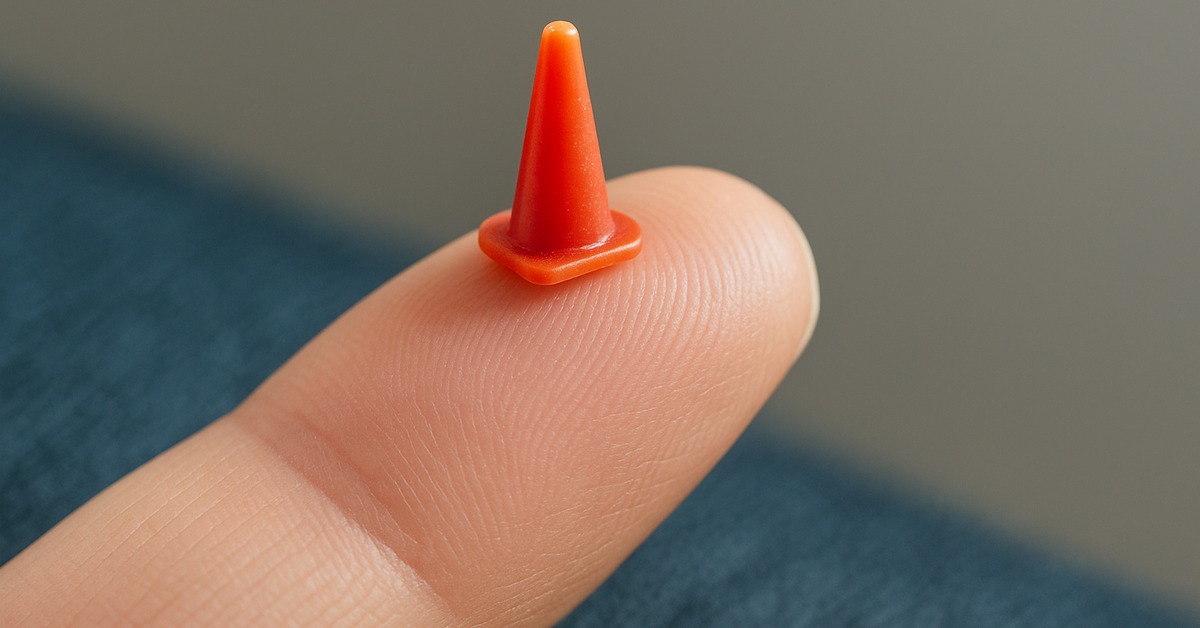
- Still orange. Still Playmobil-shaped. After forty years.
What this case really tells us about the body
The instinct is to read this as a reassuring story. The body adapted, the man was fine, it all worked out. But that’s not quite the right takeaway from a foreign object in lung tissue sitting undisturbed for four decades.
Children die from aspirated objects every year. Adults with undetected airway obstructions develop chronic infections, collapsed lung segments, sometimes permanent damage. Most cases don’t end with a dry case report and a swift recovery. What makes the Preston case worth thinking about isn’t the happy ending — it’s the forty years of successful biological negotiation that preceded it, and the fact that even that eventually ran out.
The man got lucky that his cough finally forced the issue. Lucky that his doctors went looking carefully enough. Lucky that the cone was still retrievable. A lot of luck had to line up.
If something persistent is happening in your body without an obvious explanation, the lesson here isn’t that it’ll probably sort itself out. It’s the opposite. The body is both more adaptable and more quietly stubborn than most medical intuition accounts for — which is exactly why it sometimes needs help it doesn’t know how to ask for.
A Playmobil traffic cone. A lung that worked around it for forty years. A doctor who went in looking for cancer and found something considerably stranger. The Preston case sits in a weird corner of the medical literature where the biology is fascinating, the outcome is fortunate, and the whole thing is a reminder that the body keeps secrets right up until it doesn’t. More cases like this — some with less tidy endings — are at this-amazing-world.com.
Frequently Asked Questions
Q: What did doctors find in the patient’s lung?
Doctors at Southport and Ormskirk Hospital in Preston, UK found a small orange Playmobil traffic cone lodged in the airway of a 47-year-old man who had come in with a persistent cough. A chest X-ray had shown a suspicious shadow, and given his smoking history the medical team initially prepared for a possible cancer diagnosis. A bronchoscopy threaded a camera into his airways instead revealed the toy, which the patient recognised as part of a Playmobil set from his childhood around 1977.
Q: How can someone breathe in a toy and not notice for decades?
Small, smooth objects can slip past the larger airways into a narrower branch without triggering the usual coughing or choking response. Once lodged, surrounding lung tissue can accommodate the object rather than break it down, slowly remodelling around it so breathing remains functional. The arrangement is more of an ongoing compromise than true healing. Partial blockages may seed low-grade infections or mucus buildup, but symptoms can remain mild background noise for years before becoming noticeable, as happened in the Preston case.
Q: Why did symptoms appear after 40 years rather than earlier?
As lung tissue around the cone changed with age and airway elasticity shifted, a tolerable obstruction began tipping toward something less tolerable. The case notes indicate the man had experienced chest issues for years before finally seeking help, but nothing acute enough to demand immediate investigation. Partial blockages of this kind can seed low-grade infections, encourage mucus buildup and cause recurring inflammation that gradually accumulates. The cone itself had not moved, but the surrounding compromise stopped working as quietly as it had for decades.
Q: How dangerous is foreign body aspiration overall?
Foreign body aspiration causes approximately 2,000 deaths per year in the United States, mostly in children under five and adults over 75, according to the American Academy of Pediatrics 2019 data. Roughly 80 percent of aspirated foreign bodies in children are food items such as nuts, grapes and hard candy, while toy parts make up a smaller but still significant share of emergency presentations. Modern bronchoscopy successfully retrieves foreign bodies in around 95 percent of cases where the object can be located.
Illustrations are AI-generated. Article fact-checked and human-edited. Our editorial standards.