Spain’s NATO Bases and the Fracture No One Saw Coming
Here’s the thing about Spain’s NATO bases and Iran strike refusal — the gates didn’t close dramatically. They were always designed to close. What nobody planned for was a Spanish government willing to actually use that mechanism while the missiles were already in the air. Rota and Morón de la Frontera, two installations that have quietly anchored U.S. military reach across the Atlantic corridor for decades, are now the center of the sharpest fracture NATO’s southern flank has seen in a generation.
What makes Spain’s position so striking isn’t just the decision itself — it’s where it lands. Rota and Morón aren’t peripheral installations. They’re load-bearing walls inside the structure of NATO’s southern flank. Spain condemning the U.S.–Israel military campaign against Iran and simultaneously shutting access to those bases raises a question that everyone in Brussels is quietly asking: when political alignment fractures, what’s actually holding the alliance together?
Key Facts
- Spain’s Naval Station Rota and Moron de la Frontera anchor NATO’s southern flank under the 1988 Agreement on Defense Cooperation.
- Four Arleigh Burke-class destroyers were forward-deployed to Rota for NATO ballistic missile defense, confirmed by U.S. Naval Forces Europe in 2023.
- The U.S. paid Spain approximately 300 million euros over the 2015 to 2020 basing agreement period.
- A 2025 Centro de Investigaciones Sociologicas poll found 71 percent of Spanish citizens opposed facilitating strikes against Iran.
- Turkey’s 2003 refusal of U.S. access passed by a parliamentary margin of just 3 votes, the last comparable NATO basing refusal during an active operation.
In short: Spain has invoked its 1988 sovereignty clause to bar Rota and Moron de la Frontera from supporting U.S.-Israeli strikes on Iran. The Spain NATO bases Iran refusal, backed by 71 percent of Spaniards in 2025 polling, is the sharpest fracture by a NATO member with active U.S. basing rights since Turkey’s 2003 refusal.
The Two Bases That Changed the Equation
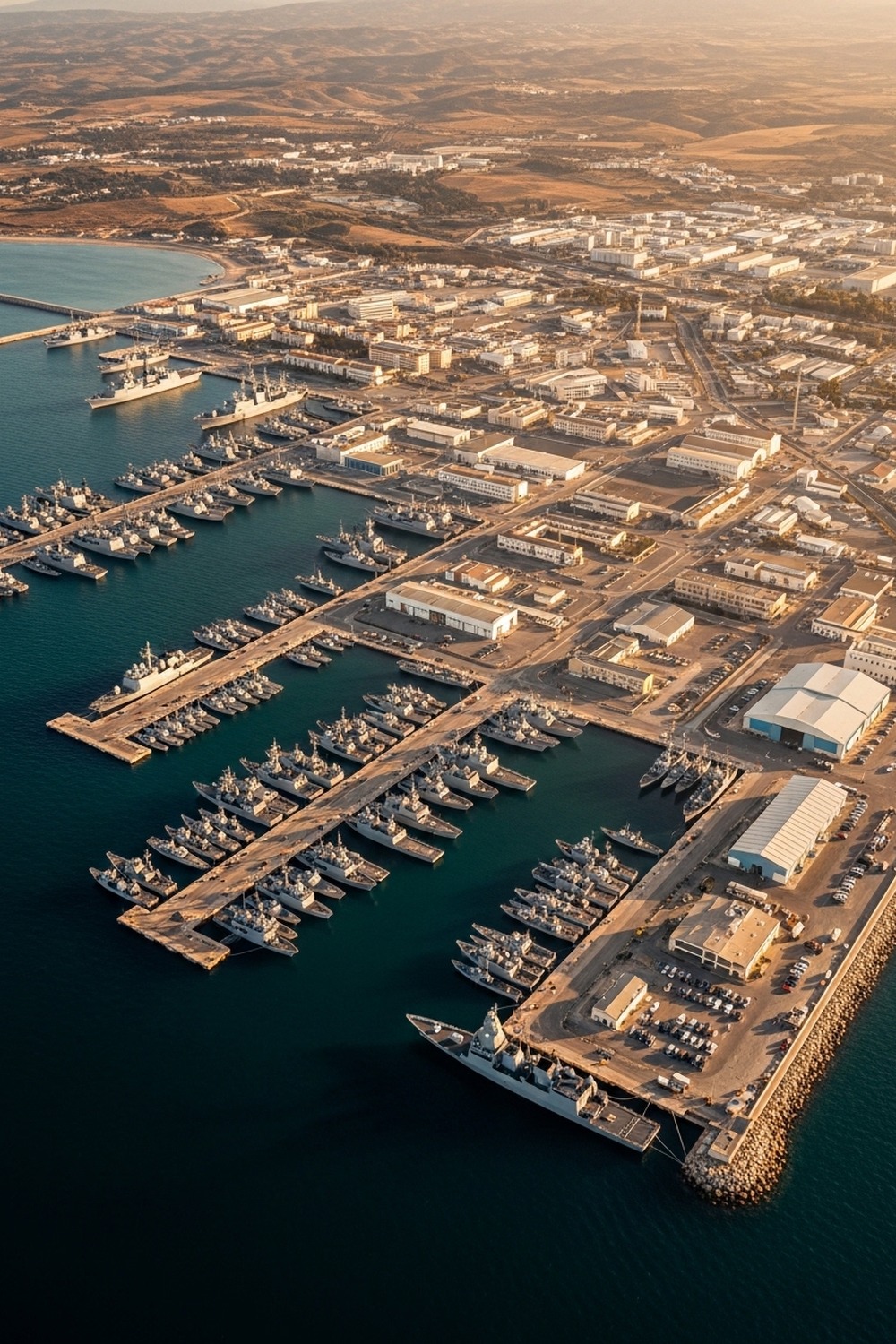
Naval Station Rota sits on a narrow peninsula near Cádiz, where the Atlantic and the Mediterranean nearly touch. It’s one of the largest U.S. naval installations outside American territory — home to thousands of sailors, a deep-water port capable of handling destroyers and submarines, and since 2014, a core node in NATO’s Aegis Ballistic Missile Defense System. That last function is what makes Spain’s NATO bases and Iran strike refusal so geometrically complicated. Rota doesn’t just support operations. It defends Europe from ballistic threats — including, explicitly, threats from Iran.
Four Arleigh Burke-class destroyers were forward-deployed to Rota specifically for that missile defense mission, confirmed by U.S. Naval Forces Europe in 2023. Refusing U.S. strike operations while hosting missile defense infrastructure creates a contradiction that neither side has publicly resolved.
Morón de la Frontera, 60 kilometers east of Seville, plays a different but equally critical role. It’s an air base. The U.S. Air Force has used it for rapid-response deployments across Africa and the Middle East — it became the staging point for the 2013 evacuation of U.S. personnel from Libya after the Benghazi crisis, and again in 2021 during the chaotic final days of the Kabul airlift. Spain’s decision to lock that machine isn’t a political gesture. It’s an operational consequence.
Together, these two installations have processed more American military logistics than almost any facility in Europe. Closing them to strike-related activity doesn’t just inconvenience a campaign. It forces a rerouting of supply chains that were never designed to route around Spain.
The 1988 Agreement That’s Now Under Pressure
Governing both bases is the Agreement on Defense Cooperation between Spain and the United States, signed in 1988 and renegotiated multiple times since. That agreement gives American forces access to Rota and Morón while explicitly maintaining Spanish sovereignty over how that access is used. Spain retains the right to deny missions it considers incompatible with its foreign policy — this isn’t a loophole, it’s a foundational clause, one that Madrid negotiated hard for after Francisco Franco’s dictatorship had allowed U.S. bases to operate with almost no Spanish oversight from the 1950s onward. For readers following how military infrastructure intersects with global power dynamics, the story connects to broader patterns explored across this-amazing-world.com — the way geography, history, and politics collide in places that look, from the outside, simply like buildings on a map.
Why does the payment structure matter? Because it shows exactly how much each side understood the leverage involved. Updated three times — in 2002, 2012, and 2015 — the agreement eventually reached approximately 300 million euros over five years in compensation from Washington to Madrid for continued basing rights. What wasn’t anticipated in any of those negotiations was a scenario where a sitting Spanish government would publicly condemn an active U.S.–Israeli military operation and simultaneously invoke its sovereignty clause. That’s new terrain.
Spanish defense officials have been careful not to use the word “suspension.” They’re talking about “non-participation.” The distinction matters legally — but on the ground, the operational effect is the same. The gates are closed to this mission.
European Solidarity, or European Fracture?
Spain isn’t alone in its objections. Belgium, Ireland, and Norway have all issued statements refusing to support strike operations against Iran, and several European governments have called for an immediate ceasefire and humanitarian corridors. But Spain’s refusal carries different weight, because Spain has the bases. Words from Oslo or Brussels don’t redirect logistics. Madrid’s decision does.
According to a BBC analysis of European NATO responses to the escalating Middle East crisis, Spain’s position represents the sharpest formal divergence from Washington’s line that any NATO member with active U.S. basing rights has taken since France’s 2003 refusal to support the Iraq invasion — a comparison that carries its own freight of consequences and warnings. History has a way of treating the people who ignored this kind of evidence unkindly.
Spain’s NATO bases and Iran strike refusal are forcing a debate that NATO headquarters in Brussels had been managing quietly for months: what happens when the alliance’s political consensus breaks before its military infrastructure does? Individual nations invoke their sovereignty rights. Operational gaps open that no amount of diplomatic language can paper over. NATO was designed for collective defense. It was not designed for collective offense, and the distinction is proving harder to finesse than anyone expected.
What’s remarkable is the speed of it. Three weeks ago, this was a theoretical tension. Now it’s a scheduling problem for U.S. Central Command. The architecture held for decades — it’s the political weather underneath it that changed.
Spain’s NATO Bases and What Comes Next
Rerouting is the immediate problem for military planners. Sigonella and Aviano in Italy, Ramstein in Germany, Souda Bay in Crete — these will absorb some of what would have moved through Rota and Morón. But none of them replicate Rota’s specific combination of deep-water port access, Atlantic positioning, and ballistic missile defense infrastructure. A 2022 RAND Corporation assessment of NATO’s southern flank described Rota as “irreplaceable in the short term” for European missile defense continuity — language that defense analysts are now citing in real time. Rerouting around that means slower logistics, longer supply lines, and increased operational complexity at exactly the moment when speed and reliability matter most.
And then there’s the deeper question — one that won’t resolve when the crisis does.
What Spain’s refusal signals about the durability of the post-Cold War basing model is harder to sit with. That model assumed a convergence of values and threat perception between the U.S. and its European partners (researchers actually call this “strategic alignment” — and that phrase is doing a lot of work right now). It assumed the installations built to defend a shared order would be available to maintain that order. When a partner government looks at a specific military action and decides it violates the values underpinning the alliance rather than upholds them, the model breaks — not all at once, but in a specific place, over a specific decision, in two specific bases near Cádiz and Seville.
NATO’s next formal review of bilateral basing agreements is scheduled for 2026. That review just became significantly more politically charged. Spain’s government has indicated it intends to raise the sovereignty clause issue formally — not to exit the alliance, but to renegotiate the terms of what access actually means.
The Historical Echo No One Wants to Hear
Turkey in 2003 is where you look first. Ankara refused to allow the U.S. Fourth Infantry Division to enter Iraq from the north, forcing a complete revision of the invasion’s opening phase — a decision that cost weeks of planning, altered the strategic balance inside Iraq in ways that reverberated for years, and left a lasting strain on U.S.–Turkish relations that’s never fully healed. That refusal happened by a parliamentary vote, margin of three. It was that close. Spain’s current refusal is coming from the executive branch directly, with broader public support: surveys conducted by Spain’s Centro de Investigaciones Sociológicas in early 2025 showed 71 percent of Spanish respondents opposed to any Spanish military involvement or facilitation in strikes against Iran.
The parallel isn’t perfect. Turkey in 2003 was a border state with direct geographic stakes in an invasion of its neighbor. Spain’s relationship to Iran is more distant, mediated through alliance politics and Mediterranean geopolitics rather than direct proximity. But the structural similarity is hard to ignore: a NATO ally with critical infrastructure choosing national political judgment over alliance operational unity, at the moment when the U.S. is already committed to a course of action. The Spanish refusal won’t stop the campaign. It will change its shape — and it will leave a mark on the alliance’s internal credibility that won’t disappear when the crisis does.
Stand in Rota on a clear morning. Watch the destroyers sitting in port, their Aegis radar arrays pointed at a sky full of possibilities. The infrastructure is intact. The alliance is intact, on paper. What’s shifted is something harder to see — the assumption that when the call came, the gates would open.

How It Unfolded
- 1953 — The U.S. and Francoist Spain sign the Pact of Madrid, granting American forces access to Spanish territory in exchange for military and economic aid, establishing the original basing framework at Rota and Morón.
- 1988 — A post-Franco, democratic Spain renegotiates the arrangement as the Agreement on Defense Cooperation, explicitly codifying Spanish sovereignty over how U.S. forces use the bases — including the right of refusal.
- 2014 — NATO formally assigns Rota as a forward deployment hub for Aegis ballistic missile defense destroyers, dramatically raising the base’s strategic profile within the alliance’s European defense architecture.
- 2025 — Spain invokes its sovereignty clause under the 1988 agreement, refusing to allow Rota and Morón to be used in support of U.S.–Israeli strike operations against Iran, triggering the sharpest NATO bilateral fracture in over two decades.
By the Numbers
- 4 — Arleigh Burke-class destroyers forward-deployed to Rota as of 2023 for NATO ballistic missile defense (U.S. Naval Forces Europe).
- ~300 million euros — Compensation paid by the U.S. to Spain over the 2015–2020 basing agreement period for continued access to Rota and Morón.
- 71% — Spanish citizens who opposed any Spanish facilitation of strikes against Iran, per Centro de Investigaciones Sociológicas polling, early 2025.
- 3 votes — The margin by which Turkey’s parliament refused U.S. access in 2003, the last comparable NATO basing refusal during an active operation.
- 60 km — Distance between Morón de la Frontera air base and Seville; the base has served as a rapid-response hub for U.S. operations across Africa and the Middle East since the 1990s.
Field Notes
- Rota’s missile defense role creates a structural paradox at the heart of Spain’s refusal: the base is specifically tasked with intercepting Iranian ballistic missiles threatening Europe, yet Spain has now refused to allow it to be used in offensive operations against Iran. Both functions exist simultaneously inside the same fence line, in 2025.
- The 1988 Defense Cooperation Agreement contains no automatic renewal clause — it operates on rolling five-year review cycles, meaning Spain’s government could theoretically allow any individual renewal to lapse without formally withdrawing from NATO or triggering Article 5.
- Morón de la Frontera is listed under a separate sub-agreement from Rota, which means Spain could theoretically apply different access conditions to each base — a legal granularity that U.S. and Spanish lawyers are almost certainly examining right now.
- Analysts still can’t agree on whether Spain’s refusal sets a precedent that other NATO members with U.S. installations — Italy, Germany, Portugal — feel empowered to follow, or whether Spain’s specific legal framework makes it a one-off case. That question doesn’t have a clean answer yet.
Frequently Asked Questions
Q: What exactly does Spain’s NATO bases Iran strike refusal mean in practice?
Spain has invoked its sovereignty rights under the 1988 bilateral defense agreement to prevent Rota and Morón de la Frontera from being used to support, stage, or supply U.S.–Israeli military strikes against Iran. U.S. forces at both bases aren’t being expelled — day-to-day operations, including missile defense, continue. But any logistics, flight operations, or support activity tied to the Iran campaign is off the table. This is an operational restriction, not a diplomatic rupture, though the line between those two things is narrowing fast.
Q: Does Spain have the legal right to refuse U.S. use of these bases?
Yes, explicitly. The 1988 Agreement on Defense Cooperation was specifically designed to preserve Spanish sovereignty over how American forces use its territory. Spain negotiated this after decades of Francoist-era agreements that gave the U.S. nearly unchecked access. The agreement’s consent mechanism requires Spain to authorize specific categories of operations — it’s not a blanket access grant. Madrid hasn’t broken any treaty. It’s used the treaty exactly as written, which is what makes Washington’s diplomatic options so limited in the short term.
Q: Does Spain’s refusal weaken NATO as a whole?
That’s the argument Washington is making, but it’s more complicated than it sounds. NATO’s collective defense obligation — Article 5 — applies to attacks on member states, not to offensive operations outside alliance territory. Spain isn’t refusing to defend a NATO ally. It’s refusing to support a strike campaign that NATO as an institution hasn’t authorized. The alliance has no formal mechanism requiring members to support operations that fall outside Article 5. Spain’s position is legally coherent within the NATO framework, even if it’s politically explosive.
Editor’s Take — Sarah Blake
What strikes me most about this story isn’t the refusal itself — it’s the speed at which a structural assumption collapsed. The basing agreements that underpin NATO’s southern flank were written on the premise that political alignment and military utility would move together. Spain’s decision reveals how quietly those two things had been drifting apart for years. The bases didn’t change. The destroyers didn’t move. The political ground underneath them did — and it turned out no one had mapped that terrain carefully enough to see what was coming.
Military alliances are usually described in terms of treaties, deployments, and deterrence calculations. But what Spain has just demonstrated is that they’re also held together by something less tangible — a shared willingness to act, when the moment arrives, in the same direction. That willingness isn’t guaranteed by a signed agreement. It’s maintained, or lost, in the accumulation of political decisions made by elected governments answering to their own publics. Two bases near Cádiz and Seville haven’t changed their coordinates. The question now is whether the alliance surrounding them has quietly changed its shape.
Illustrations are AI-generated. Article fact-checked and human-edited. Our editorial standards.