She Sold Everything and Moved to Kenya for a Stranger
In 1987, a Swiss woman sold her clothing store, booked a one-way ticket to Kenya, and moved into a mud compound to be with a man she’d known for roughly three weeks. She was 27. He was a Samburu warrior named Lketinga. Nobody warned her what would happen next.
It is 1986. Corinne Hofmann is on holiday in Mombasa, relaxing after months of running her boutique in Zurich, when she meets him on a beach. He’s beautiful in a way that doesn’t translate to her world — decorated in the specific language of his people, a Samburu age-set warrior whose appearance alone carries information she has no framework to read. They spend time together. She goes home. She stares at her store, her apartment, the life she’s built brick by brick.
And then she liquidates it all.
Cash in hand. One-way ticket booked. By early 1987, she’s on a plane back to northern Kenya, to a semi-arid village called Barsaloi in Samburu County, where temperatures regularly crack 40°C and the nearest hospital is over 100 kilometers away on unpaved roads. Not for a holiday. Not for a project. To build a life with someone she barely knew.
Key Facts
- In 1987 Corinne Hofmann sold her Zurich clothing boutique and moved to Barsaloi in Samburu County, northern Kenya, to live with a Samburu warrior named Lketinga.
- Her memoir Die weisse Massai (The White Masai), published in 1998, sold over 4 million copies across German-speaking Europe (Knaur Verlag records).
- A film adaptation directed by Hermine Huntgeburth followed in 2005.
- The Samburu people number approximately 150,000–200,000 across roughly 21,000 square kilometers of northern Kenya.
- Hofmann returned to Switzerland with her daughter Napirai by 1990, after malaria nearly killed her twice.
In short: The White Masai Corinne Hofmann story recounts how a Swiss boutique owner sold everything in 1987 to live with Samburu warrior Lketinga in remote Barsaloi, Kenya. Her 1998 memoir Die weisse Massai sold over 4 million copies and became a 2005 film, chronicling love, cultural distance, malaria, and her eventual return home with daughter Napirai.
What Nobody Told Her About Barsaloi
There was no electricity. No running water. No infrastructure that mapped onto anything in her lived experience. She moved into a mud-and-stick compound and began the kind of education that no guidebook prepares you for — fetching water over long distances in heat that made thinking difficult, gathering firewood, learning Samburu, a Nilotic language spoken by roughly 150,000 people in a region most Europeans couldn’t find on a map.
She didn’t just visit his world.
She tried to become it.
And for stretches of those years, things worked. She gave birth to a daughter named Napirai. Learned the rhythms of the place. But cultural distance has a way of breaking things that start out genuine — not all at once, but in the quiet, accumulating way that makes love feel like you’re pushing against a wall that never learned to move.
Lketinga’s jealousy intensified over time. It was likely connected — though the memoir never claims absolute proof — to his use of khat, the stimulant leaf chewed widely across East Africa and closely associated with mood volatility and something darker. The man she’d crossed the world for was still there. But so was someone else.
Malaria nearly killed her. Twice.
By 1990, she was back in Switzerland with Napirai. The compound, the cattle, the language — all of it left behind. She was 30 years old and starting over with a toddler and a story that nobody around her could fully understand.
So she wrote it down.
How a Book Nobody Expected Sold Four Million Copies
Here’s the thing about Die weisse Massai — The White Masai — when it published in 1998. It didn’t behave. It spread across Germany, Austria, and Switzerland in that pre-social-media way that publishers still use as a case study, the kind of word-of-mouth virality that feels almost impossible now. Four million copies. In German-speaking Europe alone. A film followed in 2005, directed by Hermine Huntgeburth, and it reached audiences who’d never heard of Samburu County or northern Kenya or the concept of a woman who gave up everything and then lost it anyway.
It won no major literary prizes.
It didn’t need to. What it did instead was force a conversation that made people uncomfortable — not about Africa as a romantic backdrop, but about what love actually costs when you’re trying to bridge incompatible worlds. About who gets to tell a story. About whose experience gets centered. About the parts that don’t resolve.
Napirai, raised between two cultures and never quite at home in either, would eventually speak publicly about that inheritance. It doesn’t wrap up. It just sits there.
The Numbers That Make You Stop
- Die weisse Massai sold over 4 million copies across Europe by the mid-2000s — one of the best-selling German-language memoirs ever published (Knaur Verlag records).
- The Samburu people number approximately 150,000–200,000 and occupy a territory of roughly 21,000 square kilometers in northern Kenya. That’s larger than Wales. An entire cultural universe most of the world has never heard of.
- Barsaloi sits at 1,000 meters elevation in a region that regularly records temperatures above 40°C.
- Khat (Catha edulis) is used by an estimated 10 million people daily across East Africa and the Arabian Peninsula. The World Health Organization tracks it. So do addiction specialists. So do the families of people who chew it.
The Things That Stayed With Me
- Corinne didn’t stop at one book. She returned to Kenya years later — not to fix things with Lketinga, but to reconnect with the country itself and her daughter’s roots. The follow-up memoirs received almost no attention compared to the original, but anyone who’s read them says they’re more emotionally complex. That last fact kept me reading for another hour.
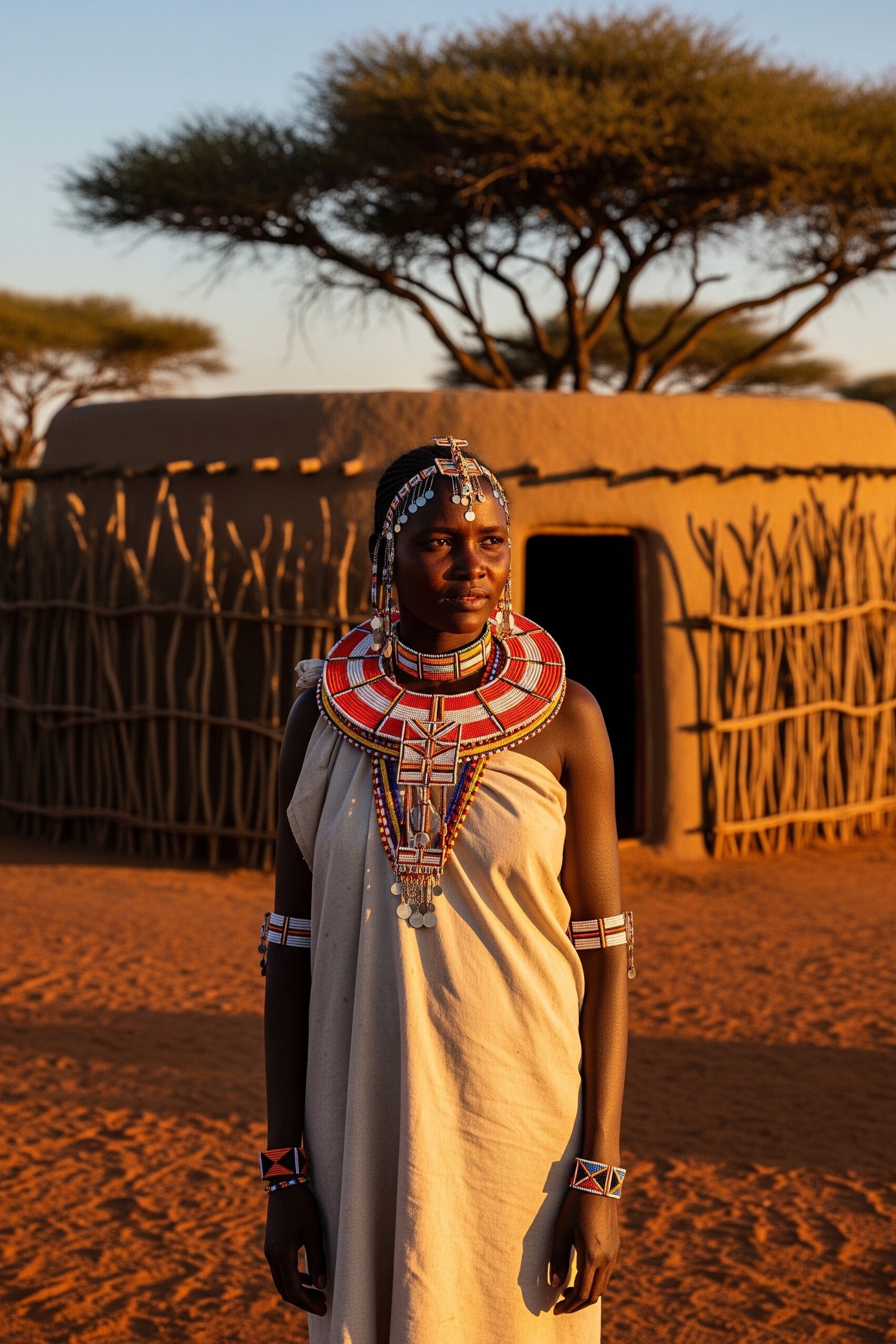
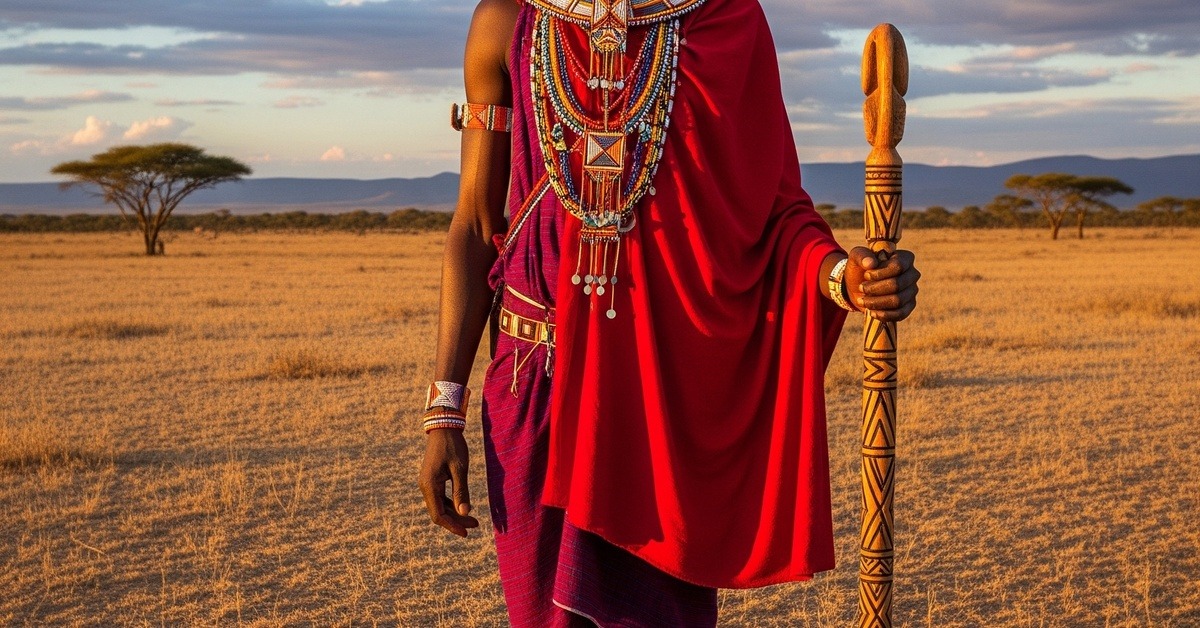
- Samburu warrior decoration is a text. Specific beading combinations, colors, ornaments — they communicate age-set, marital status, social standing. When Corinne first saw Lketinga on a Mombasa beach, she was reading a language she had no dictionary for.
- Napirai, as an adult, made her own journey to Kenya to meet her father. She documented it. She described it as genuinely moving, which adds a layer to Corinne’s original memoir that the book itself couldn’t have anticipated.
Why It Still Refuses to Let Go
The White Masai endures not because it’s a love story — though it is — but because it’s honest about what happens when desire outpaces understanding. When two people who aren’t wrong try to build something in the gap between their worlds. It doesn’t make Corinne a hero. Doesn’t make Lketinga a villain. It just shows the truth.
What lingers is the question underneath everything: when you walk away from everything familiar, are you chasing something real? Or running from something you haven’t named?
Corinne spent three years in northern Kenya finding out the hard way.
Then she had to come home and live with the answer.
Some stories don’t wrap up. They settle into you and stay. Corinne built a life in a place she had no business surviving, loved a man across a gap neither of them could cross, and came home with a daughter and a manuscript and a different kind of knowing. That’s not tragedy. Not triumph. Just what happened. And sometimes that’s the most powerful thing a story can be.
Frequently Asked Questions
Q: Who is Corinne Hofmann and what is The White Masai about?
Corinne Hofmann is a Swiss author who in 1987 sold her Zurich clothing boutique and moved to the remote village of Barsaloi in northern Kenya to live with a Samburu warrior named Lketinga, whom she had met on a Mombasa beach. Her 1998 memoir Die weisse Massai (The White Masai) recounts those roughly three years — the cultural distance, the birth of her daughter Napirai, bouts of malaria, and the relationship’s eventual breakdown before she returned to Switzerland in 1990.
Q: How many copies did The White Masai sell?
Die weisse Massai (The White Masai) sold over 4 million copies across German-speaking Europe — Germany, Austria, and Switzerland — by the mid-2000s, making it one of the best-selling German-language memoirs ever published, according to Knaur Verlag records. It spread through word-of-mouth virality before social media and was adapted into a film directed by Hermine Huntgeburth in 2005, reaching audiences who had never heard of Samburu County or northern Kenya.
Q: Where did Corinne Hofmann live in Kenya?
Corinne Hofmann lived in Barsaloi, a semi-arid village in Samburu County, northern Kenya, situated at about 1,000 meters elevation where temperatures regularly exceed 40°C. She moved into a mud-and-stick compound with no electricity or running water, fetching water over long distances and learning Samburu, a Nilotic language. The nearest hospital was over 100 kilometers away on unpaved roads, an isolation that shaped much of her experience there.
Q: What happened to Corinne Hofmann after she left Kenya?
By 1990 Corinne Hofmann returned to Switzerland with her daughter Napirai, after malaria had nearly killed her twice and her relationship with Lketinga deteriorated. She wrote The White Masai, which became a sensation, and later returned to Kenya to reconnect with the country and her daughter’s roots, producing follow-up memoirs. Napirai, raised between two cultures, eventually made her own journey to Kenya to meet her father and documented that emotional reunion.
Illustrations are AI-generated. Article fact-checked and human-edited. Our editorial standards.