920,000 Cars Got Free Tolls. 36,000 Paid Anyway.
In April 2025, Japan’s toll gates just… opened. For 38 hours, 920,000 drivers rolled through for free, and nobody stopped them. Then 36,000 of those drivers called to pay anyway.
Here’s the thing that gets weird: they didn’t have to.
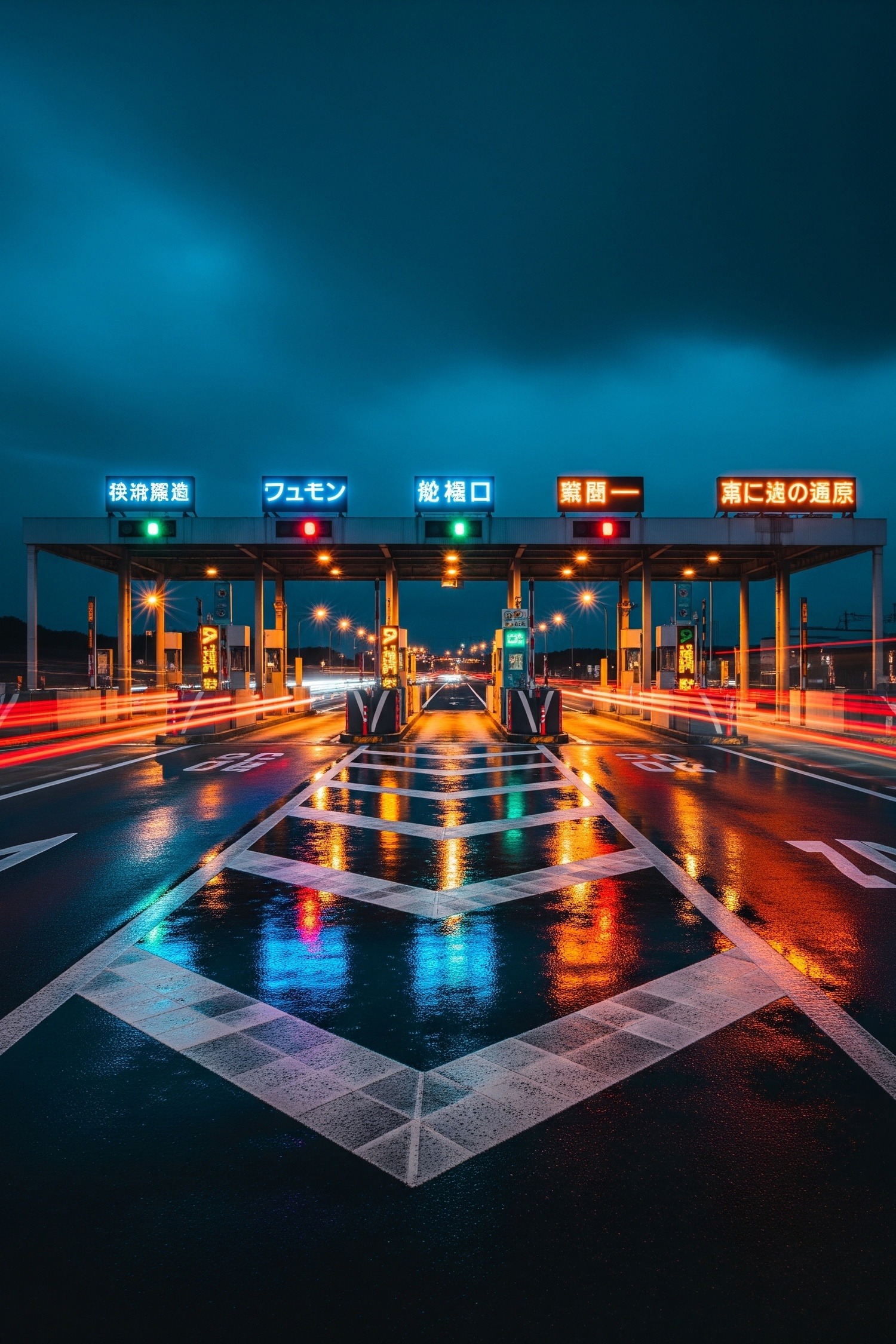
NEXCO Central, which runs Tokyo’s expressway network, had a software failure so complete it shut down the electronic toll system across their entire operation. The decision was practical — lift the barriers, keep traffic moving, sort the money out later. What nobody predicted was what came next. A small but undeniable number of people decided that getting something for free didn’t mean they should keep it. They made phone calls. They arranged payments. They did this with zero enforcement, zero notification, and zero chance of getting caught not paying.
That’s not supposed to happen. And yet it did.
Key Facts
- In April 2025, a NEXCO Central software failure left Tokyo expressway toll gates open for 38 hours.
- Approximately 920,000 drivers passed through toll gates for free during the outage.
- By April 15, 2025, about 36,000 drivers had voluntarily called to pay tolls they owed, roughly a 3.9% compliance rate.
- Japan’s ETC electronic toll system has operated since 2001 and handles over 93% of all toll transactions in the country.
- NEXCO later waived all outage-period tolls and refunded the 36,000 drivers who had already paid voluntarily.
In short: The Japan toll system glitch of April 2025 left Tokyo expressway gates open for 38 hours, letting 920,000 drivers pass free. With zero enforcement, about 36,000 voluntarily called to pay, a 3.9% compliance rate. NEXCO then waived all tolls and refunded everyone who had paid.
The Glitch That Broke Nothing
NEXCO Central operates a chunk of Japan’s expressway system that moves millions of vehicles daily. Their ETC system — Electronic Toll Collection — has been processing payments since 2001 and now handles over 93% of all toll transactions in the country. According to Wikipedia’s overview of electronic toll collection, Japan’s adoption rate sits among the highest globally. The system almost never fails.
Then it failed spectacularly.
The gates lifted automatically when the system went dark. Traffic kept moving. NEXCO made an announcement that essentially amounted to: “We’ll collect the tolls later, please just drive.” And that’s where the story stops being about infrastructure and starts being about people.
What Happened Next Was Accidental
By April 8th, just days after the outage ended, NEXCO was receiving phone calls. Drivers voluntarily calling to pay what they owed. No letters. No fines. No enforcement cameras tracking plate numbers. Just people calling a customer service line to settle a debt that nobody was chasing them over.
By April 15th?
36,000 calls.
The Japan toll system glitch had accidentally created a real-world behavioral study — the kind that usually only exists in controlled lab settings with small sample sizes and volunteer participants. This was 920,000 actual humans. Real roads. Real money. Real zero enforcement. That last fact kept me reading for another hour, because the implications are genuinely unusual.
Let’s Talk About What 36,000 Actually Means
A typical Tokyo expressway toll runs between ¥1,000 and ¥3,000 — roughly $7 to $20 USD. These weren’t token payments made to feel virtuous. These were actual tolls. Real money out of real wallets. And every single driver who called did it without being asked, without being threatened, without any mechanism of enforcement.
- 36,000 voluntary payments out of 920,000 free passages = approximately 3.9% spontaneous compliance rate with zero enforcement
- That means 884,000 drivers made the opposite choice — consciously or unconsciously — to not pay
- No comparable U.S. toll amnesty has ever documented voluntary repayment at scale
- Japan’s ETC system is among the world’s most reliable, making the failure statistically shocking
The numbers get interesting when you realize what that 3.9% actually represents in behavioral terms.
Cultural Programming, or Something Else?
Japan has a cultural concept called meiwaku — roughly “imposing inconvenience or trouble on others.” It carries real social weight even in situations where enforcement is impossible. The expressway situation hit squarely in that moral space for certain drivers. Not paying felt like causing trouble, even with open gates and zero surveillance.
But here’s where that explanation breaks down.
If cultural programming explained the behavior, you’d expect closer to 30% or 40% compliance, not 4%. Instead, the vast majority of drivers — 884,000 people — either made a conscious choice not to pay or never thought about it again after passing through. Which raises a darker question: how much of infrastructure compliance actually comes from culture, and how much just comes from… nobody thinking too hard about it?
Then NEXCO Announced the Twist
Every driver who’d passed through during the outage was getting the tolls waived. Clean slate. Free passage, officially retroactive.
And all 36,000 people who’d already voluntarily paid?
Full refund.
Think about that timing. Thousands of people made phone calls, arranged payments, and settled a debt — only to find out that debt was being forgiven anyway. They didn’t know it when they called. They acted on incomplete information, operating under the assumption that their payment mattered because they thought paying was the right thing to do.
The system broke, trust held, and then trust got refunded.

Context Matters More Than You’d Expect
- Behavioral economists have documented that voluntary civic compliance spikes in immediate aftermath of system failures — but only when people feel personal responsibility, not communal obligation. The expressway case fits that pattern almost exactly.
- Japan’s ETC system reached 90%+ adoption by 2019 — nearly two decades after launch. Its failure rate is extraordinarily low by global standards, which is probably why the 2025 glitch was so disorienting. Systems don’t fail. That’s the whole expectation.
- NEXCO Central’s refund announcement likely reached many voluntary payers after they’d already made contact. Thousands paid a debt being forgiven in real time.
What This Actually Tells Us
The Japan toll system glitch wasn’t about virtue or cultural superiority. It was about something much more fragile: what happens when institutions respond to failure with flexibility instead of punishment.
NEXCO trusted the public to keep driving. A small percentage of the public, in response, trusted that their payment mattered — even without enforcement mechanisms. That’s feedback loop most infrastructure engineers never get to observe working in practice.
The interesting part isn’t that 36,000 people paid.
The interesting part is that when systems fail gracefully, something in people responds. Not always. Not even usually. But sometimes, unexpectedly, in directions worth paying attention to.
The gates were open. Nobody had to stop. Some people stopped anyway.
Nine hundred and twenty thousand free rides. Thirty-six thousand phone calls that didn’t have to happen. The math doesn’t resolve into a clean moral lesson — and that’s probably the point. Real human behavior is messier than our systems assume. It’s complicated, context-dependent, and occasionally surprising in ways that matter. For more stories that stay with you long after the numbers stop making sense, there’s more at this-amazing-world.com.
Frequently Asked Questions
Q: What caused the Japan toll system glitch in April 2025?
In April 2025, NEXCO Central, which operates part of Tokyo’s expressway network, experienced a software failure so complete it shut down its entire electronic toll collection (ETC) system. To keep traffic moving, the company lifted the barriers automatically and let vehicles through for free for about 38 hours. Roughly 920,000 drivers passed during the outage. NEXCO announced it would sort out the tolls afterward rather than stopping traffic.
Q: How many drivers voluntarily paid their tolls during the outage?
By April 15, 2025, about 36,000 drivers had voluntarily called NEXCO’s customer service line to pay tolls they owed from the free-passage period. That represents roughly a 3.9% compliance rate out of the 920,000 drivers who passed through. There were no fines, letters, or enforcement cameras chasing them, meaning every payment was made entirely without any mechanism to catch non-payers.
Q: Did NEXCO end up keeping the voluntary toll payments?
No. After the outage, NEXCO announced it was waiving all tolls for every driver who passed through during the failure, granting retroactive free passage. The roughly 36,000 people who had already voluntarily paid received full refunds. Many of those drivers had made their phone calls and arranged payments before learning the debt was being forgiven, acting on the belief that paying was simply the right thing to do.
Q: How reliable is Japan’s ETC toll system normally?
Japan’s Electronic Toll Collection (ETC) system has processed payments since 2001 and now handles over 93% of all toll transactions in the country, one of the highest adoption rates globally. It reached 90%-plus adoption by 2019, nearly two decades after launch, and its failure rate is extraordinarily low by international standards. That reliability is part of why the 2025 glitch felt so disorienting to drivers and observers alike.
Illustrations are AI-generated. Article fact-checked and human-edited. Our editorial standards.