Wisdom the Albatross: World’s Oldest Wild Bird at 74
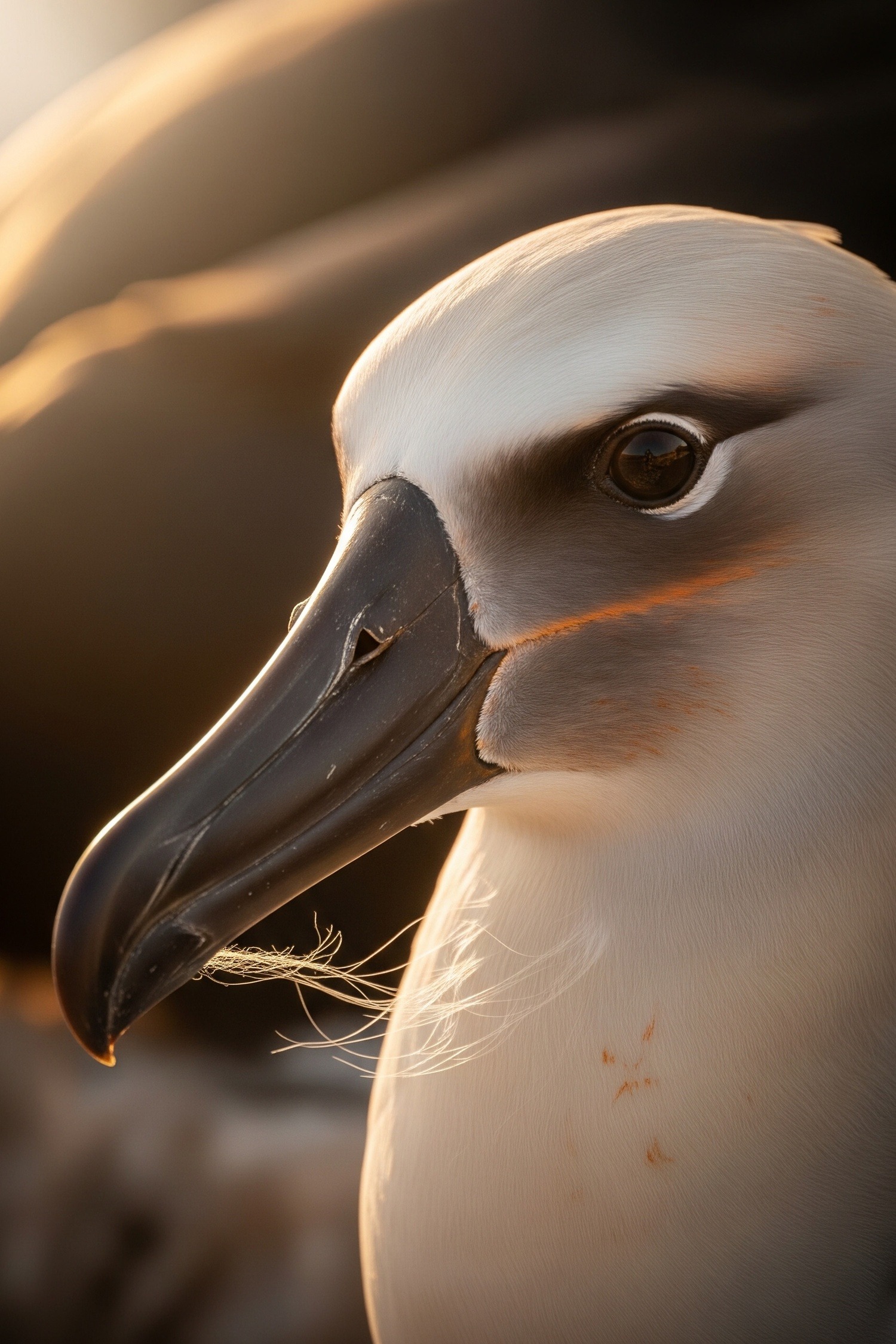
At 74, she just did something impossible. Wisdom the albatross — banded in 1956, still breeding in 2025 — has hatched a chick on the same volcanic speck of land in the North Pacific where she was born, shattering what ornithologists thought they knew about the outer limits of wild animal survival. She is the oldest known wild bird ever documented. And she’s not done yet.
Her home is Midway Atoll, a remote coral island roughly equidistant between North America and Asia, host to the largest Laysan albatross colony on Earth. Wisdom has nested there since before most living humans were born. Scientists aren’t just impressed. They’re quietly rewriting what they thought they knew. Here’s the thing: they may have had the ceiling on lifespans wrong the entire time.
Key Facts
- Wisdom, a Laysan albatross, was first banded at Midway Atoll in December 1956 by USGS biologist Chandler Robbins, who estimated her age at five.
- As of 2025 she is at least 74 years old, the oldest known banded wild bird in history (U.S. Fish and Wildlife Service).
- In January 2025, Wisdom hatched a new chick at Midway Atoll National Wildlife Refuge.
- She has raised an estimated 30 to 36 chicks and flown 3 to 6 million miles, roughly 120 times around Earth.
- Midway Atoll hosts more than 70% of the world’s Laysan albatross population; typical lifespan for the species is about 40 years.
In short: Wisdom the albatross is the oldest known wild bird, first banded at Midway Atoll in 1956 and estimated at 74 years old in 2025, when she hatched yet another chick. Having flown millions of miles and raised over 30 chicks, she forces ornithologists to rewrite assumptions about seabird lifespan and fertility limits.
Wisdom Albatross: The Oldest Wild Bird Ever Banded
December 1956. A U.S. Geological Survey biologist named Chandler Robbins clipped a small metal band onto the leg of a nesting Laysan albatross at Midway Atoll. He estimated she was at least five years old — already sexually mature, already a seasoned flier. Robbins was working with the Bird Banding Laboratory, the federal program that has tracked migratory birds across North America since 1920. He banded hundreds of birds that season. Most were never seen again.
In 2002 — forty-six years later — Robbins encountered the same bird. He recognized his own band number. He had to sit down. The animal now known as Wisdom the albatross had just strolled back into his life. No other reunion quite like that had happened in the history of the program. Laysan albatrosses are large, graceful seabirds built for the open ocean — but nobody had imagined they could survive like this.
Typical lifespan in the wild: around 40 years. That’s the average. That’s what textbooks say. Wisdom has now passed that number twice over. As of January 2025, she added another entry to her biological résumé: a newly hatched chick, confirmed by U.S. Fish and Wildlife Service staff stationed at Midway Atoll National Wildlife Refuge. Her latest partner — albatrosses are serially monogamous, pairing for years at a time — formed a bond with her in late 2024. Biologists don’t fully understand how she keeps finding mates. She simply does.
Robbins himself died in 2017 at age 98. Wisdom outlived him too. That fact alone has a strange, quiet weight to it.
How a Seabird Survives What Nothing Else Does
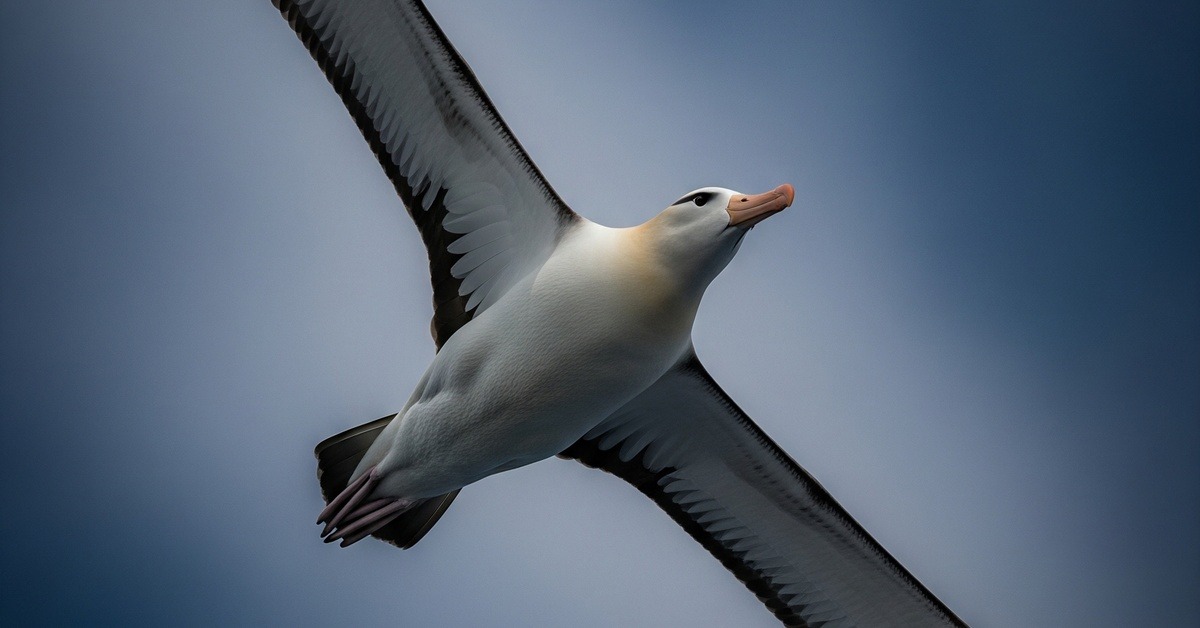
Albatrosses are extraordinary animals by almost any biological measure. They spend the vast majority of their lives airborne over open ocean, touching land only to breed. They drink saltwater, excreting the excess salt through specialized nasal glands. They sleep on the wing. They can lock their wings in a fixed glide using a structural tendon that requires almost no muscular effort — meaning they can soar for hours, even days, without significant energy expenditure. This kind of sustained long-distance survival has parallels in other extreme animal adaptations: much like the way the sandgrouse of the Kalahari has evolved specialized feathers that carry water across the desert, albatrosses have evolved a physiology that turns the hostile open Pacific into a livable home.
Wisdom has spent an estimated 3 to 6 million miles in the air over her lifetime. That’s the equivalent of circling Earth at least 120 times. For comparison, the Moon is only 239,000 miles away — she’s traveled there and back more than six times over.
What makes Wisdom’s longevity remarkable isn’t just the distance. It’s the biological cost. Every year of flight means UV exposure, oxidative stress from exertion, and the physical toll of breeding. Albatrosses lay only a single egg per breeding season — sometimes skipping years entirely to recover. Wisdom has raised an estimated 30 to 36 chicks over her lifetime. That’s an enormous reproductive output for any long-lived seabird, and it means she hasn’t simply endured. She’s been functionally productive decade after decade in ways that defy standard models of avian aging. (And this matters more than it sounds: if one bird can keep reproducing into her eighth decade, every assumption about seabird population dynamics needs recalibration.)
Beth Flint, a wildlife biologist with the U.S. Fish and Wildlife Service who has monitored the Midway colony for years, described Wisdom’s 2025 hatch as both thrilling and scientifically valuable. “She continues to amaze us,” Flint told reporters. The chick arrived in January, healthy, incubated by Wisdom herself.
Midway Atoll: The Island That Watches Everything
About 1,300 miles northwest of Honolulu, Midway Atoll sits at the northwestern end of the Hawaiian archipelago — small enough to overlook on most maps, significant enough to have shaped modern history. In June 1942, the Battle of Midway took place in the waters surrounding this tiny island chain. The U.S. Navy defeated a superior Japanese fleet in what historians call the turning point of the Pacific War. Beneath the surface, those waters still hold the wrecks of four Japanese aircraft carriers.
Above it, albatrosses have been nesting continuously for centuries. The Midway Atoll National Wildlife Refuge now protects roughly 3 million seabirds, including more than 70% of the world’s Laysan albatross population. A Smithsonian Magazine feature on Wisdom described the atoll as one of the most important seabird habitats on the planet — a fragile nesting ground now threatened by rising seas and plastic debris washing in from the Pacific gyre.
Why does Wisdom return to the same atoll, year after year, when the world is changing around her? Because albatrosses navigate by instinct older than most modern nations, and Midway is home.
She has nested here through all of it. Through WWII’s aftermath, through the Cold War, through the environmental crises of the late twentieth century, and into the age of climate anxiety. She has lost mates — at least two confirmed partners have died before her — and found new ones. The Midway colony has absorbed mass plastic ingestion events, where parent birds accidentally feed plastic fragments to their chicks, confusing debris for food. Wisdom’s chicks, researchers note, have survived at rates consistent with healthy birds. Whether that reflects her experience, her territory, or simply luck remains an open question.
The island’s human population is small and transient — mostly wildlife refuge staff and volunteers. She doesn’t know any of them.
What Wisdom the Oldest Wild Bird Tells Science
Standard models of aging in birds predict that cellular senescence — the gradual breakdown of cells’ ability to repair and replicate — should impose hard limits on survival and reproduction. Here’s where Wisdom becomes a problem for those models. Studies published in journals including The Journals of Gerontology have used albatrosses as model organisms specifically because their long lives offer a rare window into slow-aging vertebrate biology.
Research from the University of California, Davis and the Royal Society for the Protection of Birds has examined telomere dynamics in seabirds — the protective caps on chromosomes that shorten with age and stress. In most animals, including humans, severely shortened telomeres correlate with death. In some long-lived seabirds, the degradation appears dramatically slowed. A 2021 study in the journal Proceedings of the Royal Society B found evidence that certain albatross populations show negligible senescence — meaning their physical decline with age is so minimal it’s statistically difficult to detect.
Wisdom doesn’t just challenge longevity records. She challenges the assumption that reproduction and aging trade off against each other in a linear way. In most species, reproductive output declines sharply in old age. Wisdom hatched a chick at what may be 74. If she was indeed five years old when banded in 1956 — the conservative estimate used by the USGS — then she has been reproductively active for nearly seven decades. Watching a species refuse to decline at this speed, you stop calling it a trend and start calling it a symptom of something we don’t understand yet.
That data point alone is forcing ornithologists to revise upward their estimates of maximum possible lifespan and fertility in wild birds. She isn’t an outlier to be footnoted. She’s a data point that demands a new model.
Biologists at the USGS are now using Wisdom’s decades-long record as a baseline for studying how seabirds respond to climate-driven shifts in prey availability. Her breeding success in years when Pacific sea surface temperatures spike — reducing fish and squid near the surface — is being compared against colony-wide breeding rates. So far, she holds her own. Remarkably, stubbornly, her own.
What Comes Next for Wisdom — and Her Kind
Sea level rise is perhaps the most immediate threat. Midway Atoll sits only a few meters above sea level at its highest point. Projections from the National Oceanic and Atmospheric Administration suggest that storm surge events will increasingly overwash nesting sites during albatross breeding season, which runs from November through July. A single severe overwash event can destroy an entire season’s worth of eggs across large sections of the colony. In 2011, the Tōhoku tsunami — generated by the catastrophic earthquake off Japan — inundated parts of Midway and killed an estimated 110,000 albatross chicks in a matter of hours. Wisdom survived it. Her chick that year did not.
Laysan albatrosses face real and growing threats beyond the obvious. Plastic pollution compounds everything — the same ocean surface that carries food also carries bottle caps, fishing line, lighters, and foam fragments. Adult albatrosses forage across thousands of miles of the North Pacific, diving for fish eggs, squid, and flying fish. Parent birds feed these materials to their chicks without any apparent ability to distinguish them from prey. Necropsies of chick carcasses on Midway regularly reveal stomach cavities packed with plastic. The USGS estimates that roughly half of all Laysan albatross chicks on Midway ingest some quantity of plastic before fledging. Long-term reproductive success for the colony depends, in part, on whether ocean plastic loads decline in the coming decades.
Wisdom keeps nesting regardless. Her new 2025 chick — small, gray, and already demanding — will fledge sometime around June, then vanish into the Pacific for several years before returning to Midway to find its own mate. Whether it inherits anything of its mother’s extraordinary cellular resilience is a question biologists can’t yet answer. But they’re watching closely. Because if one albatross can tell us where the outer limits of wild animal survival actually sit, it’s her.
How It Unfolded
- 1956 — Biologist Chandler Robbins bands a nesting Laysan albatross at Midway Atoll, estimating her age at five or older; this bird will become known as Wisdom.
- 2002 — Robbins encounters the same banded bird again during a return visit to Midway, confirming she has survived at least 46 years since first banding — already a record.
- 2012 — Wisdom hatches a chick at an estimated age of 62, drawing international media coverage and prompting formal recognition by the U.S. Fish and Wildlife Service as the oldest known wild bird on record.
- January 2025 — Wisdom’s latest egg hatches at Midway Atoll; she is estimated to be 74 years old, making this one of the most extraordinary reproductive events in ornithological history.
By the Numbers
- 74 — Wisdom’s estimated minimum age as of 2025, based on her 1956 banding and the conservative five-year-old age estimate recorded at the time (USGS Bird Banding Laboratory).
- 3 to 6 million miles — estimated total distance flown over her lifetime, equivalent to circling Earth approximately 120 to 240 times.
- 30–36 chicks raised to fledgling stage across her breeding lifetime — an extraordinary output for any long-lived seabird species.
- 70% — share of the global Laysan albatross population that nests at Midway Atoll National Wildlife Refuge, making it the single most critical site for the species.
- 40 years — typical maximum lifespan for a Laysan albatross; Wisdom has exceeded this figure by more than three decades and counting.
Field Notes
- Wisdom has been re-banded multiple times over her life — her original band wore out decades ago — and her current band number is Z333. USGS staff confirmed her identity in 2024 by matching band records dating back through the archive to Robbins’ original 1956 notation.
- Albatrosses don’t breed every year. In years when food resources are poor or a bird is physically depleted, they skip the season entirely. That Wisdom has raised more than 30 chicks implies she successfully bred far more often than the average bird in her colony.
- Wisdom has outlived at least two confirmed mates. Albatrosses can mourn dead partners — returning to the same nest site for years before accepting a new bond. Her current mate is her most recent in a line of partnerships that stretches back to decades before most of her current neighbors were hatched.
- Researchers still can’t explain why Wisdom’s reproductive capability hasn’t declined with age the way models predict it should. Whether this reflects individual genetics, the specific food environment around Midway, or some still-unmeasured cellular mechanism remains genuinely unresolved.
Frequently Asked Questions
Q: How old is Wisdom the albatross, and is she really the oldest wild bird ever recorded?
Wisdom the albatross is at least 74 years old as of 2025, based on her 1956 banding by USGS biologist Chandler Robbins, who estimated she was already five at the time. She holds the official record as the oldest known banded wild bird in history, recognized by the U.S. Fish and Wildlife Service. No other wild bird with a verified banding record has come close to her documented age.
Q: How does Wisdom keep having chicks at such an advanced age?
Biologists don’t have a complete answer yet. Laysan albatrosses are among several seabird species that appear to exhibit what researchers call negligible senescence — a dramatically slowed rate of physical decline compared to most animals. Their telomeres, the chromosome-protective structures that typically shorten with age, degrade more slowly in some long-lived seabird lineages. Wisdom’s continued fertility may reflect a combination of exceptional individual genetics, consistent access to high-quality food in her North Pacific foraging range, and a degree of biological luck that even scientists hesitate to fully quantify.
Q: Is Wisdom the albatross endangered, and is the species at risk?
Wisdom herself is healthy, but Laysan albatrosses as a species face significant pressure. The IUCN currently lists them as Vulnerable. Threats include longline fishing bycatch, plastic ingestion, and sea level rise threatening their low-lying nesting sites at Midway. The species isn’t on the immediate edge of extinction — there are roughly 1.5 million individuals — but their extremely slow reproduction rate, with just one egg per breeding attempt, means population losses are very difficult to recover quickly. Wisdom’s successful hatches contribute meaningfully to the colony’s numbers.
Editor’s Take — Alex Morgan
What strikes me most about Wisdom isn’t the headline number. It’s the 2002 reunion — Chandler Robbins, a biologist in his seventies, standing on a wind-swept atoll and recognizing his own handwriting on a bird he’d banded nearly half a century earlier. That moment quietly demolished every assumption he’d built a career on. Science is supposed to expand what we think is possible. Wisdom did something rarer: she erased a ceiling that nobody had noticed was there.
A 74-year-old bird is somewhere over the North Pacific right now, riding thermals above water so deep and cold it would kill a human in minutes. She’ll return to Midway. She’ll feed her chick. She’ll do what she has done for seven decades, on an island that has absorbed a world war, a tsunami, and decades of plastic tide without flinching. The question she leaves behind isn’t really about albatrosses. It’s about every assumption we’ve made about the limits of wild things — and how many of those limits exist only because we’ve never had the patience to wait long enough to see them broken.
Illustrations are AI-generated. Article fact-checked and human-edited. Our editorial standards.