This Cat Just Turned 30 — That’s 136 in Human Years
A cat in England just turned 30. That’s not a typo — thirty years old, still alive, still here. She was born the same year Toy Story hit theaters.
Her name is Flossie, and on December 29th, 2025, she became something vets almost never see. The oldest living cat on the planet. Roughly 136 in human years, deaf in both ears, vision shot in one eye, and yet — every morning she wakes up and that’s genuinely surprising to everyone involved.
Key Facts
- Flossie, an English cat, turned 30 on December 29, 2025, becoming the oldest living cat, roughly 136 in human years.
- Flossie was born in 1995 near a hospital in Merseyside, England, the same year Toy Story was released.
- The all-time record holder, Creme Puff of Austin, Texas, lived 38 years and 3 days before dying in 2005.
- Average domestic cats live 12 to 15 years, and reaching 20 represents roughly 0.1% of the cat population.
- Domestic shorthairs tend to live longer than purebred cats, according to longevity observations cited in the article.
In short: Flossie, the world’s oldest cat, turned 30 on December 29, 2025, reaching roughly 136 human years after being born in Merseyside, England in 1995. Average cats live 12 to 15 years, making her remarkable, though she still trails the all-time record holder, Creme Puff, who reached 38 years.
How we got here
Flossie was born in 1995 near a hospital in Merseyside, England. Not glamorous. Not planned. A hospital worker picked her up, and over thirty years she’d move between homes, between people, between entire eras of human life. Some of the people who loved her first are gone now. Some are old themselves. She’s just… still here.
Most cats hit 15 and that’s considered a good run.
Twenty is when vets start asking questions. Thirty is the kind of number that doesn’t happen. Except it did. The previous record holder — a cat named Creme Puff from Austin, Texas — made it to 38 years and 3 days before dying in 2005. That record’s been sitting untouched for twenty years. Flossie would need eight more years just to catch up, which would put us in 2033. Think about that for a second.
You can read more about the world’s oldest cats on Wikipedia, but the honest truth is we don’t have many of them to read about. The data is sparse. The cats are rarer.
What makes a cat last that long
Here’s the thing: nobody’s entirely sure.
Genetics clearly matter — some cats apparently carry mutations that slow cellular aging, reduce inflammation, or just generally make their bodies harder to kill. Low-stress environments show up constantly in longevity studies. Attentive care catches problems early. But researchers keep flagging something that sounds almost too soft to be science: emotional stability. Cats that feel safe seem to age differently.
That’s not poetic hand-waving.
It’s measurable — lower cortisol, better immune response, reduced inflammation across organ systems. Stress kills things. Safety apparently does the opposite. Flossie moved between homes multiple times across three decades, which you’d think would be stressful, but every home gave her that baseline: warm, fed, safe. And that might be exactly what kept her here.
That last fact kept me reading for another hour.
The record that still stands
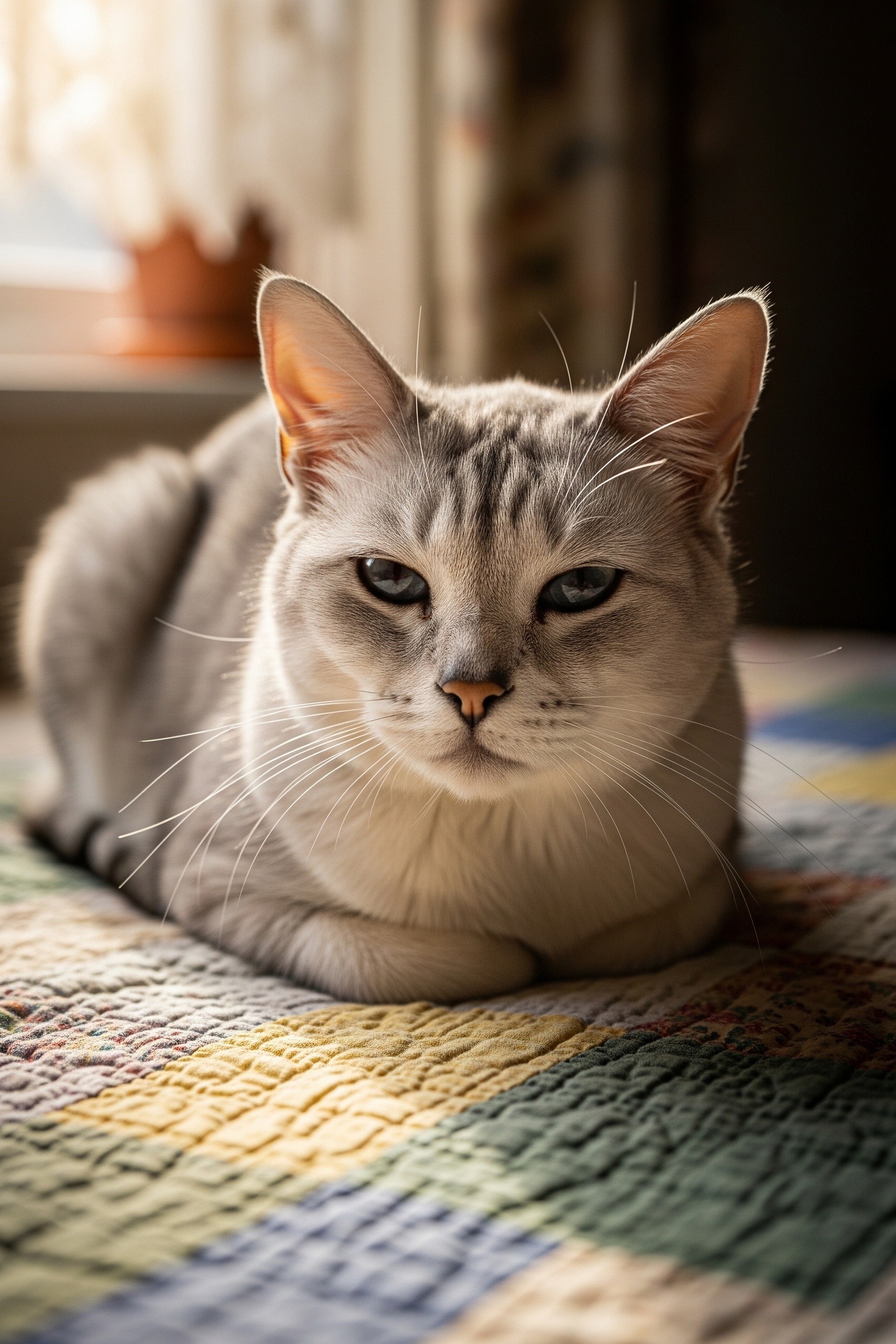
Creme Puff of Austin, Texas. August 2005. 38 years and 3 days.
Her owner, Jake Perry, fed her bacon, eggs, and occasionally red wine. Vets have been arguing about that diet for two decades — did it help or was Creme Puff just genetically stubborn? Nobody knows. The record’s in Guinness and it’s never been beaten, which is its own kind of remarkable. A cat lived nearly four decades and nobody’s come close since.
The numbers that actually matter
- Creme Puff held the Guinness record from 2005 to now — longer than some cats live at all.
- Average domestic cat: 12 to 15 years. Hitting 20? That’s roughly 0.1% of the cat population.
- At 30 years old, Flossie’s equivalent to 136 human years using the non-linear scale where the first two years accelerate wildly and everything after 10 slows down dramatically.
- A cat reaching 25 is statistically rarer than a human becoming a supercentenarian — we have hundreds of those worldwide, but documented 25-year-old cats? You could probably count them on both hands, which raises the obvious question: how many extremely old cats are just never recorded?
The details nobody talks about
- Cats don’t age linearly — a one-year-old is like a 15-year-old human, but by age 10 everything changes and the math gets weird.
- Domestic shorthairs live longer than purebreds — the scruffy mixed-genetics cats that most people skip at shelters are apparently the ones built to last.
- Flossie isn’t the first cat to claim “world’s oldest living” — Guinness has cycled through multiple titleholders over decades, but here’s what’s strange: most of them lack consistent documentation from kittenhood, which means genuinely ancient cats probably go unrecorded all the time just because nobody kept the paperwork.
Why this actually matters
Scientists studying extreme longevity in animals are hunting for something larger. Which genes? Which environments? Which behaviors let an organism dodge the biological bullet for decades longer than it should? Every Flossie, every Creme Puff is a small piece of a puzzle that might eventually tell us something about aging across all species — including humans.
But beyond the research angle, there’s something simpler.
Flossie has lived through people dying. Loved her, moved on, left. She’s been carried through grief and change and a whole world that kept accelerating around her quiet, unhurried existence. That’s not nothing.
Thirty years. One small cat. A story that started in 1995 and is, somehow, still unfolding. She probably doesn’t know she’s remarkable. She just wakes up, finds warmth, and keeps going. For more stories that do this to you, there’s this-amazing-world.com — and the next one’s even stranger.
Frequently Asked Questions
Q: How old is Flossie, the world’s oldest cat?
Flossie turned 30 on December 29, 2025, becoming the oldest living cat on the planet, roughly 136 human years using the non-linear feline age scale. She was born in 1995 near a hospital in Merseyside, England, the same year Toy Story hit theaters. Deaf in both ears and with vision impaired in one eye, she still wakes each morning, a milestone vets almost never see given that most cats live 12 to 15 years.
Q: What is the all-time record for the oldest cat ever?
The oldest cat ever recorded was Creme Puff of Austin, Texas, who lived 38 years and 3 days before dying in 2005. The Guinness record has stood untouched for two decades. Creme Puff’s owner, Jake Perry, famously fed her bacon, eggs, and occasionally red wine, though vets still debate whether the diet helped or she was simply genetically stubborn. Flossie would need eight more years, reaching 2033, to match it.
Q: What helps a cat live exceptionally long?
Nobody is entirely sure, but several factors recur in longevity studies. Genetics clearly matter, with some cats carrying mutations that slow cellular aging or reduce inflammation. Low-stress environments and attentive care that catches problems early also appear repeatedly. Researchers increasingly flag emotional stability: cats that feel safe show measurably lower cortisol, better immune response, and reduced inflammation. Flossie moved between homes for decades but each gave her a warm, fed, safe baseline.
Q: How rare is it for a cat to reach 25 or 30 years?
Extremely rare. Average domestic cats live 12 to 15 years, and reaching 20 represents roughly 0.1% of the cat population. A cat reaching 25 is statistically rarer than a human becoming a supercentenarian; there are hundreds of supercentenarians worldwide, but documented 25-year-old cats could be counted on both hands. This scarcity raises the question of how many extremely old cats simply go unrecorded for lack of documentation from kittenhood.
Illustrations are AI-generated. Article fact-checked and human-edited. Our editorial standards.