70 New Species Found — Including One Tiny Opossum No One Knew Existed
There’s a tiny opossum in Peru that nobody knew about until 2025, despite living there for who knows how long. She’d been sitting in a museum drawer since 2018, waiting for someone to actually look at her.
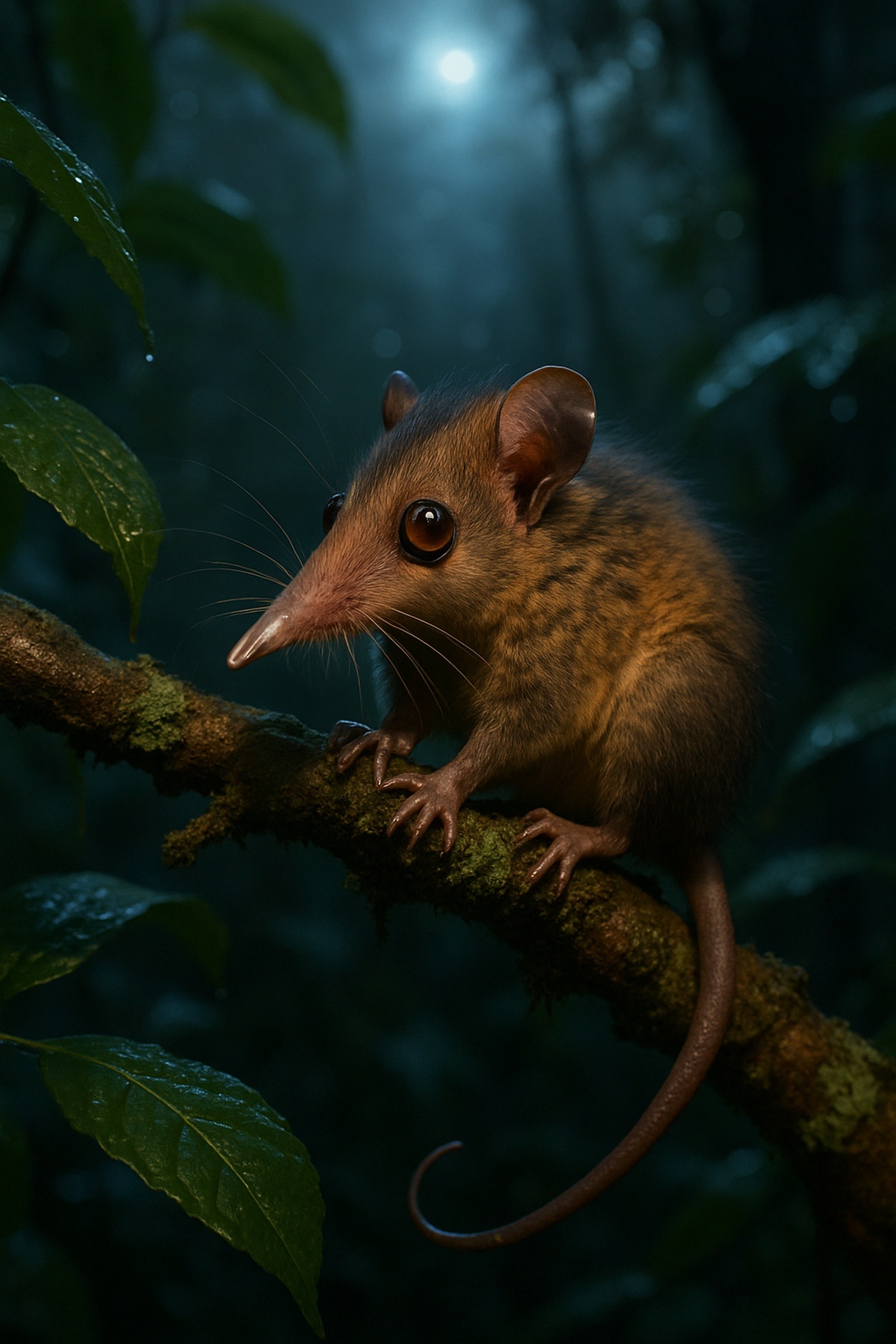
Seventy new species got formally named last year. Not discovered. Named. There’s a difference — and it’s the difference between a creature existing and a creature mattering to science. One of them was this mouse opossum with an impossibly long nose and a tail she uses like a fifth hand. Marmosa chachapoya. Named after an ancient people who built cliff tombs in the same cloud forests where she still hunts insects in the dark.
Key Facts
- The Natural History Museum in London announced that 70 new species were formally named in 2025.
- Marmosa chachapoya, a small mouse opossum from the cloud forests of northern Peru, was collected in 2018 and formally described seven years later in 2025.
- Scientists estimate that about 8.7 million species exist on Earth, while only roughly 1.5 million have been formally described.
- Roughly 80 percent of all species ever described came from museum specimens, often decades or centuries after collection.
- There are an estimated 3 billion specimens held in natural history museums worldwide.
In short: In 2025 the Natural History Museum in London announced 70 newly named species, including Marmosa chachapoya, a Peruvian mouse opossum collected in 2018. Of an estimated 8.7 million species on Earth, only about 1.5 million are formally described, and roughly 80 percent of descriptions come from museum specimens awaiting study.
New Species Discovered 2025: When Numbers Get Strange
Seventy in one year. The Natural History Museum in London announced it, and the number sits there like a koan. Dr. Tim Littlewood and his team pointed out something obvious once you hear it: we’re not finding more new species because nature suddenly got creative. We’re finding them because the backlog of unexamined specimens finally started getting attention, and because genetic sequencing got cheap enough to matter.
The real number — everything still waiting in jars and drawers and cloud forests nobody’s walked through yet?
Much larger.
Much, much larger. An estimated 8.7 million species exist on Earth. We’ve formally described about 1.5 million. Do the math. That 80% figure that kept me reading for another hour — that’s not an estimate. That’s a confession.
A Creature Named After Warriors
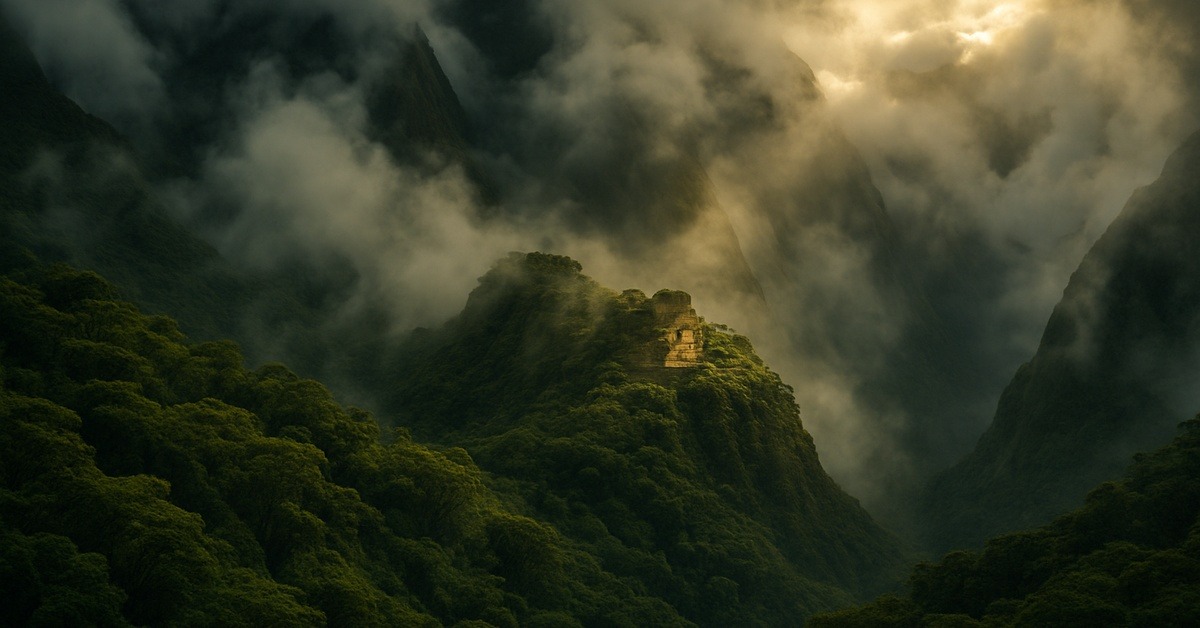
Marmosa chachapoya weighs about as much as a handful of grapes. She has a nose like a tweezers and a prehensile tail that moves independently. She lives in the cloud forests of northern Peru, in the same mountains where the Chachapoya people built elaborate tombs carved into cliff faces centuries ago — before Spanish conquest, before anyone with a specimen jar showed up.
There’s something that sits wrong with that timeline, in a good way.
A civilization rises and falls. It builds monuments. It vanishes from history for centuries. Meanwhile, in the same dark canopy above their tombs, a small marsupial is living her entire existence — being born, hunting, reproducing, dying — completely unknown to the entire species that would eventually name her.
What “Naming” Actually Means — and Why It Takes So Long
Here’s the part that surprises most people: discovering a creature and naming it are two completely separate events, sometimes separated by decades. A field biologist can hold an animal in their hand, photograph it, even know in their gut it’s something new — and that counts for nothing until the formal machinery of taxonomy catches up.
To give a species an official scientific name, a researcher has to do several things in sequence. First, they designate a holotype — a single physical specimen that becomes the permanent, eternal reference point for the entire species. Every future scientist who wants to know what Marmosa chachapoya “really is” will, in principle, be able to point back to that exact preserved individual in that exact museum drawer. Then comes the morphological work: measuring skull dimensions, counting teeth, comparing fur, mapping the subtle anatomy that distinguishes one mouse opossum from its near-identical cousins.
Increasingly, that’s no longer enough. Modern descriptions also require genetic comparison — sequencing DNA to confirm the animal isn’t just a regional variant of a species we already know. Then the whole package has to be written up, peer-reviewed, published in a recognized journal, and registered in international databases governed by the rules of zoological nomenclature. Only when all of that is finished does the creature become, in the most literal bureaucratic sense, real to science.
This is why a specimen can wait years. It’s not negligence. It’s a system deliberately built to be slow, because a name, once given, is meant to last forever. Getting it wrong is far worse than getting it late.
The Museum Drawer Part (This Is Where It Gets Real)
She wasn’t hiding. We just weren’t looking.
Someone collected Marmosa chachapoya in 2018 during fieldwork. Labeled her. Put her in storage at a natural history museum. That’s not abandonment. That’s a waiting game. Waiting for genetic sequencing to become affordable. Waiting for a specialist in South American marsupials to have time to examine her morphology. Waiting for the machinery of formal taxonomy to move forward slowly, methodically, like it always does.
Seven years later, she became real to science.
Roughly 80% of all species we’ve ever described came from museum specimens — many of them decades or centuries after the original collector died. The person who first caught this opossum might never have known what they were holding. But they preserved her anyway, and patience did the rest.
There are an estimated 3 billion specimens in natural history museums worldwide. How many undescribed species are sitting in those collections right now, just waiting for someone with the right technology or expertise to look closely?
The Other 69 Species Got Interesting
Not all of last year’s discoveries came from dusty storage. Some arrived via active fieldwork — researchers in Southeast Asian rivers, botanists in East African highlands, marine biologists pulling things from the deep that still look alien under light.
Plants. Insects. Fish. Fungi. Mammals.
And then — here’s where the story gets genuinely strange — someone formally described a mineral that science had never identified before. A mineral. Something geological, inorganic, ancient as rock itself. Still unnamed until 2025.
If we’re still finding new minerals, what else are we walking past without seeing it?
That question sat with me for hours.
Why DNA Changed the Whole Game
For most of the history of biology, a species was defined by how it looked. Two animals were the “same” if they shared the right shape, size, color, and bone structure. That worked, mostly — until it didn’t. Nature is full of creatures that look nearly identical but live separate evolutionary lives, never interbreeding, quietly distinct. Taxonomists call these cryptic species, and they’re one of the biggest reasons our official count of life is so far behind reality.
Genetic sequencing pried that hidden world open. When the cost of reading an organism’s DNA collapsed over the past two decades — from something only major labs could afford to something a graduate student can run on a routine budget — it suddenly became possible to test what the eye couldn’t see. A single “species” of frog or insect or mouse opossum could be split into three or four genuinely separate ones, each with its own distinct lineage, simply by comparing their genetic code.
That’s a large part of why the numbers feel like they’re accelerating. The animals were always there. What changed is that we finally have a tool sharp enough to tell apart things that fooled us for two centuries. Cheaper sequencing didn’t just speed up the work — it redrew the boundaries of what counts as a separate kind of life in the first place.
Cloud Forests Don’t Give Up Their Secrets Easily
The Peruvian Andes are one of those rare places where isolation breeds biodiversity at ridiculous speeds. The cloud forests that climb the eastern slope — researchers call it the ceja de selva, the eyebrow of the jungle — exist at elevations where temperature, moisture, and altitude combine into conditions that exist nowhere else on Earth.
Species evolve in tight pockets. A single ridge can contain organisms found nowhere in the world. Marmosa chachapoya probably has relatives on nearby ridges that science still hasn’t identified — separate populations that split off thousands of years ago and are quietly becoming their own species right now, under nobody’s watch.
That’s evolution happening in real time. Most of it is running without an observer.
The cloud forests of the Andes contain an estimated 45,000 plant species. About 20,000 of them exist nowhere else. It’s irreplaceable in the literal sense — lose it and you lose species that have evolved nowhere else on the planet.
The mechanism behind that richness is worth pausing on. Cloud forests are stacked in narrow bands of altitude, and each band has its own combination of temperature, fog, and rainfall. Move up a few hundred meters and the whole climate shifts. Mountains slice the landscape into countless small, sealed-off worlds, and populations stranded in those worlds drift apart genetically, generation after generation, until they can no longer interbreed. Biologists call this an “island effect” — except instead of water separating the islands, it’s elevation and ridgelines. The Andes don’t have one cradle of new species. They have thousands, stacked on top of each other.
By the Numbers (Because This Matters)
- 70 new species formally described in 2025 by the Natural History Museum London.
- 8.7 million species thought to exist on Earth. 1.5 million formally described. Which means roughly 80% of all life on this planet is still introducing itself (Mora et al., 2011, PLOS Biology).
- Marmosa chachapoya spent 7 years as an unlabeled specimen before formal description — actually considered fast for museum taxonomy.
- Andes cloud forests: 45,000 plant species. 20,000 found nowhere else. One ridgeline can contain organisms completely unique to that ridgeline alone.
- 3 billion specimens stored in natural history museums worldwide. A significant number probably contain undescribed species that haven’t been examined with modern techniques.
Field Notes
- Mouse opossums aren’t closely related to North American opossums despite the shared name. They’re Didelphidae, and most species don’t even have pouches — the young just cling directly to the mother’s belly and ride along.
- The Chachapoya people built their sarcophagi and tombs at altitudes above 3,000 meters, in the same cloud forest zones where Marmosa chachapoya lives. Their civilization declined rapidly after Spanish contact in the 16th century, but thousands of their tombs remain largely unexcavated.
- A formal species description requires morphological analysis, genetic comparison, publication in peer-reviewed journals, and registration in international databases. It’s meticulous. It’s slow. It’s why specimens can sit for years before becoming officially real to science.
The Race Against the Clock
There’s an uncomfortable arithmetic running underneath all of this. If 80% of species are still unnamed, and if the most diverse places on Earth are exactly the ones being cut, drained, and warmed fastest, then we are in a quiet race we may not be winning. Some species will go extinct before they are ever described — vanishing not just from the planet, but from the record entirely. Scientists have a grim phrase for it: they call it “dark extinction,” the loss of a kind of life we never knew existed and now never will.
This is why the slow, unglamorous work of naming matters more than it sounds. A described species can be protected, listed, studied, mapped onto a conservation plan. An undescribed one is invisible to every legal and political mechanism we have. You cannot save what you cannot name. The opossum in the museum drawer became, on the day she was formally described, eligible for a kind of attention she could never have received the day before.
It also reframes what a natural history museum actually is. These aren’t warehouses of dead things. They’re time capsules — libraries of biological information, much of it not yet read. A specimen collected in 1890 can still yield its DNA today, can still settle a debate that didn’t exist when it was caught. The collectors of the past were, without knowing it, writing letters to a future that finally has the tools to open them.
Why Naming One Tiny Opossum Actually Matters
Every species formally described is a boundary marker. It tells us where life exists. It maps how evolution is still branching. And urgently — it tells us what we might lose before we finish counting.
Marmosa chachapoya lives in a cloud forest that’s shrinking. Deforestation in the Andes is fragmenting the exact kind of isolated habitat that makes this kind of biodiversity possible. We named her. Now the question is whether we’ll protect the place that created her.
That’s what the number 70 actually represents. Not discovery for discovery’s sake. It’s a clock. A race against something we can’t fully see. Species that took millions of years to evolve, gone in a generation, before they ever got a name. Before anyone knew to look.
A tiny marsupial with a long nose and no name spent seven years in a museum drawer, then stepped into the scientific record in 2025. Seventy species did the same. The planet keeps introducing itself — quietly, at altitude, in darkness. If that keeps you reading past midnight, there’s more like this at this-amazing-world.com. The next one is stranger.
Frequently Asked Questions
Q: What is Marmosa chachapoya and where does it live?
Marmosa chachapoya is a small mouse opossum that weighs about as much as a handful of grapes and has a long, tweezers-like nose and a prehensile tail. It lives in the cloud forests of northern Peru, in the same mountains where the Chachapoya people built cliff tombs centuries before Spanish conquest. The species was named after that ancient civilization. A specimen was collected during fieldwork in 2018 and stored at a natural history museum until it was formally described in 2025.
Q: Why does naming a new species take so long?
Naming requires several formal steps. A researcher must designate a holotype, a single physical specimen that becomes the permanent reference. They then complete morphological work such as skull measurements, tooth counts, and fur comparisons. Modern descriptions also require DNA sequencing to rule out regional variants of known species. The findings must be written up, peer-reviewed, published, and registered in international databases under zoological nomenclature rules. Because the name is meant to last forever, the process is deliberately slow and careful.
Q: How many species on Earth remain undescribed?
Scientists estimate that about 8.7 million species exist on Earth, but only roughly 1.5 million have been formally described, meaning more than 80 percent are still unnamed. Roughly 80 percent of described species came from museum specimens, sometimes studied decades or centuries after collection. With an estimated 3 billion specimens stored in natural history museums worldwide, many undescribed species are likely already in collections, waiting for the right technology, expertise, or attention to be examined.
Q: Were all 70 new species discovered through fieldwork?
No. Many of the 70 species named in 2025 came from museum specimens collected earlier, like Marmosa chachapoya from 2018. Others arrived through active fieldwork in Southeast Asian rivers, East African highlands, and the deep sea. The 70 included plants, insects, fish, fungi, and mammals. Notably, scientists also formally described a previously unidentified mineral. According to Dr. Tim Littlewood, the surge in named species reflects cheaper genetic sequencing and renewed attention to long-standing specimen backlogs rather than a sudden increase in discoveries.
Illustrations are AI-generated. Article fact-checked and human-edited. Our editorial standards.