India Slows Trains for Tigers in Forest Reserve Corridors
India slows trains for tigers in the dark heart of its forest reserves, and the reason is disarmingly simple. A locomotive eases off the throttle. Not for a signal. Not for fog. Because something enormous is moving in the trees beside the track.
The country’s tiger reserves cut through some of the most biodiverse forest corridors on the planet. For years, high-speed rail tore straight through them. After courts and wildlife experts raised alarms, authorities mandated reduced speeds in these zones. The fix sounds almost too small to matter. So why does it work?
Key Facts
- India is home to roughly 3,600 wild tigers, the largest population of any country on Earth.
- The Pench and Kanha corridors in Madhya Pradesh are among the protected forest zones with reduced train speeds.
- Trains in these corridors are slowed from highway-rail speeds to a cautious crawl, often well under 50 km/h.
- Courts and wildlife authorities pushed the change after repeated animal deaths on tracks through reserves.
- India’s wild tiger numbers have climbed under Project Tiger, launched in 1973.
In short: India slows trains for tigers by enforcing reduced speed limits where railway lines pass through forest reserves like Pench and Kanha. Slower trains give the country’s roughly 3,600 wild tigers and other wildlife the few seconds they need to cross tracks safely, lowering deadly collisions without halting the rail network.
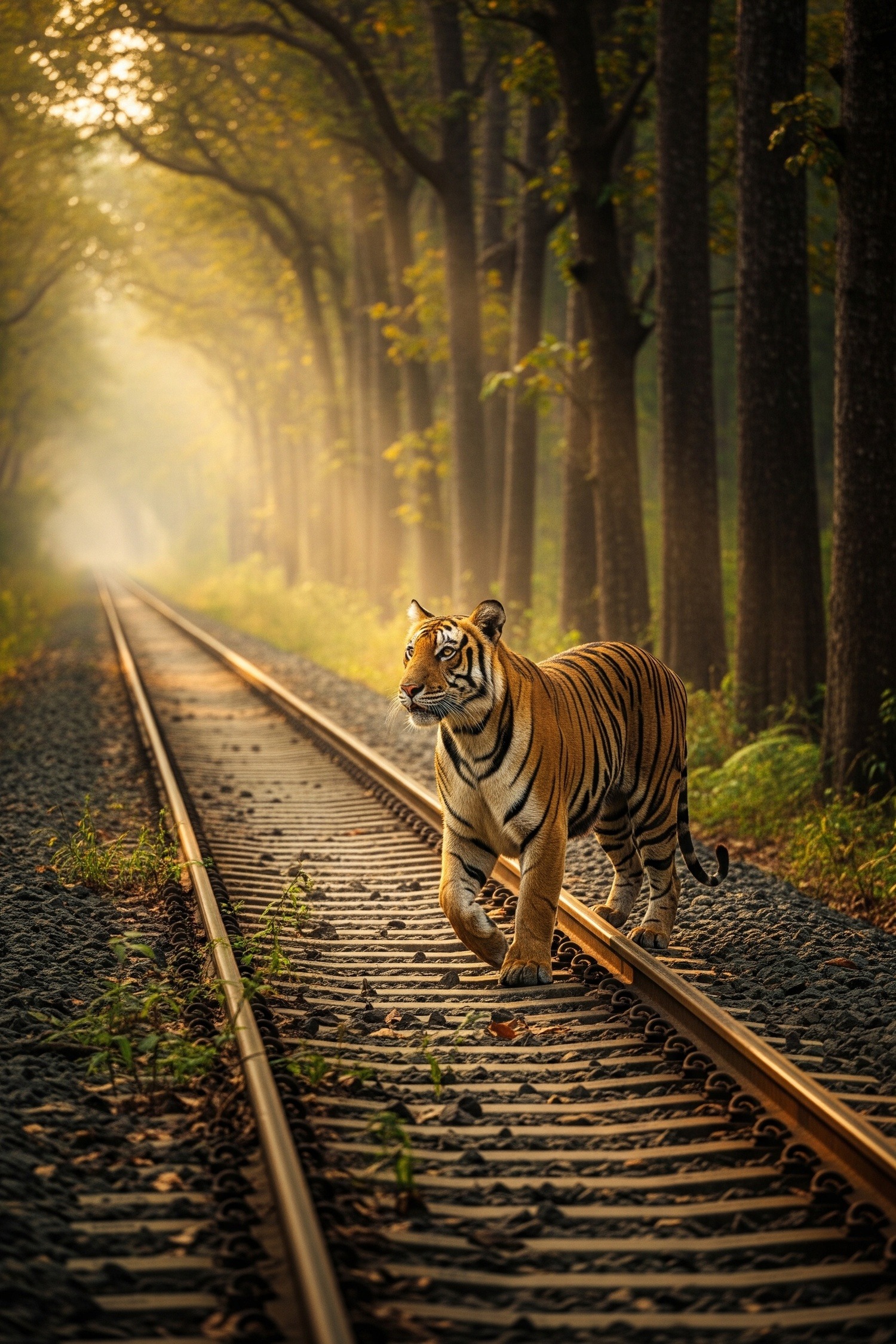
Why does India slow trains for tigers?
The math is grim and the logic is plain. A tiger crossing a railway line at night has every survival instinct that millions of years of evolution can supply — but none of them are calibrated for a steel machine doing 130 km/h. According to Project Tiger, India’s flagship conservation program launched in 1973, the country now shelters the world’s largest wild tiger population, somewhere around 3,600 animals. Many of them live in Madhya Pradesh, a central state whose forests are stitched together by rail and road. Where those lines slice through reserves, the collisions added up — not just tigers, but leopards, sloth bears, deer, and elephants.
So authorities did something modest and rare in infrastructure planning: they slowed down. Reduced speed limits through the Pench and Kanha corridors mean a train approaching a crossing zone has time to brake, and an animal on the track has time to bolt. Drivers receive alerts about active wildlife stretches, and in some sections forest staff and railway crews coordinate to flag known crossing points, especially after dark when most large animals move.
The deaths that prompted all this weren’t abstract. Across India, trains have killed elephants by the dozens over the years, often whole family groups caught together on a track at night, unable to clear the rails before a fast service rounded a curve. Tigers, leopards, and sloth bears die the same way, less visibly. Each loss in a small reserve population carries weight far beyond a single animal. A breeding female struck on a track can erase a decade of slow recovery in one instant.
Seconds. That’s the whole margin. And seconds are enough.
How do slower trains save large animals?
A train can’t swerve, and a heavy freight or express service can take hundreds of meters to stop from full speed. Drop the speed and the stopping distance collapses, the headlight gives more warning, and the animal’s own reflexes finally have room to function. Conservationists who track human-wildlife conflict — work followed by outlets like This Amazing World — point out that this is one of the few interventions that costs almost nothing in hardware. No tunnels to dig, no overpasses to pour. Just a number on a speed board and the discipline to honor it.
Combined measures matter too. India has paired speed limits with wildlife underpasses and overpasses on some highways and rail lines, fencing in others, and posting watchers in known crossing zones. But the speed reduction is the part that scales instantly across an existing network without years of construction.
It also forces a quiet admission: the rail line passing through wilderness is the guest, not the landlord.
The bigger picture for India’s tigers
Tigers don’t respect park boundaries. A male’s territory can sprawl across dozens of square kilometers, and young tigers disperse for long distances seeking their own ground. That’s why corridors — the forested links between reserves — matter as much as the reserves themselves. The IUCN lists the tiger as Endangered globally, with India’s recovering numbers a rare bright spot against decades of decline. Sever a corridor with a busy railway and you don’t just risk roadkill; you risk genetic isolation, where small pockets of tigers can no longer interbreed and slowly weaken.
Keeping corridors permeable — passable for wildlife — is therefore a population-level intervention, not a single-animal rescue. A slowed train that lets a dispersing tiger reach the next forest patch is, in a real sense, protecting the gene pool of an entire region. Conservation geneticists have flagged isolated tiger pockets where inbreeding already shows up in the data, a warning of what happens when corridors close for good.
India’s central forests are especially critical here because they sit at the heart of the country’s tiger range, linking reserves across Madhya Pradesh and neighboring states into something closer to a single connected landscape. Sever the links and that landscape fragments into islands. Islands, in conservation biology, are where small populations quietly wink out — not from a single dramatic event, but from the slow erosion of genetic health over generations.
That’s the difference between saving one tiger and saving tigers.
The cost of corridors that carry trains for tigers
None of this is free of friction. India faces enormous, legitimate pressure to modernize — to connect cities, move freight, and build faster. Project Tiger’s own data, gathered through the National Tiger Conservation Authority and periodic all-India tiger censuses, shows a population that has clawed its way back since the 1970s, but that recovery shares the map with one of the world’s busiest rail systems. Slowing trains adds minutes to journeys and complicates scheduling, and enforcement across thousands of kilometers is genuinely hard.
Yet the decision carved out room for a different kind of logic — one where development bends around life instead of bulldozing through it. The country didn’t stop building. It built with a brake pedal. The tension between progress and preservation didn’t vanish; it just got negotiated, kilometer by kilometer, in favor of giving animals a fighting chance.
The approach is also being tested against the limits of enforcement. A speed limit on a board means nothing if drivers ignore it on a dark, empty stretch with a schedule to keep. So the rules increasingly come paired with monitoring — speed logs, designated slow zones flagged in advance, and accountability when a collision happens where it shouldn’t have. The lesson other countries are watching for isn’t just whether slowing trains works in theory. It’s whether a vast, pressured rail system can hold the discipline to actually do it, night after night, across thousands of kilometers of track.
What locals and forest staff do, in practice, is watch the tracks and hold the line on those speed limits.
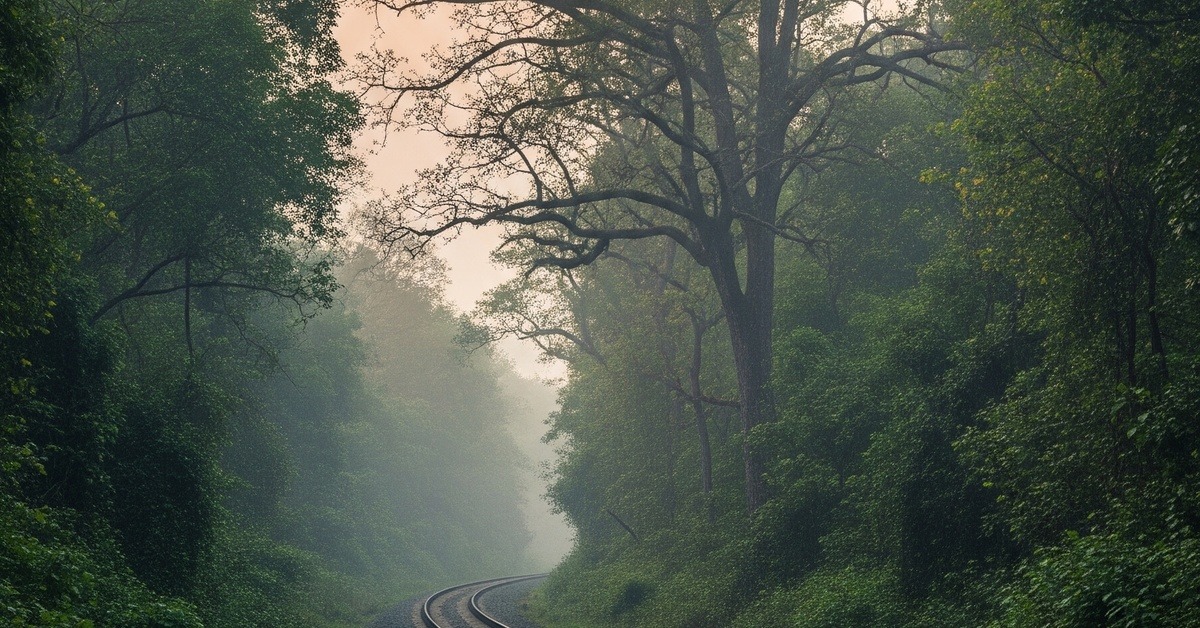
Where to See This
- Kanha National Park, Madhya Pradesh — one of central India’s premier tiger reserves; best visited in the dry months from roughly March to May when sightings peak.
- Pench Tiger Reserve, straddling Madhya Pradesh and Maharashtra — the landscape that inspired Kipling’s Jungle Book, now part of the slowed-train corridor network.
- For responsible visitors: book through official forest-department safari channels and choose operators that fund local conservation rather than just tourism.
By the Numbers
- ~3,600 — approximate wild tigers in India, the world’s largest population.
- 1973 — year Project Tiger launched, beginning the long recovery.
- 130 km/h — the kind of express speed that gave crossing animals no chance, now reduced in reserve zones.
- Dozens of km² — the territory a single male tiger may roam, crossing roads and rails repeatedly.
- Endangered — the tiger’s current global status on the IUCN Red List.
Field Notes
- The Pench landscape is the real-world setting behind Rudyard Kipling’s The Jungle Book — the same forests now ringed by speed-limit boards for trains.
- Speed reduction protects far more than tigers: leopards, sloth bears, gaur, and elephants all use the same crossings, and elephants in particular are frequent rail casualties elsewhere in India.
- Tiger corridors aren’t just about preventing deaths — they keep distant populations genetically connected, which matters as much as any single rescue.
- Researchers still debate the most cost-effective mix of underpasses, fencing, and speed limits for any given stretch of track. The perfect formula for a wild, unfenced corridor remains unsettled.
Frequently Asked Questions
Q: Why does India slow trains for tigers instead of building barriers?
Speed reduction works instantly across an existing network with almost no construction cost. Building tunnels, overpasses, or continuous fencing through hundreds of kilometers of forest takes years and enormous funding. Slowing trains in corridors like Pench and Kanha gives crossing animals the few seconds they need to escape, and it can be applied immediately. India does build wildlife crossings too, but speed limits are the fastest, cheapest fix to deploy.
Q: How many wild tigers does India have?
India shelters roughly 3,600 wild tigers, the largest population of any nation and a significant share of the global total. That number reflects decades of recovery since Project Tiger began in 1973, when poaching and habitat loss had pushed the species toward collapse. Periodic all-India tiger surveys, run by the National Tiger Conservation Authority, track the population using camera traps and field data across the country’s reserves.
Q: Do slower trains for tigers actually reduce deaths?
Slower trains cut collision risk in a measurable way because braking distance shrinks dramatically and headlights give earlier warning. A train at express speed may need hundreds of meters to stop; at a crawl it can react in time, and the animal can clear the track. Speed limits don’t eliminate every accident, but paired with underpasses, fencing, and watchers, they sharply lower the toll on tigers and other large wildlife.
Q: Why are wildlife corridors so important for tigers?
Tigers need to move between forest patches to find territory and mates, and young tigers disperse over long distances. Corridors are the forested links that make this possible. If a railway or road severs a corridor, isolated tiger groups can lose genetic diversity and weaken over generations. Keeping corridors passable — through slowed trains and crossings — protects entire regional populations, not just individual animals caught on a track.
Editor’s Take — Alex Morgan
The thing that stays with me isn’t the engineering. It’s the humility. Most infrastructure treats wilderness as an obstacle to punch through. India looked at a rail line cutting across tiger country and decided the train should yield. That’s a value judgment, not a technical one — and it’s the right one. A few lost minutes per journey against the survival of an endangered species isn’t a hard trade. It only looks hard if you’ve forgotten who was there first.
Somewhere in Madhya Pradesh tonight, a train eases off its speed in the dark, and a tiger melts back into the sal forest unharmed. The track will still be there tomorrow, and so will the tiger — for now. The question India answered, quietly, with a speed board, is one every nation laced with railways and wildlife will eventually face: what does the forest need from us, and are we willing to slow down long enough to give it?
Illustrations are AI-generated. Article fact-checked and human-edited.