How Did Ancient Civilizations Get Clean Water? A Real Comparison
To ask how did ancient civilizations get clean water is to ask one of the great hidden engineering questions of human history — long before germ theory, before microscopes, before chlorine, our ancestors moved mountains, tunnelled under deserts, and stacked cities on top of plumbing more sophisticated than anything Europe would build again for two thousand years.
Key Facts
- Mohenjo-daro had more than 700 brick-lined wells by around 2500 BC — roughly one well per house — feeding private bathrooms and the first known public Great Bath.
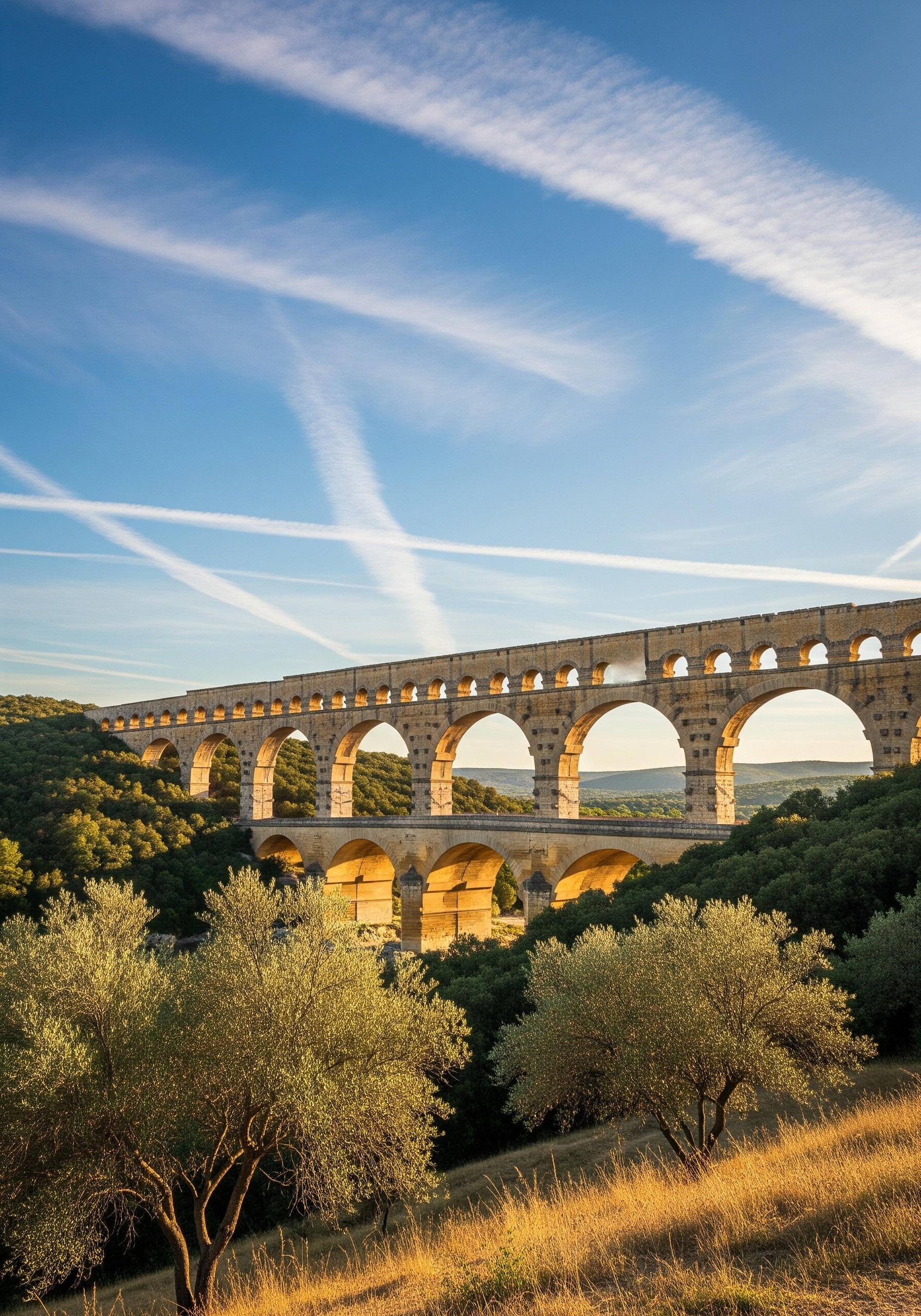
- Rome’s eleven aqueducts ran for more than 500 kilometres and, at their peak, delivered an estimated 1 million cubic metres of water per day into the city — mostly by pure gravity, with grades as fine as 1 in 4,800.
- Persian qanats are 3,000 years old, can run 40 kilometres underground, and still irrigate parts of Iran today; 11 qanat systems were inscribed on UNESCO’s World Heritage List in 2016.
- Egyptians described chemical clarification with alum around 1500 BC, and Hippocrates (c. 400 BC) used a cloth “Hippocratic sleeve” — the first documented bag filter — to strain boiled water.
- Sanskrit texts from c. 2000 BC (the Sushruta Samhita tradition) prescribed boiling, sunning, copper vessels, and filtration through cloth, sand, and charcoal — essentially every domestic purification step we still use today.
In short: Ancient civilizations got clean drinking water through a layered system — clever sourcing (springs, deep wells, mountain aqueducts, underground qanats), physical conveyance away from contaminated surface water, and household treatment (boiling, sand and charcoal filtration, alum coagulation, sunlight, copper). They did not understand microbes, but by trial and error they engineered around them with astonishing success.
Key Facts
- Mohenjo-daro had more than 700 brick-lined wells by around 2500 BC — roughly one well per house — feeding private bathrooms and the first known public Great Bath.
- Rome’s eleven aqueducts ran more than 500 kilometres and at peak delivered an estimated 1 million cubic metres of water per day, mostly by gravity with grades as fine as 1 in 4,800.
- Persian qanats are 3,000 years old, can run 40 kilometres underground, and still irrigate parts of Iran; 11 qanat systems were inscribed on UNESCO’s World Heritage List in 2016.
- Egyptians described chemical clarification with alum around 1500 BC, and Hippocrates (c. 400 BC) used a cloth ‘Hippocratic sleeve’ to strain boiled water — the first documented bag filter.
- Sanskrit texts from c. 2000 BC (the Sushruta Samhita tradition) prescribed boiling, sunning, copper vessels, and filtration through cloth, sand, and charcoal.
In short: Ancient civilizations secured clean water without germ theory by combining clever sourcing (springs, deep wells, aqueducts, qanats) with household treatment such as settling, sand and charcoal filtration, alum coagulation and boiling. The Indus Valley, Egypt, Persia, Greece and Rome each engineered solutions suited to their climate and geology.
The problem they were solving: dirty water kills
Before the 19th century, the leading cause of death in cities was almost always the water. Cholera, typhoid, dysentery, and parasitic worms move through human waste; pack people together, and your local stream becomes a slow-motion epidemic. Every civilization that built a permanent city had to solve this — or it didn’t last.
What is remarkable is that they solved it without knowing why. There were no bacteria in their worldview. Instead, ancient engineers and physicians watched, tasted, smelled, and copied what worked: clear water from a deep spring kept people healthy; cloudy water from a downstream river made them sick. From those observations grew a global toolkit that, in many places, achieved drinking-water quality competitive with the early modern era.
Sourcing: the four good places to find clean water
Across continents, the answer to how did ancient civilizations drink water begins not with treatment but with site selection. Ancient water sources cluster into four categories, ranked roughly from cleanest to dirtiest:
The first and safest were springs — groundwater bubbling up after natural filtration through bedrock. Greek and Roman cities were famously sited around springs; the oracle at Delphi sat above the Castalian spring, and Rome’s Aqua Virgo (still feeding the Trevi Fountain) tapped spring water 20 km outside the city.
Second were deep wells. The Indus Valley city of Mohenjo-daro is the gold standard: more than 700 brick-lined wells, many private, drilled into the alluvial water table. In Egypt, Greece, and the Levant, masonry-lined wells were standard urban infrastructure by 2000 BC.
Third was collected rainwater, stored in plastered cisterns. The Minoans on Crete and later the Nabataeans at Petra became virtuosos of this approach, channelling every drop off rooftops and rock faces into underground reservoirs sealed with hydraulic lime.
Fourth — and only when the first three failed — was surface water from rivers and lakes, which everyone understood was the most dangerous. This is where the treatment chapter of human history begins.
{IMAGE_2}
The civilizational comparison: who solved it best?
The textbook answer is “the Romans,” but that is a Eurocentric reflex. By any honest measure, the Bronze Age cities of the Indus Valley got there first and, arguably, did it better at the household level. Greece pioneered the science; Persia mastered the desert; Rome scaled it to an imperial population. Here is the head-to-head:
| Civilization | Primary source | Signature engineering | Treatment |
|---|---|---|---|
| Indus Valley (c. 2600–1900 BC) | Private brick wells | 700+ wells; covered street drains; Great Bath | Settling in tanks; covered storage |
| Ancient Egypt (c. 1500 BC) | Nile + flood basins | Shadufs, canals, household cisterns | Alum coagulation; charcoal in jars |
| Persia (c. 1000 BC →) | Mountain aquifers | Qanats — 3,000-year-old gravity tunnels up to 40 km long | Natural cooling + sediment drop in chambers |
| Classical Greece (c. 600 BC) | Springs + aqueducts | Tunnel of Eupalinos (Samos), public fountains | Boiling; cloth filter (“Hippocratic sleeve”) |
| Rome (c. 300 BC – AD 300) | Mountain springs | Eleven aqueducts, 500+ km, ~1,000,000 m³/day | Castella (settling tanks); high overflow rate |
| Nabataean Petra (c. 100 BC) | Rain + flash floods | Rock-cut cisterns; ceramic pipe network | Sediment basins between cisterns |
Persia’s quiet masterpiece: the qanat
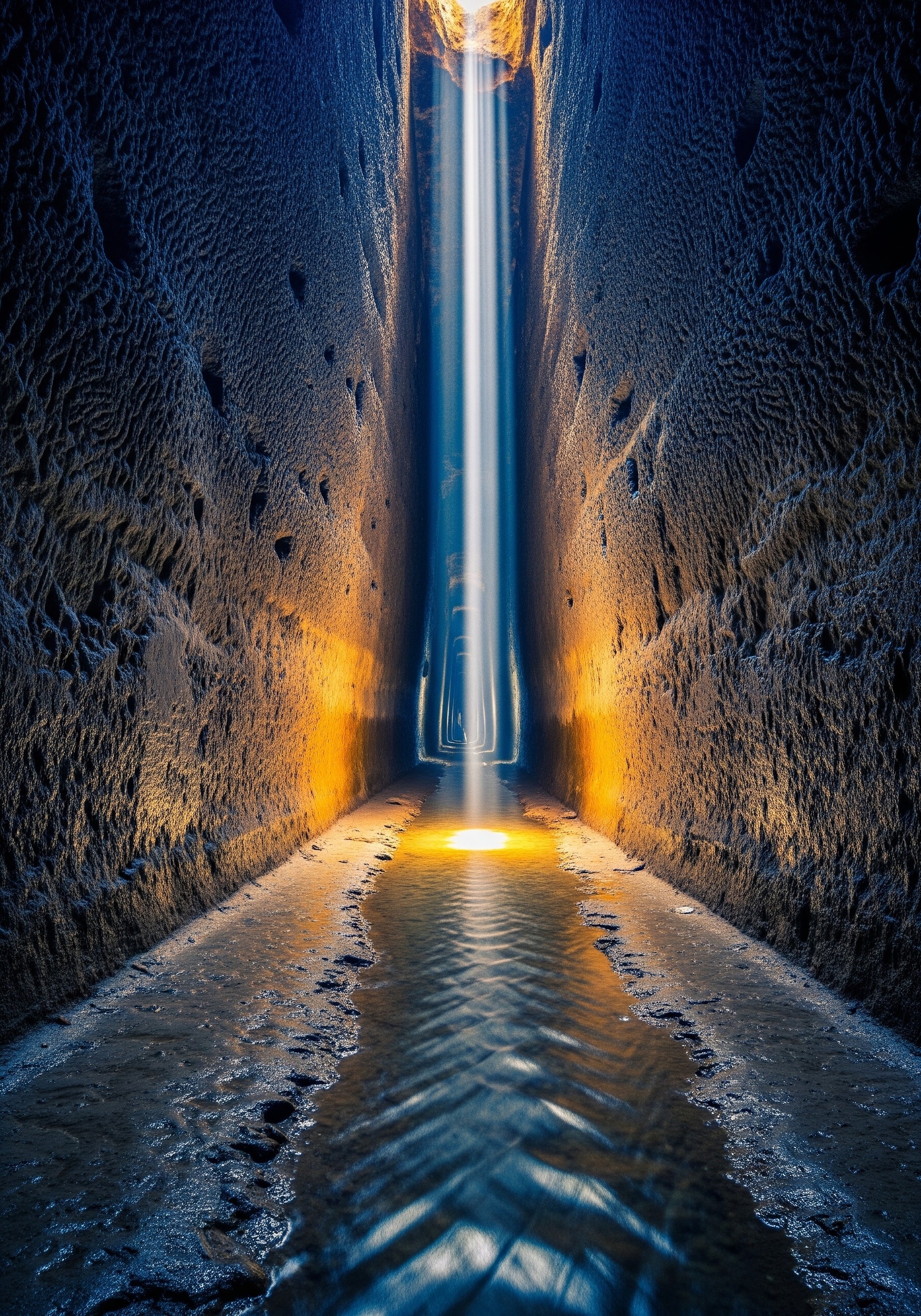
If one technology deserves the title of antiquity’s greatest answer to clean drinking water, it is the Persian qanat. Beginning in the early Iron Age, surveyors in what is now Iran would locate an aquifer high in the foothills, then dig a gently sloping tunnel — by hand, with hammer and chisel — toward the village or city below. Vertical air shafts every 20 to 50 metres provided ventilation and let workers haul out rubble. Once breached, the aquifer fed the tunnel by pure gravity, and water emerged at the surface clear, cool, and naturally filtered by kilometres of porous rock.
The genius of the qanat is that it solves three problems at once. It bypasses evaporation in a desert climate. It draws on groundwater already filtered by geology, so the water arrives potable. And it requires no pumps or fuel — once cut, a qanat runs for centuries. Some still do: UNESCO inscribed eleven Iranian qanats as a World Heritage Site in 2016, and an estimated 35 countries from Morocco to western China retain working examples. National Geographic has called them “3,000-year-old marvels of engineering,” and the description is not hyperbole.
Rome’s monument to gravity
Where Persia tunnelled underground, Rome built skyward. Between 312 BC and AD 226 the empire constructed eleven major aqueducts feeding the capital, with combined channels stretching well over 500 kilometres. The water came from cold mountain springs east of the city — Aqua Marcia, prized for its taste, was the longest at about 91 km — and flowed by gravity alone, with grades engineered to fractions of a percent. By the late first century AD, water commissioner Sextus Julius Frontinus could write a two-book treatise (De aquaeductu) accounting for every cubic foot.
Frontinus was the first known water-quality regulator. He insisted on a deliberately high overflow rate, because moving water stayed cleaner than standing water and flushed the sewers. At the city end, the aqueducts emptied into vast settling reservoirs called castella aquae, which acted as cisterns and sediment tanks; from there, lead and ceramic pipes carried the supply to fountains, baths, and private homes.
The dark footnote is lead. The Roman architect Vitruvius warned a generation earlier that “water conducted through clay pipes is much more wholesome than that which is conducted through lead pipes,” and he was right in principle. Modern isotope analyses of Roman sediments suggest the actual lead load in tap water was elevated above natural levels but probably not catastrophically toxic; the constant flow and high mineral content of Roman water coated pipes in a calcium-carbonate layer that limited leaching. It was, by accident, harm-reduced plumbing.
Ancient water filtration: the household toolkit
Once the water arrived, ancient people still treated it before drinking. The methods are surprisingly consistent across cultures, which suggests independent rediscovery of what actually works. The five techniques you find again and again are:
Boiling. Wherever fire was tame, boiling was the gold standard — and it remains the WHO’s recommended emergency disinfection method today. Greek, Indian, and Chinese texts all reference it.
Sand and gravel filtration. Egyptians and Greeks built simple vertical filters: gravel at the bottom, sand on top, water trickling down. This removes turbidity and a useful share of bacteria — the same principle as modern slow-sand filters used in municipal plants from London to Lagos.
Charcoal. Egyptians placed charcoal lumps in clay storage jars. The porous structure adsorbs organic compounds and improves taste — exactly what a modern Brita cartridge does.
Alum coagulation. Around 1500 BC Egyptian sources describe adding aluminium sulphate (alum) to cloudy water; it binds suspended particles into clumps that sink. This is the founding step of every drinking-water treatment plant on Earth today.
Sunlight and copper. The Sanskrit medical tradition recommended storing water in copper vessels and exposing it to sunlight. Modern research confirms both work: UV-A inactivates many waterborne pathogens (the basis of the WHO-endorsed SODIS method), and trace copper ions are antimicrobial.
What they got wrong — and why it cost them
For all this brilliance, ancient water systems had two recurring failures. The first was sewage. Even Rome and the Indus Valley, with their celebrated drains, ultimately emptied wastewater into the same rivers their downstream neighbours drank from. Without germ theory, the conceptual leap that human waste could re-enter the water supply at a microscopic level was simply unavailable. The result was endemic gastrointestinal disease that ancient physicians treated symptomatically and could not stop.
The second was scale. As cities outgrew their springs, they tapped progressively dirtier sources. Imperial Rome’s later aqueducts drew partly from lakes and rivers, not pure springs, and Frontinus complained that the Anio Novus arrived discoloured after every heavy rain. Settling tanks helped, but turbidity always returned. The same story repeats in late-period Constantinople, Han Chang’an, and Aztec Tenochtitlán — the moment population outruns geology, water quality slips.
What modern engineers still borrow from the ancients
Walk into any 21st-century drinking-water plant and you will see the same four steps the Egyptians, Greeks, and Romans pioneered: coagulation (alum), sedimentation (settling tanks), filtration (slow sand and activated carbon), and a covered conveyance (now steel and PVC, then ceramic and stone). Only the final disinfection step — chlorine, ozone, or UV — is genuinely new, and even UV is a high-tech version of the Sanskrit sunlight prescription.
This is why historians of technology often argue that the modern public-water revolution was less an invention than a recovery. After the fall of Rome, Europe lost most of these techniques and spent a thousand years drinking from rivers. The London cholera outbreaks of the 1850s, which John Snow famously traced to a contaminated pump, were the result of an industrial city operating below the standard a Bronze Age Harappan would have recognised as normal.
Frequently Asked Questions
Q: Did ancient people really drink wine because the water was unsafe?
A: Partly true, but exaggerated. Wealthy Greeks and Romans mixed wine with water roughly 1:3 — the alcohol modestly reduced microbial load and the wine improved taste — but this was a cultural and social practice as much as a sanitary one. Ordinary citizens, soldiers, and slaves drank straight water from public fountains daily; in cities with good aqueducts or springs, that water was generally fine.
Q: How did ancient civilizations get clean water in deserts?
A: With brilliant engineering. The Persians built qanats — underground tunnels up to 40 km long — that tapped mountain aquifers without exposing the water to sun or sand. The Nabataeans at Petra carved rock cisterns and channelled flash-flood runoff. In Egypt, deep wells reached the Nile’s alluvial water table even far from the river itself.
Q: Did ancient civilizations know about germs?
A: No. Germ theory was not established until the work of Pasteur and Koch in the 1860s–80s. But Greek, Indian, and Roman writers all noticed that stagnant, cloudy, or smelly water made people sick, and that clear, fast-moving, or boiled water did not. They built their systems around those empirical correlations — getting the right answer for the wrong reason for nearly three millennia.
Q: What was the most advanced ancient water system?
A: It depends on the metric. For sheer scale, Rome’s aqueduct network. For household ubiquity 4,500 years ago, Mohenjo-daro’s 700+ private wells and covered drains. For sustainability, the Persian qanat — many are still running. Each civilization optimised for its geography, and each remained the world standard in its category for centuries.
The honest answer to how did ancient civilizations get clean water is that they took the problem seriously — more seriously, in many cases, than the medieval Europe that followed them. They could not see the enemy, but they out-engineered it for three thousand years, leaving behind tunnels still flowing in Iran, aqueducts still standing in Spain and France, and a quiet reminder that the modern tap is not a break with history but the latest chapter of it.
Illustrations are AI-generated. Article fact-checked and human-edited.