Ancient Water Secrets Keeping the Middle East Alive
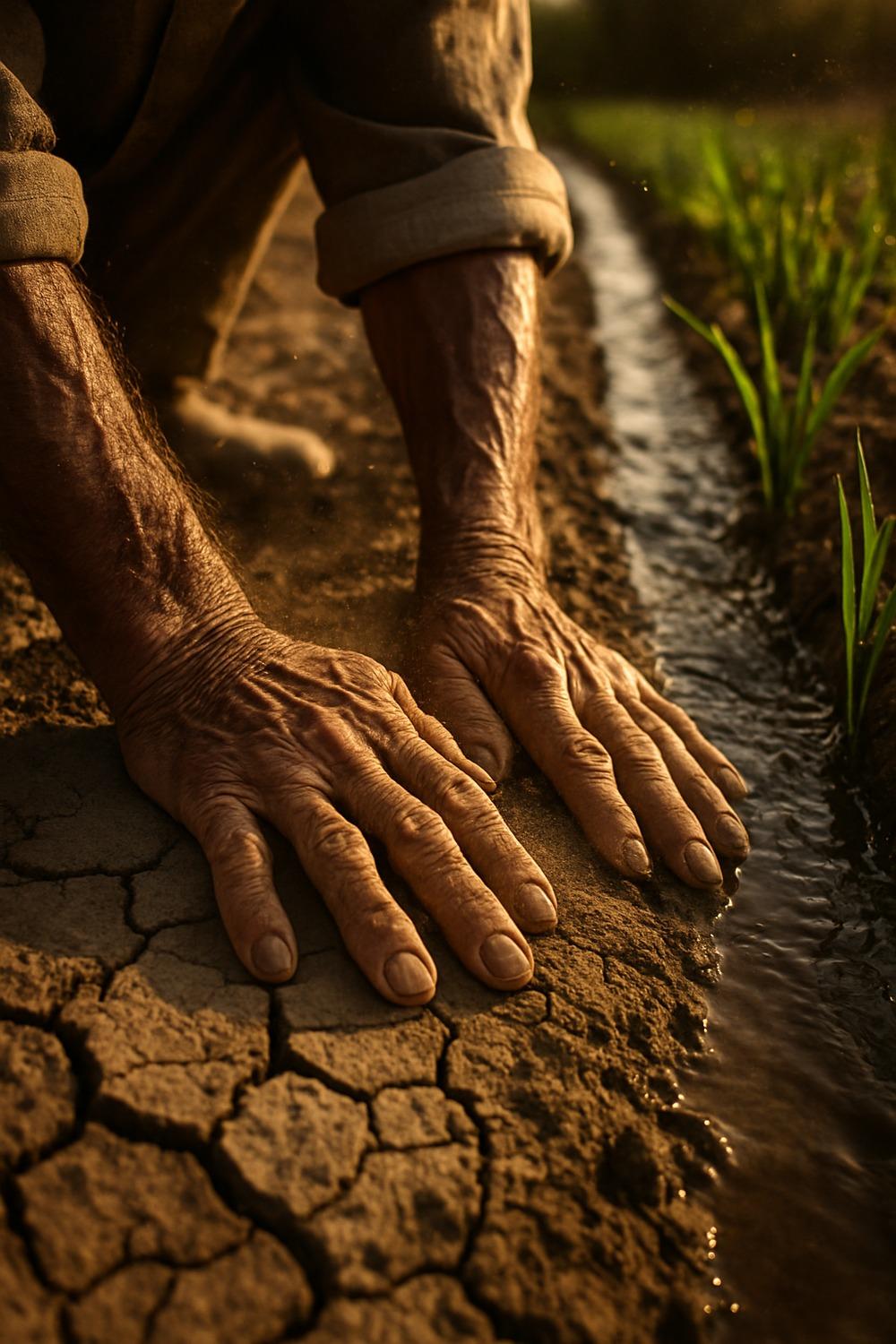
Stand at the mouth of a qanat in Iran’s Yazd province and you’ll feel it before you see it — a cool breath rising from the earth, carrying water that fell as mountain rain a century ago. These underground aqueducts, some stretching more than 70 kilometers, were engineering answers to an impossible geography. And somehow, impossibly, they still work. The ancient water systems of the Middle East have been pulling life from stone for three millennia.
A maze of tunnels. Barely enough to keep a village breathing. Yet today, with aquifers collapsing and desert temperatures climbing, the question isn’t whether these ancient systems were brilliant. It’s whether they can outlast the modern world’s thirst.
Key Facts
- Iran holds an estimated 37,000 active qanats as of 2021 (Iranian Ministry of Energy), delivering around 8 billion cubic meters of water annually to approximately 75 cities.
- UNESCO added the Persian qanat to its Intangible Cultural Heritage list in 2016 and designated Oman’s Aflaj Irrigation Systems a World Heritage Site in 2006.
- Some of Iran’s longest individual qanat tunnels stretch more than 70 kilometers, entirely gravity-fed with no mechanical assistance.
- The 2023 World Bank report projects a 6% reduction in MENA GDP per capita by 2050 attributable solely to water scarcity.
- A 2022 American University of Beirut study found rehabilitating derelict qanat networks in the Levant could offset 15-30% of unsustainable groundwater extraction.
In short: Ancient water systems Middle East engineers built, including qanats, aflaj, and karez, are gravity-fed underground aqueducts dating back roughly 3,000 years. Iran alone runs about 37,000 active qanats. These pre-industrial networks self-limit to renewable flows, surviving where modern fossil-water pumping depleted aquifers within a single generation.
Underground Rivers: How Ancient Aqueducts Shaped the Region
The qanat is, at its core, a gravity machine. Engineers — called muqanni — would identify a water-bearing layer at the base of a mountain, then dig a gently sloping tunnel stretching toward a village or farm on the plains below. No pumps. No electricity. Just a precise calculation of angle and depth, repeated across thousands of kilometers of otherwise hostile terrain.
The qanat system, which UNESCO added to its Intangible Cultural Heritage list in 2016, represents one of the most sophisticated pre-industrial hydrological networks ever built. Iran alone holds an estimated 37,000 active qanats, according to the Iranian Ministry of Energy, delivering around 8 billion cubic meters of water annually — a figure that hasn’t changed much in centuries, because the physics hasn’t changed either. What changed is the demand around it.
Around 1000 BCE, the oldest confirmed qanats emerged in present-day Iran, though some archaeologists at the University of Tehran have argued for earlier origins in the copper-mining cultures of eastern Persia. Here’s the thing: what makes that age staggering isn’t the number. It’s the continuity. These aren’t ruins. They’re operational. The same channels that watered Zoroastrian settlements are still directing snowmelt toward pistachio orchards and wheat fields in 2024.
The knowledge required to maintain them passes person to person, father to child, muqanni to apprentice — where each shaft sits, which tunnel segment serves which village, how to clear a collapse without flooding the rest.
Walk through a qanat-fed oasis in Kashan and the contrast hits hard. Pomegranate trees lean over a narrow channel. Roses bloom against a mud wall. Behind the garden: flat, bleached desert all the way to the horizon. The water makes that line. Without it, there’s no line at all.
Desert Survival: The Human Communities Built on Ancient Water
Water engineering in arid landscapes has always shaped more than agriculture. It shapes everything — architecture, law, social hierarchy, and the rhythm of daily life. In Jordan’s Azraq Basin, communities have depended on desert springs and hand-dug cisterns for thousands of years. The broader Arabian Peninsula’s wildlife and human populations alike have always organized around scarcity, clustering near every reliable water source.
What makes the Middle East’s ancient water cultures particularly remarkable is how legal and communal they became. Water wasn’t just a resource. It was a right, encoded in local law centuries before modern water legislation existed anywhere in the world. The falaj system of Oman — a close cousin to the Iranian qanat — operates under a governance structure that UNESCO recognized as a World Heritage cultural landscape in 2006.
Villages divided falaj water by time, not volume. Each family received a specific window — measured in hours, sometimes minutes — during which the channel flow belonged to them. A water clock called a sundial or a float mechanism in a bowl tracked the allocation. Disputes went to a designated water master, the arif, whose word was final. This system operated continuously for at least 3,000 years across more than 3,000 individual aflaj channels in Oman alone.
There’s something quietly radical about a 3,000-year-old legal code that still functions. The arif still exists in some Omani villages. He still arbitrates. The bowl still floats. The water still runs on schedule.
When Ancient Ingenuity Meets Modern Over-Extraction
The collision between ancient water systems and modern demand is not gradual. It’s violent, and it’s accelerating. A 2021 study published in Nature using GRACE satellite data found that the Arabian Aquifer System — one of the world’s largest non-renewable groundwater reserves — is being depleted at a rate that cannot be sustained beyond mid-century under current use patterns.
Saudi Arabia’s experiment with fossil water wheat farming, which peaked in the 1990s when the kingdom briefly became a major grain exporter, ended in 2016 when the government acknowledged the aquifer math simply didn’t work. Billions of dollars and millions of acre-feet of ancient water, gone in a generation.
Why does the irony cut so deep? Because the ancient water systems of the Middle East never tried to draw fossil water. They were designed around renewable flows — snowmelt, seasonal rain, the slow seep through mountain rock. Qanats take what the mountain gives that year. They can’t overdraw because gravity won’t let them. The communities built around qanats lived within a hard natural ceiling, which is exactly why those communities survived.
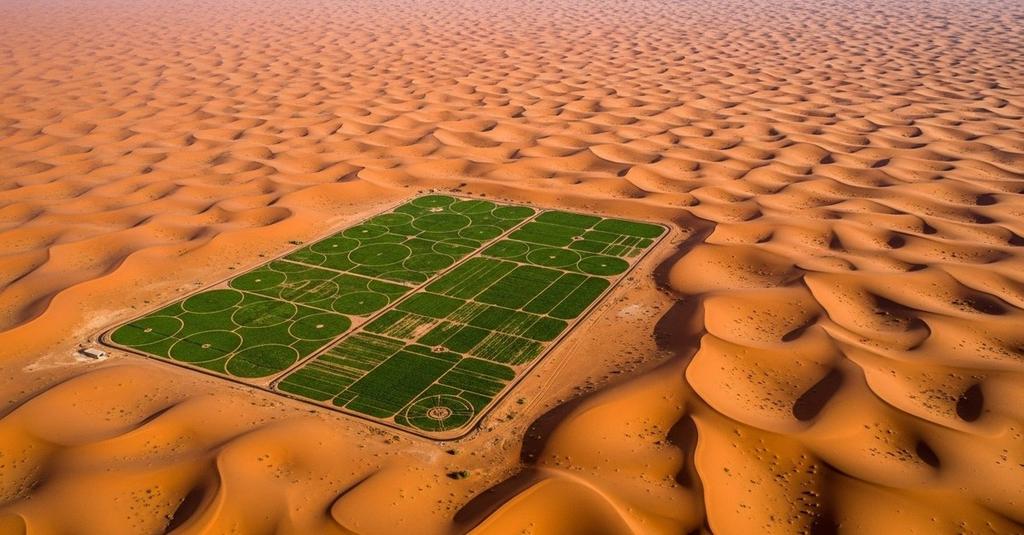
Modern groundwater pumping removed that ceiling entirely, and the results are now visible in satellite imagery: shrinking lakes, subsiding land, fields abandoned after a generation of artificial plenty. A qanat built in 800 BCE still flowing today. A modern aquifer well drilled in 1980, bone dry by 2020. Both in the same country. Different philosophies of time.
Watching a species of civilization disappear at this speed — not with conflict or collapse, but with depletion — you stop calling it a trend. You call it a choice made once every 20 years and never unmade.
Ancient Water Systems Middle East Researchers Are Racing to Document
Before these systems disappear — either from neglect or from the collapse of the aquifers that feed them — researchers are scrambling to map, record, and understand them. The International Center on Qanats and Historic Hydraulic Structures (ICQHS), based in Yazd, Iran, has been cataloguing qanat networks since 2004, using ground surveys, LiDAR scanning, and oral histories from ageing muqannis.
Their data revealed something striking: qanat water quality, in many cases, is cleaner than treated municipal water in the same regions, filtered by kilometers of natural rock and kept cool underground. The ancient water systems of the Middle East weren’t just clever. They were elegant in ways that took modern scientists decades to quantify. (And this matters more than it sounds — because efficiency in water delivery was never optional, it was existential.)
At the American University of Beirut, hydrologists have been modeling what would happen if Lebanon, Jordan, and the Palestinian territories shifted water policy to prioritize qanat rehabilitation over new pumping infrastructure. Their preliminary 2022 findings suggest that even partial restoration of derelict qanat networks in the Levant could offset between 15% and 30% of current unsustainable groundwater extraction. That’s not a small number in a region where aquifer depletion is a national security issue.
Jordan already imports virtual water through food trade because it can’t grow enough within its own borders — a situation that gets worse every year the rain doesn’t cooperate. But in Oman, researchers are doing something practical. They’re training young engineers in traditional falaj construction techniques, alongside modern hydrology coursework. The bet is that hybrid knowledge — ancient geometry plus satellite monitoring — produces water systems that neither approach could build alone.
The Future Written in Stone: What These Systems Can Still Teach
In 2023, the World Bank estimated that the MENA region would face a 6% reduction in GDP per capita by 2050 attributable solely to water scarcity — a figure that excludes conflict costs, migration pressure, and agricultural collapse. For comparison, the 2008 global financial crisis reduced world GDP by approximately 2%. Water stress in the Middle East, on its current trajectory, will hit harder and last longer than the worst economic shock in living memory. That context changes how you read a 3,000-year-old tunnel in the Iranian desert. It stops looking like history and starts looking like a blueprint.
Every qanat was engineered to work within the annual water budget of its specific mountain catchment. Exceed that budget and the system fails. The muqannis knew this. They didn’t build aspirationally beyond what the geology could sustain. The ancient water systems of the Middle East encode something modern infrastructure often doesn’t: respect for limits.
There’s no equivalent instinct in a diesel pump. A pump draws until the well is dry, and then you drill deeper, and then there’s nothing left to drill toward. Several Gulf states are now investing heavily in desalination — a technology that works but costs extraordinary amounts of energy to operate, contributing to the carbon emissions that are accelerating the regional warming that’s reducing rainfall in the first place. The loop is not comfortable to trace.
In a village outside Kerman in southeastern Iran, an 80-year-old muqanni named Hassan Ahmadi — one of perhaps a few hundred still practicing the craft — describes the sound of water moving through rock as a kind of conversation. “The mountain tells you where it wants to go,” he said through a translator in a 2019 documentary filmed by the Aga Khan Trust for Culture. “You just make the path.” That sentence contains more practical wisdom about water management than most policy documents produced in the last 50 years.
How It Unfolded
- ~1000 BCE — The earliest confirmed qanats are constructed in present-day Iran, channeling mountain aquifer water to lowland settlements in what is now Kerman Province.
- 500 BCE — Persian expansion carries qanat technology across the Achaemenid Empire, from North Africa to Central Asia, becoming the backbone of regional agriculture for centuries.
- 2006 — UNESCO designates the Aflaj Irrigation Systems of Oman as a World Heritage Site, recognizing the living cultural landscape built around falaj water governance.
- 2016 — Saudi Arabia halts domestic wheat production, citing irreversible fossil aquifer depletion — a public acknowledgment that modern extraction had failed where ancient systems endured.
By the Numbers
- 37,000 — Active qanats still operating in Iran as of 2021 (Iranian Ministry of Energy), supplying water to approximately 75 cities and thousands of villages.
- 70+ kilometers — The length of some of Iran’s longest individual qanat tunnels, entirely gravity-fed with no mechanical assistance.
- 3,000+ — Individual falaj channels recorded in Oman, some continuously maintained for over three millennia.
- 6% — Projected GDP per capita reduction in MENA countries by 2050 attributable to water scarcity, according to the 2023 World Bank climate report.
- 25 millimeters — Annual average rainfall in some of the Arabian Peninsula’s most arid zones, compared to London’s 600 millimeters per year.
Field Notes
- In 2019, a team from the University of Oxford’s Environmental Change Institute found that qanat water temperatures remain between 15°C and 18°C year-round, even when surface temperatures exceed 50°C — a passive cooling effect that also reduces evaporation loss by an estimated 60% compared to open irrigation channels.
- The vertical shafts dug to construct and maintain qanats act as ventilation chimneys, drawing air through the tunnel and creating a natural cooling draft. Ancient air conditioning built into the water supply.
- Afghanistan has more than 6,000 karez — the local name for qanats — that collectively irrigated roughly 75% of the country’s agricultural land before decades of conflict severely degraded the maintenance networks, dramatically accelerating food insecurity.
- Researchers still can’t fully explain how pre-literate muqannis in 1000 BCE determined precise tunnel gradients across dozens of kilometers without instruments — the tolerances required are fine enough that modern engineers using GPS occasionally get them wrong.
Frequently Asked Questions
Q: What exactly are ancient water systems in the Middle East, and are they still used today?
Ancient water systems in the Middle East include qanats, aflaj, and karez — gravity-fed underground aqueducts that channel mountain groundwater to lowland settlements without pumps. Iran alone has approximately 37,000 active qanats as of 2021. Many are genuinely still in use, supplying drinking water, irrigation, and even industrial cooling in cities like Yazd and Kashan. They’re not museum pieces — they’re functioning infrastructure that predates the Roman Empire.
Q: Why didn’t these ancient systems deplete groundwater the way modern wells do?
The design is the answer. Qanats tap the water table at a fixed point and rely entirely on gravity to move water downhill. They can only deliver what naturally flows into that tapping point — they can’t actively draw down an aquifer the way a motorized pump can. When seasonal recharge is low, qanat flow drops proportionally. The system self-limits. Modern submersible pumps have no such constraint, which is why fossil aquifers across the region are declining at rates that took millennia to accumulate and may take centuries to recover.
Q: Can ancient water engineering really help solve modern water crises in the Middle East?
It’s a common assumption that ancient systems are too small-scale to matter. The data suggests otherwise. Preliminary modeling by hydrologists at the American University of Beirut in 2022 found that rehabilitating derelict qanat networks in the Levant could offset 15-30% of unsustainable groundwater extraction in those areas. The infrastructure already exists underground — much of it intact. The bottleneck isn’t engineering. It’s the shortage of trained muqannis and political will to invest in restoration rather than new extraction technology.
Editor’s Take — Sarah Blake
What stops me cold about this story isn’t the engineering — it’s the timeline. Saudi Arabia spent decades and billions of dollars drawing down fossil water to grow wheat, then stopped in 2016 when the aquifer ran out. A qanat dug in 800 BCE is still flowing today, two kilometers away from an abandoned modern well. We built systems that lasted 40 years and called them progress. They built systems that lasted 3,000 years and we called them primitive. That’s a reckoning, not just a footnote.
The ancient water systems of the Middle East aren’t relics. They’re arguments — made in stone and gravity and slow time — about what it actually means to live within a landscape rather than against it. The muqanni who carved those tunnels by lamplight, calculating slopes by feel and experience, understood something the age of the diesel pump forgot: water doesn’t belong to the generation that finds it. Every falaj channel still running is proof that restraint can outlast ambition. The question now is whether we’ll learn that before the last aquifer goes dry, or after.
Illustrations are AI-generated. Article fact-checked and human-edited. Our editorial standards.