Your Cat Shares 95.6% of Its DNA With a Tiger
Your cat is carrying around tiger DNA. Not metaphorically — 95.6% of the actual genetic code is identical, base pair for base pair, which means that thing sleeping on your pillow is running the same biological operating system as an apex predator that can take down a water buffalo.
The weird part? Nobody really expected to find this. When geneticist Wes Warren at Washington University finally sequenced the domestic cat genome in 2013 and ran the comparison, the results were so consistent that people had to double-check the data. Same neural wiring. Same hunting architecture. Same everything, except for that remaining 4.4% — which turns out to be mostly size, some temperament calibration, and a few neurochemical brakes that your tabby never actually uses when it’s 3am and the mood strikes.
Key Facts
- Domestic cats and tigers share approximately 95.6% of their DNA, confirmed in Wes Warren et al.’s 2014 genome study published in PNAS, after the cat genome was sequenced at Washington University in 2013
- Domestic cats share roughly 90% of their genome with lions and leopards
- Cats and humans have brain structures with about 90% similarity, more comparable than dog brains to human brains
- Domestic cats have lived alongside humans for roughly 10,000 years, with relatively little domestication-related genetic change compared with dogs or livestock
- Both domestic cats and tigers possess a tapetum lucidum, a reflective layer behind the retina that provides night vision roughly six times better than human vision
In short: Domestic cats share 95.6% of their DNA with tigers, per Wes Warren’s 2014 PNAS study after the cat genome was sequenced in 2013 at Washington University. The same predator architecture — stalking circuitry, night vision, jaw biomechanics — is preserved. Cats roughly self-domesticated over 10,000 years and never lost their wild operating system the way dogs lost theirs.
What 95.6% DNA Similarity Actually Means
Look, before we go further, let’s be honest about what this number does and doesn’t mean. You can read the full technical breakdown on Wikipedia’s cat genome page, but here’s the human version: it’s not that cats are tiny tigers. It’s that they’re running nearly identical genetic instructions for how to be a predator.
The blueprint is the same.
Size is controlled by a different set of genes. Temperament has some variation. But the fundamental predator architecture — the neural circuitry for stalking, the sensory wiring for night vision, the jaw mechanics for killing prey efficiently — that’s all preserved in your domestic cat with remarkable fidelity. It’s as if someone took the tiger source code, compiled it at 70% scale, and handed it to your house pet to run indefinitely.
Researchers who study wild felids have pointed out that when you watch a domestic cat stalk a toy mouse, you’re watching millions of years of predator programming execute in real time. The crouched spine. The slow, deliberate paw placement. The pupils dilating. These aren’t behavioral quirks. They’re archaeological evidence. You can dig deeper into the science at this-amazing-world.com for more on what the cat DNA tiger connection reveals about behavior across the species.
Here’s Where Domestication Gets Uncomfortable
Most domesticated animals — dogs, cows, sheep — were selectively bred over generations to suppress wild instincts and increase human-friendly traits. Someone actively shaped them.
Cats basically domesticated themselves.
They moved toward human grain stores because rodents did. Humans tolerated them because they were useful. And the genetic pressure to fundamentally change? It never really came. Cats made a business arrangement and kept everything that mattered. Dogs diverged from wolves so dramatically that some researchers call them a different behavioral species. Cats? They never changed the foundation. They just negotiated the lease terms.
This is the part that kept me reading for another hour, because it means we may have completely misunderstood what domestication actually did — or in this case, what it failed to do.
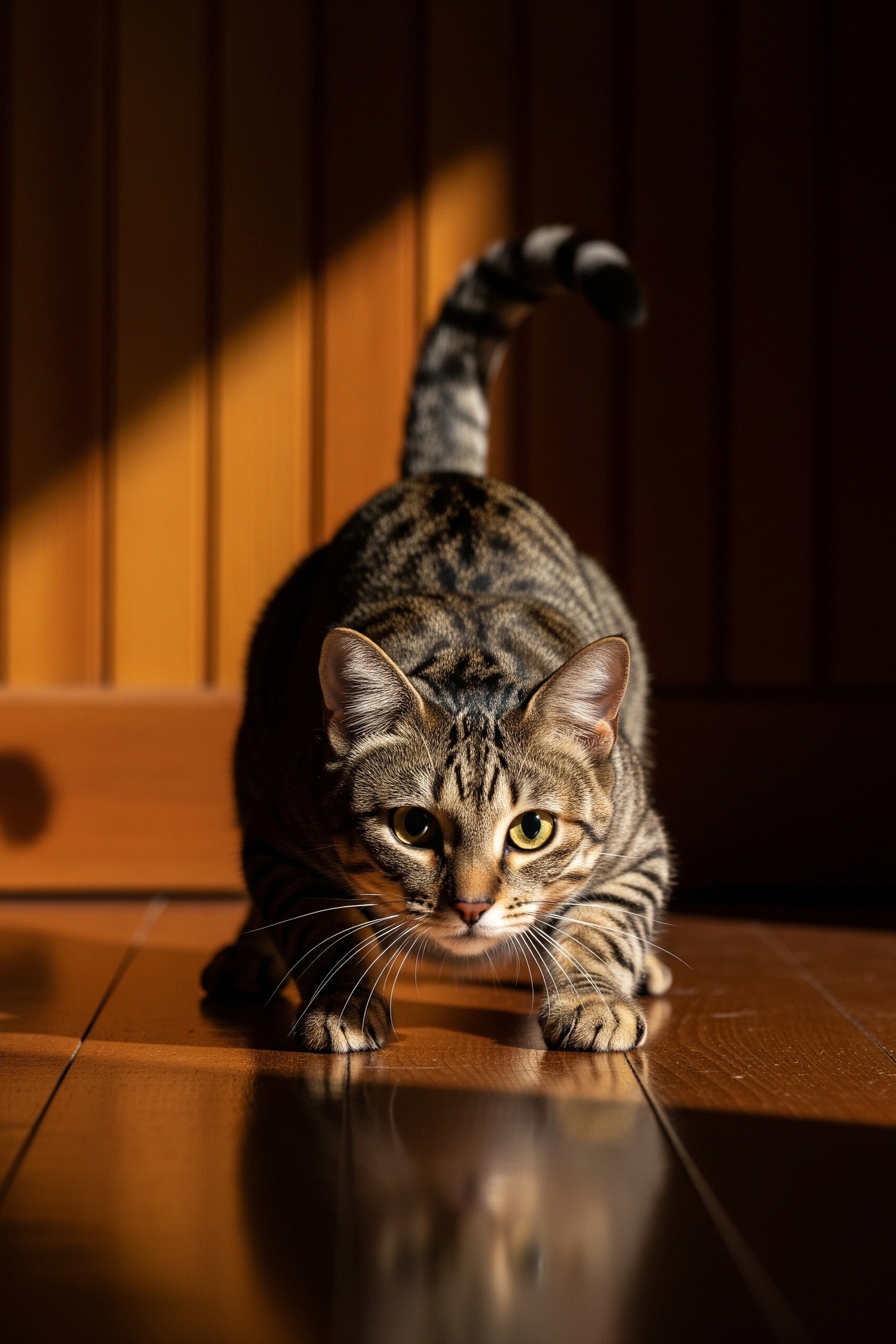
The Hunting Wiring Is Fully Intact
Here’s the genuinely strange part. Studies on well-fed, indoor domestic cats show they still hunt — not because they’re hungry, but because the neural reward system for hunting is entirely separate from hunger in felids. A tiger hunts because it needs to eat. But it wants to hunt because of an older, deeper drive coded millions of years ago.
Your cat knocking a hair tie off the bathroom counter at 3am is running that same ancient subroutine.
The prey is different. The drive is identical. The neurochemical payoff for successful stalking is wired so deep that you can’t breed it out in 10,000 years if you’re not actually trying. Which cats never did. They just showed up one day, decided humans were tolerable, and never bothered updating their internal programming.
Tigers and Tabbies: The Shared Systems
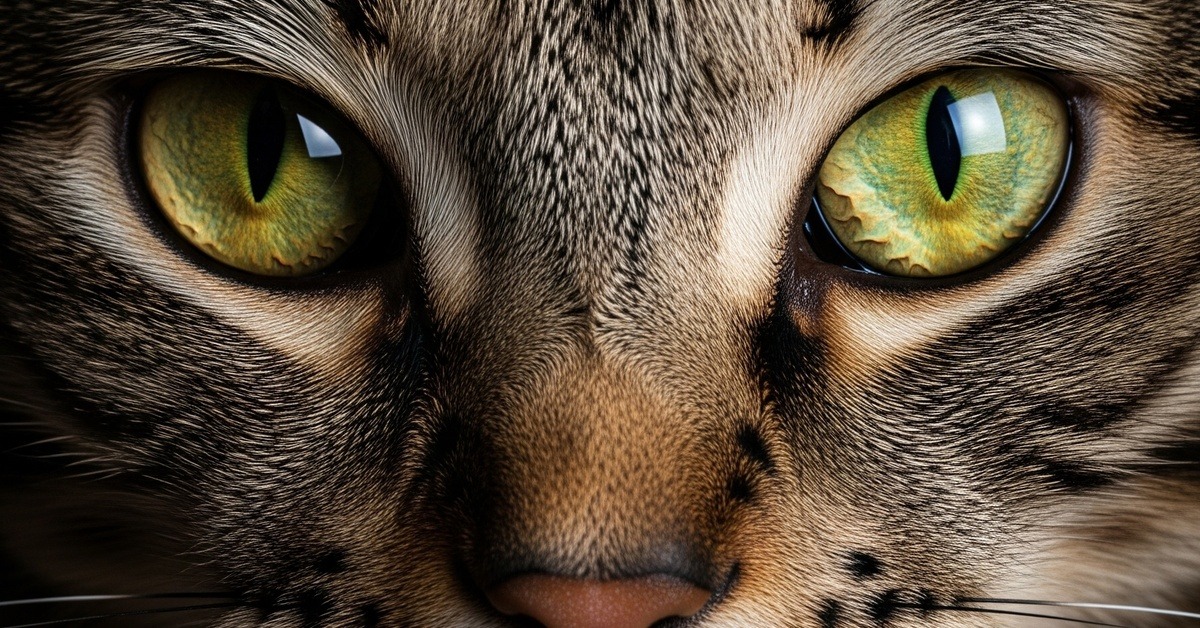
The overlaps go deeper than hunting mechanics. Night vision? Nearly identical gene regions in both species. Both have a tapetum lucidum, that reflective layer behind the retina that makes eyes shine in the dark and provides vision roughly six times better than ours in low light. The scent-marking behavior. The slow blink as a social signal. The specific vocalizations used during hunting approach — all of it maps across species with remarkable consistency.
What’s different is scale and equipment. A tiger’s roar requires specialized larynx structures. Your cat purrs instead. But the emotional trigger behind both? The communication drive? Researchers believe it’s essentially the same code running on different hardware.
The slow blink is the one that gets people. Most cat owners interpret it as affection. Ethologists who study wild felids recognize it as a non-threat signal used across the entire cat family — it’s a shared language that actually works on lions.
By the Numbers
- 95.6% — domestic cats and tigers, confirmed in Warren et al.’s 2014 genome study published in PNAS
- Domestic cats share roughly 90% of their genome with lions and leopards. The entire Panthera genus is genetically closer than most people realize.
- A domestic cat’s brain structure is 90% similar to a human’s — more comparable than a dog’s brain to ours, according to comparative neurology studies
- 10,000 years of living alongside humans. The genome shows far less domestication-related change than any other common pet.
- Domestic cats use the same jaw grip to carry prey that leopards use to carry kills up trees — bite angle and neck positioning are biomechanically identical
- The gene sequence controlling whisker sensitivity is nearly identical to that in tigers. Both use whiskers to detect air pressure changes caused by prey movement.
What This Actually Changes
The cat DNA tiger connection isn’t just trivia. It reframes the entire relationship between humans and domestic cats.
We’ve spent thousands of years assuming we domesticated them — shaped them, softened them, made them safe. But the genome shows something different. An animal that arrived on its own terms, stayed because the arrangement suited it, and kept every biological tool it came with.
That 4.4% separating a house cat from a tiger? Mostly size regulation. Some social flexibility. The rest is tiger.
It changes how we understand behavior. It changes what we can realistically expect from cats. And honestly — it changes how we should feel when one of them actually chooses to sit with us. It’s not domestication. It’s a decision made by something very old and very capable, deciding that today, right now, your couch is the most interesting hunting ground available.
The animal on your lap is running software that’s millions of years old, tested against real predators in real ecosystems, and barely updated since the beginning. It eats from a bowl. It tolerates the vet. It purrs when you scratch behind its ears.
But underneath all of that, the code is identical to what stalks through tall grass on another continent. If this keeps you up at night, there’s more at this-amazing-world.com — and the next story is even stranger.
Frequently Asked Questions
Q: How similar are domestic cats and tigers genetically?
Approximately 95.6% of their DNA is identical, base pair for base pair, confirmed in Wes Warren et al.’s 2014 PNAS genome study after the domestic cat genome was sequenced at Washington University in 2013. Domestic cats also share roughly 90% of their genome with lions and leopards. The fundamental predator architecture — neural circuitry for stalking, sensory wiring for night vision, and jaw mechanics for killing prey — is preserved in your house cat. Size is controlled by a different set of genes, and temperament has only minor variation.
Q: Why are cats so different from dogs in terms of domestication?
Most domesticated animals — dogs, cows, sheep — were selectively bred over generations to suppress wild instincts and reinforce human-friendly traits. Cats basically domesticated themselves: they moved toward human grain stores because rodents did, humans tolerated them because they were useful, and the genetic pressure to fundamentally change never really arrived. Dogs diverged from wolves so dramatically that some researchers consider them a different behavioral species. Cats never updated the foundation. After roughly 10,000 years alongside humans, they show far less domestication-related change than any other common pet.
Q: Do indoor cats still have hunting instincts?
Yes, fully intact. Studies on well-fed indoor domestic cats show they still hunt — not because they are hungry, but because the neural reward system for hunting is entirely separate from hunger in felids. A tiger hunts because it needs to eat, but it wants to hunt because of an older, deeper drive coded into the species millions of years ago. Your cat knocking a hair tie off the bathroom counter at 3am is running that same ancient subroutine. The prey is different; the drive is identical.
Q: What other traits do cats share with tigers?
Both species possess a tapetum lucidum — a reflective layer behind the retina that makes eyes shine in the dark and provides night vision roughly six times better than human vision. Scent-marking behavior, the slow blink as a non-threat social signal, specific vocalizations during hunting approach, whisker sensitivity used to detect air pressure changes from prey — all map across species with remarkable consistency. A domestic cat’s jaw grip when carrying prey is biomechanically identical to a leopard carrying kills up trees: same bite angle, same neck positioning.
Illustrations are AI-generated. Article fact-checked and human-edited. Our editorial standards.