Dung Beetle Facts: The Insect Guided by the Milky Way
From rolling balls under the Milky Way to saving U.S. ranchers $380 million a year, dung beetles are the planet's strangest and most useful cleaners.
Read More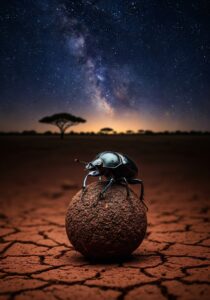
From rolling balls under the Milky Way to saving U.S. ranchers $380 million a year, dung beetles are the planet's strangest and most useful cleaners.
Read More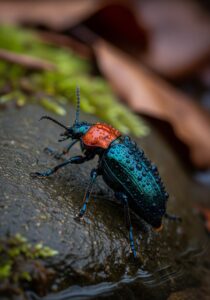
The bombardier beetle mixes hydroquinone and hydrogen peroxide inside an armoured chamber and fires a near-boiling, pulsed spray — a defence so good it can work from inside a toad's stomach.
Read More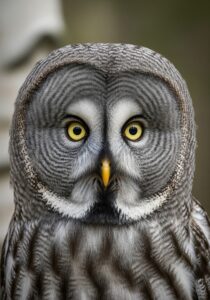
Tube-shaped eyes, three eyelids, and a 270° neck swivel — the real science behind how owls see, and the popular 'night vision' claim that almost every article gets wrong.
Read More
Hummingbird wing speed is misquoted everywhere. Here are the real beat-per-second figures, sorted by species and behavior, with the high-speed-camera science behind them.
Read More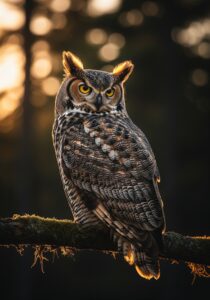
Owls don't really spin their heads 360°. The truth — 270° of rotation, 14 cervical vertebrae, and four Johns Hopkins-identified vascular adaptations — is actually stranger and more interesting.
Read More
How a 3-gram bird crosses 500 miles of open water without stopping — the metabolic engineering behind hummingbird migration, an honest look at the route debate, and when to expect them in your yard in 2026.
Read More
On a Tuesday morning in Elkmont, Alabama, a two-and-a-half-year-old Bloodhound named Ludivine slipped outside for a bathroom break — and ended up running 13.1 miles to finish seventh overall in a local half marathon, earning a medal, the top female spot, and a story nobody saw coming. Her owner doesn't even run.
Read More
Velvet worms fire glue jets at 5 m/s and can lock prey down in under a second — but they are completely harmless to people. Here's the real biology behind the slime cannon.
Read More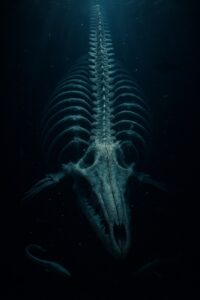
A whale dies. Its body sinks for hours through cold darkness until it hits the seafloor — and then something extraordinary happens. What follows isn't decay. It's the birth of an entire ecosystem that can last 100 years, run on toxic gas, and host creatures science only just discovered. Welcome to the most fascinating event in the deep ocean.
Read More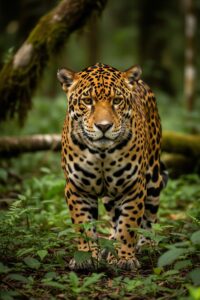
A 2024 national census put the jaguar population in Mexico at 5,326 — the highest confirmed count in decades and nearly 30% above the 2010 figure. The recovery wasn't an accident. It came from protection corridors, camera traps, DNA from scat, and Indigenous communities turning their lands into buffer zones for the Americas' largest cat.
Read More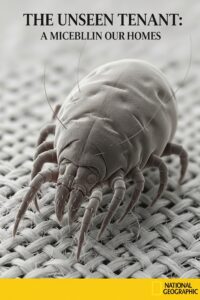
Roughly two million dust mites can share a single mattress with you tonight. They engineer their survival around one thing: moisture from your body. A 2005 Kingston University study found a fix that costs nothing and contradicts everything your parents told you about tidiness. Leave the bed unmade.
Read More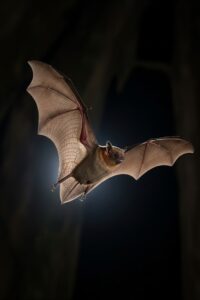
Flying squirrels glide. Sugar gliders drift. But bats actually fly — and it all comes down to what is technically a very weird hand. Stretched between freakishly elongated finger bones is a membrane that took 50 million years to perfect. The result? The fastest self-powered flight ever recorded in any animal, and nearly 1,400 species quietly holding entire ecosystems together.
Read More