The Berry That Kills and Cures: Deadly Nightshade’s Double Life
Two berries of deadly nightshade belladonna will kill a child. The same plant saves lives in operating rooms every single day.
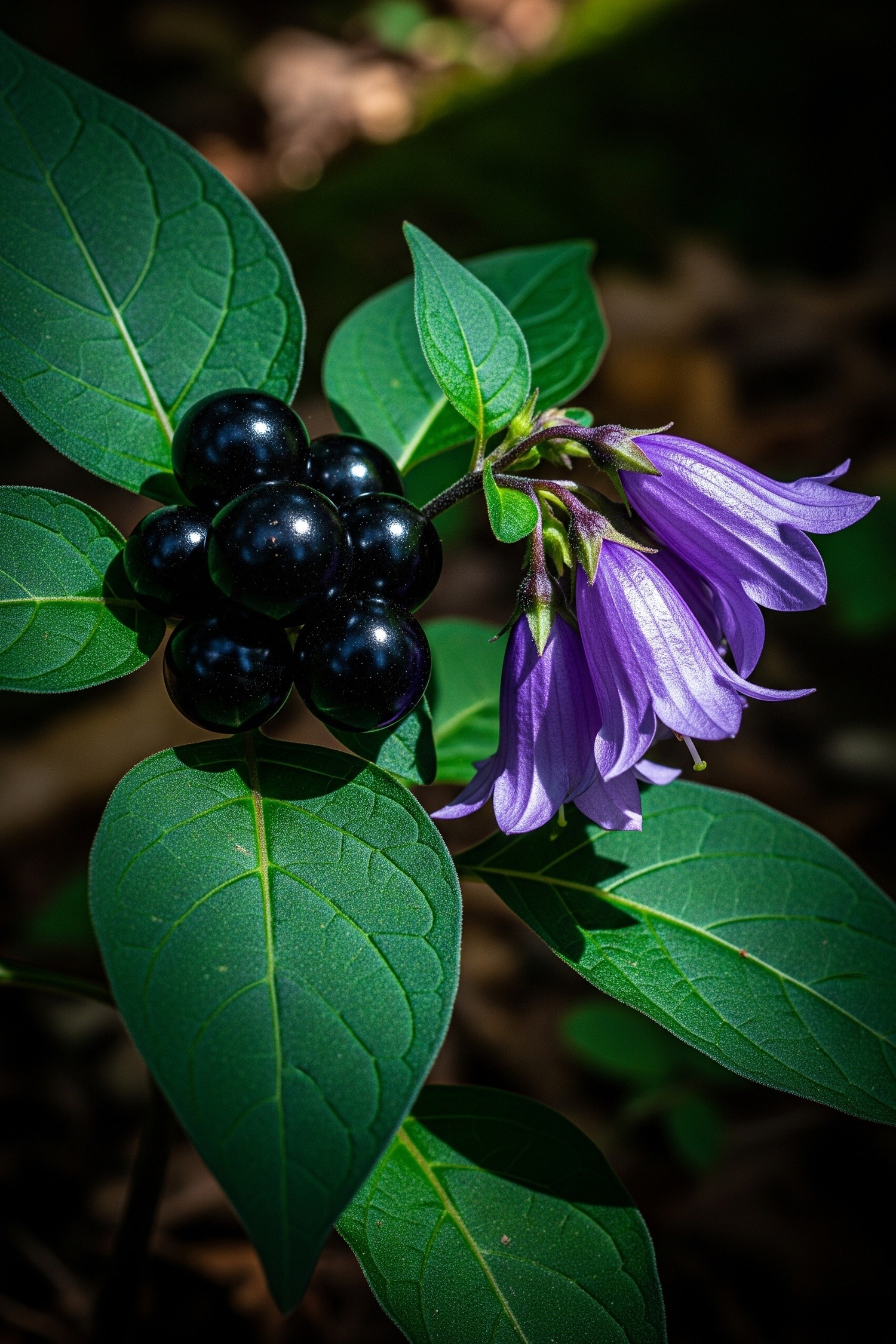
It’s not a paradox once you understand the chemistry — but getting there means accepting something unsettling about how medicine actually works. Atropa belladonna grows wild across European roadsides like it’s nothing. Glossy black berries. Unremarkable until you understand what they contain. The alkaloids inside — atropine and scopolamine — are among the most studied compounds in pharmacology, and also among the most lethal in amounts you could hide under a fingernail. Humans have been walking the line between poison and cure for two thousand years. Sometimes falling.
Key Facts
- Just 2 to 5 belladonna berries can be lethal for a child, while the berries taste sweet, which is why children eat them.
- Belladonna’s alkaloids atropine and scopolamine work by blocking acetylcholine, disrupting heart rate, saliva, pupil size, and other involuntary functions.
- Atropine has been on the World Health Organization’s Model List of Essential Medicines since 1977, one of fewer than 500 designated drugs.
- The name belladonna means beautiful woman in Italian, from Renaissance women dripping the juice into their eyes to dilate their pupils around 1500.
- Scopolamine motion-sickness patches deliver roughly 1 microgram per hour, about one-millionth of the toxic dose.
In short: The plant deadly nightshade belladonna is both lethal and lifesaving: just 2 to 5 berries can kill a child, yet its alkaloid atropine has been on the WHO Essential Medicines list since 1977. Atropine and scopolamine block acetylcholine, causing chaos in poisoning but healing in tiny doses, treating bradycardia and motion sickness.
How Deadly Nightshade Belladonna Hijacks Your Body
Block acetylcholine and everything stops working right.
That’s what atropine and scopolamine do. Acetylcholine is the neurotransmitter keeping your heart beating, your saliva flowing, your pupils narrow. It’s running every involuntary function you don’t think about. Cut it off hard enough and your body goes into chaos — racing pulse, dry mouth so complete you can’t swallow, hallucinations so vivid they feel more real than waking, the inability to sweat while your core temperature climbs, convulsions, coma. The pharmacologist John Daly spent his career mapping out how plant alkaloids disrupt neural pathways, and belladonna’s mechanism is still considered textbook toxicology. But here’s what matters: in tiny, controlled amounts, that same disruption becomes healing.
The paradox isn’t theoretical.
It’s in every berry.
Renaissance Women Poisoned Themselves for Beauty
It is 1500 in Venice. A woman takes belladonna juice — extracted from berries her neighbor grows in a garden two blocks away — and drops it directly into her eyes.
The atropine dilates her pupils dramatically. Her eyes go wide and luminous. This is what beauty looks like right now, in this moment, in this city. The name comes straight from this practice: bella donna means beautiful woman in Italian. She knows her vision will blur. She does it anyway. For years sometimes. Every time her pupils shrink back to normal, she does it again.
Prolonged use causes permanent eye damage. Systemic toxicity builds in her body — we don’t know the long-term costs because Renaissance Venice didn’t keep medical records on cosmetic poisoning. But she keeps doing it because the alternative is being unmarked by current beauty standards.
Beauty has always demanded a price. This one was poison.
You can read the full documented history of these practices on belladonna’s Wikipedia entry, which catalogs centuries of cultural and medical use — some intentional, most accidental, all of it shaping how we understand the plant today.
The Greek Fate Who Gave the Plant Its Name
The genus name Atropa wasn’t poetic. It was a warning.
Atropos was the eldest Fate — the one holding shears, cutting the thread of life when someone’s time ended. The other two Fates spun and measured. She cut. Ancient herbalists who named this plant weren’t being clever. They were being direct: this plant kills, the thread ends here, don’t make mistakes.
That level of cultural clarity persists because the danger was never secret.
From Poison to the WHO’s Essential Medicines List
Atropine — extracted and synthesized from belladonna — now sits on the World Health Organization’s List of Essential Medicines. Fewer than 500 drugs have that designation. Atropine has held it since 1977.
It treats bradycardia. It reduces secretions before surgery. And critically, it’s the frontline treatment for nerve agent poisoning. Soldiers carry atropine auto-injectors. It counteracts the exact mechanism that nerve agents exploit — the same acetylcholine disruption that makes belladonna poisoning so terrifying, except this time controlled, measured, lifesaving.
Scopolamine is the other story. Motion sickness patches. Anesthesia. That last fact kept me reading for another hour — the compound that causes hallucinations vivid enough to feel like you’re flying is also sitting behind someone’s ear right now in a microgram dose, preventing nausea on a ferry.
One molecule. Two completely different outcomes depending on concentration.
That’s the entire story of belladonna.
Crime Scenes, Witches, and Wartime Poison
Belladonna has one of the darkest historical resumes of any plant on earth. Credibly linked to poisonings from ancient Rome through Victorian England, where it competed with arsenic as the domestic poisoner’s weapon of choice.
The plant grows wild across Europe. Not exotic. Not rare. Roadside and woodland-adjacent, the kind of thing you’d walk past without noticing.
Medieval witchcraft traditions used it in “flying ointments” — rubbed into skin to induce hallucinations so vivid practitioners believed they were genuinely traveling. Whether those flight experiences were chemical or cultural is debated. The fact that it’s plausible tells you everything about how well-understood belladonna’s power was.
According to some historical accounts, Macbeth’s army used belladonna-laced whisky to incapacitate an invading Danish force during a supposed truce. Myth or history? Debated. But the scenario wouldn’t surprise anyone who understands the plant’s potency.
Before modern anesthesia, surgeons needed patients unconscious. Enter the “soporific sponge” — belladonna mixed with henbane and mandrake, soaked into cloth, held under the patient’s nose. Crude. Dangerous. Occasionally fatal. But it worked often enough that medieval practitioners kept using it, kept improving it, kept people alive through surgery despite everything. You can explore more of this history at this-amazing-world.com, where the deeper you look into medicine’s past, the stranger it gets.
By the Numbers
- 2–5 berries. That’s lethal for a child.
- Atropine has been on the WHO Model List of Essential Medicines since 1977 — one of fewer than 500 globally indispensable drugs, updated nearly five decades straight.
- Scopolamine patches deliver roughly 1 microgram per hour. One-millionth of the toxic dose. Microdosing chemistry changed everything about how we think of pharmacology.
- World War I soldiers were already being treated with atropine for chemical weapons exposure — a compound extracted from a European roadside plant being used to save lives in trench warfare.
Field Notes
- The berries taste sweet. This is why children eat them. The plant doesn’t taste like death.
- When your optometrist dilates your eyes for an exam, they’re using atropine — a direct chemical descendant of what Renaissance women dripped into their eyes for beauty centuries ago.
- Belladonna belongs to Solanaceae — the family that also includes tomatoes, potatoes, peppers, eggplant. The deadliest plant in the English hedgerow is a close relative of your pasta sauce.
Why This Plant Still Matters Right Now
Deadly nightshade belladonna isn’t historical. The alkaloids are actively researched in neurology, psychiatry, emergency medicine. Atropine remains critical in nerve agent antidote kits carried by military and emergency responders worldwide.
Organophosphate poisoning from agricultural pesticides kills tens of thousands annually in developing countries. Atropine is often the only treatment available — cheap enough, stable enough, to store in rural clinics that can’t access sophisticated pharmaceuticals. The plant that dressed medieval murder scenes and Renaissance vanity tables is keeping farmworkers alive in 2024 after accidental pesticide exposure.
Poison and cure aren’t opposites. They’re the same molecule at different concentrations.
That’s not metaphor. That’s literal chemistry. And it’s true of dozens of compounds we call medicine today — compounds lethal at slightly higher doses, healing at precisely measured ones.
Someone had to get the dose wrong first. Had to watch what happened. Had to experiment despite the risks. Belladonna killed enough people that we learned what it could cure. It’s brutal knowledge — but it’s how we learn.
The most important medicines often come from the most lethal plants. And the only way to know what they can cure is to survive getting the dosage wrong. If this keeps you up at night wondering about the stranger corners of medical history, there’s more at this-amazing-world.com. The next one is even weirder.
Frequently Asked Questions
Q: How many belladonna berries are deadly?
As few as 2 to 5 berries can be lethal for a child. Part of the danger is that the glossy black berries of deadly nightshade taste sweet, which is exactly why children eat them; the plant does not taste like death. Atropa belladonna grows wild across European roadsides and woodland edges, so it is not exotic or rare. The lethal alkaloids, atropine and scopolamine, are potent in amounts you could hide under a fingernail.
Q: How can belladonna be both a poison and a medicine?
It comes down to concentration. Belladonna’s alkaloids atropine and scopolamine block acetylcholine, the neurotransmitter controlling involuntary functions like heartbeat, saliva, and pupil size. In large amounts that disruption causes racing pulse, hallucinations, convulsions, and coma. In tiny, controlled doses the same mechanism becomes healing: atropine treats slow heart rate and nerve agent poisoning, while scopolamine, at roughly 1 microgram per hour in a patch, prevents motion sickness. One molecule produces two opposite outcomes depending on dose.
Q: Why is belladonna called deadly nightshade and beautiful woman?
The name belladonna means beautiful woman in Italian, from a Renaissance practice around 1500 in Venice where women dripped belladonna juice into their eyes. The atropine dilated their pupils dramatically, creating wide, luminous eyes considered beautiful, despite blurred vision and eventual permanent eye damage. The genus name Atropa is darker: it comes from Atropos, the eldest Greek Fate who cut the thread of life, a direct warning from ancient herbalists that the plant kills.
Illustrations are AI-generated. Article fact-checked and human-edited. Our editorial standards.