The Dolphins Who Brought Gifts to an Empty Shore
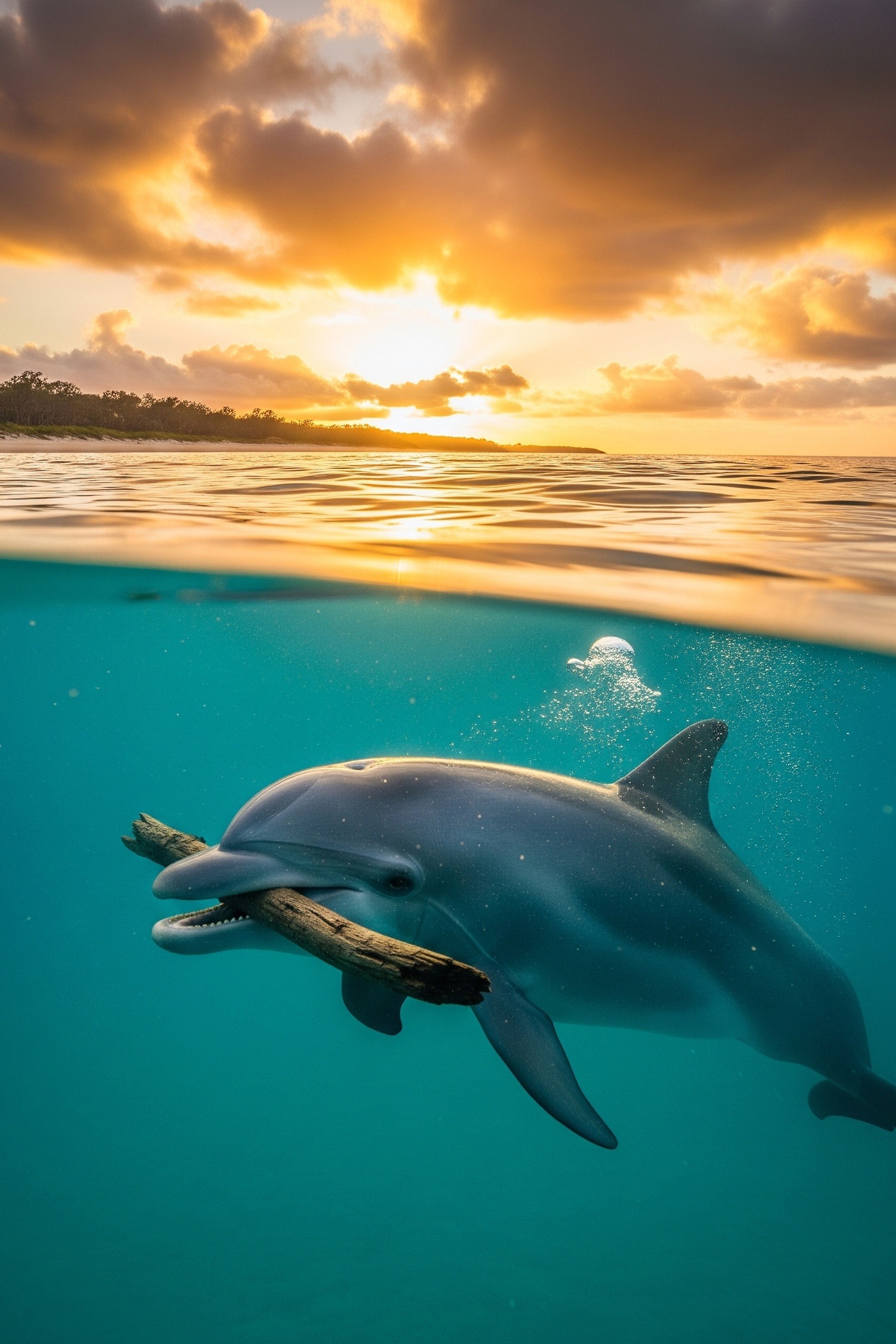
During the 2020 lockdowns, a dolphin named Mystique started leaving things on an empty beach. Shells. Driftwood. Plastic bottles. Nobody was there to receive them, which is exactly what makes it strange.
In Tin Can Bay, Queensland, wild humpback dolphins had spent years showing up when tourists arrived. Then everyone vanished overnight. What happened next wasn’t dramatic or violent or even obviously sad. It was just… persistent.
Key Facts
- Wild humpback dolphins in Tin Can Bay, Queensland, increased object-presentation behavior on an empty beach during the 2020 lockdowns when tourists vanished.
- At least four dolphins engaged in object presentation during the 2020 lockdown period, documented by marine biologist Olivia De Boer.
- A dolphin named Mystique has been documented at the Tin Can Bay site for over a decade and could live up to 40 years.
- Tin Can Bay dolphins have been hand-fed by humans since the 1990s, building structured social routines across multiple generations.
- The species Sousa sahulensis (Australian snubfin / humpback dolphin) was not formally recognized as distinct until 2014.
In short: When tourists vanished during the 2020 lockdowns, wild humpback dolphins at Tin Can Bay, Queensland, kept arriving at an empty shore. The fact that dolphins brought gifts (shells, driftwood, bottles) to a beach with no one to receive them suggests these animals had woven humans into their social lives over more than a decade.
Why humpback dolphins gifts surprised researchers worldwide
The dolphins — Sousa sahulensis, the Australian snubfin — are already known for being socially complex. But bringing objects to humans? That wasn’t common. Not in 2019, anyway.
Then 2020 happened. Marine biologist Olivia De Boer, watching from Tin Can Bay, documented a sudden spike in these gift-giving events. Multiple dolphins. Multiple objects. Repeated trips to the shoreline. You can read more about Sousa sahulensis on Wikipedia.
The weird part? Mystique had been documented at this site for over a decade. She’d done this occasionally when people were there. Now she was doing it for an audience of exactly zero.
Scientists have a term for what dolphins bring to shore — “object presentation.” It’s technically accurate and emotionally meaningless. Watching video of Mystique nudging driftwood toward a vacant shoreline feels like something the term doesn’t quite capture.
What an empty beach reveals about animal bonds
Here’s what made researchers actually stop and think about this: these dolphins hadn’t just tolerated humans. They’d built routines around them. Social routines. The kind that take years to establish.
And when those routines broke — completely, suddenly, with no warning — something shifted in how the dolphins behaved.
Researchers call it a social disruption response. It’s documented in elephants. In primates. In animals whose lives are structured around specific relationships. When those relationships disappear, the behavior changes. Measurably. Visibly.
The dolphins didn’t stop eating. They didn’t beach themselves or show acute distress. They just kept arriving with offerings, depositing them like presents no one had asked for. That last fact kept me reading for another hour.
The conservation problem nobody wants to admit
Wildlife management has always taught us the same lesson: an animal comfortable near humans is a vulnerable animal. Dependent. Stripped of wildness. It’s a fair warning.
But these dolphins flip that entire framework.
Turns out the relationship wasn’t what anyone assumed. The dolphins weren’t just tolerating humans. They were choosing them. Incorporating humans into the structure of their social lives. Year after year after year.
Which raises the obvious question: what do you owe an animal like that?
What’s your ethical responsibility to a wild creature that has, over a decade, woven your species into its identity?
The provisioning problem — and why it matters
Tin Can Bay dolphins have been hand-fed by humans since the 1990s. That’s not accidental contact. That’s structured, regulated, intentional relationship-building. Multiple generations of dolphins have grown up knowing humans as a reliable social presence — not as a food source (they hunt fine on their own) but as something else. Something social.
That changes everything about how we should interpret what happened during lockdown.
- At least four dolphins engaged in object presentation during the 2020 lockdown period.
- Mystique has spent roughly a quarter of her 40-year potential lifespan in regular human contact at this specific beach.
- Object gifting in dolphins shows up in other contexts too — bottlenose dolphins present items during courtship displays, suggesting the behavior connects to something deeper than play or curiosity.
- The Sousa sahulensis species itself wasn’t formally recognized as distinct until 2014 — meaning science barely knew what to call these animals before researchers started documenting this behavior in them.
What the dolphins actually did
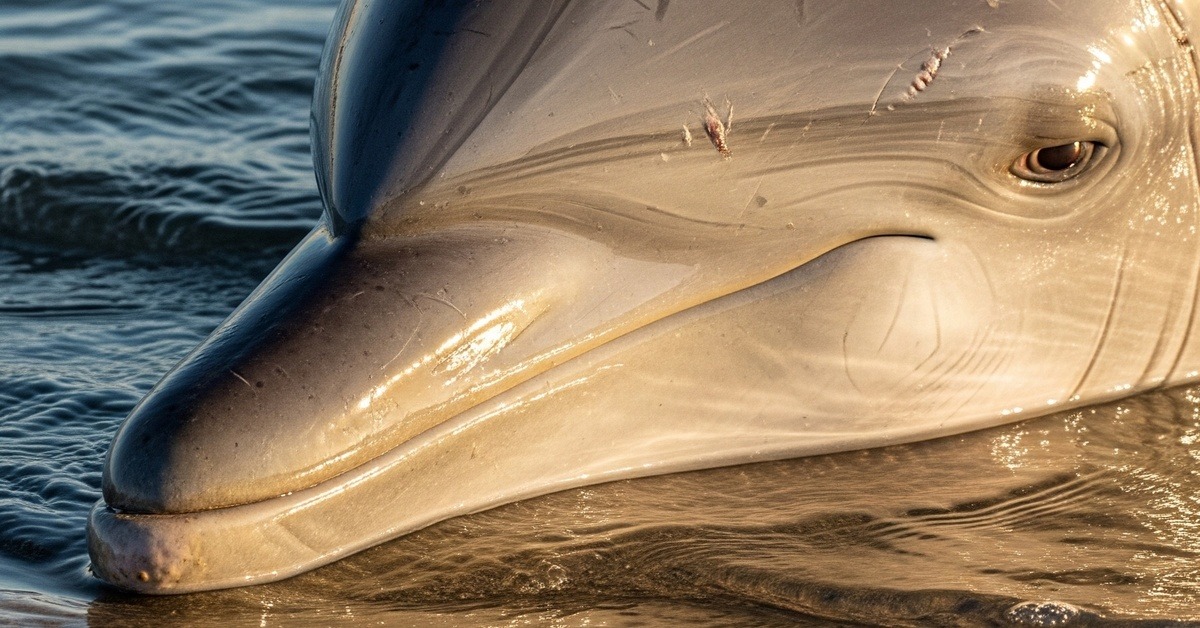
They didn’t wait passively for humans to return. They didn’t just accept the absence. They brought things. Repeatedly. Consistently. As if that had worked before, so why wouldn’t it work now?
That’s not instinct on autopilot. That’s not random. That’s pattern-recognition. That’s intention.
And intention changes how we should think about what we owe animals we’ve invited into relationship with us.
The uncomfortable conversation we’re not having
We talk constantly about what humans take from wildlife — habitat, freedom, population safety. We spend almost no time thinking about what happens when we give wild animals something they didn’t ask for. Connection. Reliable presence. A daily arrival at a shore that smells like people.
Then we remove it.
The dolphins at Tin Can Bay didn’t lose their survival capacity. They’re wild animals. They hunt. They forage. They absolutely don’t need us.
But they’d apparently decided they wanted us.
And when we disappeared, they tried to get us back using the only method they knew — the same behavior that had reliably created connection before. Show up. Bring something. Establish contact.
The shore stayed empty.
They kept coming anyway.
If there’s something that keeps you up at night about a creature doing that — trying that hard to reach something that’s already gone — check out this-amazing-world.com. There’s more there. Stranger things. The kind of stories about wild animals and human connection that make you question what “wild” even means anymore.
Frequently Asked Questions
Q: Where did dolphins bring gifts to an empty beach?
This behavior was documented at Tin Can Bay in Queensland, Australia, during the 2020 lockdowns when tourists stopped visiting. Wild humpback dolphins (Sousa sahulensis), which had been hand-fed by humans at the site since the 1990s, were observed bringing objects such as shells, driftwood, and plastic bottles to the shoreline even though no people were there to receive them. Marine biologist Olivia De Boer documented the spike in these events.
Q: Why do dolphins bring objects to humans?
Scientists call this behavior object presentation. Researchers documented at least four Tin Can Bay dolphins doing it during the 2020 lockdown period. It also appears in other contexts: bottlenose dolphins present items during courtship displays, suggesting the behavior connects to something deeper than play. At Tin Can Bay, where dolphins had built social routines around humans since the 1990s, the gift-giving appeared to be an attempt to re-establish lost contact after people disappeared.
Q: What is object presentation in dolphins?
Object presentation is the scientific term for when a dolphin brings an item, such as a shell or piece of driftwood, and offers it, often toward humans. The behavior was newly notable at Tin Can Bay in 2020 because the dolphins continued doing it for an audience of zero. Mystique, a dolphin documented at the site for over a decade, had previously done this occasionally when people were present, but during lockdown she repeated the trips to a vacant shoreline.
Illustrations are AI-generated. Article fact-checked and human-edited. Our editorial standards.