Do Elephants Grieve? The Science Behind Their Death Rituals
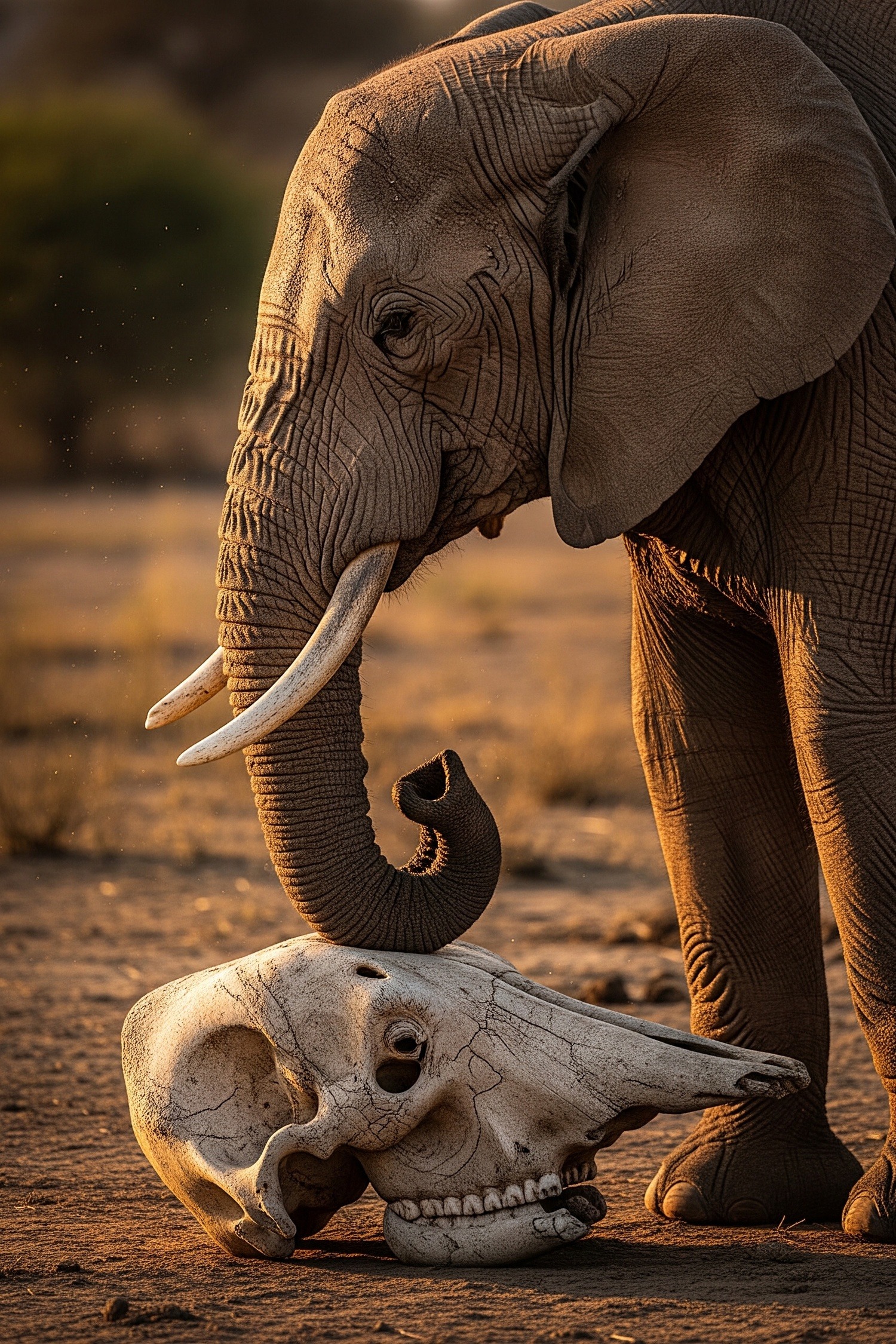
Across Amboseli National Park in Kenya, a matriarch stands over bones that aren’t hers. For decades, wildlife biologists have quietly documented elephant grief behavior — the trunk reaching down, the skull turning slowly, the return to the same spot years later. What stops researchers cold isn’t that this happens. It’s the weight of what it means: that something we’ve treated as uniquely human — the ritual of mourning, the return to the dead — appears to be far more widespread than we’ve been willing to admit. Elephant grief behavior is real, measurable, and forcing us to completely rethink what we thought we knew about consciousness and loss.
The behavior looks purposeful. It looks like mourning. But the question science is now forced to ask isn’t whether it happens. It’s what it says about an entire category of feeling we’ve long assumed was ours alone — and what that implies for how we should treat the animals who carry it.
Key Facts
- Dr. Cynthia Moss founded the Amboseli Elephant Research Project in Kenya in 1972, the longest continuous study of wild elephants in the world.
- Elephants have approximately 2,000 olfactory receptor genes, roughly three times the number found in humans (University of Tokyo, 2014).
- A 2010 University of Sussex study by Dr. Karen McComb confirmed elephants respond selectively and preferentially to elephant bones over other species’ remains.
- Elephants have been recorded returning to the same death sites up to 12 years after the original loss, based on Amboseli tracking data.
- African elephant populations declined by approximately 30% between 2007 and 2014, an estimated loss of 144,000 individuals (Great Elephant Census, 2016).
In short: Documented since 1972 by the Amboseli Elephant Research Project, elephant grief behavior includes touching the bones of the dead, covering bodies, and returning to death sites up to 12 years later. A 2010 University of Sussex study confirmed elephants respond selectively to elephant remains over other species, challenging the idea that mourning is uniquely human.
When Elephants Stop: Documented Grief Behavior in the Wild
Dr. Cynthia Moss founded the Amboseli Elephant Research Project in 1972. What began as the longest continuous study of wild elephants in the world has become something far more: a fifty-year archive of behavior that scientists are still struggling to explain. Moss and her colleagues have observed elephants pausing at the bones of deceased individuals, using their trunks to handle skulls and tusks, and returning to death sites years after an animal’s passing. One documented case tracked members of a matriarch’s family returning to her remains more than a decade after her death.
They touched her bones first.
They spent longer at her skull than at the skulls of elephants they had no known relationship with. This wasn’t random behavior. It was selective, and it was consistent. The Amboseli Elephant Research Project has now accumulated over fifty years of behavioral data, and the death-related observations represent some of its most striking findings. The specificity matters enormously. Elephants don’t approach just any bones — field teams have placed the remains of lions, buffalo, and other species near elephant paths, and the animals largely ignore them. Place the bones of an elephant in the same location, and everything changes. Trunks extend. The group slows. Individuals that never knew the deceased still pause.
What exactly triggers this response? Researchers at the University of Sussex published controlled findings in 2016 confirming that elephants respond selectively and preferentially to elephant bones over other species’ remains — even when controlling for familiarity. The skull and tusks drew the most sustained attention. The response wasn’t fear. It wasn’t curiosity about a novel object. It was something more calibrated than either of those things, and nobody in the field was prepared for how deliberately targeted it would turn out to be.
Memory, Biology, and the Weight of Loss
Grief isn’t just emotion. It’s architecture — neural and biological systems that, in animals experiencing them, operate with profound structural depth. Elephants possess three times more olfactory receptor genes than humans, which gives them a chemosensory world of extraordinary richness. They can identify individual animals by scent alone. When a herd member dies, the smell of that animal doesn’t simply disappear. It fades, transforms, persists in bone and soil and the memory of those who knew it.
This is where elephant grief behavior becomes something stranger and more profound than a simple emotional display. It’s a biological relationship with the dead — and here’s the thing: it mirrors what we see in human attachment systems. Grief isn’t a single event but a process of encountering absence, again and again, until the body adjusts. This connects to something researchers studying human emotional resilience have explored: the idea that tenderness and strength can live side by side in the same grieving body.
Elephant brains contain a highly developed hippocampus — the region most associated with memory consolidation and spatial navigation. Studies from the Elephant Voices Project, led by Dr. Joyce Poole, have documented individual elephants displaying what researchers describe as temporal displacement: responding to stimuli associated with a dead individual years after the loss occurred.
In 2011, Poole recorded a matriarch named Echo’s family members showing visible agitation and altered movement patterns in the weeks following her death. The family’s cohesion changed. Their ranging behavior shifted. These weren’t short-term disruptions — they persisted for months. The youngest calves learn from this. They mirror their mothers and aunts, touching what the elders touch, pausing where the elders pause. Grief, in elephant society, appears to be transmitted. It’s social, instructional, and deeply embedded in how a herd understands its own past.
Burial, Covering, and the Ritual Dimension
Does ritual require intention? The word itself is contested in animal behavior research — it carries implications of symbolic thought that scientists are reluctant to assign without extraordinary evidence. But documented elephant behavior keeps pushing against that reluctance. Multiple field researchers, including teams from Save the Elephants and the Kenya Wildlife Service, have observed elephants covering the bodies of deceased herd members with soil, leaves, and broken branches. This behavior has been recorded in both African and Asian elephant populations. It isn’t universal. It isn’t performed for every death. But when it is performed, it happens deliberately, with what field notes consistently describe as unusual care and slowness. National Geographic’s reporting on elephant mourning has documented several of these cases, drawing on footage and researcher testimony that’s difficult to explain away as coincidence.
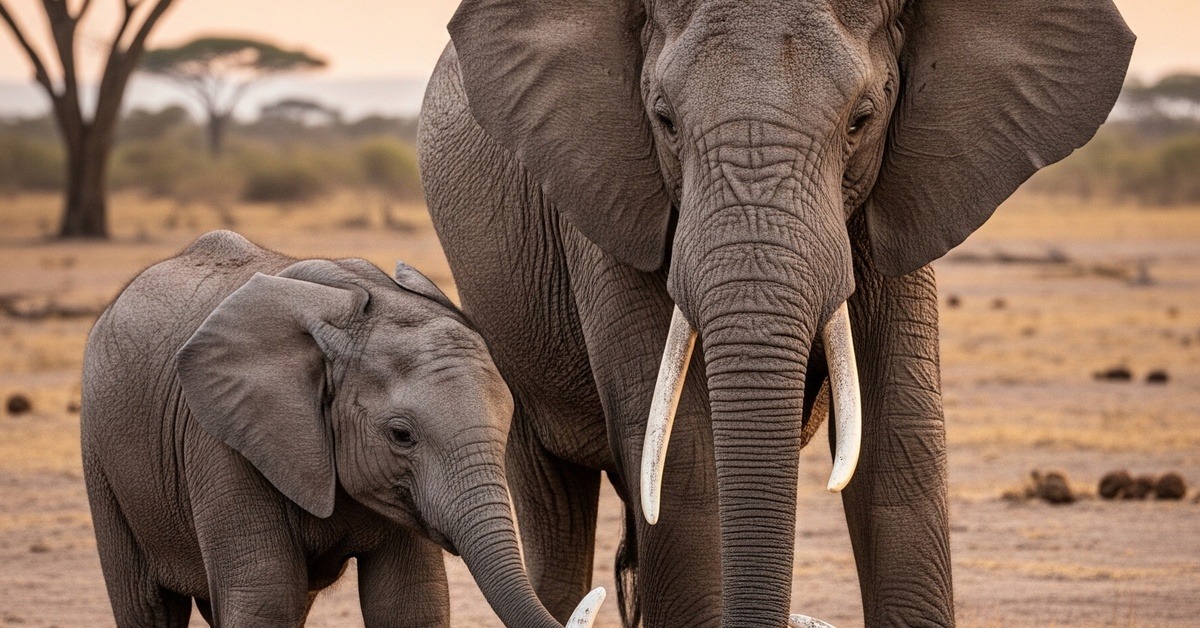
The most striking cases involve calves. Mothers have been observed standing over the bodies of their dead young for days. They attempt to rouse them. In several documented cases, mothers carried deceased calves — held in the trunk, balanced against the body — for extended distances before finally leaving them.
The psychological and neurological cost would be enormous. It’s not adaptive in any immediate sense. It serves no survival function. Which is precisely what makes it so hard to look away from. But I’ve watched researchers who’ve spent decades with these herds struggle to articulate what they’re seeing — because watching a species grieve for no adaptive reason, purely because the dead were their own, changes something in how you understand what loss means at all.
Dr. Karen McComb at the University of Sussex has argued that this cluster of behaviors — covering, revisiting, prolonged contact with the dead — represents something functionally analogous to what humans would recognize as mourning. That’s a careful, scientific framing. What it describes, in plain terms, is devastating.
What Elephant Grief Behavior Tells Us About Our Own Assumptions
For most of recorded history, human cultures have treated death ritual as a defining mark of our species. Burial practices date back at least 100,000 years in Homo sapiens. Evidence from Neanderthal sites suggests deliberate interment may predate anatomically modern humans entirely. We’ve used this as a boundary — a line between us and everything else.
Elephants are dismantling that line. A 2021 paper published in the journal Proceedings of the Royal Society B reviewed behavioral evidence from elephants, chimpanzees, dolphins, and corvids, concluding that death-related awareness and responsive behavior are far more widespread across the animal kingdom than previously acknowledged. The study noted that elephants showed the most sustained and complex death-response behaviors of any non-human species examined — including extended vigils, revisitation of remains, and apparent transmission of mourning behavior to younger group members. The implications for how we define consciousness, self-awareness, and emotional complexity are significant.
And they are also deeply inconvenient for centuries of assumed human exceptionalism. If elephants grieve — if they carry the dead in their memory, return to their bones, teach their calves which remains deserve stillness — then the threshold for grief, for ritual, for something resembling the sacred, sits much lower in the tree of life than we’ve been comfortable admitting. This isn’t a curiosity. It’s a reorientation.
Researchers at the Elephant Crisis Fund and various conservation NGOs have begun incorporating behavioral complexity data into advocacy frameworks. If an animal grieves, it has something to lose. That changes the legal and moral calculus of how we treat them — and how urgently we respond to the forces that are killing them. The data left no room for alternative interpretation: animals capable of sustained mourning deserve legal and ethical protections that go far beyond what we currently offer.
How It Unfolded
- 1972 — Cynthia Moss establishes the Amboseli Elephant Research Project in Kenya, beginning the first systematic long-term study of wild elephant social behavior, including death-related responses.
- 1988 — Joyce Poole and Cynthia Moss publish landmark research documenting elephant responses to the death of herd members, introducing the concept of elephant mourning to mainstream scientific literature.
- 2010 — Dr. Karen McComb and colleagues at the University of Sussex publish controlled experimental findings confirming that elephants respond selectively and preferentially to the bones of deceased elephants over other species’ remains.
- 2021 — A multi-species review in Proceedings of the Royal Society B formally positions elephants as demonstrating the most complex death-awareness behaviors of any non-human animal yet studied.
By the Numbers
- Elephants have approximately 2,000 olfactory receptor genes — roughly three times the number found in humans (University of Tokyo, 2014).
- More than 2,500 individual elephants have been tracked across more than 50 years of continuous field observation by the Amboseli Elephant Research Project.
- African elephant populations declined by approximately 30% between 2007 and 2014 — an estimated loss of 144,000 individuals (Great Elephant Census, 2016).
- Elephants have been recorded returning to the same death sites up to 12 years after the original loss, based on GPS and behavioral tracking data from Amboseli.
- The elephant brain weighs approximately 5 kilograms — the largest of any land animal — with a highly developed hippocampus associated with long-term memory and emotional processing.
Field Notes
- In 2013, Amboseli researchers observed a matriarch named Qoral spending over four hours with the bones of a deceased herd member she had no documented relationship with — moving slowly, using her trunk to lift and rotate individual bones, before finally walking away. The behavior was unprompted and unrelated to any identifiable environmental trigger.
- Elephants have been observed picking up and carrying the ivory tusks of deceased individuals — sometimes for significant distances. Researchers aren’t certain why, but it doesn’t appear to be foraging or tool use. It looks, by most accounts, like taking something to remember.
- Asian elephants have been documented standing vigil over deceased calves for up to 72 hours, in behavior that mirrors documented vigil behaviors in several corvid species — birds with brains a fraction the size of an elephant’s, suggesting that death-awareness may be less about brain architecture than social complexity.
- Researchers still can’t determine whether elephants have any concept of their own mortality — whether they understand, as they stand over bones, that those bones could one day be theirs. That question may be permanently beyond the reach of behavioral science.
Frequently Asked Questions
Q: Is elephant grief behavior actually grief, or are scientists projecting human emotions onto animals?
Anthropomorphism is a legitimate scientific caution — it’s a real risk in behavioral research. But the documented behaviors are specific, selective, and persistent in ways that rule out simple curiosity or fear responses. Researchers like Dr. Karen McComb at the University of Sussex have used controlled experiments to confirm that elephants respond differently to elephant remains than to other objects. Whether the internal experience matches what humans call grief is unknowable. The behavioral signature is not.
Q: Do all elephants exhibit mourning behavior, or only certain individuals?
Not all individuals display the same intensity of response, and behavior varies between herds, family units, and individuals. Matriarchs and adult females tend to show the most sustained responses. Calves appear to learn the behavior from observing adults — suggesting it’s partly cultural, transmitted through social learning rather than purely instinctive. This means herds with more experienced elders may display more elaborate death-related behaviors than younger, disrupted populations. Poaching, which disproportionately removes older females, may be eroding this behavioral inheritance in affected herds.
Q: What’s the most common misconception about elephant grief behavior?
That it only occurs between closely related individuals. Field data suggests otherwise. Elephants have been observed showing sustained interest in the bones of animals they had no documented family connection to — sometimes individuals from entirely different herds. The response appears to be triggered by species recognition as much as personal relationship. This makes elephant grief behavior broader and stranger than a simple family-bonding explanation can accommodate.
Editor’s Take — Alex Morgan
What unsettles me most about this research isn’t the footage of elephants standing over bones — it’s the calves. Small, watchful, learning which remains deserve stillness before they’ve ever lost anyone themselves. That’s not instinct. That’s culture. And if a six-year-old elephant can be taught to mourn correctly, we have to ask what else we’ve been teaching ourselves to ignore about the emotional lives happening all around us. The science here isn’t soft. It’s some of the most methodologically rigorous behavioral research conducted on any species. We just haven’t been ready to believe what it shows us.
Grief was supposed to be the thing that separated us. The ritual. The return to the grave. The touching of what remains. But a matriarch in Amboseli doesn’t know she’s dismantling a philosophical boundary. She just knows, in whatever way a 6,000-kilogram animal knows anything, that this place matters. That these bones deserve a moment. The youngest calf at her side watches, and learns, and will one day stand in her own stillness over her own set of bones. What do we do with the knowledge that we’re not the only ones who remember the dead?
Illustrations are AI-generated. Article fact-checked and human-edited. Our editorial standards.