The Red Slime on Hippos Is Actually Natural Armor
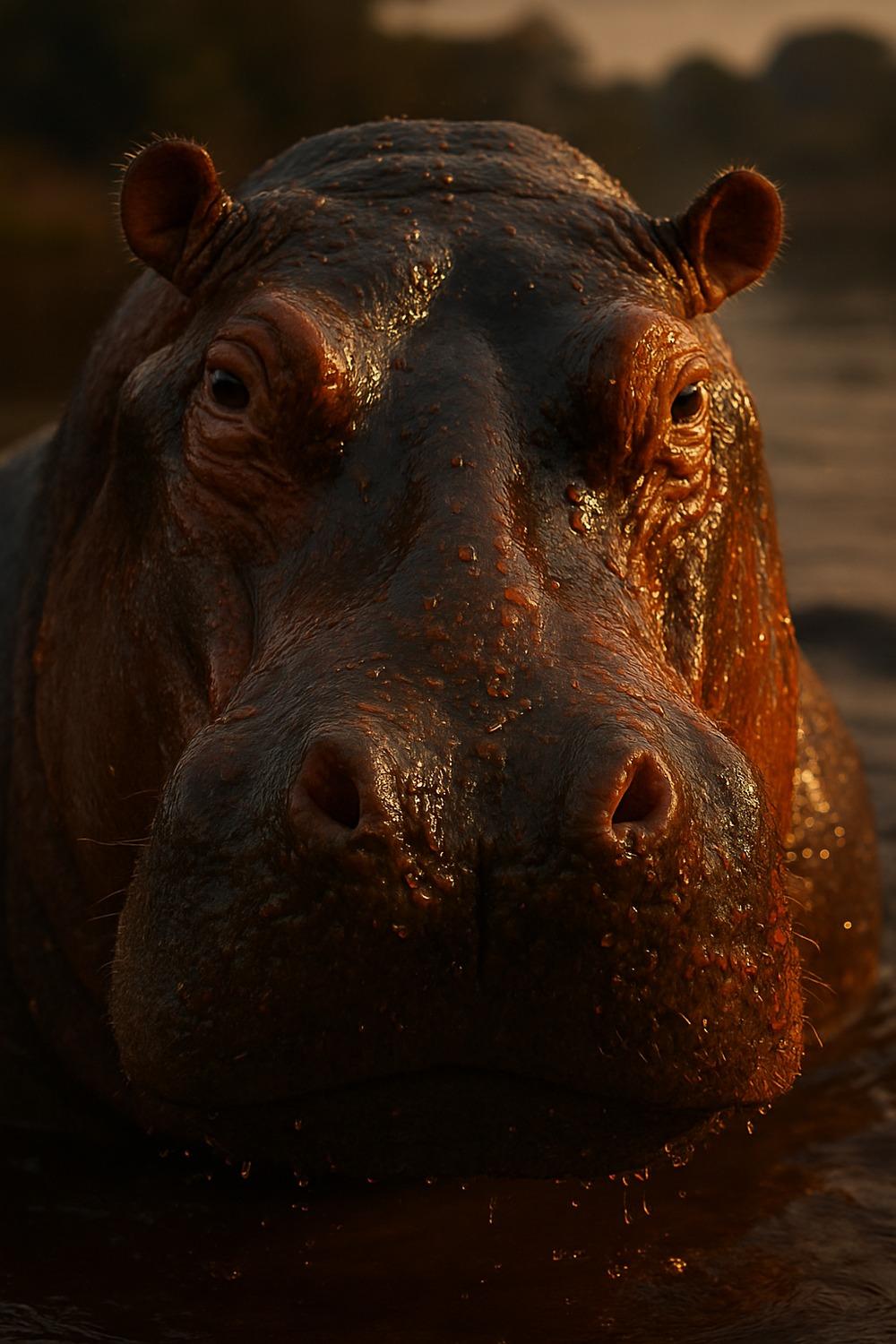
Walk past a hippo at the zoo and you’ll see what looks like blood seeping from its skin. Turns out it’s neither blood nor sweat, and it’s basically a two-in-one sunscreen and antibiotic that we’ve been trying to replicate in labs for decades without much luck.
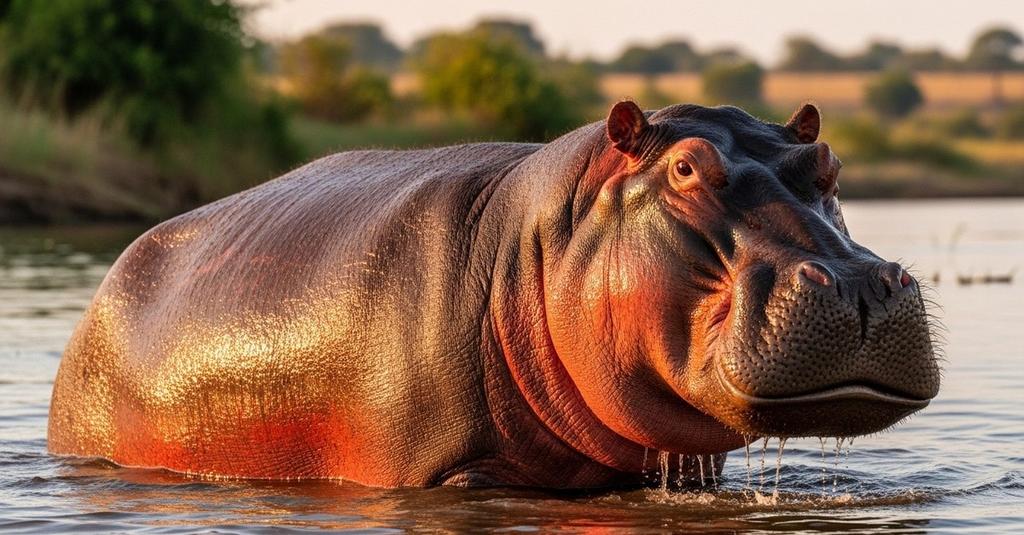
The reddish sheen shows up the moment a hippo climbs out of the water. Most people assume it’s an infection, or an injury, or something wrong with the animal. But here’s what’s actually happening: a hippo is actively manufacturing a chemical compound that does things our best skincare products still can’t pull off together. And we didn’t even understand what we were looking at until 2004.
Key Facts
- Hipposudoric acid (red) and norcarmine acid (orange) were chemically isolated in 2004 by biochemist Kimiko Hashimoto at Kyoto Pharmaceutical University.
- A mature bull hippo weighs around 3,500 kilograms, with a skull alone exceeding 200 kilograms.
- A hippo’s bite force has been measured at over 8,000 newtons, with canine teeth reaching up to 50 centimeters long.
- Hippos diverged from a common cetacean ancestor (whales and dolphins) around 55 million years ago.
- The IUCN classifies hippos as Vulnerable, with roughly 115,000-130,000 individuals remaining after a 7-20% decline over the past decade.
In short: Hippo blood sweat is neither blood nor sweat: it is hipposudoric and norcarmine acid, a secretion that acts as both natural sunscreen and antibiotic. Identified in 2004, it kills bacteria like Pseudomonas aeruginosa while absorbing UV radiation, a dual function our best skincare products still cannot replicate.
What hippo blood sweat actually does to skin
Biochemist Kimiko Hashimoto at Kyoto Pharmaceutical University finally cracked the code in 2004 — identified the two pigments giving hippos that rusty-orange glow: hipposudoric acid (the red one) and norcarmine acid (the orange). They come from specialized skin glands that exist nowhere else in the animal kingdom. Not sweat glands. Not oil glands. Something the hippo evolved that’s purely its own invention.
Here’s where it gets weird.
The secretion starts clear. Colorless. Then you watch it change color in real time — deepening to orange-red within minutes of hitting air. It’s a chemical reaction literally happening on the animal’s skin while you stand there watching. Most zoo visitors have no idea what they’re seeing.
The fluid itself absorbs UV radiation across a broad spectrum. Natural sunscreen. But that’s not the interesting part.
Nature built a better sunscreen before we did
The same pigments that block sunlight also kill bacteria. Pseudomonas aeruginosa. Klebsiella pneumoniae. Pathogens that absolutely love the muddy, bacteria-rich water where hippos spend their entire lives. So a hippo isn’t just wearing sun protection — it’s wearing an antibiotic coating at the same time, synthesized from scratch by its own body, applied fresh every single day. You can read more about the chemistry on Wikipedia.
We’ve spent billions trying to make products that do one of those things well. The hippo does both. Automatically. For 55 million years straight.
Dermatologists studying this have started pointing to hippo secretions as a template for human skincare. That last fact kept me reading for another hour — the idea that evolution already solved a problem we thought was cutting-edge, and we’re just now noticing.
The body beneath the slime is even more alarming
A mature bull hippo weighs around 3,500 kilograms.
That’s a compact car and a half of solid bone, layered muscle, and skeletal architecture designed specifically for collision. Their skulls alone tip the scale at over 200 kilograms. Most wildlife researchers will tell you — if you ask them which African land mammal kills more humans than any other — they point to this one.
Those curved, yellowed canine teeth reach up to 50 centimeters long. They’re self-sharpening because the upper and lower jaw grind them against each other constantly. A hippo’s bite force has been measured at over 8,000 newtons. That’s not theoretical. That’s “capable of biting through a wooden boat in a single motion” kind of power. They’ve actually done it.
You can read more about why that reputation is earned at this-amazing-world.com.
Slow on the outside, fast when it counts
The public image is deeply misleading. For up to 16 hours a day, hippos are submerged and almost completely motionless, thermoregulating in the water. They look sedentary. Peaceful, even. Push one. Startle one. Come between a mother and her calf.
The image evaporates.
On land, hippos can hit around 30 km/h over short distances — faster than most humans can sprint at maximum effort, wearing that protective chemical coating the whole time. In water, they don’t even swim. They bounce. They push off the riverbed in this almost slow-motion gallop, using buoyancy to become weightless. Nostrils close. Ears seal. They can hold their breath for five minutes.
They sleep underwater without surfacing to full consciousness.
Scientists still don’t fully understand that last mechanism.
Their role in the ecosystem surprises even ecologists
Here’s the thing: hippos aren’t just impressive animals. They’re load-bearing infrastructure. Every evening they walk from water to land. Every morning they return. And with them comes nutrient transfer — their dung feeds fish populations that entire communities depend on for food. Remove hippos from a river system and fish biomass collapses measurably downstream within a few years. They’re not decorative.
The paths hippos cut through vegetation as they move between grazing land and water reshape how floodwaters distribute across landscapes. African river systems have essentially evolved around their presence for millions of years. Some researchers now classify hippos as a keystone species — the entire ecosystem depends on them more than the raw numbers suggest.
By the Numbers
- Hipposudoric acid wasn’t chemically isolated until 2004 by Hashimoto et al. — over a century after researchers first spotted the reddish secretion and started guessing about what it was.
- Hippo jaw opens to approximately 150 degrees, generating a bite force over 8,000 newtons in adult males.
- Hippos share their closest living relatives with whales and dolphins. They diverged from a common cetacean ancestor around 55 million years ago.
- Despite weighing up to 3,500 kg, a hippo can sustain speeds of 30 km/h on land and can hold its breath for up to five minutes underwater while sleeping without waking.
- Hippo populations have declined an estimated 7–20% over the past decade. The IUCN classifies them as Vulnerable. Roughly 115,000–130,000 individuals remain in the wild.
Field Notes
- Nocturnal grazers that cover up to 10 kilometers per night.
- The reddish secretion flows continuously from birth — a newborn hippo is already producing its own sunscreen and antimicrobial coating from its first hours of life.
- Hippos communicate using a sound that travels above and below the water surface simultaneously. This amphibious call lets them signal to hippos both in the water and on land at once. Almost no other animal does this.
Why this animal deserves a second look
The hippo sits at this strange intersection where biological innovation meets ecological importance, and we keep underselling both. The hippo blood sweat is actively being researched by dermatologists, pharmacologists, and materials scientists. The antimicrobial properties could eventually inform wound-care treatments. The UV-absorption chemistry could shift how we formulate next-generation sunscreens. And none of it requires harming a single animal — just understanding what evolution figured out millions of years ago and working backward.
But hippo populations are dropping. Habitat loss. Drought. Poaching for ivory teeth. Human-wildlife conflict pushing numbers down across their range. An animal that maintains river ecosystems, protects fish populations, and walks around wearing biological armor is quietly disappearing. Most people outside Africa still think of hippos as cartoon characters. Slow, grumpy obstacles. Not what they actually are.
The red slime isn’t a wound. It’s a solution — one that took nature 55 million years to perfect and science about a century just to start explaining. Hippos are strange, powerful, chemically sophisticated, ecologically essential. They’re also running out of time. Sometimes the most underestimated things are hiding the most remarkable engineering. If you want more of this, there’s more at this-amazing-world.com. The next one is even stranger.
Frequently Asked Questions
Q: What is hippo blood sweat actually made of?
Hippo blood sweat is neither blood nor sweat. It contains two pigments, hipposudoric acid (red) and norcarmine acid (orange), identified in 2004 by biochemist Kimiko Hashimoto at Kyoto Pharmaceutical University. These come from specialized skin glands found nowhere else in the animal kingdom. The secretion starts colorless and deepens to orange-red within minutes of hitting air, a chemical reaction happening in real time on the animal’s skin.
Q: Does hippo secretion really work as both sunscreen and antibiotic?
Yes. The same pigments that give hippos their rusty glow absorb UV radiation across a broad spectrum while also killing bacteria such as Pseudomonas aeruginosa and Klebsiella pneumoniae, pathogens common in the muddy water where hippos live. A hippo wears sun protection and antimicrobial coating simultaneously, synthesized by its own body and applied fresh every day, for 55 million years of evolution.
Q: How dangerous is a hippo compared to other African animals?
Most wildlife researchers identify the hippo as the African land mammal that kills more humans than any other. An adult bull weighs around 3,500 kilograms, its bite force exceeds 8,000 newtons, and its self-sharpening canine teeth reach up to 50 centimeters. On land hippos can hit roughly 30 km/h over short distances, faster than most humans can sprint at maximum effort.
Q: Why are hippos considered a keystone species?
Hippos transfer nutrients between water and land. Every evening they walk to graze and every morning return, and their dung feeds fish populations that entire communities depend on for food. Remove hippos from a river system and fish biomass collapses measurably downstream within a few years. The paths they cut through vegetation also reshape how floodwaters distribute across landscapes, which is why ecologists classify them as load-bearing ecosystem infrastructure.
Illustrations are AI-generated. Article fact-checked and human-edited. Our editorial standards.