The $975M Deal for Khaby Lame’s Brand That Imploded
In 2023, a holding company announced it was buying the human behind 160 million TikTok followers for $975 million. Here’s what happened next: almost nothing. And then: everything.
The deal was real. The number was real. Rich Sparkle Holdings acquiring Step Distinctive Limited — the corporate shell around Khaby Lame — was announced with all the trappings of a genuine blockbuster transaction. All-stock. Nearly a billion dollars. The kind of headline that makes business journalists sit up and start typing. Except that within weeks, the stock that gave the deal its value had evaporated. Over 90% gone. Trading halted. Brokerages restricting access. And somewhere in that wreckage was a TikTok creator whose brand is literally built on pointing out when things are overcomplicated.
Key Facts
- In 2023, Rich Sparkle Holdings announced an all-stock acquisition of Khaby Lame’s company valued at $975 million.
- Khaby Lame surpassed 160 million TikTok followers in 2022, briefly becoming the platform’s most-followed creator.
- Rich Sparkle’s stock fell over 90% from its peak, prompting brokerages to halt trading.
- No cash was transferred in the deal; the entire valuation depended on the share price holding.
- Goldman Sachs valued the global creator economy at roughly $250 billion in 2023.
In short: The Khaby Lame deal collapse saw Rich Sparkle Holdings announce a $975 million all-stock acquisition of the TikTok star’s company in 2023. Because no cash changed hands, the valuation hinged entirely on the share price, which then fell over 90%, triggering trading halts. The paper deal imploded while Khaby kept posting.
Who Is Khaby Lame, Actually
Born in Senegal, raised in Italy, he became the most-followed person on TikTok by doing almost nothing. According to Wikipedia, Khaby briefly overtook Charli D’Amelio for the top spot in 2022 — a milestone that, on paper, made him the most valuable creator on the planet. His entire format is one continuous, wordless reaction: watch someone struggle with opening a jar using seventeen steps, then watch Khaby stare directly at the camera with both palms open. What’s the normal way? Implied. What’s hilarious? Everything else.
No dialogue. No special effects. No language barrier. A creator who’d built an audience that transcended English, geography, and the usual structural limits of internet fame.
And then someone decided that this phenomenon — this human and his silence and his 160 million followers — was worth $975 million as a corporate acquisition.
The Deal That Made No Sense
Here’s the mechanics: Rich Sparkle Holdings announced it would acquire Step Distinctive Limited using its own stock as payment. Company A buys Company B using shares instead of cash. Simple enough on paper. Except this is where things get strange, because the entire stated value of the deal — the $975 million headline number — depended entirely on those shares maintaining their price. If the stock collapsed, the deal’s stated worth collapsed with it. There was no cash backstop. No floor. Just paper, held together by confidence.
Rich Sparkle’s stock didn’t hold.
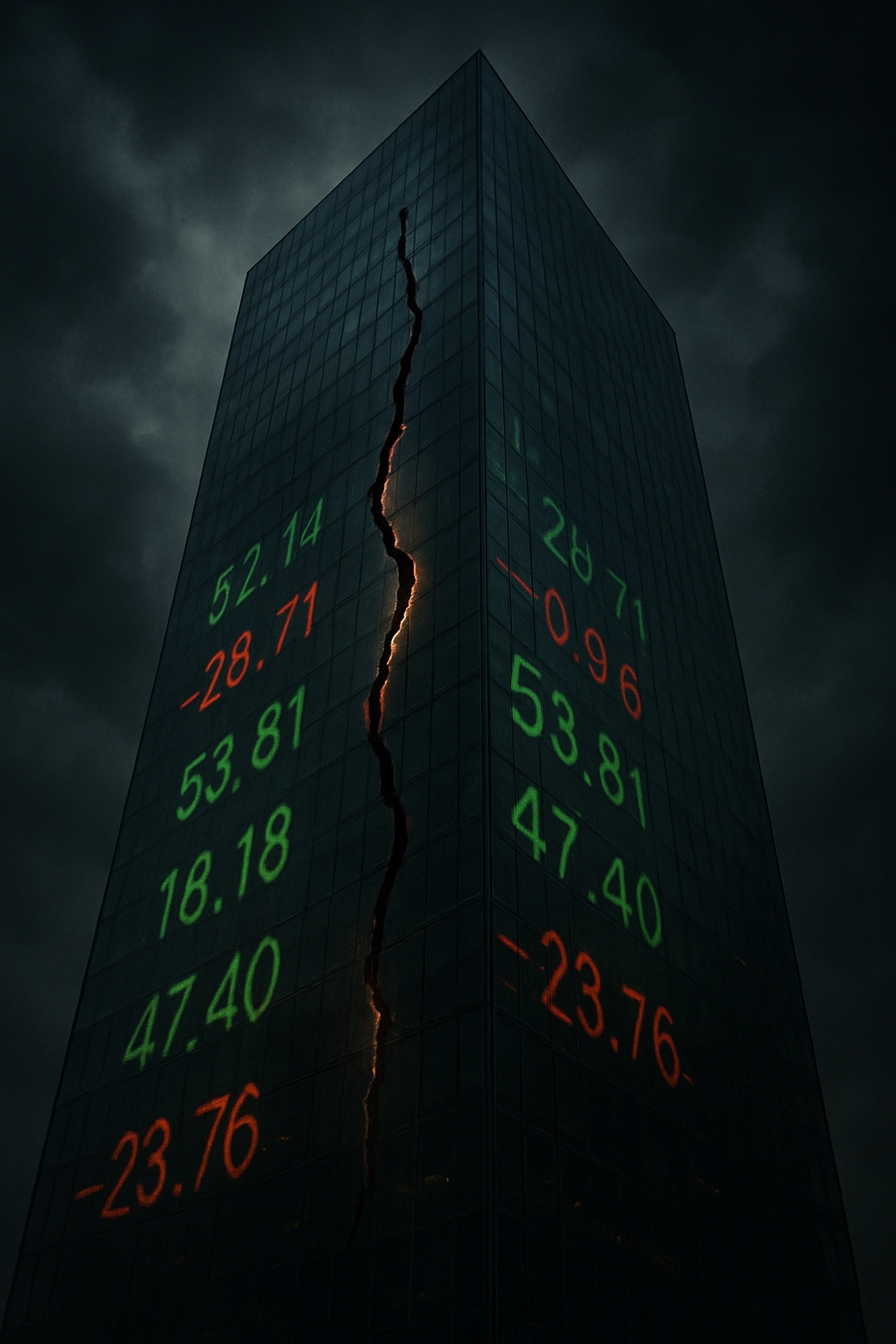
It fell 90%. Then brokerages started restricting trades. Major financial institutions began stepping back from the whole thing. The deal that was supposed to be a landmark moment in creator-economy finance became something else entirely — a case study in how not to structure anything involving a human being’s future income and a volatile stock price.
Khaby Lame, whose entire brand is built on mocking unnecessary complexity, had just become the silent centerpiece of one of the most unnecessarily complex financial structures the creator economy has produced.
That last part kept me reading for another hour.
What Actually Happened to the Valuation
The moment the acquisition got announced, Rich Sparkle’s stock jumped. Standard behavior for any company making a big acquisition announcement — a shot of speculative excitement, some short-term momentum. But what followed wasn’t a normal correction. It was a wipeout. 90% destruction of value. Trading halts. The kind of price action that tends to trigger SEC inquiries and a lot of uncomfortable questions about who knew what and exactly when they knew it.
- $975 million was the announced deal value in 2023, structured entirely in stock.
- Over 90% stock collapse from peak — severe enough that brokerages halted trading to prevent further free-fall.
- 160 million+ followers on TikTok as of 2022, making Khaby the most-followed account on the platform.
- $0 in cash actually transferred as part of the acquisition, which meant the entire valuation was contingent on share price stability — and nothing about this stock was stable.
- The creator economy valued at roughly $250 billion globally in 2023 according to Goldman Sachs, yet Khaby’s deal price exceeded what most individual creator companies sell for by an order of magnitude.
The Uncomfortable Question Underneath All This
How do you actually value a human?
Traditional finance has built-in tools for this stuff. Companies have factories, patents, revenue histories, audited balance sheets. A creator has followers. Engagement rates. The personal brand and the willingness to keep showing up and being that brand. Subtract the person, and what’s left? Sometimes not much at all. The $975 million wasn’t really about Step Distinctive Limited’s assets — it was a bet on Khaby. His face. His silence. His continued existence as a working creator with the ability to maintain relevance and pull audiences.
You can’t securitize charisma.
You can’t audit a vibe. But somehow, every few years, Wall Street-adjacent companies keep trying. Media economist Douglas McCabe has argued that creator-linked brands represent an entirely new asset class — one that markets fundamentally don’t know how to price yet. The Khaby deal proved his point by being the worst possible version of itself: a valuation so disconnected from any actual business fundamentals that it collapsed almost immediately upon making contact with actual market conditions.
Some Additional Context
- Khaby’s silent-reaction format works in every single language simultaneously — there’s no translation lag, no cultural specificity that needs decoding. This is a significant part of why his follower growth outpaced most English-language creators by such a margin.
- All-stock acquisitions of creator-linked companies are exceptionally rare in practice. Most talent deals involve some combination of cash, equity stakes, royalty structures, or milestone-based earnouts. The Rich Sparkle deal was structurally unusual before the stock price started falling.
- Creator economy valuations are notoriously difficult to standardize. A creator with 160 million followers might be valued anywhere from $50 million to $500 million depending on engagement rates, audience demographics, and whatever arbitrary metrics the acquirer is using on any given Tuesday.
Why This Actually Matters
The Khaby Lame acquisition saga isn’t really a story about one failed deal. It’s evidence of a system under stress.
The creator economy has been built on one fundamental assumption: that attention is bankable. That followers equal value. That reach equals revenue. That the right human brand can be packaged, sold, and run through traditional financial markets like any other asset. Sometimes that’s true. Sometimes a brand deal happens and everyone gets paid in actual money and it’s fine.
But the moment you attach a nine-figure number to that assumption, the seams start showing. Paper valuations aren’t the same as real money. All-stock deals only work if the stock is actually worth something. And human brands are subject to variables that quarterly earnings reports don’t typically account for — personal burnout, cultural shifts, the simple possibility that someone might decide to stop posting and retire.
Khaby Lame is still posting. His followers are still watching. His face, his hands, his look of absolute deadpan disbelief — still pulling millions of views daily. The deal imploded. The human didn’t.
The infrastructure that was supposed to capture and securitize that value? That burned. But the person remained. That’s the strange resilience at the heart of the attention economy: the paper collapses, the brand survives, and somewhere another company is probably already drafting the next billion-dollar acquisition proposal, learning nothing from any of this.
For more on how creator valuations actually work — and the ways they consistently don’t — there’s more at this-amazing-world.com.
Frequently Asked Questions
Q: What was the Khaby Lame $975 million deal?
In 2023, Rich Sparkle Holdings announced it would acquire Step Distinctive Limited, the corporate entity around TikTok star Khaby Lame, in an all-stock transaction valued at $975 million. The company paid using its own shares rather than cash, so the headline figure depended entirely on those shares holding their price. Khaby, who became TikTok’s most-followed creator with over 160 million followers in 2022, was the silent centerpiece of one of the creator economy’s most complex financial structures.
Q: Why did the Khaby Lame deal collapse?
The deal was structured entirely in stock with no cash backstop, meaning its $975 million value rested solely on Rich Sparkle’s share price remaining stable. After an initial jump on the acquisition announcement, the stock fell over 90% from its peak. Brokerages began restricting trades and major financial institutions stepped back. With no cash floor, the deal’s stated worth collapsed alongside the shares, turning a supposed landmark transaction into a cautionary case study.
Q: Did Khaby Lame actually lose money in the failed deal?
No cash was ever transferred as part of the acquisition, so the entire valuation was contingent on share price stability that never materialized. The infrastructure built to capture and securitize Khaby’s value collapsed, but Khaby himself continued posting his silent-reaction videos and retained his audience. As the article notes, the paper collapsed while the human brand survived, illustrating how creator valuations built purely on stock can evaporate without affecting the creator’s underlying career.
Q: Why are creator economy valuations so hard to price?
Traditional finance values companies using factories, patents, revenue histories, and audited balance sheets, but a creator’s worth rests on followers, engagement, and personal brand. Subtract the person and little measurable asset remains. Goldman Sachs valued the global creator economy at roughly $250 billion in 2023, yet Khaby’s $975 million price exceeded what most individual creator companies sell for by an order of magnitude. A creator with 160 million followers might be valued anywhere from $50 million to $500 million depending on metrics used.
Illustrations are AI-generated. Article fact-checked and human-edited. Our editorial standards.