Leftover Pasta Lowers Blood Sugar by 50 Percent
Something happens to the pasta in your refrigerator that has nothing to do with staleness and everything to do with molecular reconstruction. Cool leftover noodles overnight, and the starch molecules that spiked your blood glucose when fresh begin reassembling into crystalline structures your body can’t efficiently dismantle — a transformation documented in clinical data showing resistant starch pasta blood sugar response drops up to 50 percent. The same carbohydrates. Fundamentally different biology. Most people eating yesterday’s linguine have no idea they’re consuming something structurally transformed.
For decades, the conversation around pasta and blood sugar followed a narrower script: starchy carbohydrates break down fast, glucose floods the bloodstream, the body scrambles to catch up. That framing isn’t wrong.
It’s incomplete. What it leaves out is time. Specifically, what happens to pasta in the hours between the stove and your fork.
The chemistry that unfolds in a refrigerator overnight has been quietly documented in university labs for years. Most people have never heard of this transformation, let alone understood that they’ve been conducting an accidental metabolic experiment every time they reheat a container of pasta the next day.
Key Facts
- Cooling cooked pasta to refrigerator temperature (around 4 degrees Celsius) triggers starch retrogradation, forming resistant starch.
- Dr. Denise Robertson at the University of Surrey published 2014 findings showing cooled pasta reduced peak blood glucose response by up to 50% versus freshly cooked pasta.
- Researchers at the College of Chemical Sciences in Sri Lanka found in 2015 that certain cooled rice preparations cut caloric absorption by up to 60%.
- A 2023 Food Chemistry review found potato starch cooled for 24 hours contained resistant starch levels three to four times higher than freshly cooked.
- Consistent resistant starch intake measurably shifts gut bacteria toward butyrate-producing species within four to six weeks (University of Colorado, 2018-2021).
In short: When you cool cooked pasta overnight at around 4 degrees Celsius, its glucose chains reassemble into resistant starch through retrogradation. Clinical work by Dr. Denise Robertson at the University of Surrey showed this resistant starch pasta change can cut peak blood glucose response by up to 50% versus freshly cooked pasta, and reheating only partly reverses it.
How Resistant Starch Forms Inside Cooled Pasta
Heat disrupts the tightly packed crystalline structure of starch granules — a process called gelatinization. When pasta is cooked, the chains of glucose molecules that once formed compact, ordered arrangements absorb water and swell, becoming soft and easily digested. This is why freshly cooked pasta sends blood sugar climbing so predictably: the disrupted starch is almost immediately accessible to the digestive enzymes in your small intestine.
But cool that pasta down to refrigerator temperature — around 4°C — and something counterintuitive begins. The glucose chains start to reassociate, refolding into new crystalline formations in a process called retrogradation. What emerges is resistant starch — starch that, structurally speaking, has become resistant to the very enzymes that would normally break it apart. Dr. Denise Robertson at the University of Surrey published work in 2014 demonstrating that this transformation meaningfully reduces postprandial glucose response in human subjects.
What makes resistant starch genuinely unusual is that it doesn’t behave like a carbohydrate in the traditional sense — it behaves like a fiber. Because the digestive enzymes in the small intestine can’t efficiently dismantle its reformed crystalline structure, it passes largely intact into the large intestine. There, it becomes a fuel source not for you, but for your gut bacteria. It’s a prebiotic. The same meal that would have provided a sharp glucose hit in its freshly cooked form now arrives in your colon as a resource for microbial communities.
Here’s the thing: the nutritional identity of the food has shifted. Same calories on the label. Different biology at the table.
Picture the starch structure like a tangled pile of rope thrown into hot water — loose, chaotic, easy to pull apart. Cooling is the hand that recoils the rope into neat, compressed bundles. Digestive enzymes are designed to unravel loose rope. Compact bundles, they largely leave behind.
Your Gut Microbiome Gets There First
When resistant starch pasta blood sugar dynamics shift, it’s not only about what doesn’t enter your bloodstream — it’s about what does enter your colon. The downstream effect on the gut microbiome is where the story grows unexpectedly large. Fermentable fibers and resistant starches feed specific bacterial populations: Bifidobacterium longum, Lactobacillus acidophilus, Ruminococcus bromii. These species break down resistant starch through fermentation, producing short-chain fatty acids — primarily butyrate, propionate, and acetate — as metabolic byproducts.
Butyrate is the primary fuel for colonocyte cells, the cells lining your colon wall. A well-fed colon lining is a more intact one: tighter junctions between cells, reduced permeability, lower systemic inflammation. The connection between what happens in the refrigerator and what happens at the cellular level in your gut wall is remarkably direct. (And this matters more than it sounds — a permeable colon lining correlates with systemic inflammation that ripples through metabolic regulation across multiple organs.)
Between 2018 and 2021, the University of Colorado’s Center for Gut Health documented how consistent prebiotic fiber intake — including resistant starch — measurably shifts the ratio of beneficial to neutral gut bacteria within four to six weeks. The shift isn’t dramatic enough to notice without testing. But the microbial community that emerges preferentially produces butyrate over other metabolites, and higher butyrate production correlates with improved insulin sensitivity. A food decision at lunch creates a cellular outcome in a completely different organ by evening. The mechanism is systemic.
One University of Colorado dietary study participant described the protocol plainly: eat cooled carbohydrates four days a week, have your blood drawn, repeat for six weeks. No supplements. No medication changes. By week six, fasting glucose had dropped measurably. What changed wasn’t willpower.
It was the starch’s molecular architecture.
Rice, Potatoes, and the Sri Lanka Discovery
Pasta doesn’t hold a monopoly on this transformation. Researchers at the College of Chemical Sciences in Sri Lanka published findings in 2015 that drew genuine surprise from the nutrition science community. They tested multiple preparations of rice — different varieties, different cooking oils, different cooling durations — and found that specific combinations reduced caloric absorption from the rice by up to 60 percent in some preparations.
Why does cooling time matter so much? Because rice refrigerated for 12 hours before eating showed the most dramatic shift. Adding coconut oil before cooking amplified the effect. The oil appeared to interact with the starch molecules during cooling, accelerating and deepening the retrograde process. The Smithsonian Magazine covered the findings in detail, noting that the implications extended well beyond Sri Lanka — to any population where rice forms the caloric foundation of daily life.
The rice findings mattered because they confirmed universality. This isn’t a pasta quirk. It’s a starch behavior. Any starchy staple food — the kind that has fed human populations for millennia — undergoes structural change when given time to cool. The researchers in Sri Lanka weren’t investigating diabetes management or metabolic health specifically. They were studying caloric density. The blood sugar implications emerged as a secondary finding, which makes them, if anything, more credible.
They weren’t looking for a headline. The data produced one regardless.
Potatoes show the same pattern with particular clarity. A 2023 review in the journal Food Chemistry found that potato starch cooled for 24 hours contained resistant starch levels three to four times higher than freshly cooked potato starch. Serve your potato salad cold. That’s not just a preference.
It’s a structural decision with metabolic consequences.
Resistant Starch, Pasta, Blood Sugar: What the Numbers Actually Show
The 50 percent figure deserves precision. It doesn’t mean every person eating leftover pasta will see a 50 percent reduction in blood glucose spike — it means that under controlled conditions, with standardized pasta portions and measured postprandial glucose response, peak blood glucose rise was reduced by up to 50 percent compared to the same pasta eaten immediately after cooking. The study methodology matters here. Dr. Robertson’s University of Surrey work used continuous glucose monitoring in healthy adult subjects with no prior metabolic disease. Similar trials at the University of Naples in Italy published in 2016 found the result held across body types, across cooking methods, and across different pasta shapes. Pasta shape affects surface area, which affects how quickly the starch gelatinizes — thicker shapes retain slightly more resistant starch potential — but the directional finding was consistent: cooling works, and reheating doesn’t erase the benefit.
Most people assume reheating reverses the transformation. It doesn’t — not fully. The reformed crystalline starch structure is more thermally stable than the original gelatinized starch. Some resistant starch converts back to digestible starch when reheated, but a substantial fraction holds. The University of Naples trial compared four conditions: fresh pasta, cooled pasta, reheated pasta, and cooled-then-reheated pasta. Blood glucose response was lowest with cooled pasta, second lowest with cooled-then-reheated pasta — still significantly below the fresh baseline.
Day-old pasta, even warmed in a pan the next morning, delivers a meaningfully different glucose response than pasta eaten straight from the pot. The practical message is clear.
Nutritionists in Italy — a country where pasta is both culturally foundational and scientifically studied with unusual rigor — have begun incorporating this data into guidance for patients managing type 2 diabetes. Not as a replacement for medication or comprehensive dietary intervention, but as a practical, zero-cost modification that requires nothing more than a refrigerator and patience. Watching a population where carbohydrate-heavy meals have been standard for millennia begin to optimize those meals at the molecular level, you realize that the conversation has finally caught up to the chemistry.
How It Unfolded
- 1980s — Early food science literature identifies “resistant starch” as a distinct category of starch that escapes digestion in the small intestine, prompting the first formal classification.
- 2000s — Multiple European nutrition institutes begin linking dietary resistant starch intake to improved insulin sensitivity and gut microbiome diversity in longitudinal human trials.
- 2014 — Dr. Denise Robertson at the University of Surrey publishes clinical findings showing leftover pasta produces measurably lower postprandial blood glucose than freshly cooked pasta in human subjects.
- 2015 — Sri Lankan researchers at the College of Chemical Sciences publish the rice cooling study, confirming the starch retrogradation effect extends across staple carbohydrates globally and demonstrating up to 60 percent caloric reduction in specific preparations.
By the Numbers
- Up to 50% — reduction in peak blood glucose response from cooled versus freshly cooked pasta (University of Surrey, 2014)
- Up to 60% — reduction in caloric absorption from certain cooled rice preparations (College of Chemical Sciences, Sri Lanka, 2015)
- 4°C — standard refrigerator temperature at which starch retrogradation is most effective; lower temperatures slow the process
- 3–4× — the increase in resistant starch content in potato starch cooled for 24 hours compared to freshly cooked, per a 2023 Food Chemistry review
- 4–6 weeks — timeframe within which consistent resistant starch intake measurably shifts gut bacterial composition toward butyrate-producing species (University of Colorado, 2018–2021)
Field Notes
- In a 2014 BBC documentary segment featuring Dr. Robertson’s work, a journalist ate freshly cooked pasta one day and leftover pasta the next, with continuous glucose monitoring throughout. The visual difference in the glucose curves — broadcast to a general audience — generated more mainstream attention for resistant starch research than years of academic papers had managed. Sometimes public science works exactly as intended.
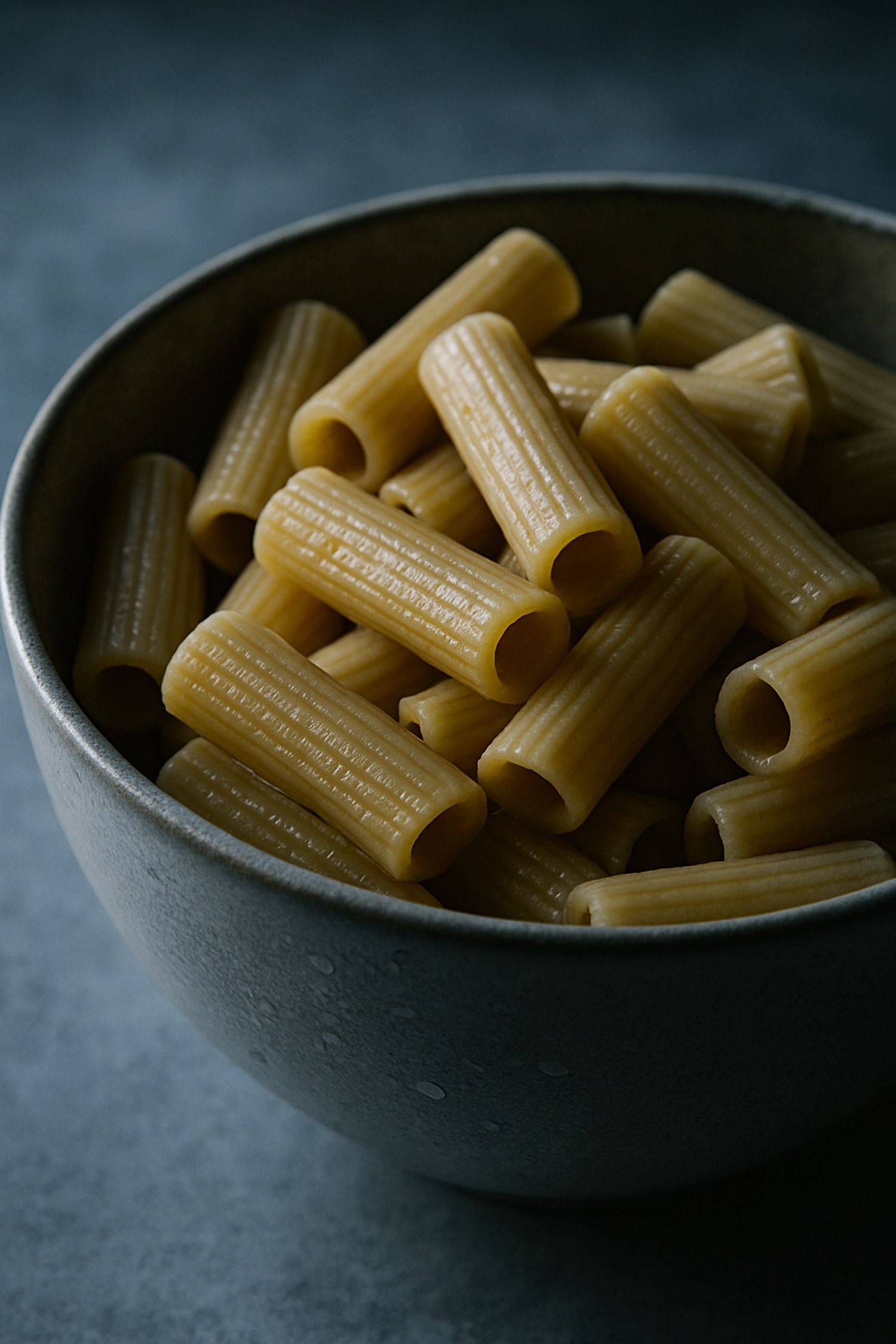
- Pasta shape genuinely affects resistant starch potential: thicker, denser pasta shapes like rigatoni or penne retain more of their reformed starch structure after cooling than thin shapes like capellini, because their smaller surface-area-to-volume ratio slows initial gelatinization and offers more protected interior starch to undergo retrogradation.
- The resistant starch in cooled food isn’t catalogued on any nutrition label — current labeling regulations in most countries don’t require or account for it, meaning the nutritional information on a pasta packet is technically accurate only for that pasta eaten immediately after cooking.
- Researchers still can’t fully predict individual glycemic response to resistant starch. Two people eating identical portions of the same cooled pasta can show meaningfully different blood glucose curves — and the reason appears to lie in gut microbiome composition, which varies so widely between individuals that it functions almost like a fingerprint. Whether you can modify your response by first changing your microbiome is an open and actively studied question.
Frequently Asked Questions
Q: Does resistant starch pasta blood sugar reduction work for people with type 2 diabetes?
The research to date has primarily involved healthy adults without diabetes, so direct clinical extrapolation requires caution. That said, the mechanism — slower starch breakdown, reduced postprandial glucose spike — is precisely the outcome diabetic management targets. A 2016 University of Naples trial did include subjects with impaired fasting glucose, and those individuals showed comparable reductions to the healthy control group. Anyone managing diabetes should discuss dietary changes with their physician before adjusting protocols based on this data.
Q: How long does pasta need to cool before the resistant starch forms?
Meaningful retrogradation begins within the first two hours of cooling, but the process continues and deepens over 12 to 24 hours. Overnight refrigeration — typically eight to twelve hours — produces the most consistently documented glucose-lowering effect in clinical trials. Cooling on a countertop at room temperature also initiates the process, but refrigerator temperatures (around 4°C) appear to drive more complete crystalline restructuring of the starch molecules. A few hours at room temperature followed by overnight refrigeration is the practical optimum for most households.
Q: Doesn’t reheating pasta destroy the resistant starch benefit?
This is the most common misconception about resistant starch pasta blood sugar research. Reheating partially — but not fully — reverses the retrogradation. The reformed crystalline starch is thermally more stable than people assume. Clinical trials from the University of Surrey and the University of Naples both tested reheated leftover pasta specifically, and found blood glucose response remained significantly lower than freshly cooked pasta, even after reheating. You lose some of the benefit compared to eating it cold, but a substantial portion of the resistant starch survives typical reheating temperatures (60–80°C in a pan or microwave).
Editor’s Take — Dr. James Carter
What strikes me most here isn’t the 50 percent figure — dramatic as it is. It’s that the mechanism has been understood at a structural chemistry level for decades, and the dietary implications have been sitting in plain sight in university nutrition departments since at least the early 2000s. We spent years demonizing leftover carbohydrates on the basis of their macronutrient profile. The molecular architecture of the food — something that changes completely based on temperature and time — was never part of the public conversation. It should have been.
There’s something quietly remarkable about a refrigerator doing metabolic work. No prescription required. No supplement. Just time, and cold, and chemistry that has been reshaping starches since long before anyone had the instruments to see it happening. The same grain that built the Roman Empire, the same rice that feeds half the planet today — both of them capable of arriving in your gut as something fundamentally different from what was cooked. Your kitchen has always been a laboratory. Most people just haven’t been reading the results. What else are you reheating without knowing what it’s become?
Illustrations are AI-generated. Article fact-checked and human-edited. Our editorial standards.