Slovenia Bans Netanyahu: What Persona Non Grata Really Means
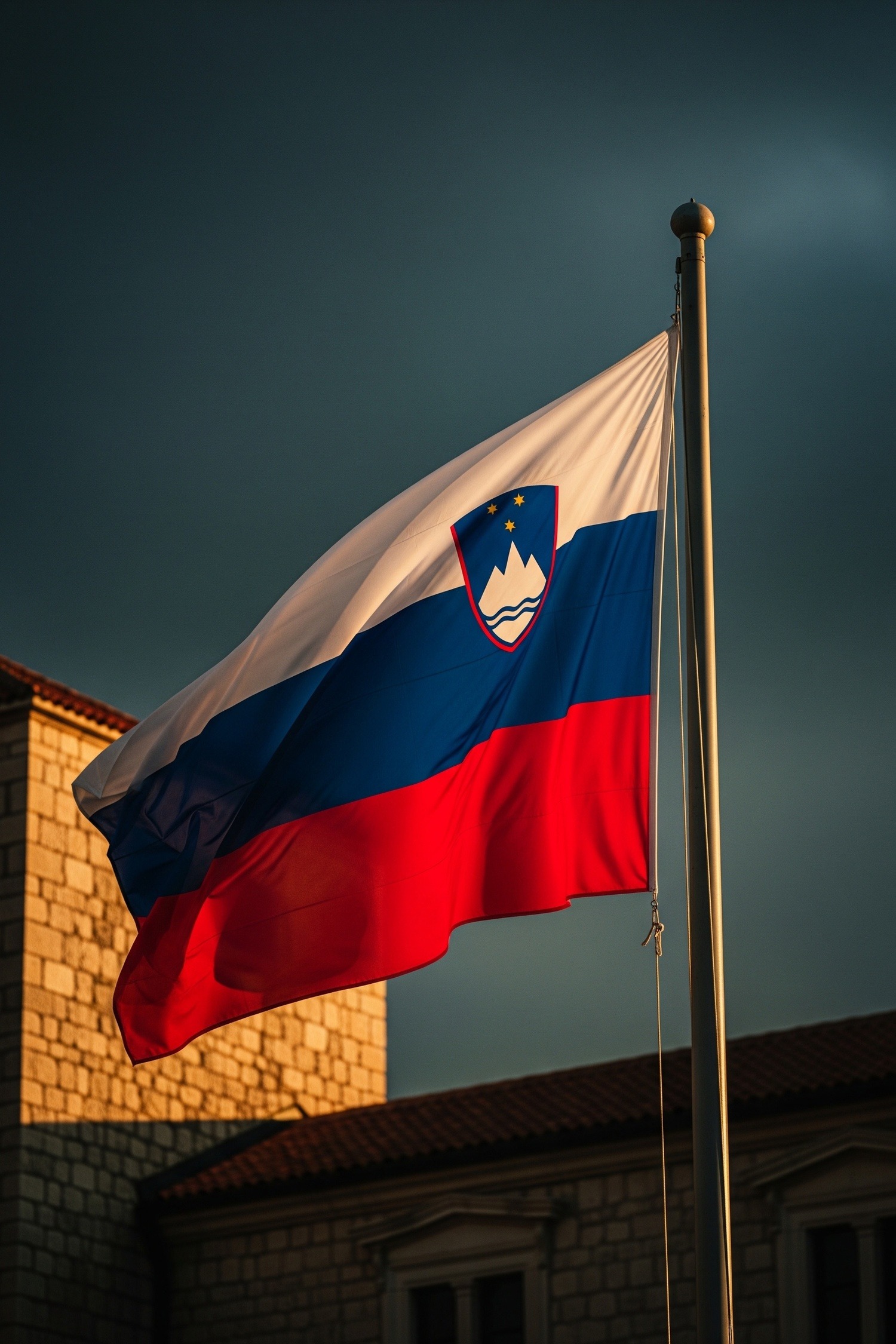
Imagine a nation of 2.1 million telling a sitting prime minister: you cannot come here. That’s what Slovenia did when it declared Netanyahu persona non grata — and the move exposed something uncomfortable about how Western alliances actually work when international law collides with political power. Small countries aren’t supposed to move this boldly. Slovenia just rewrote the script.
The announcement landed with unusual clarity. Ljubljana didn’t hedge, didn’t couch the move in diplomatic softness. Benjamin Netanyahu, Prime Minister of Israel, is no longer permitted to enter Slovenian territory. The decision traces directly to the International Criminal Court’s November 2024 arrest warrant — and it raises a question that’s rippling through foreign ministries across Europe: if small countries keep doing this, what exactly does it mean for the architecture of Western alliances?
Key Facts
- Slovenia declared Israeli Prime Minister Benjamin Netanyahu persona non grata in 2025, barring his entry, citing the ICC’s November 2024 arrest warrant.
- The Vienna Convention on Diplomatic Relations was adopted on April 18, 1961, and its Article 9 lets states declare persona non grata without explanation.
- The ICC, established under the 1998 Rome Statute, issued arrest warrants for Netanyahu and former Defense Minister Yoav Gallant in November 2024.
- In May 2024, Slovenia, Ireland, Norway, and Spain formally recognized the State of Palestine within days of each other.
- Slovenia has a population of 2.1 million and armed forces of approximately 7,600 active personnel; 124 countries are signatories to the Rome Statute.
In short: The Slovenia persona non grata declaration against Netanyahu, issued in 2025, formally bars the Israeli prime minister from entering Slovenia, citing the ICC’s November 2024 arrest warrant. A nation of 2.1 million used the 1961 Vienna Convention and ICC membership to turn legal obligation into an explicit, public entry ban.
What ‘Persona Non Grata’ Actually Means Legally
The phrase sounds like something from a Cold War thriller. But here’s the thing: Slovenia’s persona non grata declaration against Netanyahu is grounded in a very specific legal instrument that has governed international diplomacy since 1961. The Vienna Convention on Diplomatic Relations, adopted on April 18, 1961, established the formal framework under which one state can reject a foreign official without being required to explain itself. Article 9 is blunt: a receiving state may declare any member of a diplomatic mission persona non grata “at any time and without having to explain its decision.”
The mechanism was designed primarily for ambassadors and diplomatic staff — not for sitting heads of government. Using it against a prime minister from a NATO-adjacent Western democracy is not only unusual, it is, by any historical measure, extraordinary. Legal scholars at the European University Institute in Florence have noted that the application of this convention to a serving head of government pushes the instrument well beyond its original diplomatic intent.
Why does this distinction matter? Because when countries expel ambassadors, it’s tense but manageable. There are back-channels, there are face-saving mechanisms, there are ways to quietly de-escalate. Declaring a sitting head of state persona non grata has no soft landing. It’s a public statement. It’s intended to be read. And once it’s made, it cannot be easily walked back without one side absorbing a visible loss of credibility.
The legal weight matters because it changes the nature of any future interaction. Netanyahu cannot enter Slovenia for any purpose — not a state visit, not a transit stop, not a multilateral summit held on Slovenian soil. The declaration applies until it is formally rescinded.
That’s not a diplomatic chill. That’s a door bolted shut.
The ICC Warrant That Changed Everything in Europe
November 2024: the International Criminal Court issued arrest warrants for Benjamin Netanyahu and former Israeli Defense Minister Yoav Gallant. The charges — tied to allegations that Israeli military operations in Gaza amounted to war crimes and crimes against humanity, including the use of starvation as a method of warfare — were among the most consequential the ICC had ever issued against a sitting Western-aligned leader.
The court, based in The Hague, was established under the 1998 Rome Statute, and Israel, like the United States, is not a signatory. But that doesn’t insulate Israeli officials from the warrant’s reach: ICC member states are legally obligated to arrest any indicted individual who enters their territory. Slovenia is an ICC member state.
So the Slovenia persona non grata declaration isn’t just symbolic — it’s Ljubljana signaling that it intends to honor its international legal commitments, even when doing so creates friction with powerful allies. The decision carries real teeth because it removes the ambiguity that other governments have hidden behind.
The warrant created an immediate problem for ICC member states across Europe. Technically, if Netanyahu landed at Heathrow, Schiphol, or Charles de Gaulle, those governments would be obligated to arrest him. In practice, most European governments — including France, Germany, and the United Kingdom — have either remained ambiguous or indicated they wouldn’t necessarily comply, citing various sovereign immunities. Hungary, led by Viktor Orbán, went further in 2024 and explicitly invited Netanyahu to visit, declaring it would ignore the warrant entirely.
Slovenia’s response sits at the opposite end of that spectrum.
And the contrast between those two positions tells you almost everything about how fracture lines are forming inside Europe right now. What’s striking is how little noise Ljubljana made about this. No dramatic press conferences. No coordinated media campaign. The declaration was issued and it stood. That kind of quiet decisiveness tends to carry more diplomatic weight than a loudly announced position that immediately gets walked back.
Why Small Countries Are Reshaping the Palestinian Question
2024 became a turning point. Slovenia’s persona non grata declaration against Netanyahu didn’t emerge from nowhere — it’s the latest chapter in a sequence of moves that began accelerating when European countries started collectively reassessing their positions on the Israeli-Palestinian conflict in ways that would have seemed politically impossible just five years earlier. In May, Slovenia, Ireland, Norway, and Spain all formally recognized the State of Palestine within a matter of days — a coordinated wave that sent a visible signal to both Washington and Brussels.
Recognition of Palestinian statehood had long been treated as a third-rail issue by Western European governments. Then, suddenly, it wasn’t. According to reporting tracked by BBC News in 2024, more than 140 countries had by that point recognized Palestine — but the addition of Ireland and Spain, in particular, represented a significant shift in the political geography of the European Union. These weren’t outsider nations making symbolic gestures. These were core EU members with real influence over bloc-wide policy. The addition matters.
Each individual move — recognition of Palestine, support for ICC proceedings, the Slovenia persona non grata declaration against Netanyahu — seems discrete when viewed alone. But viewed together, they trace an arc. Europe’s smaller nations are using the tools available to them to exert pressure that their larger neighbors are unwilling or unable to apply. Ireland’s historical experience with occupation and partition gives its recognition of Palestine a particular resonance. Slovenia’s wartime history, and its sharp post-independence instinct to assert sovereignty loudly, shapes its willingness to make declarative gestures.
And here’s what matters more than it sounds: geography, memory, and political culture are all doing institutional work here. Every diplomatic move of this kind creates a response — from Israel, from the United States, from other EU partners. The question isn’t whether Slovenia’s declaration will change Israeli policy. It won’t, not by itself. The question is what it signals when enough small countries start saying the same thing at the same time.
Slovenia Persona Non Grata Decision: Historical Parallels
History offers a limited but instructive set of comparisons. The use of persona non grata against heads of government — rather than ambassadors or diplomats — is rare enough that each instance tends to generate its own precedent. Sudan’s President Omar al-Bashir became the first sitting head of state indicted by the ICC in 2009, and several African Union member states subsequently refused to arrest him when he visited — a defiance that triggered years of tension between the African Union and the court.
The al-Bashir case is instructive not because it’s identical to Netanyahu’s situation but because it established a pattern: ICC warrants against sitting leaders test the limits of international legal enforcement in ways that purely theoretical frameworks never anticipated. The International Crisis Group, in analyses published between 2010 and 2015, repeatedly documented how the failure to enforce the al-Bashir warrant eroded the court’s credibility as a meaningful deterrent. Slovenia’s willingness to go further than most Western nations — and to name that willingness explicitly — represents a conscious effort to avoid repeating that pattern of non-enforcement.
Consider the scale. Slovenia has a GDP roughly comparable to Paraguay’s. Its military consists of approximately 7,600 active personnel. It shares borders with Italy, Austria, Hungary, and Croatia. It joined NATO in 2004 and the European Union the same year. By almost any conventional measure of state power, it has limited leverage in global geopolitics.
Yet the Slovenia persona non grata decision against Netanyahu has generated coverage in every major news outlet on earth. Leverage, it turns out, isn’t only about the size of your armed forces. Sometimes it’s about the precision of your language and the clarity of your timing — and watching a state exercise this kind of calibrated authority, you realize how much of geopolitics has nothing to do with tanks.
The historical parallel that keeps surfacing among legal scholars isn’t actually a diplomatic one — it’s from trade law. Small nations in the WTO have successfully used dispute resolution mechanisms against far larger powers, not because they could enforce outcomes unilaterally, but because the mechanism itself forced larger powers to negotiate. Slovenia is using international law the same way. Not as a sword. As a mirror.
What Comes Next for Europe’s Fragmented Consensus
The fracture lines inside Europe over the ICC warrant are visible and widening. Hungary has explicitly defied the court. Germany and France have been deliberately vague. A cluster of Eastern European nations tends to defer to Israeli-American preferences on Middle East policy. On the other side: Slovenia, Ireland, Spain, Norway, and Belgium have moved systematically toward both Palestinian recognition and ICC compliance.
This isn’t a clean ideological divide — it cuts across traditional left-right lines, across NATO commitments, across historical relationships with the United States. What it looks like, increasingly, is a generational and institutional divergence about what international law is actually for. For the generation of European leaders who built the post-Cold War order, institutions like the ICC were aspirational architecture — impressive to have, rarely expected to perform at the highest levels (researchers actually call this the “consensus without enforcement” model). For a newer cohort, those institutions are tools. They exist to be used.
The Slovenia persona non grata declaration sits precisely at that fault line. If the ICC warrant is taken seriously — if member states actually comply with their legal obligations — then the warrant becomes a real constraint on Netanyahu’s mobility, not just a reputational embarrassment. Every country that explicitly declares itself unwilling to admit him narrows the geography available to Israeli diplomacy. Enough countries doing this simultaneously starts to look less like a collection of individual gestures and more like a coordinated enforcement mechanism, even without formal coordination.
That’s a qualitatively different outcome than anyone anticipated when the Rome Statute was signed in 1998.
How It Unfolded
- 1998 — The Rome Statute is adopted, establishing the International Criminal Court and creating the legal framework that would later make the Netanyahu warrant possible.
- May 2024 — Slovenia, Ireland, Norway, and Spain formally recognize the State of Palestine within days of each other, marking a turning point in Western European consensus.
- November 2024 — The ICC issues arrest warrants for Benjamin Netanyahu and former Defense Minister Yoav Gallant, triggering an immediate legal obligation for all member states.
- 2025 — Slovenia officially declares Netanyahu persona non grata, becoming one of the first European nations to translate ICC compliance into an explicit entry ban.
By the Numbers
- 140+ countries had recognized Palestinian statehood before the 2024 European wave, according to UN tracking data.
- 2.1 million — Slovenia’s total population, making it one of the smallest EU member states by headcount.
- 124 countries are currently signatories to the Rome Statute, each legally obligated to enforce ICC arrest warrants within their territory.
- 4 European nations — Ireland, Norway, Spain, and Slovenia — recognized Palestinian statehood within the same week in May 2024, an unprecedented coordinated move.
- 7,600 — approximate number of active-duty personnel in Slovenia’s armed forces, underscoring how legal rather than military leverage defines this story.
Field Notes
- The Vienna Convention’s persona non grata clause has been invoked dozens of times against ambassadors and diplomatic staff, but its application to a sitting head of government of a Western-aligned democracy is so rare that most international law textbooks don’t include a clear precedent — legal scholars at Oxford’s Blavatnik School of Government noted in 2024 that the Netanyahu situation is genuinely novel terrain.
- Slovenia was one of the first former Yugoslav republics to gain international recognition after declaring independence in 1991, and its institutional memory of that recognition process — how much formal diplomatic acknowledgment matters — shapes its willingness to use diplomatic tools assertively.
- Hungary’s decision to invite Netanyahu and explicitly ignore the ICC warrant puts it in direct legal conflict with its EU treaty obligations — a fact that the European Commission has so far declined to formally address.
- Researchers and legal analysts still can’t agree on whether persona non grata declarations against non-diplomatic figures carry binding force under the Vienna Convention, or whether Slovenia is effectively creating new customary international law through state practice. The answer may only emerge if tested in court — which itself requires a violation to occur first.
Frequently Asked Questions
Q: What does the Slovenia persona non grata declaration against Netanyahu legally require?
The declaration means Netanyahu is formally barred from entering Slovenia. Under the Vienna Convention on Diplomatic Relations, persona non grata status can be declared without explanation and takes effect immediately. Combined with Slovenia’s obligations as an ICC member state, any attempt by Netanyahu to enter the country would theoretically trigger an arrest obligation. The declaration doesn’t expire automatically — it remains in force until formally lifted.
Q: Could Netanyahu be arrested if he traveled to other European countries?
Technically, yes. All 124 ICC member states — which includes most of the European Union — are legally obligated to enforce ICC arrest warrants within their territory. In practice, compliance has been uneven. Countries like Hungary have explicitly refused to comply, while others like France and Germany have been ambiguous. The Slovenia persona non grata decision is notable precisely because it makes that legal obligation explicit and public, removing the ambiguity other governments have relied on.
Q: Isn’t persona non grata just a symbolic gesture with no real effect?
This is the most common misconception. Persona non grata declarations have concrete legal effects: they create a binding entry prohibition that applies to all Slovenian border crossings, airports, and territorial waters. They also affect any multilateral events Slovenia might host. What they can’t do is compel other countries to follow suit. But the accumulated effect of multiple countries making similar declarations — as appears to be happening across parts of Europe — shifts from symbolism to genuine constraint on diplomatic mobility.
Editor’s Take — Sarah Blake
What strikes me most about this story isn’t Slovenia’s courage, though that’s real. It’s the mechanism. A country of 2.1 million people doesn’t have aircraft carriers or Security Council vetoes. What it has is treaty membership and the willingness to actually use it. International law has always been described as toothless when powerful states ignore it. But Slovenia is demonstrating something different: that enough small states using the same legal tools simultaneously creates a form of enforcement that no single defection can dismantle. That’s not idealism. That’s architecture.
Ljubljana in the mornings is quiet. Cobblestone streets along the Ljubljanica River. A castle that has watched centuries of empires pass through. The city itself isn’t loud about anything. And yet the declaration echoing from its foreign ministry — two Latin words that say a sitting head of government is not welcome — has reframed what international law actually means when it’s tested by power. For decades, the polite consensus was that international institutions existed to handle the powerless — to process conflicts involving states that couldn’t push back. Slovenia’s move, quiet and precise, challenges that assumption at its root. If international law only applies to those without the leverage to avoid it, it isn’t law at all. What Ljubljana just said is that it disagrees. Who else is listening?
Illustrations are AI-generated. Article fact-checked and human-edited. Our editorial standards.