The Pink Snow That’s Eating the Arctic Alive
Pink snow in the Arctic isn’t cute. It’s a slow-motion catastrophe that’s been waiting millions of years for us to warm things up just enough. And the worst part? The algae doing it aren’t invaders — they’re part of the system.
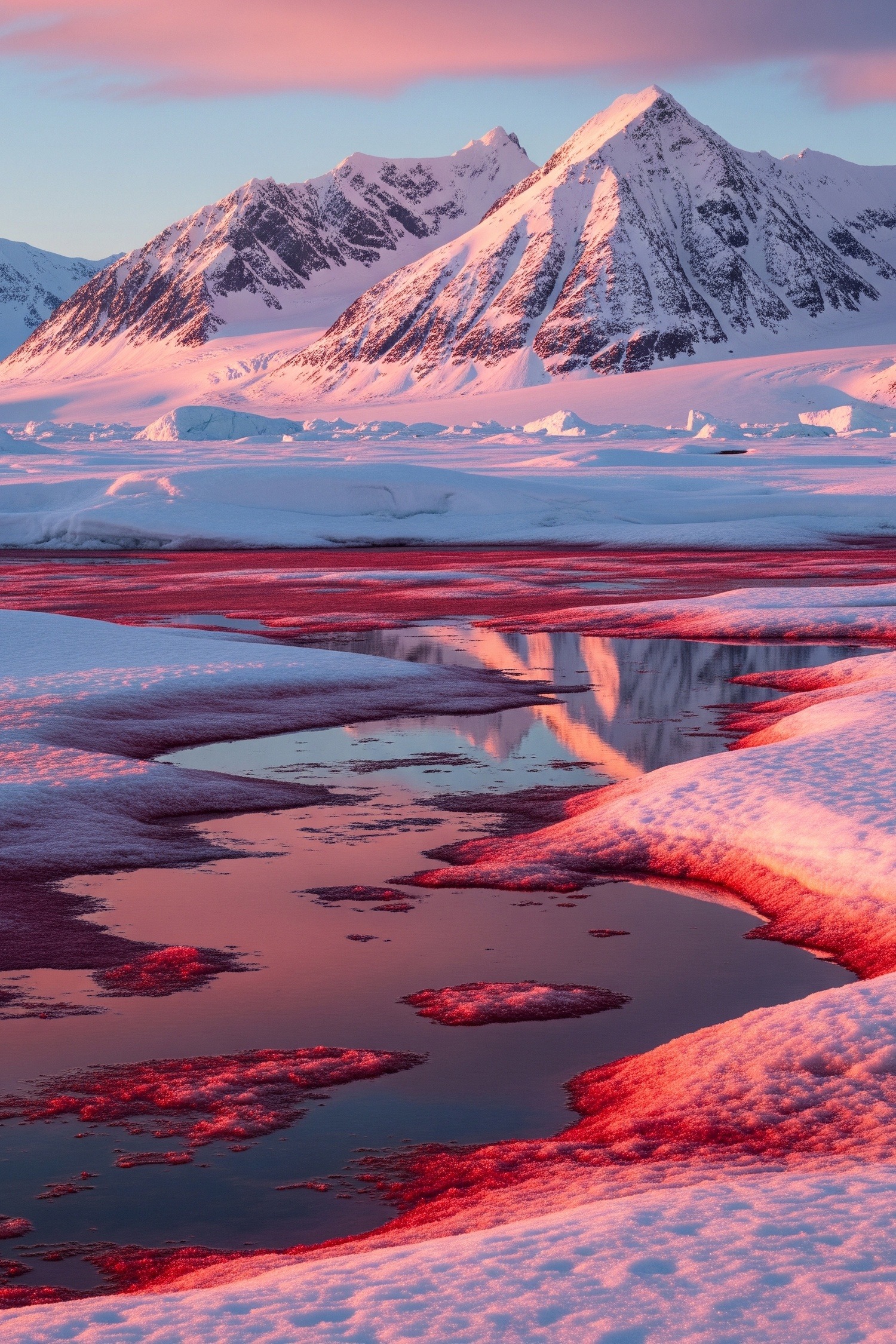
You’re standing on a snowfield somewhere high up. The snow under your boots isn’t white anymore. It’s rose-colored, almost pretty in a way that makes you uncomfortable once you understand what’s happening. There’s a smell — faint, sweet, like watermelon rind left in the sun. What you’re looking at is Chlamydomonas nivalis, a single-celled green algae that’s spent millions of years perfecting survival in frozen places. To handle the brutal ultraviolet radiation at high altitude, it produces a pigment called astaxanthin — a blood-red carotenoid compound. The same one that makes flamingos pink. The same one in salmon flesh. A molecule we associate with warmth and life, showing up in one of the coldest places on Earth. The contradiction kept me reading for another hour.
Key Facts
- Watermelon snow is caused by Chlamydomonas nivalis, a single-celled green algae that produces the red pigment astaxanthin.
- A 2016 study of 40 Arctic and alpine sites found snow algae blooms accelerate surface melt by an average of 13% per season.
- White snow reflects about 90% of incoming solar radiation, but algae-darkened snow absorbs far more heat.
- The Arctic is warming roughly four times faster than the global average, extending the bloom window.
- Astaxanthin is the same carotenoid pigment that makes flamingos pink and wild salmon orange-red; Pliny the Elder described red snow in the first century AD.
In short: Watermelon snow algae, the single-celled Chlamydomonas nivalis, turns Arctic snowfields pink using the red pigment astaxanthin. A 2016 study of 40 sites found these blooms accelerate surface melt by 13% per season by darkening snow that normally reflects 90% of sunlight, creating a self-reinforcing feedback loop in an already rapidly warming Arctic.
What Actually Happens When Snow Turns Pink
Here’s the mechanism, and it’s simple enough to be terrifying. White snow reflects about 90% of incoming solar radiation straight back into space. The moment algae blooms spread across a snowfield, that reflectivity collapses. The darker surface absorbs heat instead of bouncing it away.
Snow melts faster.
Warmer meltwater pools. More algae blooms. Cycle repeats. The algae create the conditions for their own expansion — melt more snow, get more liquid water, grow faster, darken more surface area, absorb more heat. It’s a feedback loop wearing a pretty pink disguise, and it doesn’t need any help once it starts spinning. You can dig deeper into how biological processes reshape entire ecosystems at this-amazing-world.com.
The Math
A 2016 study analyzing 40 Arctic and alpine sites found that biological darkening from snow algae accelerates surface melt by an average of 13% over a full melting season.
Thirteen percent. Easy to shrug at. But apply that number across millions of square kilometers of Arctic snowpack, and suddenly this stops being trivia. Researchers are now asking whether biological darkening needs its own line in climate models — because right now, most models don’t fully account for it.
The catch? The Arctic is already warming four times faster than the global average. You’re not adding 13% to a stable system. You’re adding it to something already running dangerously hot.
The Unsettling Part
This algae didn’t come from somewhere else. Nobody introduced it as an invasive species. It’s been living in Arctic and alpine snowfields for millions of years, quietly dormant through winters, blooming briefly when the melt season arrived, perfectly adapted to freeze-thaw cycles. It belongs there. And then we changed the conditions. Warmer temperatures. Longer melt seasons. More liquid water available earlier. Suddenly Chlamydomonas nivalis has a window to bloom, spread, and darken the surface it lives on — a window it never had before.
We didn’t introduce a threat.
We amplified one that was already part of the ecosystem. You can’t remove the algae without removing part of the Arctic’s living system. You can’t treat it like pollution. It isn’t.
Astaxanthin: The Pigment That Works Too Well
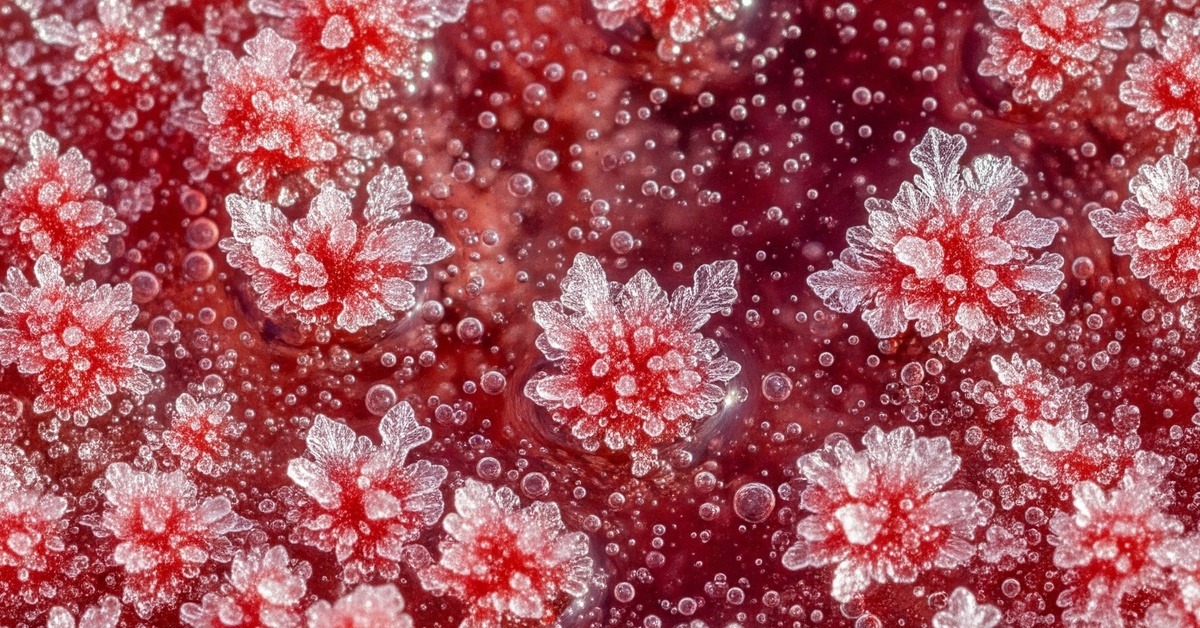
The biology here is genuinely brilliant, which makes it worse. Astaxanthin acts as a living sunscreen, absorbing ultraviolet radiation that would otherwise destroy the algae’s cells at high altitudes. Without it, Chlamydomonas nivalis wouldn’t survive a summer day on exposed snow. The pigment is a masterwork of evolutionary chemistry.
It’s also accelerating the loss of the ice the algae live on.
There’s something almost tragic in that dynamic. The algae aren’t “trying” to melt the Arctic. They’re just surviving — using a tool that worked perfectly for millions of years in conditions that no longer exist. The catastrophe is a side effect of success.
Numbers Worth Knowing
- A 2016 study across 40 Arctic and alpine sites found snow algae blooms accelerate surface melt by 13% per season.
- Most mainstream climate models don’t yet incorporate this figure — a significant oversight.
- The Arctic warms approximately four times faster than the global average, dramatically extending the summer window when algae can bloom and spread.
- White snow reflects up to 90% of solar radiation; algae-darkened snow drops that reflectivity significantly, altering the surface energy budget of entire mountain ranges and ice sheets.
- Astaxanthin — the red pigment from Chlamydomonas nivalis — is the same carotenoid compound that makes flamingos pink and wild salmon orange-red, connecting microscopic Arctic biology to some of the most recognizable colors in nature.
Where This Happens
- Snow algae blooms appear wherever there’s persistent snow and summer sunlight — Arctic, Antarctica, Rocky Mountains, the Alps, Himalayas, even volcanic peaks in Hawaii.
- The watermelon smell is real. Explorers and mountaineers have documented it for centuries. Pliny the Elder wrote about red snow in the first century AD, though he had no idea what was causing it — he was just confused about why polar snow didn’t smell like ice.
- Pink snow isn’t just algae. It’s an entire micro-ecosystem including snow worms, ice bacteria, cryophilic fungi. The pink surface is really a living community. Scientists are still mapping how these organisms interact.
What This Actually Means
Watermelon snow algae is a story about feedback loops — about how a warming world doesn’t just melt ice directly, but recruits living systems to finish the job. The algae aren’t villains. They’re indicators. Every summer bloom signals that temperatures are warm enough, long enough, for a process running quietly for millions of years to suddenly accelerate.
We tend to think of melting ice as a purely physical problem. Too much heat, too little cold. But life is involved. Microscopic life, blooming pink across white surfaces, absorbing the heat that pushes them further and faster than ever before.
The Arctic isn’t just melting because of CO2 in the atmosphere. It’s melting because a red pigment evolved millions of years ago for a world that doesn’t exist anymore. It’s melting because of feedback loops we’re only beginning to understand.
Short sentences. Big consequences. A snowfield that smells like watermelon while it disappears. There’s more of this at this-amazing-world.com — and the next story is even stranger.
Frequently Asked Questions
Q: What causes watermelon snow to turn pink?
Watermelon snow is caused by Chlamydomonas nivalis, a single-celled green algae adapted to frozen environments. To survive intense ultraviolet radiation at high altitude, it produces astaxanthin, a blood-red carotenoid pigment that acts as a living sunscreen. This is the same compound that makes flamingos pink and wild salmon orange-red. The algae also give off a faint sweet smell resembling watermelon, which explorers and mountaineers have documented for centuries.
Q: Why is watermelon snow algae a problem for the climate?
White snow reflects about 90% of incoming solar radiation back into space. When algae blooms darken a snowfield, that reflectivity collapses and the surface absorbs heat instead. The snow melts faster, creating more meltwater, which lets more algae bloom and darken still more surface, absorbing more heat. A 2016 study of 40 Arctic and alpine sites found this biological darkening accelerates surface melt by an average of 13% per season, a self-reinforcing feedback loop.
Q: Is the snow algae an invasive species?
No. Chlamydomonas nivalis is not an invader and was never introduced. It has lived in Arctic and alpine snowfields for millions of years, lying dormant through winters and blooming briefly during melt seasons, perfectly adapted to freeze-thaw cycles. The problem is that warmer temperatures, longer melt seasons, and earlier liquid water now give it far wider windows to bloom and spread. Humans didn’t introduce a threat; they amplified one already part of the ecosystem.
Q: Where does watermelon snow appear?
Snow algae blooms appear wherever there is persistent snow and summer sunlight, including the Arctic, Antarctica, the Rocky Mountains, the Alps, the Himalayas, and even volcanic peaks in Hawaii. The pink surface is actually an entire micro-ecosystem that includes snow worms, ice bacteria, and cryophilic fungi. Pliny the Elder wrote about red snow in the first century AD, though he had no idea algae were responsible, and scientists are still mapping how these organisms interact.
Illustrations are AI-generated. Article fact-checked and human-edited. Our editorial standards.