She Spent $150,000 at 70 to Build a Community for Women
Most people stop building at 70. Robyn Yerian started. She’d watched 11 million older women in America navigate housing insecurity alone—watched the market decide they weren’t worth solving for—and instead of writing a white paper, she wrote a check. $150,000. Her savings. Her bet. The result is a tiny home community for older women in Ohio that functions less like real estate and more like a lifeline. Front-porch conversations. Shared garden beds. Neighbors who check on you. But the real question—the one that lingers long after you see what she built—isn’t how. It’s why it took this long to happen at all.
What she constructed wasn’t just architecture. It was a deliberate interruption of loneliness, a housing solution that doubles as a health intervention, a model that exposes something uncomfortable about what we’ve been willing to ignore.
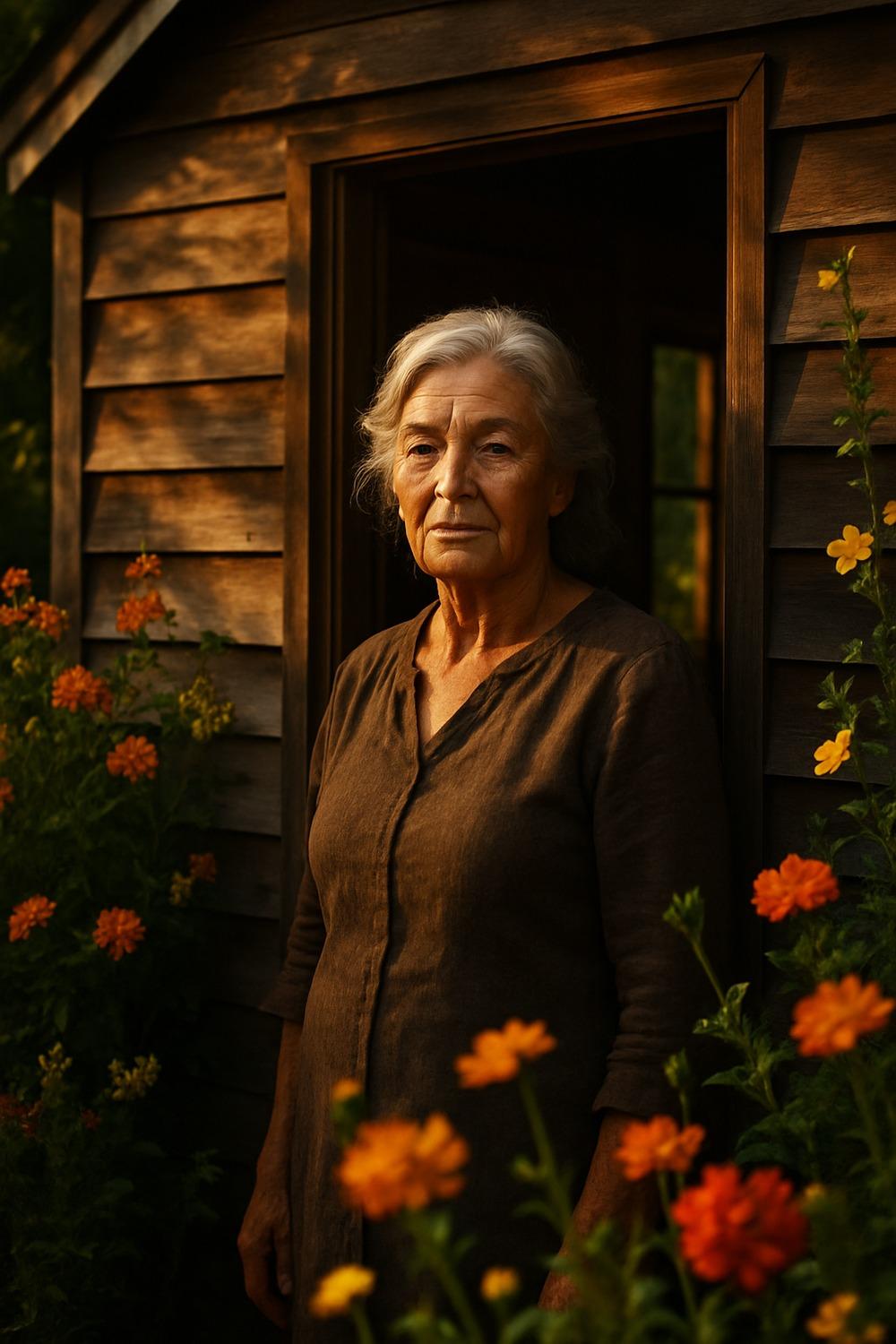
Key Facts
- Robyn Yerian, age 70, spent $150,000 of her savings to complete an all-women tiny home neighborhood in Ohio in 2023.
- Women over 65 are nearly twice as likely as men the same age to live in poverty (U.S. Census Bureau, 2023).
- Approximately 11 million women over 60 are living alone in the United States.
- The average monthly Social Security benefit for female recipients in 2023 was $1,484, roughly half the national median rent for a one-bedroom apartment.
- The U.S. Surgeon General’s 2023 advisory found social isolation carries a mortality risk comparable to smoking 15 cigarettes a day.
In short: At age 70, Robyn Yerian spent $150,000 of her savings to build a tiny home community for older women in Ohio, completed in 2023. With 11 million women over 60 living alone in the U.S. and affordable housing waitlists exceeding a decade, her model treats loneliness as both a housing problem and a health intervention.
The Housing Crisis Nobody Talks About
Go looking for housing insecurity in America, and the faces you find are almost never 70 years old. The news cycle has made us think of this as a young person’s problem. But U.S. Census Bureau data from 2023 tells a different story: women over 65 are nearly twice as likely as men the same age to live in poverty. The structural reasons aren’t subtle. Women earn less across their working lives. They accumulate smaller retirement savings. And because they statistically outlive their male partners, they navigate widowhood or late-life divorce entirely alone, absorbing financial consequences that hit hardest at precisely the moment when earning power disappears.
Diana Pearce, a sociologist, coined the term feminization of poverty in 1978 to describe exactly this pattern: the structural conditions that funnel women toward financial precarity even when they’ve done everything right. Decades later, the pattern hasn’t changed. It’s deepened.
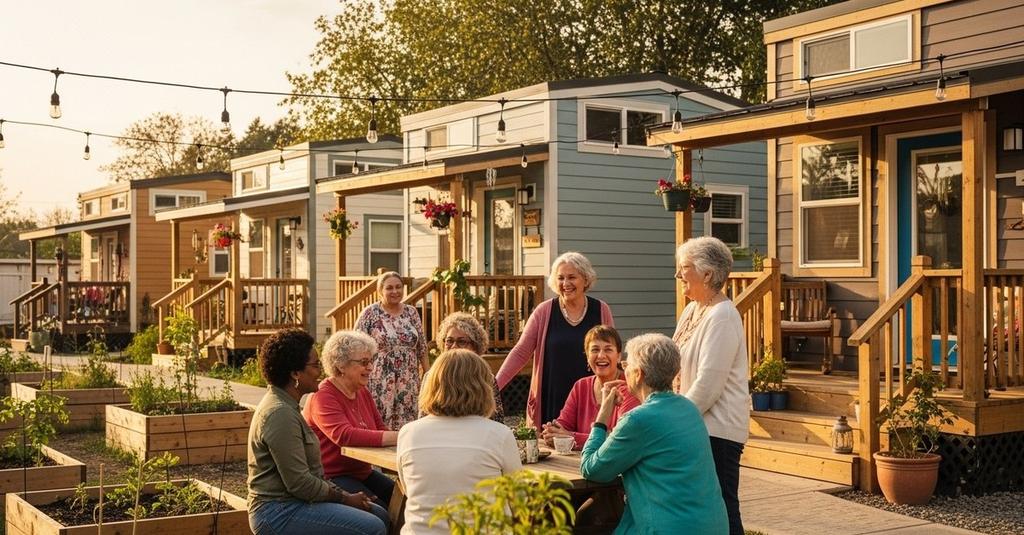
Eleven million women over 60 are living alone in the United States right now. That’s a city the size of Los Angeles made up entirely of women navigating fixed incomes, rising rents, and the particular exhaustion of aging without a safety net. Most are one unexpected crisis away from losing stability—one medical bill, one car repair, one furnace failure. Meanwhile, the housing market optimizes for young professionals and growing families. It doesn’t see them. It never has.
Yerian was one of them. And that was reason enough to act.
What $150,000 Buys When You Spend It Right
Tiny homes get marketed to minimalists and eco-conscious millennials and lifestyle bloggers. The architecture, though—here’s the thing—was never really the point. The point is what affordability actually unlocks: autonomy, stability, the dignity of choosing where and how you live. Studies from the Stanford Center on Longevity (2019-2022) found something that surprised almost nobody once they heard it: social connection, not wealth, not even physical health, is the single strongest predictor of quality of life in older adults. What Yerian built is an intervention in loneliness as much as a housing solution. The intentional connection she designed echoes what we understand about communities that work—they become containers where both strength and vulnerability can coexist.
The economics are straightforward enough to make you wonder why this model isn’t everywhere. A traditional single-family home in the American Midwest averaged $285,000 in 2023 (National Association of Realtors). A tiny home—depending on construction and land—can run a tenth of that.
For women living on Social Security, that difference is more than arithmetic. The average monthly benefit for female recipients in 2023 was $1,484. Roughly half the national median rent for a one-bedroom apartment. The gap between $285,000 and $25,000 isn’t just financial—it’s existential.
Yerian didn’t wait for a grant. No nonprofit committee meetings. No three-year approval process. She wrote a check and started building. There’s something confrontationally simple about that. And something deeply instructive about the gap between waiting for permission and deciding you’re the only permission you need.
Why Older Women Face This Alone
Why does affordable senior housing have waitlists measured in years instead of months? Because the structural forces pushing older women toward insecurity aren’t accidental—they’re the accumulated outcome of decades of policy decisions, market incentives, and social assumptions about who deserves investment.
A 2021 Bipartisan Policy Center report documented the math: affordable senior housing waitlists in some cities exceed a decade. The National Low Income Housing Coalition has identified a shortage of more than 7 million affordable rental units for the country’s lowest-income households. Older women are dramatically overrepresented in that category. The Smithsonian has reported on how the tiny home movement attracts urban planners and housing advocates precisely because it offers a scalable, low-cost alternative to systems that have largely failed vulnerable populations.
But what’s remarkable about a tiny home community built explicitly for older women is how precisely it interrupts something that compounds financial hardship: isolation.
Living alone at 70 isn’t just logistical. It’s a health catastrophe. The U.S. Surgeon General’s 2023 advisory on loneliness found that lacking social connection carries a mortality risk comparable to smoking 15 cigarettes a day. Women who age alone face disproportionate exposure to that risk—not because they want isolation, but because the infrastructure for community was never built with them in mind. (And this matters more than it sounds: you can’t fix a problem you’ve decided isn’t there.)
Yerian built the infrastructure. That’s what the $150,000 actually purchased. Not walls and roofs. A reason to knock on a neighbor’s door.
How It Unfolded
- 1978 — Sociologist Diana Pearce coins the term “feminization of poverty,” formally naming the structural pattern that would define economic risk for older women across the following five decades.
- 2008 — The American financial crisis accelerates housing insecurity among older Americans, with women over 60 hit disproportionately hard as home values collapse and retirement savings evaporate simultaneously.
- 2019 — Tiny home communities gain mainstream recognition as affordable housing advocates begin formally studying their potential for vulnerable populations, including seniors living alone.
- 2023 — Robyn Yerian, age 70, completes her all-women tiny home neighborhood in Ohio, drawing national attention and prompting conversations about replicating the model across the United States.
By the Numbers
- Women over 65 are nearly 2× as likely as men the same age to live in poverty (U.S. Census Bureau, 2023).
- Approximately 11 million women over 60 are living alone in the United States right now.
- The average monthly Social Security benefit for female recipients in 2023 was $1,484 — roughly half the national median rent for a one-bedroom apartment.
- Tiny homes typically range from 100 to 400 square feet and can cost 10× less than a traditional single-family home purchase.
- The U.S. faces a shortage of more than 7 million affordable rental units for lowest-income households, according to the National Low Income Housing Coalition (2023).
Field Notes
- Yerian’s community isn’t marketed as a charity or assisted-living facility—it’s framed as a neighborhood, and that distinction matters enormously to residents who’ve spent their lives being independent. Researchers at the University of Michigan’s Institute for Social Research have documented how the language of dignity shapes whether older adults actually engage with support structures or resist them.
- Most tiny home communities in the United States are designed for transient residents—remote workers, minimalist enthusiasts—not for people who intend to age in place. Yerian’s model is among the first specifically designed for permanence and long-term female community.
- The shared garden beds aren’t incidental. Horticultural therapy research from Rutgers University documents measurable reductions in depression and cognitive decline among older adults who maintain regular gardening practice, which means the garden is, quietly, doing medical work.
- Researchers still can’t fully separate the health benefit in communities like Yerian’s: how much comes from affordability relief versus social connection. In a real-world setting, that separation may be functionally impossible—which raises an uncomfortable question about whether they were ever separate forces at all.
Frequently Asked Questions
Q: What exactly is a tiny home community for older women, and how does it differ from assisted living?
A tiny home community for older women is an intentionally designed neighborhood of small, affordable private dwellings—typically between 100 and 400 square feet—built specifically to foster community among women who are aging independently. Unlike assisted living, residents maintain full autonomy. No medical staff. No care schedule. No institutional structure. The community provides affordable housing and social infrastructure, not healthcare. Yerian’s Ohio community is one of the earliest models built explicitly with this demographic in mind.
Q: How does someone replicate what Robyn Yerian built—is this model scalable?
Scalability depends heavily on local zoning laws, which vary dramatically by state and municipality. Many jurisdictions still lack legal frameworks for tiny home communities as permanent residences, which is a significant barrier. Housing advocates and urban planners have increasingly pushed for zoning reform since 2019, and states including Oregon, California, and Texas have made legislative moves toward broader tiny home legalization. Yerian’s model—privately funded, community-managed—sidesteps some institutional hurdles but requires personal capital and commitment that not everyone can access.
Q: Is it true that loneliness is as dangerous as smoking for older women?
The evidence is robust, and most people find it surprising. The U.S. Surgeon General’s 2023 advisory on loneliness cited multiple peer-reviewed studies establishing that social isolation carries a mortality risk equivalent to smoking 15 cigarettes a day. The mechanisms involve chronic stress responses, immune function, and cardiovascular strain—not a single pathway. Older women living alone face compounded exposure. Communities like Yerian’s interrupt that exposure by making social connection a built-in feature of daily life rather than something residents have to engineer alone.
Editor’s Take — Sarah Blake
What strikes me isn’t the $150,000. It’s that Yerian spent her own savings on a problem the market had decided wasn’t worth solving. Eleven million women living alone, and the institutional response is a waitlist. She didn’t write a white paper or convene a taskforce. She signed a deed. That gap—between what data shows us and what anyone actually builds—is where the most significant human stories live.
There’s a version of this story that ends with inspiration, lets it sit there, and calls that enough. But the number is too large for that: 11 million. Eleven million women waking up alone in a country that has, more or less deliberately, failed to account for them. Yerian’s community holds perhaps a dozen. The math is uncomfortable. What it asks isn’t whether one woman’s courage is admirable—it clearly is—but whether courage should ever have been the only answer available. What would it mean to build a world where it wasn’t?
Illustrations are AI-generated. Article fact-checked and human-edited. Our editorial standards.