Abandoned at Sea: The Vanishing of Tom and Eileen Lonergan
Competent divers, Peace Corps volunteers, a routine January afternoon — and then silence. The disappearance of Tom and Eileen Lonergan at the Great Barrier Reef in 1998 wasn’t mysterious because no one saw what happened. It was mysterious because no one looked for two full days after it did.
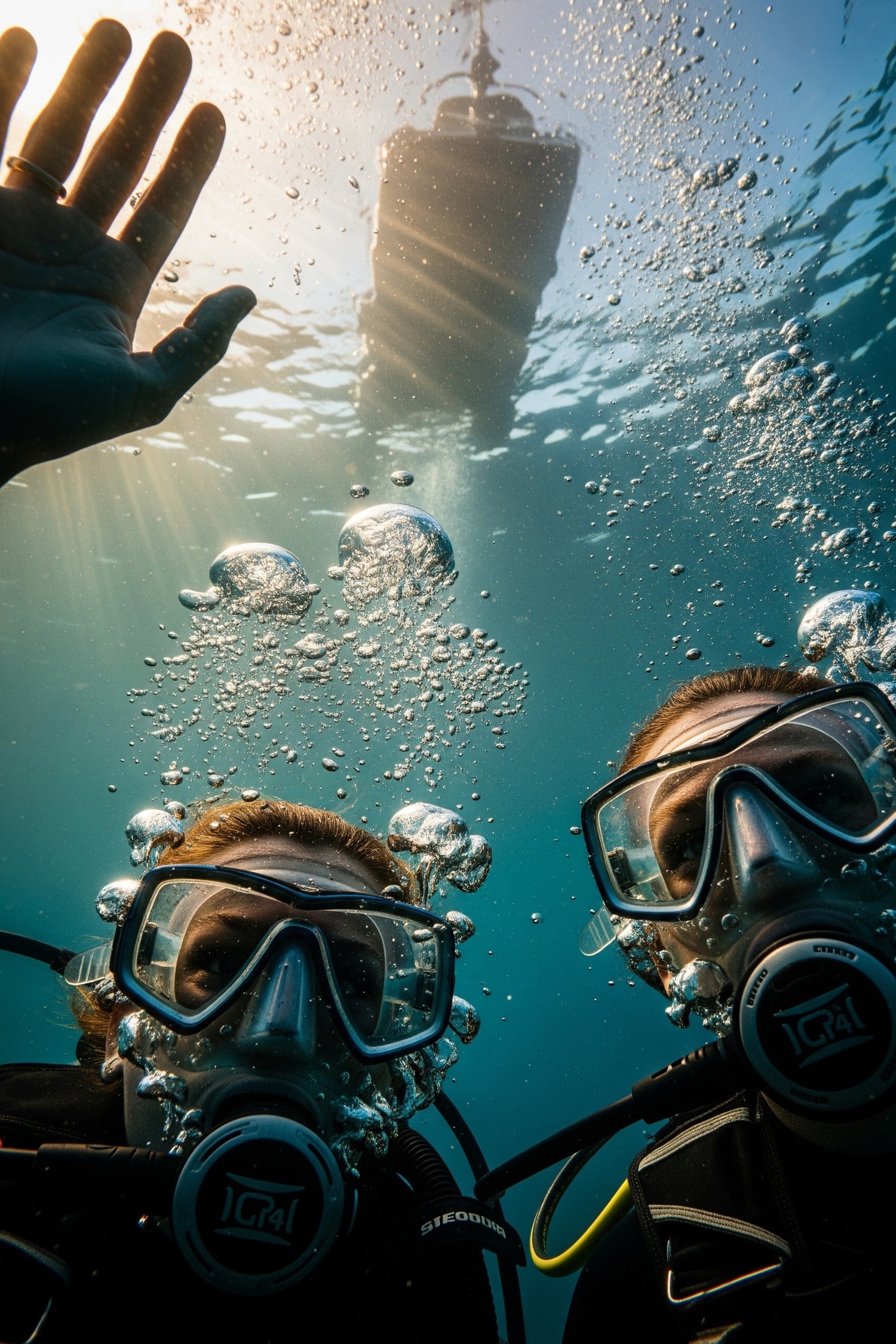
January 25, 1998. The Outer Edge, a charter vessel operating out of Port Douglas, Queensland, carried 26 passengers to St. Crispin Reef for a group dive. A headcount error — the kind that takes seconds to commit and a lifetime to undo — left Tom and Eileen treading water in the open Coral Sea as the boat vanished toward shore. What followed was a search that turned up almost nothing, and a story that exposed systemic failures in dive safety regulation that Australia could no longer ignore.
Key Facts
- Tom Lonergan (33) and Eileen Lonergan (28), Peace Corps volunteers stationed in Fiji, disappeared from a dive group at St. Crispin Reef in Far North Queensland on January 25, 1998
- The charter vessel Outer Edge carried 26 passengers but the crew counted only 24 after the dive, and the discrepancy did not trigger an immediate roll call
- Their belongings sat unclaimed on the docked boat for two full days before a staff member raised the alarm on January 27
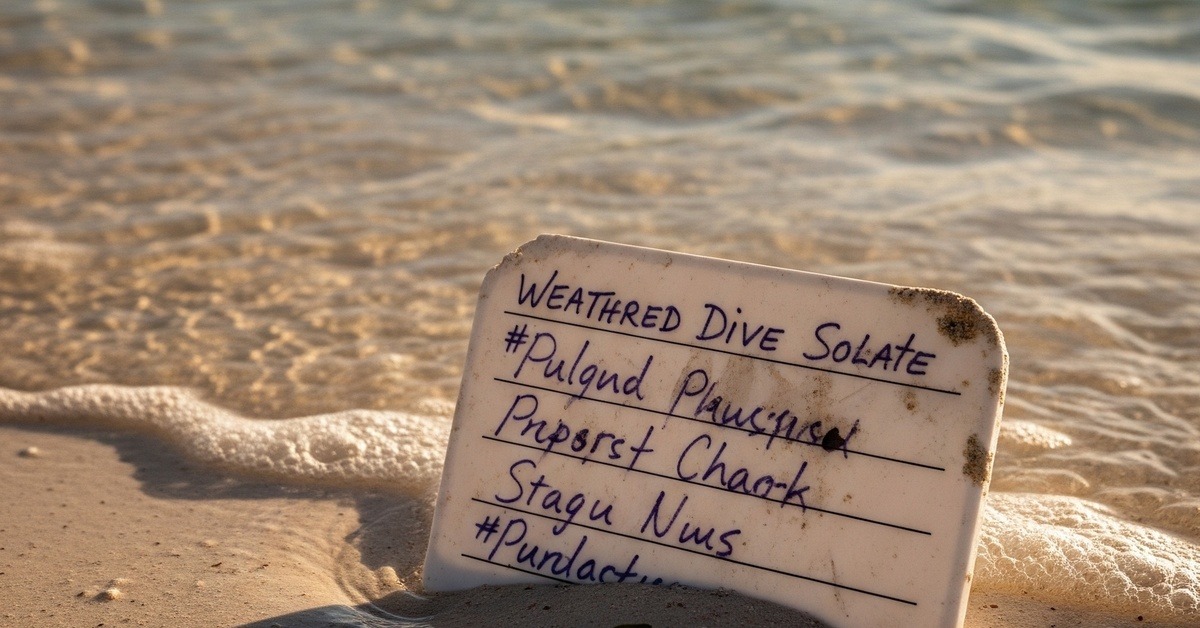
- A dive slate washed ashore approximately 80 kilometers from St. Crispin Reef in late February 1998, bearing a handwritten message dated January 26 confirming they survived at least one night in open water
- The Queensland Coroner’s inquest, completed in 2000, returned an open finding; the Outer Edge dive operator was Geoffrey Nairn, and the case prompted Queensland’s Department of Transport to overhaul passenger verification on commercial dive vessels
In short: On January 25, 1998, Tom and Eileen Lonergan were left in open ocean at St. Crispin Reef when the dive vessel Outer Edge miscounted passengers (24 instead of 26). Their bags sat unclaimed for two days. A dive slate dated January 26 washed ashore weeks later, confirming they survived at least one night. The 2000 Queensland inquest returned an open finding.
A Headcount Error That Changed Everything
Dive operator Geoffrey Nairn and his crew counted 24 passengers after the dive. The Outer Edge carried 26. The discrepancy should have triggered an immediate passenger-by-passenger roll call. It didn’t. Investigators would later determine the crew had used a system of accounting so informal — cross-referencing fins and equipment rather than names — that two absent divers simply weren’t noticed. Tom was 33. Eileen was 28. They were Peace Corps volunteers stationed in Fiji, experienced divers who’d earned their certifications and treated dive trips as a working holiday.
Nothing about their profiles suggested risk. They were competent in the water, appropriately equipped, and surrounded by other divers. The failure wasn’t theirs. It was institutional — the kind of slow-accumulating negligence that only becomes visible in the aftermath of catastrophe. The disappearance of Tom and Eileen Lonergan would eventually prompt Queensland’s Department of Transport to overhaul the entire framework for passenger verification on commercial dive vessels, but that came too late for two people who surfaced into an empty horizon.
January is peak wet season in Far North Queensland: warm water, strong tidal surges, and visibility that can shift from brilliant to murky within hours. The couple had traveled to Port Douglas specifically for the reef. They dove. They surfaced. And then the boat wasn’t there anymore.
Two Days of Silence Before Anyone Searched
When the Outer Edge docked on the afternoon of January 25, the crew noticed two sets of belongings left on board — dive bags, personal items, shoes. The assumption, apparently, was that the owners had simply forgotten them or arranged their own return. No one called the port authority. No one flagged a missing passenger report. It wasn’t until January 27 that a staff member made the connection between the unclaimed gear and an absence that couldn’t be explained away.
Here’s the thing: their gear sat unclaimed for two full days. The ocean around Australia is vast and deeply dangerous — a reality that’s easy to romanticize from shore, but which is explored in unsettling detail across reporting on the country’s coastal zones, including work examining how Australia’s coastlines hide dangers and wonders that most visitors never expect. In this case, the danger was systemic indifference paired with catastrophic timing.
When the search finally launched on January 27, it was large by any measure. The Australian Maritime Safety Authority coordinated boats, fixed-wing aircraft, and helicopters across an enormous section of the Coral Sea. The Coral Sea’s tidal system is complex — currents can push objects north, east, or south depending on the lunar cycle, and January water temperatures of around 28°C (82°F) create the thermal conditions that make the region one of the most active for marine predators in the southern hemisphere. Drift modeling projected where two people who’d entered the water at St. Crispin Reef on the afternoon of January 25 might have traveled in 48 hours, given prevailing currents.
Nothing was found. Not a tank. Not a wetsuit. Not a body. The search was eventually scaled back and then suspended entirely.
For weeks, it seemed the ocean had simply swallowed them.
The Dive Slate and What It Told Investigators
In late February 1998, a piece of equipment washed ashore approximately 80 kilometers from St. Crispin Reef. It was a dive slate — the waterproof writing board that divers use to communicate underwater — and it bore a handwritten message dated January 26, 1998. The writing confirmed they had survived at least one full night in open water. The message, reconstructed from multiple reporting sources, included a plea for help and a note identifying them by name, apparently written in the hope that the slate might reach someone.
What does it mean when a small piece of plastic manages to travel to shore while two human beings do not? The BBC’s coverage of Australian maritime incidents has documented the persistent tension between Australia’s commercial dive tourism industry and the safety standards applied to it — a tension the Lonergan case forced into the open with brutal clarity.
Tom and Eileen Lonergan’s fate in the Great Barrier Reef remains officially unresolved. No bodies were ever recovered. In 2000, a partial wetsuit was found on a beach and submitted for DNA testing, but results were inconclusive. The Queensland Coroner’s inquest, completed in 2000, returned an open finding — unable to determine with certainty how or precisely when they died, only that they did.
Investigators could not rule out shark attack. The outer reef system around St. Crispin is known territory for oceanic whitetip and bull sharks, both of which are classified as dangerous to humans in open-water encounters. The 48-hour exposure window — two days adrift without food, in strong sun and turbulent current — would have created significant physical deterioration regardless of any other threat. But the dive slate changed the legal picture. It was evidence that the Lonergans had been conscious, coherent, and alive well into the night of January 25. That meant the delay in reporting them missing — those two wasted days — had potentially catastrophic consequences. Geoffrey Nairn was prosecuted. In 2000, he was convicted of negligently causing grievous bodily harm and received an 18-month suspended sentence.
How the Tom and Eileen Lonergan Case Reshaped Dive Safety
Before 1998, Queensland’s commercial dive industry operated under a patchwork of safety guidelines that varied by operator, vessel size, and dive location. The Tourism Queensland authority and the relevant maritime regulators had standards on paper, but enforcement was inconsistent and self-reporting was the norm. A charter vessel could leave port with paying passengers, lose two of them, and not be required to reconcile its manifest before docking. That gap in accountability was extraordinary.
Following the inquest, the Queensland Transport Department introduced mandatory roll-call procedures for all commercial dive vessels operating within the Great Barrier Reef Marine Park — a formal requirement that each named passenger be physically accounted for before departure from a dive site, not just at the dock. Watching a system fail this completely, you stop calling it an oversight — you call it what it is: a catastrophe waiting to happen, and then happening.
The Great Barrier Reef Marine Park Authority, which manages the reef under federal jurisdiction, worked with dive operators in the early 2000s to develop what became known as a “positive accounting” system — meaning operators must confirm presence, not just the absence of obvious alarm. Fins counted, bags tallied, heads assumed. Positive accounting requires names checked. The change sounds small (and researchers actually call this a “procedural shift,” as if a piece of paper can’t save a life).
The engineering challenge in a real dive environment is considerably larger. With 26 people geared up, wet, and cycling through the water in rotation, operators had to redesign boarding and de-boarding protocols to make the system work. Today, dive tourism on the Great Barrier Reef brings in hundreds of millions of dollars annually, with Port Douglas and Cairns together hosting tens of thousands of dive tourists per year. Some operators display laminated safety cards in dive briefings that trace back directly to the post-Lonergan regulatory framework.
How It Unfolded
- January 25, 1998: Tom and Eileen Lonergan join a group dive at St. Crispin Reef aboard the Outer Edge, are left behind when the vessel departs after a faulty headcount.
- January 27, 1998: Staff on the Outer Edge discover the couple’s unclaimed belongings; an emergency search involving the Australian Maritime Safety Authority, boats, and aircraft is launched two days after the abandonment.
- February 1998: A dive slate dated January 26, written in the Lonergans’ handwriting and containing a plea for rescue, washes ashore approximately 80 kilometers from the dive site — confirming at least one night of survival.
- 2000: Queensland Coroner’s inquest returns an open finding on cause of death; operator Geoffrey Nairn is convicted of negligently causing grievous bodily harm and sentenced to 18 months suspended; Queensland introduces mandatory named roll-call procedures for all commercial dive vessels.
By the Numbers
- 48+ hours: the estimated time Tom and Eileen Lonergan spent adrift in the Coral Sea before a search was launched, based on the January 25 abandonment and January 27 alarm.
- 26 passengers aboard the Outer Edge on January 25, 1998 — two of whom were not counted in the post-dive headcount.
- 80 kilometers: approximate distance from St. Crispin Reef where the recovered dive slate washed ashore in February 1998, indicating significant drift.
- 28°C (82°F): approximate surface water temperature in the outer Great Barrier Reef in January — warm enough to delay hypothermia but within the thermal range preferred by oceanic whitetip sharks.
- 18 months suspended: the sentence received by operator Geoffrey Nairn in 2000 following conviction for negligently causing grievous bodily harm — the only criminal penalty ever handed down in connection with the case.
Field Notes
- The dive slate recovered in February 1998 is one of the only physical artifacts ever confirmed to belong to the Lonergans after the abandonment — its message has never been fully reproduced in public reporting, but Queensland Coroner’s documents confirm it contained identifying information and a rescue appeal written on January 26.
- Tidal modeling conducted during the search found that strong north-flowing currents in the outer reef system during late January could displace a person or object 15 to 25 kilometers per day — meaning within 48 hours, the Lonergans may have been well outside the initial search corridor before the alarm was even raised.
- The 1998 case directly inspired the 2003 American thriller film Open Water, in which a couple is abandoned by a dive boat in shark-infested open ocean — the filmmakers acknowledged drawing from the Lonergan disappearance, though the film is not a direct adaptation.
- Researchers at James Cook University in Townsville, who study human-shark interaction in the Great Barrier Reef system, still can’t determine with certainty whether shark predation, drowning, or some combination of factors caused the Lonergans’ deaths — the open finding from the 2000 inquest reflects a genuine evidentiary gap that may never be closed.
Frequently Asked Questions
Q: What actually happened to Tom and Eileen Lonergan at the Great Barrier Reef?
Tom and Eileen Lonergan were accidentally left behind at St. Crispin Reef on January 25, 1998, when the charter dive vessel Outer Edge departed following an incorrect headcount. Their belongings weren’t reported to authorities until January 27. A large search found no trace of them. A dive slate with their handwriting washed ashore in February 1998, confirming survival of at least one night. Their bodies were never recovered, and the Queensland Coroner returned an open finding in 2000.
Q: Were sharks responsible for the Lonergans’ deaths?
It’s possible but unconfirmed. The outer Great Barrier Reef near St. Crispin Reef is active habitat for oceanic whitetip and bull sharks, both considered dangerous to humans in open-water conditions. However, with no bodies recovered and the search zone covering hundreds of square kilometers, investigators couldn’t establish cause of death. Prolonged exposure — two or more days adrift in strong sun, without food or fresh water, in strong tidal current — would itself be life-threatening regardless of shark activity. The 2000 inquest couldn’t rule out any single cause.
Q: Did the Lonergan case lead to real safety changes for dive tourism?
Yes, significantly. Before 1998, Queensland’s commercial dive operators used informal headcount systems with no requirement to verify each named passenger. Following the inquest and Geoffrey Nairn’s 2000 conviction, Queensland’s Department of Transport introduced mandatory named roll-call procedures for all commercial dive vessels. The Great Barrier Reef Marine Park Authority also worked with the industry to establish “positive accounting” protocols — a system requiring confirmed presence rather than assumed absence. These changes are now standard practice across commercial dive operations on the reef.
Editor’s Take — Sarah Blake
What stays with me isn’t the abandonment itself — it’s the two days of silence that followed. Two days in which belongings sat on a boat, a couple was presumably in the water, and the system that should have flagged the discrepancy simply didn’t fire. That’s not a freak accident. That’s a structural failure dressed up as a tragic one. The dive slate is the detail I can’t let go of. Someone took the time to write their names. To ask for help. And to date it — as if they understood that the date might matter to someone, someday.
The Great Barrier Reef draws nearly two million tourists annually to its dive sites — a number that includes countless first-timers who trust entirely in the systems designed to keep them safe. Most will never know the name Lonergan. But the roll-call procedure that a dive instructor runs through before every charter departure, the laminated manifest checked twice before the engine turns over — that paperwork has a history. It was written, in part, by two people still in the water, watching a boat disappear. The question worth sitting with isn’t how they were forgotten. It’s how easily it could have been prevented, and why it took a catastrophe to make it obvious.
Illustrations are AI-generated. Article fact-checked and human-edited. Our editorial standards.