The Blue Lobster: A One-in-Two-Million Ocean Miracle
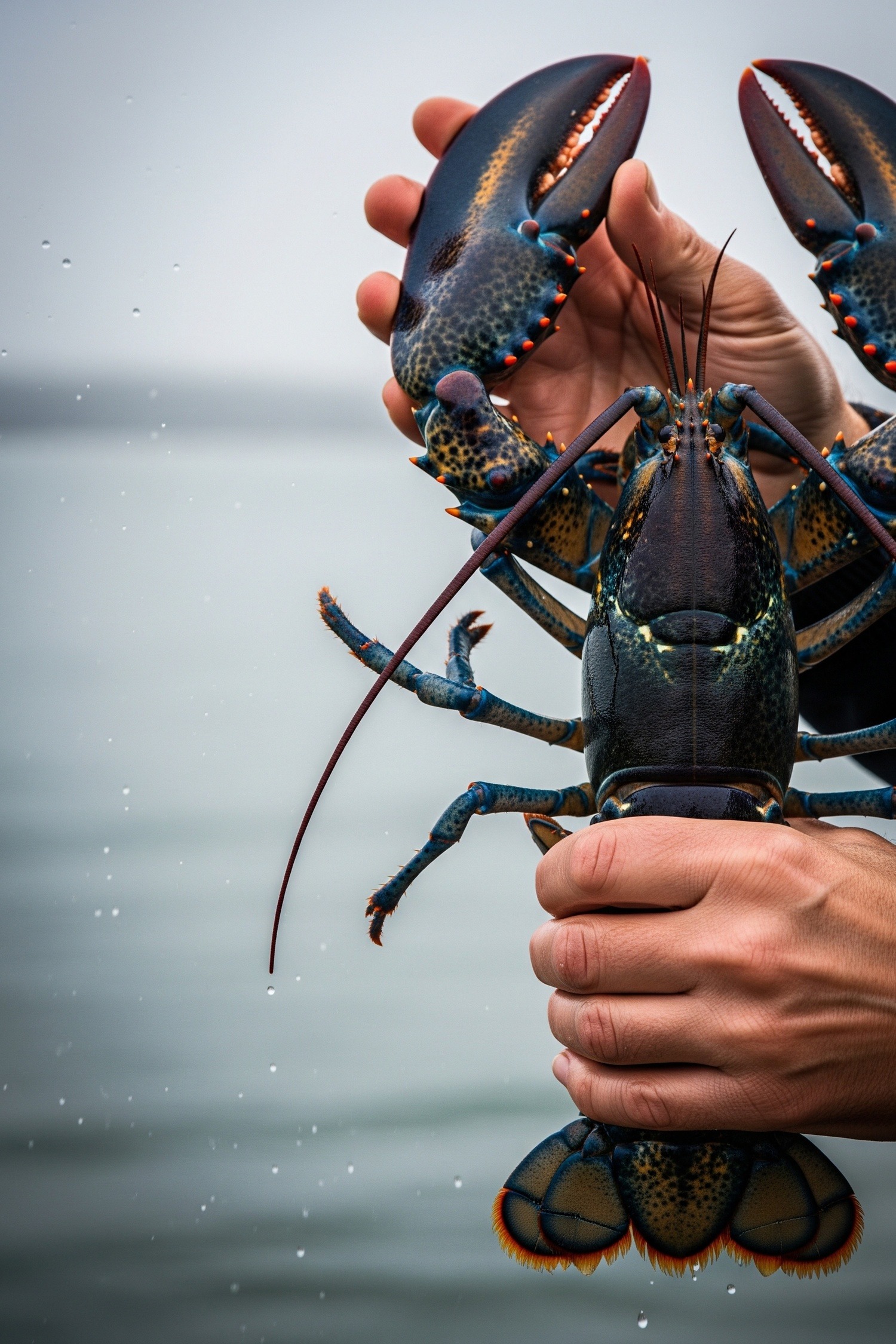
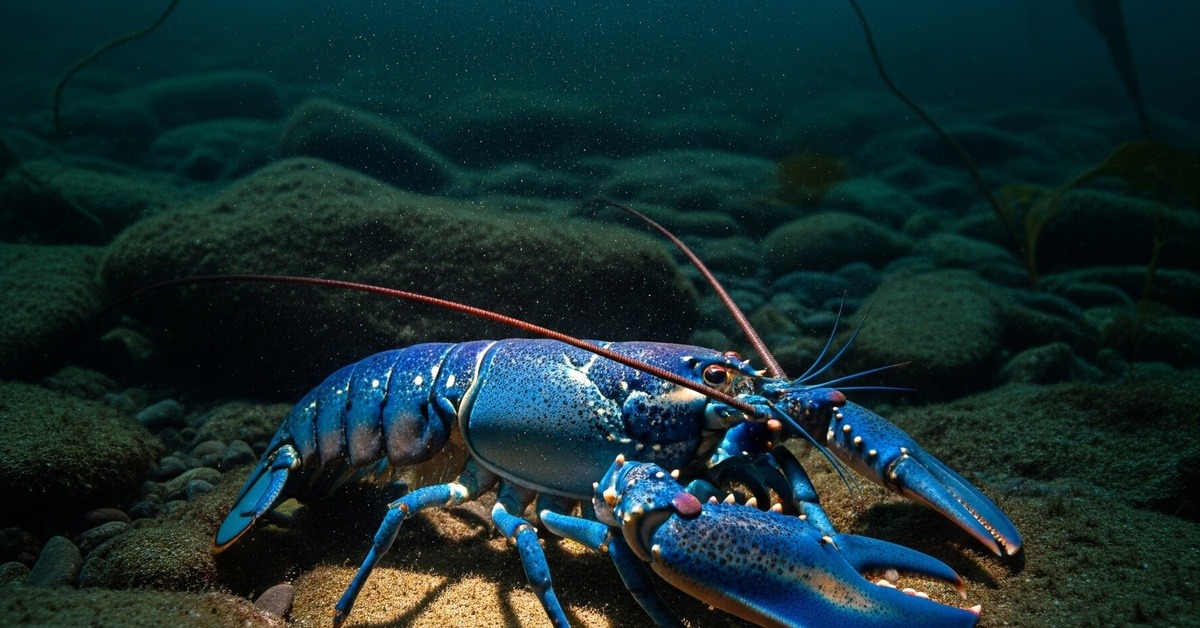
In the cold Atlantic waters off Portland, Maine, a fisherman hauled a trap one morning and found something that stops a seasoned commercial operator mid-breath: a lobster the color of a clear October sky, shell blazing cobalt in the grey light. He stared. Then he put it back. What he’d pulled wasn’t diseased or weak — it was a blue lobster rare mutation, an event estimated to occur once in every two million catches, and he’d just decided the ocean could keep it.
Off the coast of Maine, lobster fishing moves with the tides — thousands of traps hauled daily, the catch predictable, the palette reliably brown-green and mottled. Then a shell the color of deep water stops everything. What causes it, what it means biologically, and why it keeps turning up in the world’s fisheries reaches all the way into the architecture of pigment, protein, and the extraordinary randomness of genetic chance.
Key Facts
- A blue lobster is estimated to occur once in every two million catches off the coast of Maine.
- The blue color results from a single genetic mutation that overproduces a protein called crustacyanin, which binds to the pigment astaxanthin.
- Researchers at the University of Manchester confirmed in 2002 that crustacyanin mechanically squeezes astaxanthin’s molecular geometry, shifting reflected wavelengths to blue.
- Annual lobster landings in New England and Atlantic Canada have exceeded 100,000 metric tons in recent decades, making rare color mutations occasionally surface despite their odds.
- Yellow lobsters are estimated at roughly one in thirty million, orange lobsters at about one in ten million, while translucent ‘crystal’ lobsters have been documented only a handful of times.
In short: A blue lobster is a rare American lobster carrying a genetic mutation that overproduces crustacyanin, a protein that binds astaxanthin pigment and reflects blue light. The condition affects roughly one in two million lobsters and does not impair the animal. When cooked, heat releases the pigment and the lobster turns red like any other.
The Genetic Misfire Behind Blue Lobster Rare Mutation
Inside the shell of every American lobster — Homarus americanus — sits a pigment called astaxanthin, a carotenoid responsible for the rusty red-orange color that appears when a lobster is cooked. In most individuals, this pigment sits relatively unbound, producing the greenish-brown camouflage tones that make lobsters nearly invisible on a rocky seafloor. But in a blue lobster, a single genetic mutation triggers the overproduction of a protein called crustacyanin, which binds tightly to astaxanthin and physically alters how the pigment absorbs light. That binding process shifts the visible color from red-orange all the way to the short end of the visible spectrum — a brilliant, saturated blue.
Researchers at the University of Manchester, studying crustacyanin’s crystal structure as far back as 2002, confirmed that this distortion is purely mechanical: the protein squeezes the pigment’s molecular geometry, changing what wavelengths it reflects. One protein. One mutation. A completely different animal.
What makes this stranger still is how small the genetic change actually is. It doesn’t rewrite the lobster’s entire genome or compromise its survival systems. The animal functions identically to any other lobster — it forages, molts, mates, and navigates the seafloor with the same efficiency as its brown-shelled neighbors. The color is the only visible consequence. And yet that color is so improbable, so visually arresting, that it can stop a seasoned commercial fisherman mid-haul. The mutation doesn’t ask for attention. It simply can’t avoid it.
Consider what the fisherman off Portland actually saw: not a diseased or weakened animal, but a perfectly healthy lobster wearing what amounts to a genetic accident like a neon sign.
The ocean produces millions of lobsters. It produces very few mistakes this spectacular.
Same Chemistry, Wildly Different Results
Here’s the thing about blue lobsters that most people miss entirely, and it reframes the whole story. When you drop any lobster — blue, brown, or otherwise — into boiling water, it turns red. Every single time. That’s because heat breaks the bond between crustacyanin and astaxanthin. The protein denatures, releases the pigment, and the astaxanthin’s natural red-orange color floods back to the surface. A blue lobster, cooked, is indistinguishable from any other cooked lobster. The blue isn’t a different pigment. It’s the same pigment, held differently. Nature using an identical palette and arriving at completely opposite results.
This kind of hidden complexity shows up across ocean life — much like the astonishing camouflage strategies documented in pygmy seahorses, whose bodies mirror their coral hosts so precisely that researchers walked past them for decades without noticing. In both cases, the biology is doing something radical with basic materials. The tools are ordinary. The outcomes are not.
Many crustacean species carry the crustacyanin-astaxanthin system (and this matters more than it sounds — it means color variants can appear not just in lobsters but in crabs, shrimp, and other shellfish). What varies is the mutation rate and the genetic background of each population. In lobster populations off New England and Atlantic Canada — some of the densest and most heavily studied commercial fisheries on Earth, with annual landings exceeding 100,000 metric tons in recent decades — the sheer volume of animals in the water means that even a one-in-two-million event will surface several times a year.
The rarity isn’t a sign that something has gone wrong in the ecosystem. It’s a reminder of how many individuals are actually out there. Fishermen who’ve worked the same waters for thirty or forty years sometimes report seeing two or three blue lobsters in a career. Some have seen none. The odds don’t distribute evenly. They just eventually arrive.
Yellow, Orange, Crystal: The Full Spectrum of Lobster Oddities
Blue lobsters get the headlines, but they’re one point on a much wider spectrum of lobster color anomalies, each caused by a different disruption to the same basic pigment system. Yellow lobsters — estimated at roughly one in thirty million — result from a mutation that eliminates most of the darker pigments entirely, leaving astaxanthin compounds to express in their most unbound, golden-yellow form. Orange lobsters are somewhat more common, possibly one in ten million, and reflect a partial rather than complete alteration of crustacyanin binding.
Then there are calico lobsters, patchy and mottled with irregular pigmentation, their coloring the result of multiple simultaneous mutations interacting unpredictably. According to reporting by Smithsonian Magazine, the rarest of all may be the so-called “crystal” or translucent lobster, documented only a handful of times in recorded history, in which pigment production is so severely disrupted that the shell becomes nearly see-through. Why does this matter? Because each variant tells a slightly different genetic story — and each one is the ocean making an error it will almost certainly never repeat.
What unites all of these variants — and what makes the blue lobster rare mutation particularly instructive — is that none of them confer a survival advantage. In fact, they likely do the opposite. Lobsters rely on camouflage as a defense against cod, striped bass, and other predators that hunt by vision in shallow coastal waters. A cobalt-blue lobster moving across a pale sandy bottom is not invisible. It is the exact opposite of invisible. But watching a species deploy traits that demonstrably harm its chances, over and over across centuries, you start to understand something fundamental about how evolution actually works — which is sometimes not at all. The mutation that produces the color doesn’t help the animal survive; it just happens, persists at low frequency in the population, and occasionally surfaces when the genetic dice land exactly right. This is randomness expressing itself in one of the ocean’s most commercially harvested species, generation after generation, with no direction and no destination.
Why Blue Lobster Rare Mutation Records Matter to Science
At the Gulf of Maine Research Institute, scientists have been tracking anomalous lobster catch reports for years, using fisherman-submitted data to build broader pictures of population genetics in Homarus americanus. A blue lobster report — logged, documented, and ideally tissue-sampled before release — adds a data point to a growing map of how and where specific mutations cluster within populations. When a surge of blue lobster sightings occurred along the Nova Scotia coastline in 2019, it prompted questions about whether localized inbreeding in certain bays might be elevating mutation expression rates. No definitive conclusion was reached, but the episode illustrated something crucial: a fisherman with a smartphone and a willingness to report what he caught is, functionally, a field researcher.
There’s also a conservation dimension that runs deeper than most people realize. The New England lobster fishery is one of the most economically significant in the United States — worth over $1.5 billion annually as of recent years — and its long-term health depends on maintaining genetic diversity within the population. Color mutations are harmless individually, but their frequency can serve as a rough proxy for the overall genetic variability of a stock.
A fishery producing consistent novelties is, in a strange way, a fishery with enough genetic breadth to keep generating surprises. Uniformity in coloring would be a subtler, more troubling signal — the kind of biological monotone that precedes collapse.
The fisherman off Portland made a decision that many before him have also made: he released it. No aquarium deal. No viral auction. No tank. Just back into the cold Atlantic. That choice, repeated across dozens of blue lobster encounters over the years, means the animals return to the gene pool. Whether that matters at the population scale is debatable. But it matters to the lobster.
Where to See This
- The waters off Portland, Maine, and the broader Gulf of Maine coastline — particularly between Penobscot Bay and the Bay of Fundy — represent the highest-density habitat for American lobster and the best statistical chance of an anomalous catch occurring; summer through early autumn brings the most trap activity and the most reported sightings.
- The Gulf of Maine Research Institute (gmri.org) in Portland actively engages with fishermen and the public on lobster biology and population data, and is one of the leading organizations tracking catch anomalies in the Northwest Atlantic.
- For readers who want to go deeper: the New England Aquarium in Boston has periodically housed rare-color lobsters in public exhibits, and their website maintains educational resources on lobster genetics and the crustacyanin mechanism — a worthwhile starting point for anyone fascinated by what pigment can actually tell us about an animal’s biology.
By the Numbers
- 1 in 2,000,000 — the estimated odds of catching a blue lobster rare mutation in any given haul, according to the University of Maine’s Lobster Institute.
- Over 100 million pounds of lobster landed annually in Maine alone as of 2022 (Maine Department of Marine Resources), meaning statistical blue lobster catches occur multiple times per year in this fishery alone.
- 1 in 30,000,000 — estimated odds for a yellow lobster, making it at least fifteen times rarer than its blue counterpart.
- The crystal (translucent) lobster has been documented fewer than ten times in recorded commercial fishing history worldwide — no reliable frequency estimate exists.
- $1.54 billion — the value of Maine’s lobster fishery in 2021, making it the highest-value single-species fishery in the United States.
Field Notes
- In 2016, a Nova Scotia fisherman named Mike Pettit caught a lobster that was split perfectly down the middle — one side the standard greenish-brown, the other a vivid orange. Known as a gynandromorph, the animal expressed two different genetic identities simultaneously, one in each half of its body; it was donated to the Huntsman Marine Science Centre in St. Andrews, New Brunswick, where it lived in a research tank for several months.
- Blue lobsters don’t stay blue after cooking — a fact that surprises most people. Heat denatures crustacyanin and frees astaxanthin in roughly two minutes of boiling water, at which point a blue lobster becomes visually identical to any other cooked specimen on the plate.
- Astaxanthin, the pigment at the center of all blue lobster rare mutation variation, isn’t produced by the lobster itself — it’s acquired entirely through diet, primarily from consuming algae, krill, and other small crustaceans. A lobster raised in captivity on a diet lacking astaxanthin-rich food could theoretically produce a shell with dramatically different coloration.
- Researchers still can’t reliably predict which geographic populations carry higher frequencies of the crustacyanin overproduction mutation. It’s unclear whether blue lobsters cluster in certain bays or fishing grounds, or whether their distribution across the Atlantic fishery is entirely random — a question that better tissue-sampling protocols during catch-and-release could eventually answer.
Frequently Asked Questions
Q: How rare is a blue lobster rare mutation, and has it always been this uncommon?
The blue lobster rare mutation is estimated to occur in approximately one out of every two million lobsters, according to the University of Maine’s Lobster Institute. There’s no strong evidence that this frequency has changed over time — historical fishing records from the 19th century include occasional descriptions of unusually colored lobsters. The rate appears to be a stable background feature of the species’ genetics rather than a response to any environmental change.
Q: Why do lobsters turn red when cooked if they’re naturally brown or blue?
All lobster coloration — regardless of shell color — is built around the pigment astaxanthin, which is naturally red-orange. In living lobsters, astaxanthin is bound to the protein crustacyanin, which alters its light absorption and produces blues, greens, or browns depending on how tightly the binding occurs. When heat is applied during cooking, crustacyanin denatures and releases astaxanthin, allowing the pigment to return to its natural red-orange state. This is why every lobster, no matter what color it was alive, turns the same shade of red on the plate.
Q: Do blue lobsters survive better or worse in the wild than normal lobsters?
This is a common misconception — that a striking color might signal some kind of advantage. It doesn’t. Blue lobsters are biologically identical to their brown-green counterparts in every functional way: same foraging behavior, same molting cycle, same reproductive capacity. The color mutation is neutral in terms of physiology but likely harmful for camouflage, making the animal more visible to visual predators in shallow water habitats. That a blue lobster survives to adulthood at all is itself a small statistical achievement, given the odds stacked against a conspicuous juvenile on a rocky bottom.
Editor’s Take — Alex Morgan
What stays with me isn’t the color. It’s the decision to put it back. In a fishery worth a billion and a half dollars, where every pound of catch is accounted for, a fisherman pulled something genuinely unprecedented out of the water and chose to let it go. No deal. No documentation. Just a judgment call made in the grey morning light off a Maine dock. That instinct — to return the extraordinary to where it came from — tells you something about the relationship between working fishermen and the sea that no policy document quite captures.
Every day, lobster boats haul tens of thousands of traps across the Gulf of Maine. Most come up with the expected: the brown-green, the predictable, the commercial. But somewhere in that same water — under the same cold, grey surface — is an animal wearing cobalt like a mistake it doesn’t know it’s made. The ocean is vast enough to keep secrets at scale. A one-in-two-million shell is proof that we’re still only seeing what chance decides to float up to meet us. How many extraordinary things are moving through the dark below the boats, completely unseen, waiting for a trap that may never come?
Illustrations are AI-generated. Article fact-checked and human-edited.